Gifts, God and Glory

1 Kings 10-11
2 Chronicles 9

There are simply some things you have to see with your own eyes to understand what all the hype is about. To stand at the edge of the Grand Canyon or to gaze from the helm of a ship in the middle of the ocean are images that have been perpetuated as pinnacle experiences through pop culture. While it’s possible to be in awe while reading a description or gazing at a photo, the real deal—being present in these places—has left me in wonder at the work of the Almighty.

In a similar manner, the stories of Solomon’s wisdom had spread like wildfire, reaching as far as the Horn of Africa—which, in ancient historical terms, was viral. The tale of a singularly wise leader whose work had led Israel into a time of ultimate prosperity made all the hype seem too good to be true. The Queen of Sheba, having received these reports, had to hear and see for herself. What she found was that the blessings were abundant and beyond even what was reported. The sights and sounds of Israel were breathtaking, but none more than the wisdom of King Solomon. After taking it all in, the Queen acknowledged that the sovereign God of Israel had placed Solomon on the throne to rule at such a time.

“Praise be to the Lord your God, who has delighted in you and placed you on the throne of Israel. Because of the Lord’s eternal love for Israel, he has made you king to maintain justice and righteousness.”
—1 Kings 10:9

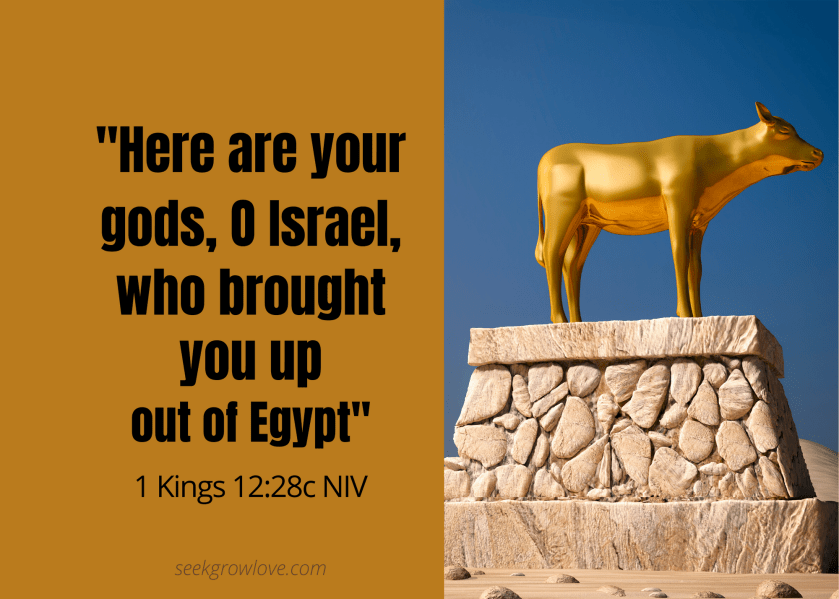
In contrast, in the very next chapter of 1 Kings, we watch the eyes of Solomon shift—from service of the Most High to service of his own flesh. From my own speculations, taken from the perspective in Ecclesiastes, it seems that for a season Solomon focused more on the gifts of God than on his relationship with Him. Israel began looking more like the king and less like its God under Solomon’s direction. He established altars for the gods of his wives and concubines, reshaping not only the physical locations but also the worship of the people. The evidence was in: the splendor of this kingdom, which once pointed to the protection of an undefeated Most High God, was now showing signs of the waning wisdom of a compromised king calling his own shots.

As we read these contrasting moments in Solomon’s life, we should turn and reflect on our own. We may not have the accolade of being the “-est” of anything, but there are tales that could be reaching far and wide about us. When we are visited, our “place settings inspected,” and people look at our sacrifice, what does all our effort and show point to? Are we encouraged—or offended—by those who look at the catalogue of our life’s work and give God the credit?

When God has His hand upon us, it can be recognized and sought by strangers from a distant land who hunger or thirst for answers to their questions. The truth is, sometimes from the outside looking in, the beauty of God’s hand in our lives is more clearly seen. Conversely, from the inside looking out, we may gaze upon the gifts of the Lord and mistakenly see them as our own handiwork, when it is by God’s glory that we are richly blessed. The warning given to us by Job is that the One who gives and multiplies can also take away and divide.

The hype of God has been—and will continue to be—acknowledged by those who look at it from afar in awe. However, the goodness of God is best experienced firsthand, through encountering Him with every thought and action. Let us not forget that He is the provider of grace and the bestower of the fruits of His Spirit; we could never attain these through our own effort. Don’t be so entangled in the blessing that you forget the intention with which it was given: to demonstrate the glory of our Heavenly Father.

-Aaron Winner

Reflection Questions

  1. What thoughts, feelings, desires, or motives do you think led Solomon astray? Which of these same thoughts, feelings, desires, or motives do you see in yourself?
  2. In what ways would you like to be like Solomon? In what ways will you work at not being like Solomon?
  3. Are there gifts God has given you that you have mistakenly viewed as your own handiwork? What happens when we focus on the gifts rather than the Gifter? How can we better see what God has given and in return give to Him the credit, thanks and glory for all His wonderful gifts.

Joy of Every Longing Heart

Job 1-5

Students may feel time stands still, waiting the release of a school day, but where reality is truly suspended is at a school dance.  I am no scientist, but I believe Albert Einstein must have been chaperoning teenagers when he discovered the theory of relativity.  It isn’t just one thing that makes it feel like you are locked into an eternal session on “Cotton-Eye Joe” on a Friday afternoon, but the combination of the shouting,  the music, the shouting, the running, the shouting, the smells, and the shouting, create a enormous sense of anticipation and longing for escape.

Today in our chronological study, we end up in a completely different book. Job is thought to historically settle in and around the time of Abraham, but there is room for debate. Personally, I like the fade to black, and the entry into another storyline.  Multiple narratives, whether in our texts or as we edify one another today, demonstrate that God is working to bring all things to one conclusion or resolution, which indeed is our great joy as we consider his uniting Kingdom.

Conversely, the vast majority of Job’s story is within the walls of great suffering, where time seemingly stands still; the playlist is that of devastating loss. Job’s health, his wealth, and his family are stripped from him.  He slowly and surely unpacks the persistence of physical and emotional pain, reminding us of the sovereignty of God: it is His prerogative to give and to take away.

Nonetheless, Job continues to seek joy and restoration with God, though time stands still in agonizing sorrow.  Leaning, reclining, and collapsing on God are the only available avenues to move forward through the most intense trials and longest of sufferings.  David says in Psalm 16:11: “You make known to me the path of life; in your presence there is fullness of joy; at your right hand are pleasures forevermore.” We long for security, satisfaction, and meaning, but the answer to these needs  do not come from momentary allowances. We can only attain this through God, who freely gives this and more through Jesus Christ.

Through His  life, death, and resurrection, we have abounding grace.  Through trials of every kind we can receive joy and develop perseverance because we know that our narrative is only one of many, tied to a single storyline about our Savior.  Though at times it feels like we will never move again, seeking God, we will be inspired to join in the conga-line with those before us who have died longing and waiting for their joy made complete.

Revelation 21:4 reminds us that eventually the noise and the music will stop, and we can finally go home  – “He will wipe away every tear from their eyes, and death shall be no more, neither shall there be mourning, nor crying, nor pain anymore, for the former things have passed away.”  Blessed be the name of the Lord! What great joy there is in eternity, to sustain us through the most taxing times where we feel the ticking of every second.  We will be in the presence of God. We will be made perfect and whole.  We will be reunited. Oh come, thou long expected Jesus.

-Aaron Winner

Reflection Questions

  1. What has God given to you? What has He taken away? Why and how can you praise Him for both? What “negative” things has He also taken away for you?
  2. Who or what else also shares responsibility for the suffering Job endures?
  3. Who do you know who has suffered much and continues to praise the name of the Lord?
  4. How can joy and perseverance grow in the face of trials, tears and suffering?

Have you downloaded and printed the 2025 SGL Chronological Reading Plan

or just one month at a time – here’s January…

Dear Desire of Every Nation

Genesis 8-11

If you have ever spent time in an airport terminal, you know how truly small the world can be. Travelers from all walks of life, zoom around in every direction.  Despite differences in cultures, status, and language, there is a common purpose among all: a deep desire to get somewhere.  While that “somewhere” might be to make a business deal, take a vacation, visit family, or relocate, each of us move to add value and meaning to our lives, to move to be a part of something greater than ourselves.

In Genesis 9, the world is a small place in a much different way. Those who survived the flood all belong to Noah’s family, who moved with a single purpose, obedience to the Creator.  God restored the connection in a covenant with all of creation.  A rainbow in the clouds became a sign of His promise, a reminder of both His faithfulness to a world, to redeem, restore, and sustain life, but also a reminder of the single sustaining purpose of humanity, to serve the Almighty God.  While God continues to uphold his side of the bargain, humanity once again falls into the trap of sin.  Noah and his family, like Adam and Eve, and like each one of us, are tempted by the self-serving desires of value, meaning, and knowledge that leads them astray from God’s command.

In Genesis 11, we see a culmination of humanity’s desire becoming misplaced. At Babel, people attempted to build a tower that reached the heavens. It is not to honor a God who created the Earth and flooded it at His command, but to make a name for themselves because they had moved some earth.  Was their longing for unity wrong? Absolutely not. God has given us an inmate desire to be connected, but the work of man without God, will never lead to Utopia.  Repeated time and again in history is the danger of groupthink that allows for and even endorses the most despicable behavior.  God’s response is to scatter these people and confuse their languages, reminding them that true unity and purpose can only be found in Him.

While the world still speaks some 7,000 languages, there is still a desire that binds each one of them. Jesus Christ has become the purification we receive in the flood and the desire for connection displayed in Babel.  He is both the covenant that brings us back to God, and the one who unites us as brothers and sisters in Him. The single purpose sought in Babel is now realized in the Church, where people of every nation, tribe, and tongue are united.  Like the airport, with a much greater sense of purpose and much less baggage, Jews, Greeks, slaves, free, men, women, impoverished and wealthy, and every other intersection of society are brought together.

Jesus Christ, and the purpose he brings to life, is the dearest desire of every nation.  The hope he brings, no matter the direction we are moving or even the trespasses accumulated against him, is the groaning inside each one of us. More than any other other time since Babel, we have an opportunity, to connect with people, nations, and even languages far beyond our own. Whether it is to our neighbor or the ends of the earth, let us continue to move for a single purpose, seeking and building the Kingdom of God.

-Aaron Winner

Reflection Questions

  1. Do you sometimes get moving…but forget what your purpose is? What is your greatest purpose today – and this year? How will you work towards fulfilling it?
  2. What went wrong at Babel? Have you ever been a part of a venture that crashed for the same reason? How do we proceed more carefully in the future?
  3. How might the stories of the flood and the tower of Babel have been different if Jesus had already been born, grown, baptized and was ministering at those respective times? How would your story be different if you had been born before Jesus?
  4. What do you desire that Jesus gives? What does your neighbor desire that Jesus has made available?

Download a print a yearly SGL Bible reading calendar…

or just one month at a time …

then find a Bible reading buddy for 2025.

Hope of All the Earth Thou Art

Genesis 4-7

Jan 2, 2025 – Day 2 of the SeekGrowLove 2025 Chronological Bible Reading Plan

Just a few months ago, my family and I found ourselves in the path of Hurricane Helene. While the storm left widespread devastation, we were fortunate to remain safe, experiencing minimal damage, and counting our blessings. However, like millions of others in our region, we found ourselves without power. Looking back now, I can’t remember exactly how many days we spent unplugged (although I most certainly knew the number at that time with every passing day) As I witnessed the unprecedented number of power trucks traveling in every direction,  I most assuredly knew the power would be restored, it was just a matter of time.  

You better believe that Noah had hash marks on the side of the ark. Noah knew beforehand how many days it would rain, but he didn’t know how long he would be making his home with a boatload of animals.  On day 41, he saw with his own eyes the Word of God fulfilled, for He had completed an unprecedented thing.  So Noah waited, holding onto hope that God would provide a way to get off the ark.

Noah’s enduring faith, to build the boat, to endure the storm, and to hang onto the promise, show the beautiful exchange of God’s grace and protection when we trust and hold onto hope. Noah found favor in God’s sight, but we can declare this to the world:  through Christ, we too can experience the fullness of God’s grace.  As we look to our Savior for this hope, we can emerge from the storms of life victorious.  Through the flooding waters of baptism we are cleansed.  But now, emerged from the flood, we wait.

There is still plenty of work to do.  We do not twiddle our thumbs until the return of Jesus. Noah continued his calling to give life and care for his flocks, herds, and packs while awaiting the return of a dove.  Like Noah, we have been given charge to continue the work of Jesus, giving hope to every nation.  If we are awaiting the return of Christ, we are approaching two-thousand years into our tally, but we are sustained, knowing the promise of God is not fleeting or pending.  It is fulfilled in its perfect time through Christ Jesus.

We would be crazy not to look to the horizon.  The fact that we do shows that we have a founded longing and are aware of the signs. We see the birth pains that lead to the return of Jesus with resurrection power, so let us declare and defend to every nation that He is the reason for the hope we have.

-Aaron Winner

Reflection Questions

  1. What have you waited for? While you were waiting what storms did you endure? What was the reason for your hope?
  2. What do we learn from Genesis about Noah? What do we learn about God from the account of Noah?
  3. How was Noah different from the rest of his generation? How can you be like Noah?

You can download and print the whole year’s Chronological Bible Reading Plan in a compact 1 page booklet form:

SGL.2025.CalendarBookletDownload

Or download and print just one month at a time in an easier to read format:

SGL.2025.JanuaryFullPageDownload

Who would you like to invite to be a Bible reading buddy with you in 2025?

Israel’s Strength and Consolation

Genesis 1-3

January 1, 2025 – Day 1 of the 2025 Chronological Bible Reading Plan

In case we have forgotten, we serve the Almighty God who created the heavens and the earth. By His word alone, He spoke the universe into existence, forming the earth and filling it with life. From eternity to today, His hands continue to hold the world as a loving Father to humanity, created in His image—the climax of His creative acts. As part of this creation, it is a powerful reminder that we are not the owners but stewards in our Heavenly Father’s domain. Yet, we can draw from the strength and power present from the very beginning. The same power that called light into darkness, parted the Red Sea, called fire from heaven, and raised Jesus from the dead is also available to us. We simply need to stop wandering aimlessly in the garden, worrying about what we will eat next, and turn to Him.

Ultimately, it is God who gave us free will—the freedom to wander or to follow. This choice is most simply expressed in whether we choose to worship and honor Him or to worship and honor something else, including ourselves. There are countless opportunities to follow our own flawed prerogatives that lead to peril because choosing sin over God is inherent in our nature. Genesis 3 presents the moment of humanity’s fall—a moment that could have marked the end of hope. Yet even in judgment, God extends consolation. He seeks Adam and Eve in their hiding, clothes their shame with garments of grace, and promises a future Redeemer who will crush the serpent’s head. This promise is repeated time and again to Israel, God’s chosen people (Isa 9:7; Gen 49:10, Deut 18:18-19), and now to us, His new nation (Rom 11:17,18, 1 Peter 2:9,10). This act of mercy reveals God’s goodness—His justice tempered with overwhelming compassion.

In our own failings, we find consolation in knowing that God pursues us in the same manner. He offers to cover our shame with the sacrifice of Jesus Christ, our Redeemer. This has been God’s plan from the beginning—that we would be redeemed and restored from our falls. In Christ, we are made a new creation. Yes, there is judgment and the penalty of death, but there is also the far greater promise of eternal life. Ultimately, we have a sustaining consolation like no other. God has given His Holy Spirit to us—not only as our Comforter as we await the fulfillment of His promises but also as a source of strength. Through the Spirit, we are empowered to reflect the fruits of our Creator and Father.

-Aaron Winner

Reflection Questions

  1. What is revealed about God Almighty in the first 3 chapters of Genesis?
  2. Do you sometimes forget some of the things that Genesis teaches us about God?
  3. What is revealed about man and woman in the first 3 chapters of Genesis?
  4. Do you sometimes forget some of the things that Genesis teaches about man and woman?
  5. What hope do you find in the first 3 chapters of Genesis?

You can download and print the whole year’s Chronological Bible Reading Plan in a compact 1 page booklet form:

Or download and print just one month at a time in an easier to read format:

Who would you like to invite to be a Bible reading buddy with you in 2025?

Let Us Find Our Rest in Thee

OLD TESTAMENT: Malachi 3-4

POETRY: Psalm 150

NEW TESTAMENT: John 21:15-25

Our bodies were designed to rest. It is a precedent set by the Heavenly Father on the seventh day and continued through the Law on the Sabbath. Whether it is sleep, a cup of coffee at work, or a walk between sets, taking a break gives us refreshment, repair, and a chance to catch our breath. Without this all-important pause, our bodies and minds suffer, leading to exhaustion, reduced cognitive function, and weakened resilience. But like all things, even our rest must be found in Jesus Christ.

In today’s reading, Peter has emerged not only from a day of hard labor but easily his most tumultuous season of life. He took up arms for Jesus, denied Him, went into hiding, grieved, and then saw his Risen Savior. Now, a moment to rest presents itself with a warm meal, a fire, and friends. Jesus seizes this restful moment to restore and recenter Peter. Rest and relaxation do not always go hand-in-hand.  A volley of questions and the allusion to a martyr’s death may seem more stressful than restful, but Peter receives His commission in a fireside chat—not in the labor of picking up loaves and fishes or walking on water. We need time to unpack the hard things away from the hard labor so our weary, heavy-laden souls can respond to the kindling of Christ’s call.

One of the most important elements of this rest is stillness. Unfortunately, distraction, coping, or physical stillness alone is incomplete when compared to God’s command of stilling oneself. Many times, we choose spiritual brain rot to fill our thoughts, keeping our minds occupied and leaving no vacancy for our Heavenly Father to speak. Today, in the repeated reading of Psalm 150, we have an opportunity to be still in the words and to meditate upon them. Just as sleep provides an opportunity for our brain to repair—removing waste, mitigating damage, regulating our mood, and increasing immune activity—meditation upon the words of God doesn’t ignore life’s challenges. Instead, it reframes our circumstances within the glory of God, offering many of the same benefits.

Finally, in God’s rest, there is peace—which is like rest, but sustainable alongside the most dire of circumstances, experienced by His treasured, faithful remnant. In the chaos of Judah and Israel’s departure from God, there is still a promise that our Heavenly Father will send His messenger to prepare the way for the Lord – and he did.  Now, we are now the messengers who battle with our own time and culture. Because we too have been filled with the Holy Spirit, we receive one of its many gifts, a peace that passes understanding. We can stand as the harbinger for the return of Christ in the unfair, the overwhelming, and the disastrous, because these things run parallel to our peace. Thank you, God, for standing as a defense and a mighty tower, so we can retreat into Your promises and find our rest in the arms of Jesus Christ.

-Aaron Winner

Reflection Questions

  1. How do you give your body rest? What can you do to improve in this area?
    How do you give your mind rest? What can you do to improve in this area?
  2. How can you/do you find rest in Scripture?
  3. If Jesus met you on the beach after one of your biggest failures what questions and directions do you think he would have for you?
  4. How can you tend/feed/shepherd Jesus’ sheep?

BE WATCHING FOR ANOTHER POST/EMAIL TO COME LATER TODAY WITH THE 2025 SeekGrowLove BIBLE READING PLAN! One little teaser word: chronological. Thank you for reading in 2024! May we continue to Seek Him, Grow in our faith, and Love the Almighty God, His Son, His people and His word – more and more!

From Our Fears and Sins Release Us

OLD TESTAMENT: Malachi 2

POETRY: Psalm 150

NEW TESTAMENT: John 21:1-14

“Each of us shoulder an invisible backpack,” I recently heard this statement during a professional development session about trauma-informed practices for students. While the idea of carrying emotional baggage is not new, the thought that this load is often imperceptible to others—visible only to the one who bears it—has lingered with me. As we consider our own baggage, the persisting heaviness of personal sin, trauma, and fear becomes clear, especially when these burdens are held within. If we choose to bear this weight alone, it can become a crushing load. In a prayer, a plea, and the prompting of a promise, I encourage each of us to begin unpacking the deepest and darkest longings and aches of our hearts, asking for release from our fears and sins.

In the second chapter of Malachi the Lord continues to call out Israel’s priests for persistently violating His law and covenant with the tribe of Levi. Two important takeaways emerge from this passage. First, no one is above submitting to Christ – or in their case, the law- and leaning on Him to carry their burdens. Second, choosing the perpetual path of personal sin wearies the ears of God. An unrepentant heart leads to the removal of protection and blessing, leaving us despised, humiliated, and metaphorically (or even literally) covered in our own filth. While we may not feel ready to announce our shortcomings to the world, we can no longer justify our sin or allow ourselves to call what is evil, good.

Psalm 150 reminds us (and speaking to myself here, mostly) that picking up an instrument means momentarily setting down the fears we carry. As stated yesterday, when we offer worship to the Lord, we reconnect with Almighty God. Praise is not merely a response to blessings but a declaration of trust in His sovereignty and goodness. I think of Joseph, Paul, and Silas, all of whom used worship to transform their injustices into testimonies (Gen 40; Acts 16). What we carry may be truly terrible and meant for evil, but with praise to our Heavenly Father, our overwhelming emotions can become a weaponized testimony that God uses to free others from similar circumstances.

Finally, in our New Testament reading, we see Jesus transform fear and failure into fruitfulness. After a night of empty nets in the Sea of Galilee, Jesus directs His disciples to cast their nets on the other side of the boat, resulting in an abundant catch. Onshore, Jesus awaits them with a prepared meal, inviting them into His provision and rest. When our doubts and frustrations run high—when we find ourselves spinning our wheels without results—we must seek the voice of the greatest Fisher of men. Only He can tell us where to cast our nets. Without His guidance, we labor in vain. Moreover, Jesus not only encourages but nourishes, reminding us that if He calls us to a task, He will also provide for it.

Carrying the weight of fear and sin is paralyzing. We will never feel adequate, and we will remain distant from God if we leave these burdens unaddressed. Ironically, when we unpack and expose these things to the Light, we receive freedom and restoration through Jesus Christ. As we reflect on the year that has passed, this is the invitation: begin digging through your invisible backpack, identifying the objects that hold you captive. Turn your failures and frailty over to Jesus, allowing Him to shoulder your burdens with the payment of His blood. Trust that His Father is faithful and forgiving, ready to release you from the weight you carry and restore you to the lightness of His yoke.

-Aaron Winner

Reflection Quesions

  1. What do you carry in your backpack? What has been the result of carrying it? What would it look like to start unpacking it?
  2. Pray for direction on where and how to cast your nets. Where and when have you previously had the most success fishing for men? What might the Greatest Fisher of Men be asking you to do next?
  3. How has worship brought you closer to God? How can you worship Him better today? What will you worship Him for?

Born to Set Thy People Free

OLD TESTAMENT: Malachi 1

POETRY: Psalm 149

NEW TESTAMENT: John 20:24-31

While there are many who find their religion in removing Christmas decor before the New Year, no such tradition exists in our home. Oftentimes, Christmas decorations linger well into January (or even February) before finding their way back into totes and closets. With these symbols close by, we try to cling to the lingering sentiments of the season. Unfortunately, there is a sobering of one’s mind from the blinding joy of Christmas spirit as we return to work and school, say goodbye to family and friends, and begin to eat our vegetables again. In this in-between season, we must wrestle with more desperate realities; we are still in the thick of things in the present evil age. Grief, illness, relational discord, anxiety, and stagnation find footholds to beckon or challenge us with a candid question: “Jesus, where are you now?”

If we say this, we are not unlike the captive Israelites of the Old Testament crying out. We are not unlike the apostles or those we have witnessed fall asleep in faith in our lifetime, all holding onto the promise of a soon-coming Savior. This week, as we transition our calendar from one year to another, our study and prayer echo the words of a three-century-old classic Christmas hymn, “Come Thou Long Expected Jesus.” The first of these reminders, as we commingle a season of great joy with that of longing heart, is that Jesus was born to set God’s people free.

Looking at today’s reading, we start with the last book of the Old Testament, Malachi. This book addresses Israel’s increasing spiritual despondency. No doubt, we can connect this to some season we are currently weathering—whether it be the day on the calendar, within our own walk with Christ, or the physical location and time we find ourselves. Malachi begins with the Lord God responding to the question, “How have you loved us?” Spurgeon states in his sermon, “God’s Love Shamefully Questioned,” that the gratitude we give to God is similar to a hog who eats acorns which have fallen from a tree, yet never once lifts its head to bless the tree that has provided the food. The Sovereign God promised a Messiah and delivered, born on the other side of the Silent Years (the time between Malachi and Jesus). His love was demonstrated in the fact that while Israel, and truly each one of us, acted as pigs in our incompetence, lackluster faith, misplaced priorities, broken offerings, accumulation of sin, and running away, He still miraculously gave us Christ to set us free (Rom. 5:8).

We may know this truth, but honestly, it may show that we carry our concerns closer than our Christ when we ask for Jesus to show up in our prescribed time and location, much like Thomas.  We request to put our hands on His scars, or some other litmus test, as proof of His message, so we can freely live in faith.  Jesus replies to this skepticism, “Because you have seen me, you have believed; blessed are those who have not seen and yet have believed” (John 20:29). While there may be times of confirmation that the hand of Jesus is in our life, it is impossible for us to see, to hold, or to understand the preparations that have been made for our future hope.

In this way, our response of faith does not require more evidence of God’s faithfulness to us; we are already redeemed. Instead, we should declare the joy and triumph that is found in the daily redemption that comes through the advent of Christ. Singing a new song and bringing a sacrifice of praise equally remind us of the promises of God, how He has loved us through redemption in His Messiah, and draw us closer to Him. The very words of God we use to sing give voice to the silence as we wait for an answer, an intercession, or the coming of our Lord Jesus. Our present circumstance may tempt us to despair, but the act of praising God rekindles our faith and recenters our thoughts on the saving power of our Heavenly Father.

The challenges we may face in this coming season may have us crying daily, “Come, thou long expected Savior,” but know that God’s plan set you free long ago. Jesus is now interceding, preparing, and indeed, residing in our hearts as we carry our cross. We have yet to see our faith made complete in the second advent, but we can pray that our next year is the first within eternity. Until then, let our pining become our praise because God so loved us, He sent His Son.

-Aaron Winner

Reflection Questions

  1. How have you acted as a hog eating the acorns and never giving thanks? What can you do to change hog-like behavior?
  2. What are you waiting for? What is your relationship with God and His Son Jesus right now?
  3. How would you answer the question, “How has God loved you?”

Socks and Shoes

Old Testament: Hosea 12-14

Poetry: Psalm 80

New Testament: Luke 16:1-15


If ever there was a dynasty in collegiate sports, it was the UCLA Bruins in the 1960s and 1970s. Over the course of a dozen years, they won 10 NCAA basketball championships.  At one point during this spell, they didn’t even lose a single game for three years.  There hasn’t been a run like it, or may never be again, and much credit goes to Coach John Wooden and his staff. Wooden didn’t seek out cutting edge strategies or even the most talented players. He cared about self-management and stewardship.  Before stepping on the court each player was taught how to put on their socks and tie their shoes. While this may seem demeaning or elementary, it had a dual purpose. The first, to minimize blisters and injury that could prevent a loss of practice time.  The second, to see if his players were faithful in the small things. If there was fidelity and discipline to this aspect, it is more likely this same commitment would be found to honing all the fundamentals of the game.

The connection of John Wooden doesn’t initially seem apparent when we examine the Parable of the Shrewd Manager. Initially it seems like a sneaky story about self-preservation instead of faithfulness.  An accusation from the owners comes against a middle level management, misusing company resources. When the news reaches the manager’s ear that he will be receiving a pink slip, he makes a game plan that will move him from one company ladder to another.  He quickly calls in those who have business dealings with the owner to settle their debts quickly and at a far lesser rate than what they owe in hopes of getting his back scratched in return upon his dismissal.  These executive decisions do not get ire, but instead the praise of his employer.  Our takeaway is likewise to be shrewd with our resources, taking responsibility for what is directly in front of us.

“Whoever can be trusted with very little can also be trusted with much, and whoever is dishonest with very little will also be dishonest with much. So if you have not been trustworthy in handling worldly wealth, who will trust you with true riches? – Luke 16:10-11

In every aspect of our dealings with others, whether with little or much, there is a responsibility to take disciplined, calculated action. Instead of acting in fear of losing our livelihood, we work on becoming the best version of ourselves because this shrewdness makes us trustworthy and impactful for the sake of the Gospel.  Jesus emphasizes that even the smallest actions are important, and really the basis for the amount of work that will be assigned to us. If we don’t take the time to tie our shoes right, and ultimately miss out on practice or games, we need to sit on a bench.  Furthermore, we cannot be expected to lead a revival, or even a Sunday School class, if we cannot be trusted with being disciplined enough to do our own Bible study.  We can’t be expected to receive God’s blessing on our business if we keep a tight grip on our purse when it is time to tithe.  Going back to the beginning of our week, staying true to a system or fundamentals, will not only develop a single resource, but ultimately encompasses every aspect of our lives, including our relationships, time, and talents.

Finally, one more theme to quickly revisit appears in today’s reading. Despite Israel’s mismanagement, let us again be reminded God’s desire is not to let them go, but to bring them back into the fold when he says: “I will heal their waywardness and love them freely, for my anger has turned away from them” (Hosea 14:4, NIV). This restoration is contingent upon living a life of integrity and faithfulness to God.  If we’re going to set foot on the court, let’s not even think about winning first.  Let’s make sure first that our socks and shoes are put on properly, looking at our calendar, our bank accounts, and our relationship, and demonstrating to God that we will be faithful with those things that are already set before us, so we may be shrewd managers, benefitting the greatest dynasty yet to come, the Kingdom of God.

-Aaron Winner

Reflection Questions

  1. What small actions have you (now or in the past) tried to skip over? What is the importance of doing these small steps consistently and well before trying to jump ahead to bigger things?
  2. What resources has God currently put you in charge of? What can you do to care for these well?
  3. How do you think God would rate your faithfulness?
  4. What is the biggest take-away you learned from Hosea this week?

The Realities of Repentance

Old Testament: Hosea 9-11

Poetry: Psalm 79

New Testament: Luke 15:11-32

One of the toughest things to do as a parent is to let your child take a great risk, manage their own protection, or walk into a mistake.  There is a realization that your sway and shielding over another willed being is truly limited, even in the smallest stages of life.  You turn them loose, simply hoping they heed your instructions.  You let them crawl and explore your home, you put them on a bus for the school day, you let them sleepover at a friend’s house, and slowly but surely they become independent humans who make their own way from their own place.  While many who read this blog have walked their children through some or all of these stages in life, today, we will all take the perspective of a child, not the parent.

Through our study of Hosea paired alongside our slow walk through Luke 15, we have focused on the restoration of those who are lost and our responsibility to be ever-searching for those who have stayed or strayed away from the care of the Good Shepherd.  Today, we look more inwardly as we walk with the Prodigal Son, specifically looking at how each of us have wandered in our own right and making sure that we have come to the realities of repentance.

“Do not hold against us the sins of past generations, may your mercy come quickly to meet us, for we are in desperate need. Help us, God our Savior, for the glory of your name;” – Psalm 79:8-9

“How can I give you up, Ephraim? How can I hand you over, Israel? … My heart is changed within me; all my compassion is aroused” – Hosea 11:8

“So he got up and went to his father. But while he was still a long way off, his father saw him and was filled with compassion for him; he ran to his son, threw his arms around him and kissed him” – Luke 15:20

The first reality is that we have all squandered the blessing of God. Today’s Psalm is estimated to be written some 150 years after Hosea, as captivity and destruction set in. We see the lament of a nation whose possessions are long carried off, whose temple is destroyed, and their freedom now limited by their lack of resources.  God’s blessing can only extend to those who walk in His ways.  If we are seeking repentance or even identifying our need to repent, we need only reflect on the way we describe the blessings in our life. Do we see our wealth as our own or God’s?  Our time as our own or God’s? Is it our relationship, our ministry, our accolades, or God’s? If we are fortunate enough to be blessed even in a single area, we should not take it for granted, turning our back and hitting the road to make our own way.

The second reality is that all this world has to offer us is pig slop. While there is an overwhelming abundance of beauty on this earth, it is not found through any pursuit other than God. We often picture an endless rave alongside the Prodigal Son in his “wild living”, but not everyone of us is a party animal. Sometimes our pursuits for pleasure and meaning come in more temperant forms. In isolation from God, pursuing education, taking a leadership role, traveling the world, and many more noble activities are vanity and unfulfilling if they are not done with God at the forefront.  If we are filling our plates with these things, we will be left with food that is fit for swine, an important image when we think to Jewish dietary laws, an animal that is unclean because of its diet.

Finally, the third reality is that we must be mindful that God’s favor makes us belong, but it does not make us supreme.  The lie we have been sold for the whole of mankind is that we can be like God, knowing what is best for our own life.  We look to the older brother, who has a grievance that his younger sibling could be invited back so easily.  God forgives us all when we act as a maître d’ to His table, deciding who eats, and who sits where. Repentance is reconciliation to God and no other. While it is important to seek forgiveness from our brothers and sisters in Christ, it is not dependent upon it.  Thankfully, it is God alone who restores us to our place at the table, and we can only hope to scoot down to make room for one more who has accepted His invitation.

-Aaron Winner

Reflection Questions

  1. Do you realize how YOU were (or are) dead and lost? When/where has God seen you stay or stray away from His table?
  2. In what ways are you guilty of not giving God the credit He deserves for the blessings He has given? How could you take steps to repent and remedy this problem?
  3. What pig slop have you tried living on? How does it differ from what is available at your Father’s table?
  4. Where/when do you see yourself in the big brother’s resentment and wish for exclusion? How can you adjust your heart to reflect God’s instead – and scoot down to make more room? How can you extend the invitation to His table?