In yesterday’s devotion, we were reminded of the importance of obedience and the dangers of disobedience. Even though the passages that we read yesterday were years and years removed from our reading today in Isaiah, similar themes run through both. Israel was continuously going through a sin-cycle of disobedience, discipline, and then a decision to return to God. In Isaiah 1, we see the harsh consequences of sin again. Verse 5 says, “Why will you still be struck down? Why will you continue to rebel? The whole head is sick and the whole heart is faint.” Sin has eternal consequences, and it also has consequences in our daily life. Because of the Israelites’ sin, their home was destroyed, and all of the things that they loved were taken away. Even though sin was destroying them from the inside out, they still refused to submit to God.
In many ways, we can talk about sin with the same language that we use for other negative repetitive behaviors, like addiction. People who are addicted to something keep returning to it even if the actual desire to do the thing isn’t there. They may actually hate the thing that they do, but they can’t seem to stop themselves from returning to it (which sounds a lot like my relationship with social media). Israel continued to return to sin despite the pain that it caused.
In verses 18-20, we see a promise to the Israelites. It says, “Come now, let us reason together, says the LORD: though your sins are like scarlet, they shall be as white as snow; though they are red like crimson, they shall become like wool. If you are willing and obedient, you shall eat the good of the land; but if you refuse and rebel, you shall be eaten by the sword; for the mouth of the LORD has spoken.” On their own, Israel could never break out of the sin cycle. When they rested on their own power, they fell back into disobedience.
But, we don’t have to rely on our own power to break our addiction to sin. This promise for the Israelites – the promise to be made clean, to be freed from sin – found its fulfillment in the sacrifice of Jesus on the cross. 2 Corinthians 1:20 says, “For all the promises of God find their Yes in him.” We now have been grafted into the body of Christ. The promise that was given to Israel has been given to us as well. This is why we can break the sin-cycle in our lives. We don’t have to rely on our own works; we find our rest in him. Hebrews 4:9-11 says, “So then, there remains a Sabbath rest for the people of God, for whoever has entered God’s rest has also rested from his works as God did from his. Let us therefore strive to enter that rest, so that no one may fall by the same sort of disobedience.” We can enter into this state of rest because Jesus has done the work for us. He was the sacrifice that made us clean. Just like the Israelites waited for the Promised Land, we wait in hope for the Kingdom, our eternal glorious place of rest. We have to hold fast to the truth and choose to live rightly.
How then should we live? Isaiah describes a life that is lived rightly: “Wash yourselves; make yourselves clean; remove the evil of your deeds from before my eyes; cease to do evil, learn to do good; seek justice, correct oppression; bring justice to the fatherless, plead the widow’s cause.” (Isaiah 1:16-17).
Let’s pursue righteousness as we wait for the fulfillment of the promises of God.
After several years of teaching, I recently had the opportunity to stay home with my two kids. My oldest is three, and he has a mind of his own. Much of my day is spent doing fun things, like playing outside, reading books, and building Lego towers. But, with a toddler, there are always going to be times of correction. Discipline now is necessary for a happy, healthy, well-adjusted human later on. But disciplining through rebellion has its share of tears, tantrums, and yelling of “No.”
Today, we read about a similar situation of discipline. There are two choices we have in life. We can choose to be obedient to God, submitting to his word, or we can choose to pursue our own desires, rejecting God’s word. One path is the path of righteousness and life. The other is the path of sin and death. In Psalm 58, we read about the harsh judgment reserved for those who are not righteous. In verse 10, “The righteous will rejoice when he sees the vengeance; he will bathe his feet in the blood of the wicked. Mankind will say, “Surely there is a reward for the righteous; surely there is a God who judges on earth.”
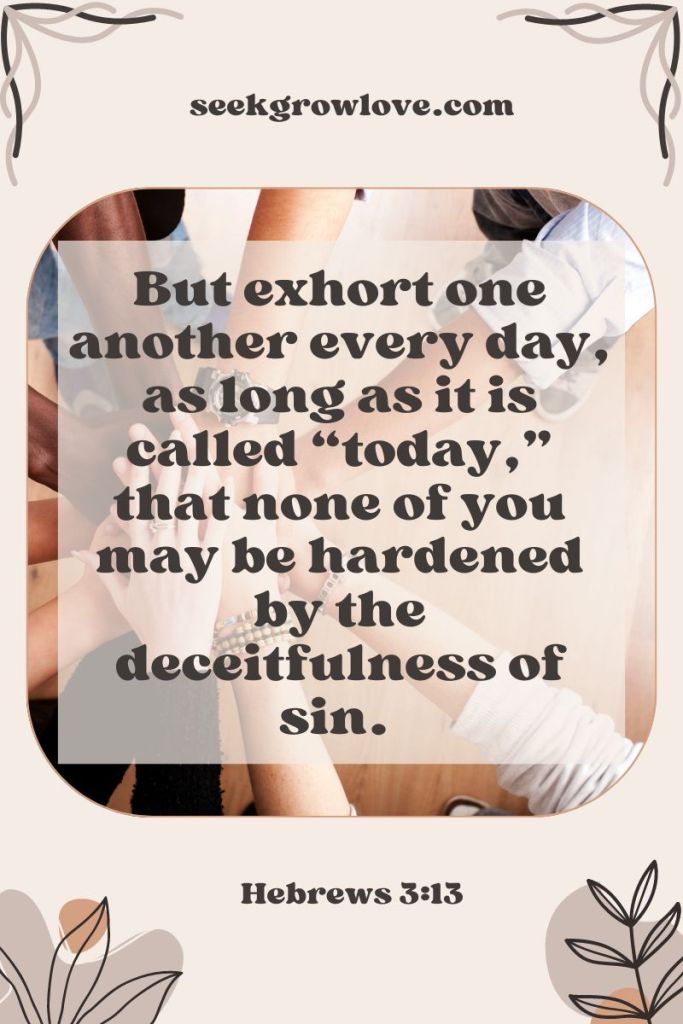
As Hebrews 3:7-8 says, “There as the Holy Spirit says, ‘Today, if you hear his voice, do not harden your hearts as in the rebellion on the day of testing in the wilderness.’ We must take care of the condition of our hearts. If our heart is soft to God’s leading, we will listen in obedience to what he says, and we will do it. However, if our heart is hard, we will be more likely to reject God’s commands.
How do we know the condition of our heart? It’s important to look at our actions. If what we do is lined up to God’s word, then we have a heart to listen to what he says and follow it. I’ve heard it described as a plumb line that we use to measure up our actions. If we are out of line, God’s word will call us out.
What does a hard heart look like? If you notice that your actions are consistently not matching up with godly living as described in the Bible, that is a good indication that you have hardened your heart to his teaching. You are living in rebellion. Those words seem harsh, but they line up with the way that Hebrews describe them. If you consistently read that you should do something but you don’t, you are not living righteously. Just like the notifications on your phone, you swipe out of and never look at or the alarm you press snooze on, you are desensitizing yourself to the effects of sin. You’ve become “an evil, unbelieving heart” that is “hardened by the deceitfulness of sin” (v. 12-13).
We need to encourage each other to pursue a righteous life of obedience. That is what we are called to do.
The book of Isaiah was written by the prophet Isaiah to the southern tribe of Judah at a time when the Assyrian empire threatened Judah’s destruction. The name Isaiah means “the Lord saves”. Isaiah is quoted in the New Testament more than any other Old Testament prophet.
While Isaiah predicted that Judah would eventually be defeated because of their sins; he also predicted a message of hope – the coming messiah (a suffering servant), would come to establish the Kingdom of God on the earth.
Some have suggested that the first 39 chapters of Isaiah focus on doom and gloom, similar to the 39 books of the Old Testament; while the 27 last chapters (40 – 66) of Isaiah focus on hope and restoration, similar to the 27 books of the New Testament.
There are many prophecies in Isaiah about the “last days”, the “Day of the Lord”, the promised messiah (Jesus), God’s suffering servant (also Jesus), conditions in the millennium, and the coming Kingdom of God.
One of my favorite verses is Isaiah 41:10, “So do not fear, for I am with you; do not be dismayed, for I am your God. I will strengthen you and help you; I will uphold you with my righteous right hand.”
–Steve
REFLECTION QUESTIONS
Have you walked through a season of rebellion? What was the outcome?
What is the importance of obedience?
What is the current status of your heart? How do you know?
Hello all! Today we will be covering the first chapter of Hebrews. One of the main purposes of Hebrews was to reassure the Jewish Christians that Jesus is necessary. We see this purpose played out in chapter one, as the author describes the importance and glory of Jesus in chapter one.
To start off the book and chapter, the author compares Jesus to the prophets of the Old Testament. The Jews loved and adored the prophets of the Old Testament, and they viewed their words very sacredly. Therefore, it makes total sense that the author would begin by comparing Jesus to the same prophets that the Jews love. Not only does he compare Jesus to the prophets, but he raises Jesus above the prophets by saying he was “appointed the heir of all things.” The prophets are crucial to both us and the Jews, but Jesus is even more important. Jesus is described as being the “radiance of the glory of God and the exact imprint of his nature.” That’s some pretty high praise. This should begin to reassure the Jewish Christians of the importance and necessity of Jesus Christ.
The author not only compares and raises Jesus above the prophets, but he compares Jesus to the angels as well. In verse 5, the author rhetorically asks “For to which of the angels did God ever say, ‘You are my Son, today I have begotten you’?” The answer to that question is none of them. No angel is God’s son. This verse is detrimental to the Jehovah’s Witnesses because they hold the belief that Jesus is the archangel Michael. We know though that Jesus is the Son of God. Therefore, sorry Jehovah’s Witnesses, but no angel, including the archangel Michael, is God’s son.
We continue along in the chapter, and verse eight reads, “But of the Son he says, ‘Your throne, O God, is forever and ever.” Hold up. Wait a minute. Put a little SAY WHAT?! The Church of God is so strong on the doctrine that God is one, and Jesus is the Son of God, not God the Son. Do we have it wrong though? Upon first look, it appears Jesus is God. Let’s take a deeper look at this then.
First off first, this is quoted from Psalm 45. Psalm 45 is about a king, not God. This isn’t trying to dictate any sign of deity, rather a sign of authority. For surely the Psalm writer of Psalm 45 wasn’t trying to give the king any form of deity. Furthermore, verse nine states, “therefore God, your God, has anointed you.” First, God doesn’t need anointed. If Jesus were God, then he wouldn’t need to be anointed. Second, the king in Psalm 45 that has the word “God” ascribed to him has a God. God can’t have a God. There is no higher being than God. Jesus can’t be God and have a God. Therefore, we can read verses eight and nine, as attributing authority to Jesus, not Jesus actually being God.
Another tidbit to point out, the ESV uses the phrase, “But of the Son he says,” in verse eight. However, a more accurate interpretation of the Greek reads, “with respect to the Son.” This is important in verses 10-12, as those verses aren’t talking about Jesus. It is in respect to the Son, Jesus. Verses 10-12 talk about the magnificence of YHWH. The author of Hebrews does this because in verse thirteen, he quotes Psalm 110:1 (the most quoted Old Testament scripture in the New Testament). By glorifying God in verses 10-12, the author is also glorifying Jesus because Jesus has the sole privilege of sitting at God’s right hand. Jesus is sitting at the right hand of the Creator of the heavens and the earth! That’s a huge privilege to have, and that privilege is held by Jesus and Jesus alone.
The final verse of Hebrews chapter one is quite possibly my favorite. It reads, “Are they (the angels) not all ministering spirits sent out to serve for the sake of those who are to inherit salvation?” The angels are sent out to serve for the sake of those who are to inherit salvation. Uh, hello! That’s us! We are the ones who are to inherit salvation. The angels are sent out to minister to you! Isn’t that awesome?!
The author of Hebrews reassured the Jewish Christians of the importance of Jesus. The author also encouraged them by stating the angels are sent to minister to them! Again, I hope this passage can impact you in the same manner that it would have for the Jewish Christians, “for the word of God is living and active,” (Just a teaser for Thursday’s reading).
In Christian love,
Kyle McClain
Fun fact of the day: the first four verses of Hebrews is one long sentence in Greek. Wow!
(originally posted for SeekGrowLove on February 5, 2018)
Reflection Questions
How many times is the Old Testament quoted in Hebrews 1? What does this tell you about the writer and his purpose?
The writer calls Jesus an exact representation of God. Is a representation ever the same thing as what it is representing?
How would you describe how Jesus is presented in Hebrews 1? What position does he have? Who gave it to him?
Throughout the Bible, the phrases “do not be afraid” and “do not fear” are repeated over and over. This phrase is first used in Genesis 15:1, which says, “After these things the word of the Lord came to Abram in a vision, saying, ‘Do not fear, Abram, I am a shield to you; Your reward shall be very great.’” The last time the Bible says this is in Revelation 2:10, which says, “Do not fear what you are about to suffer. Behold, the devil is about to cast some of you into prison, so that you will be tested, and you will have tribulation for ten days. Be faithful until death, and I will give you the crown of life.”
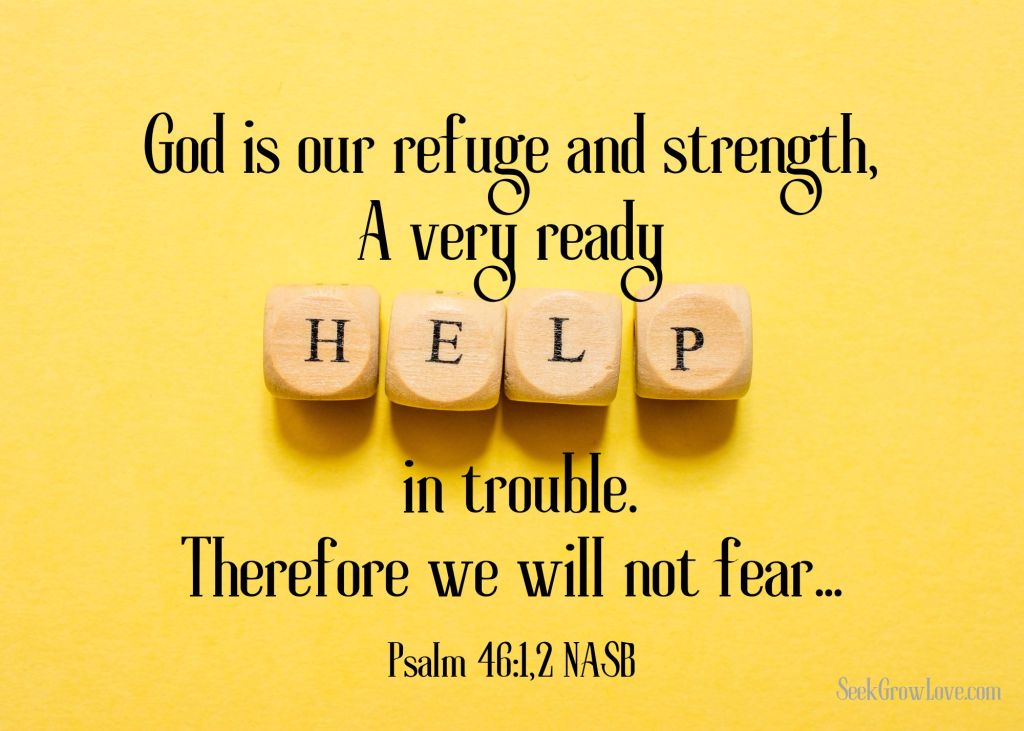
In Psalm 46, we are given the reason why we should not fear. Verse 1 says, “God is our refuge and strength, A very present help in trouble.” Psalm 46 says this is the reason we will not fear. When God is our refuge and strength, nothing can defeat us. As nothing is stronger than God, when our strength is God, nothing can overpower us. Therefore, we should not fear anything. Verses 2-3 continue to tell us that there is no reason to fear, even if the earth should change, the mountains fall into the sea, the oceans roar, and/or the mountains shake.
Further on in the psalm, it says, “The Lord of hosts is with us; The God of Jacob is our stronghold. Selah. Come, behold the works of the Lord, Who has wrought desolations in the earth. He makes wars to cease to the end of the earth; He breaks the bow and cuts the spear in two; He burns the chariots with fire.” If you didn’t have enough reason to not fear from verse 1, these 3 verses give you even more reasons. The God who is our stronghold has brought about desolations on the earth against those who have opposed Him. He has stopped wars and defeated men and their weapons over and over again. Therefore, there is no longer any reason to fear. We need to trust in God as our refuge, strength, and stronghold.
-Kaitlyn Hamilton
Reflection Questions
What are your top five fears?
How often does fear interfere with what you think God wants you to be doing or thinking?
It’s easy to say, “Do not fear.” But harder to do. What are some practical daily steps you can take to help your brain overcome fear?
How is God greater than all the things we fear?
Introduction to Philemon
The book of Philemon is Paul’s shortest letter that is included in our Bible. Paul wrote it while in prison to his dear friend and fellow Christian, Philemon.
Philemon’s slave, Onesimus, had run away, had come to Paul, and had helped Paul while he was in chains for the gospel. While there, Onesimus became a believer. This book is Paul’s letter to Philemon urging him to accept Onesimus back, not as a slave, but as a dear brother in Christ; asking that Philemon welcome Onesimus “as you would welcome me.”
This book shows Paul’s mastery of persuasion. He started by praising Philemon, then laid out a logical argument for kindly accepting Onesimus back, followed by an emotional argument. Ending with “Prepare a guest room for me, because I hope to be restored to you in answer to your prayers.” Not only was Paul an amazing missionary, he was a master strategist.
There is an expression about starting a family that has passed down from one generation to the next that goes something like this: “If you wait to start having children until you’re ready, you will never have them.” There is much truth in this. While you can prepare for being a parent by accumulating wealth, knowledge, and supplies, no one can really be prepared to take care of a tiny, fragile human 24 hours a day without on-the-job training. Being that my wife and I’s first experience of inexperience was with twins, we felt conservatively confident that we could manage it when we found out child three was going to be a singleton birth. However, I wasn’t ready for what would happen prior to Violet being born.
As I mentioned in the first blog in this series, my health spiraled out of control a couple months ago, which culminated in a scary visit to the ER. Out of all the doubts and worries that penetrated my mind, I wondered how I would be an effective father when my heart was beating rapidly and I couldn’t catch my breath putting my children in their car seats. God, why now? My Heavenly Father and I talked a lot about it, and He gave me peace in my restlessness. How I see it now. He placed me there to deliver me. He broke me then to prepare me for my present. He worked through the people around me to heal me for my growing family. His timing is always perfect, and I wish I always saw it this clearly.
“I waited patiently for the Lord; he turned to me and heard my cry. He put a new song in my mouth, a hymn of praise to our God.” – Psalm 40:1,3
Throughout the course of this week, we have focused on Trusting God’s plan. He will most certainly take us where we need to go to align our steps closer to His. It is possible we need to spend time in the desert to clearly focus on what God is calling us to. Sometimes, we need a season of mourning to remember His promise of the life to come. It could be that we need our possessions removed to see every good and perfect gift. God makes it clear He will deliver us, but He sets the schedule. He does not hang healing over our heads so we learn a lesson. He helps us to see Him more clearly, and He uses both our struggle and restoration as a testimony to Him. The words of Job ring true with this when he states, “I know that my Redeemer lives, and that in the end He will stand on the earth. Yet in my flesh I will see God.” (Job 19:25-27) While this speaks of a promise to come, literal restored men and women being with their God, we can also see God as He works in us in the seasons of feast and famine.
“‘Woman, why are you crying? Who is it you are looking for?’… Jesus said to her, ‘Mary.’ She turned toward him and cried out in Aramaic, ‘Rabboni!'” – John 20: 11, 16
God has promised to hear our cry, so why are we bemoaning? Why are we crying? We don’t grieve like those who have no hope. There is nothing that can be taken away that God cannot restore one-hundred-fold. Our Rabboni, Jesus Christ, is the firstfruits, and we will be restored like Him at the hour the Father has set. We cannot accumulate enough wealth, knowledge, or supplies to be prepared for every downfall or pitfall set before us, but in our dire circumstances, we can wait on the Lord for He will renew our strength in his perfect time.
-Aaron Winner
Reflection Questions
As part of your personal testimony, can you tell of a time God has used both your struggle and your restoration to draw you closer to Him?
What does waiting patiently on the Lord look and sound like?
From God’s word and/or from your own life, what have you learned about God’s timing?
What has God shown you about Himself in your Bible reading today?
Whether it is my teenagers at school or my three-agers at home, much of my day is filled with offering corrections for behavior. I have often wondered how many times I say “no” within the course of 24 hours. As both a teacher and a father, I know that the guidance that I offer is constructive and for the benefit of my children, but rarely is it received with thanks. I get it. When I am offered criticism, even more so when it is justified, I am defensive. If I would put the same effort in my adjustment as I did my defense, I would find myself rapidly growing professionally, personally, and spiritually. For every one of us, we should be glad of just criticism with good intentions because someone has decided to improve us instead of letting us remain as we once were.
“Though He slay me, I will hope in Him. Nevertheless I will argue my ways before Him. This also will be my salvation, For a godless person cannot come before His presence.” Job 13:15-16
More than anyone else, our Heavenly Father is interested in improving the quality of our life we have now to prepare us for the life to come. When we are in a rut, He doesn’t let us lay in the muck and the mire. Our God is actively working on our hearts, imploring us to read His Holy Word or listen to His people speaking truth into our lives. Either one of these can be a tough pill to swallow. According to Hebrew chapter 4, the Word of God is a two-edged sword that cuts deeps, separating the bone and marrow. It isn’t merely a flesh wound, but a fatal strike against our spirit of selfishness in order to die, so Christ may live in us. (Gal 2:20)
“They are not of the world, even as I am not of it. Sanctify them by the truth; your word is truth. As you sent me into the world, I have sent them into the world. For them I sanctify myself, that they too may be truly sanctified.” – John 17:16-19
But are we glad for this guidance? Are we asking for these amendments to be placed into our lives? Maybe this is where we need to change our prideful spirit in order to trust in God’s plan and walk closer to Him. This means letting go of our justifications for the negligence and sin we continue to carry in our lives. If you really are putting your hope in God Almighty, let Him slay your heart. He is beckoning you to forgive your neighbor. He is challenging you to share the Gospel with your friends. He is calling you to set aside your ambition and choose church. He is imploring you to seek help for addiction. He is challenging your will and way, so He can help you live your life more abundantly.
“Take delight in the Lord, and he will give you the desires of your heart. Commit your way to the Lord; trust in him and he will do this: He will make your righteous reward shine like the dawn, your vindication like the noonday sun.” Psalm 37:4-6
The desires of our heart are on the other side of God’s guidance. To delight in God is to live the life He is setting before you. Trust the process because the Lord will give you gains like no other. He will vindicate and exonerate those who choose Jesus Christ, His Son, above anything else. Rejoice and be glad that our Heavenly Father is offering direction to help each one of us stay on His straight and narrow way that leads to the coming Kingdom.
-Aaron Winner
Reflection Questions
What is your typical response to constructive criticism or guidance? Is your response sometimes prompted by selfishness or pride rather than truth?
What do you think of Aaron’s statement: “More than anyone else, our Heavenly Father is interested in improving the quality of our life we have now to prepare us for the life to come”?
How can you better seek God’s guidance, receiving it with gladness and acting upon it?
It is not unusual for me to carry around a Ziploc bag full of fruits and vegetables as I meander across the cafeteria crunching through school lunch. A few years ago, I made changes for the sake of my health, improving my diet and exercising regularly. I dropped some weight, I felt better, and I was healthier in my late 30s than in the whole of my 20s. I had finally mastered my body once and for all; however, this control was an illusion.
Early this summer I experienced significant changes to my health. My heart was beating out of control. I went from marathon running to huffing and puffing up the short flight of stairs at my house. I was sweaty, panicked, and dropping pounds no matter what I ate. I was heading, as I now know, full-throttle into a thyroid storm and quickly losing the gains that I had worked so hard to maintain. It was then I was given this sobering reminder: I’m not in control; not even a little bit.
Throughout the course of this week, my goal is to focus on trusting God’s plan. The rain equally falls on the just and the unjust, but we often fix our gaze on our wet shoes in the puddles and mud. This is where we find Job in Chapter 7. He ponders the calamities that befall him, and even torment him in his sleep. He is looking for a reason that God has placed him in this circumstance and even “targeted” him (v.20), removing his wealth, health, and happiness. In what looks like an ironic spin of Psalm 8, Job asks “What is mankind, that you make so much of them? That you give them so much attention?” It is a fair question. Why would God place so much attention on my life, seemingly ruining it, especially when I have put in so much time, effort, and energy into making something good?
We find our focus in the lens of eternity. When we surrender our lives to Christ, our possessions, our status, our health, and the whole of our lives are assets of the Gospel message. There is profound peace in the perfect plan of our Heavenly Father, but it requires us to relax the white knuckle grip we have over the course of our life. We must surrender in faith, fully trusting that our storm, our season, our suffering is for the glory of God. Psalm 34 states when we seek the Lord, our fears are quelled (v. 4) and in His time, he will deliver us (v. 6, 17, 19, & 22). While it is hard not to let our hearts be troubled (John 14:1), God is still good in our struggle, and for many of us, more present to taste and see it, when we are broken, poor, ill, hungry, or in peril.
When things seem out of control, we have to realize they were never in our hands. Thinking we have the power to redeem or fix our struggle alone means we are intoxicated with our own glory, one that will ultimately fail. Conversely, if we hand our lives over to Christ, declaring our lives are forfeit for His glory in faith, God will use us in a way that will infinitely diminish what we can accomplish by ourselves. Thank God, I am not in control, and His perfect will can redeem us all.
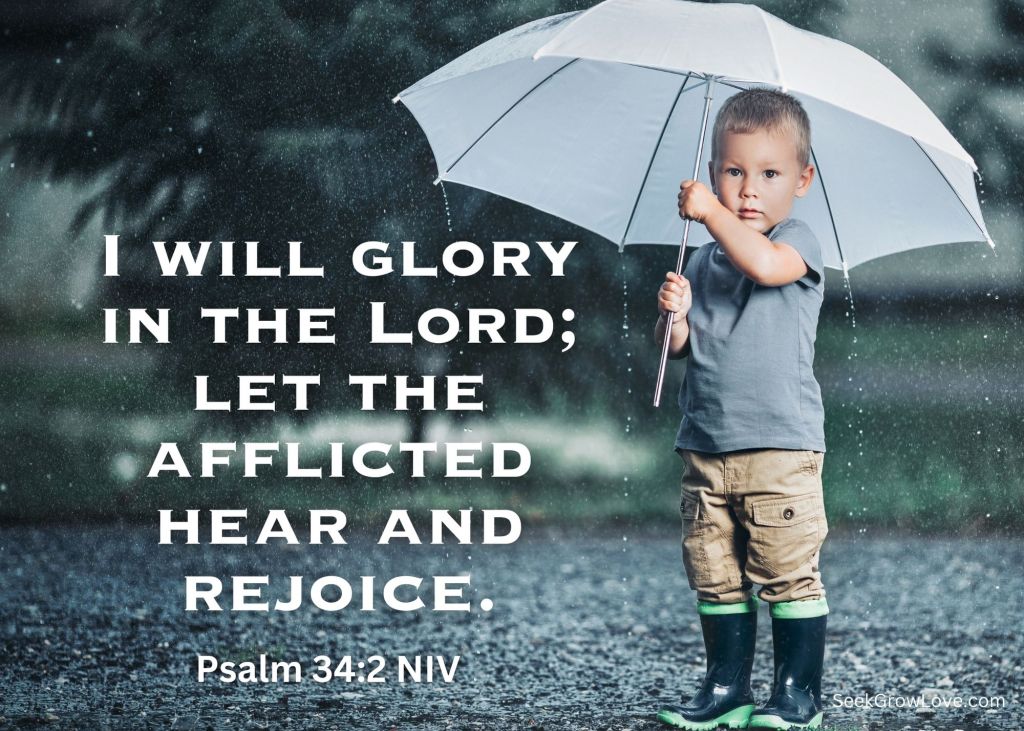
“I will extol the Lord at all times; his praise will always be on my lips. I will glory in the Lord; let the afflicted hear and rejoice.” – Psalm 34:1-2
-Aaron Winner
Reflection Questions
What do you think and feel when you hear you are not in control?
What evidence do you have to prove you are, or are not, in control?
How can you bring glory to God, even if your feet are in (or have been in) a muddy puddle?
Today we again check in on the history of the ancient kings, with 2 Chronicles 11-13. The twelve tribes of Israel were just split into two nations, confusingly known as Israel (to the north) and Judah (to the south). Civil war would have broken out but God sent a message: “You shall not go up or fight against your relatives; return every man to his house, for this thing is from Me.” (11:4). It is good that the Lord prevented bloodshed in this case, and that the people were prepared to listen, but it could almost be seen as comical: ‘don’t fight, chalk this one up to me and just draw a new border.’
King Rehoboam of Judah didn’t assume peace would last, he began preparing fortresses and weapons. It did him no good at all because he prepared physically, and not spiritually. “When the kingdom of Rehoboam was established and strong, he and all Israel with him forsook the law of the Lord.” (12:1). Just five years into his reign he lost his grip on what really mattered – his relationship with God. He barely restored the connection in time, humbling himself before God when Shishak of Egypt and his allies attacked. Still, they took “everything” from God’s own temple treasuries, and those of the palace (9).
Rehoboam should have spent more time reading the copy of the Law which, as the king, he was supposed to be guided by (Deuteronomy 17:14-20). That book lists a whole series of curses that God promised to bring on the nation if it abandoned Him, and He worked through them over the years. But God accepted Rehoboam’s humility, and He held back from further destruction in his lifetime (1 Chronicles 12:10-12). The books of kings show that only a quarter of the kings of Judah were viewed with favor by God, so you might consider that the nation just limped along.
In comparison none of the northern leaders had God’s favor, though we hear less about them in the Chronicles than in the books of the kings. We do read here that the Levites left for the south when it became clear that King Jeroboam of Israel had no interest in proper worship of God. That choice was folly on his part, of course. He feared that if the people worshipped at the Jerusalem Temple they would be influenced toward loyalty to Judah’s king while they visited there, so he provided golden idols for the people to worship in his territory (1 Kings 12:26-33). But that meant severing them from true worship, their history, and any hope for righteousness.
We do see signs for hope in these chapters. God acts to defend the people, and He guides them. Those from out of all the tribes who wanted to worship God gathered into the southern kingdom (11:16-17), where the Temple was, which provided a faithful remnant of the nation. During most of its history the city of David may have been only a shadow of what it was intended to be, but it was at least a rallying symbol for the people – the covenant with David had been made and it would be fulfilled, no matter how far from it any individual king might be.
We can imagine a better history, one where Solomon did not allow the nation to go into idolatry, and the nation was not split in two (1 Kings 11:29-39). Or where Jeroboam remembered the terms under which God gave him the kingdom of Israel, and he did not abandon the worship of God. I could keep giving suggestions, but is there much point in reimagining the Bible with Israel ruled by people who followed God perfectly? Wouldn’t that mean it was the kingdom we are waiting for? Solomon understood better than that when he prayed at the dedication of the Temple: “When [your people] sin against You (for there is no man who does not sin) . . . if they return to You with all their heart and with all their soul . . .then hear from heaven, from Your dwelling place, their prayer and supplications, and maintain their cause and forgive Your people who have sinned against You.” (2 Chronicles 6:36, 38, 39). We all sin, and we need to have a way back to God. That’s why God kept offering us systems that provide them.
Lord, thank you for allowing your power and your mercy to be shown to us in so many accounts of the history of your people in the Bible. I am glad to be able to learn from their experiences, though I am also glad I have not needed to wrestle with some of the choices they had to make. Please help us to view these events with wisdom, to compare passages carefully to gain from the connections that exist among them, and let our memories serve us well when it is fruitful to draw on what we have learned. And I thank you, Lord, that one day we will see the perfect version of what was hinted at in these texts, a Temple that cannot be attacked by armies, a King who will never deny you, a nation undivided and fully committed to your will. Until that day, let me serve you in the world I have. Amen.
-Daniel Smead
Reflection Questions
Do you think Rehoboam replaced the golden shields of Solomon with bronze ones so it would look like he still had that great wealth, or to remind himself of the wealth he had lost, and the humility he needed to maintain (2 Chronicles 9:15-16; 12:9-11)? In what ways can we develop our humility to help ourselves have a good relationship with God?
Deuteronomy 17:17 said that Hebrew kings were not to have many wives. What changes do you think it would have made if the kings had followed that rule? Why do you think they may have thought it unimportant to follow that rule? Are there things you think God wants you to do but which you have decided not to do, for now, or for reasons you think are good enough?
If you intended to fight a battle, do you think the spiritual or the physical is the more important area to prepare? Do you apply that to all areas of your life?
1 & 2 Timothy Introduction
Paul wrote First and Second Timothy to Timothy, Paul’s “true son in the faith”.
In 1 Timothy, Paul wrote to warn Timothy against false teachers in Ephesus – where Timothy was serving. Paul gave many instructions for running a church, including rules and actions for overseers and deacons, even those who shouldn’t teach or have authority. Paul also stressed the importance of holy living.
Paul wrote 2 Timothy while Paul was in prison awaiting execution. This was his farewell letter in which he also asked Timothy to come quickly to visit. Paul tried to encourage Timothy to live a holy life and remain faithful despite persecution. He strongly stressed living a holy life and gave warnings about godlessness in the last days.
Here are some well-known passages in 1 and 2 Timothy:
1 Tim 2:5 “For there is one God and one mediator between God and men, the man Christ Jesus”
1 Tim 4:8 “For physical training has some value, but godliness has value for all things, holding promise for both the present life and the life to come.”
1 Tim 4:12 “Don’t let anyone look down on you because you are young, but set an example for the believers in speech, in life, in love, in faith, and in purity.”
1 Tim 4:16 “Watch your life and doctrine closely. Persevere in them, because if you do, you will save both yourself and your hearers.”
1 Tim 5:6-7 “But godliness with contentment is great gain. For we brought nothing into the world, and we can take nothing out of it.”
1 Tim 6:10 “For the love of money is the root of all kinds of evil. Some people, eager for money, have wandered from the faith and have pierced themselves with many griefs.”
2 Tim 1:12 “…I know whom I have believed, and am convinced that he is able to guard what I have entrusted to him for that day.”
2 Tim 2:2 “And the things you have heard me say in the presence of many witnesses entrust to reliable men who will also be qualified to teach others.”
2 Tim 2:15 “Do your best to present yourself to God as one approved, a workman who does not need to be ashamed and who correctly handles the word of truth.
2 Tim 3:16-17 “All scripture is God-breathed and is useful for teaching, rebuking, correcting and training in righteousness, so that the man of God may be thoroughly equipped for every good work.”
2 Tim 4:2-3 “Preach the Word; be prepared in season and out of season; correct, rebuke and encourage – with great patience and careful instruction. For the time will come when men will not put up with sound doctrine. Instead, to suit their own desires, they will gather around them a great number of teachers to say what their itching ears want to hear.”
I hope to eventually be able to say, like Paul did in 2 Tim 4:7-8, “I have fought the good fight, I have finished the race, I have kept the faith. Now there is in store for me the crown of righteousness, which the Lord, the righteous Judge, will award to me on that day – and not only to me, but also to all who have longed for his appearing.” I hope you will be able to say this too.
Last year, the young adults at my church went through an in-depth study of the gospel. We discussed what the gospel is and why it is so important to be able to “give an answer for the hope that you have” (1 Peter 3:15). What is your understanding of the gospel? Go ahead a pause for a minute and try to sum up what you think the gospel is in a few sentences.
It’s important to be able to quickly and succinctly sum up what the gospel is. Yes, we can go deeper in our theology. Some things about our Christian walk take a whole life time of wisdom to be able to truly understand. However, when it comes to the basic building blocks of our faith, we need to have an answer for it. We need to understand what we believe. This is the first step towards spiritual maturity.
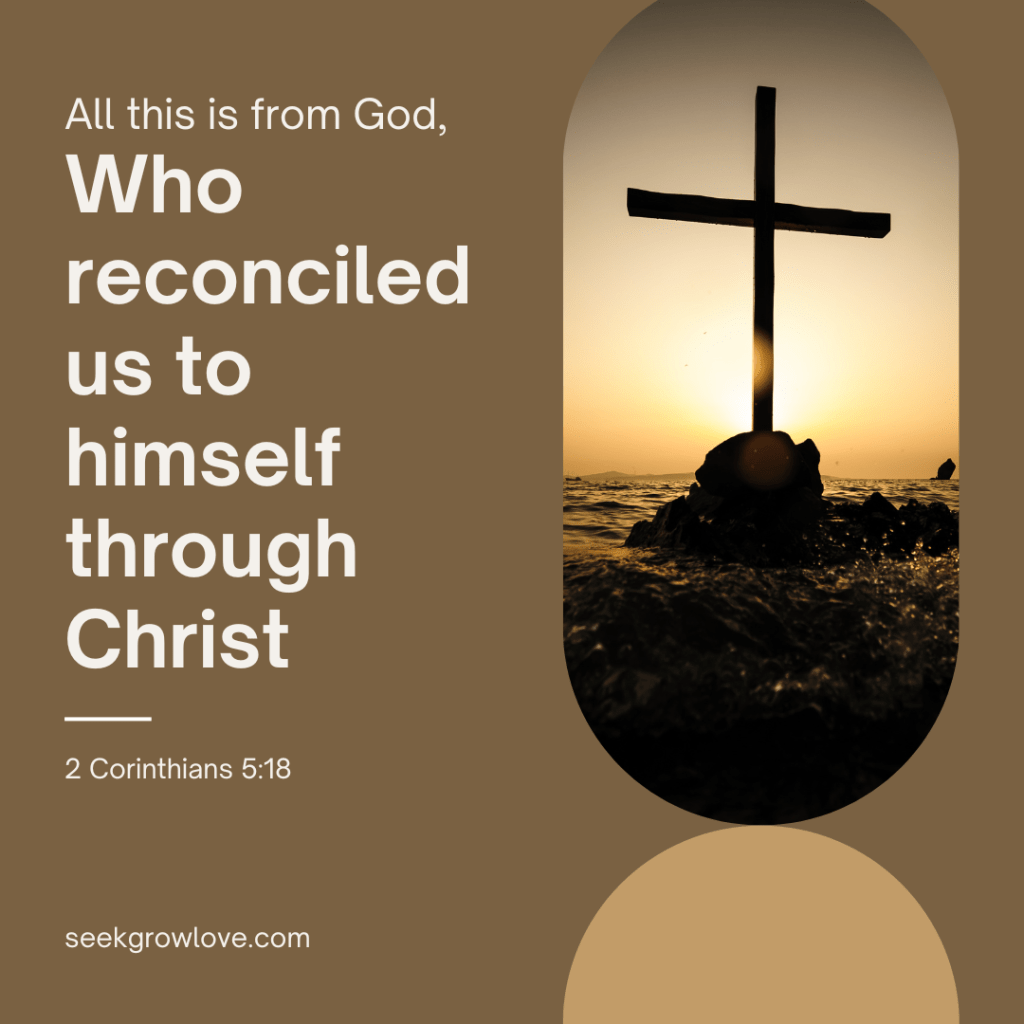
In today’s reading, Paul begins his letter to the Colossian church. He give thanks to God for the people in the church and then describes to them why Christ should be so highly esteemed. This passage is a good go-to passage for understanding what the gospel is. Paul begins in Colossians 1:18-20, “And [Jesus] is the head of the body, the church. He is the beginning, the firstborn from the dead, that in everything he might be preeminent. For in him all the fullness of God was please to dwell, and through him to reconcile to himself all things, whether on earth or in heaven, making peace by the blood of his cross.” The gospel, or good news, is the reconciling of us to God through the blood of Jesus. Jesus’ sacrifice made peace between God and man. Not only that, the gospel also points to our hope. Jesus was the firstborn from the dead. His resurrection is proof and assurance of our future resurrection.
Paul goes on to describe how the gospel changes us in verses 21-22. He says, “And you, who once were alienated and hostile in mind, doing evil deeds, he has now reconciled in his body of flesh by his death, in order to present you holy and blameless and above reproach before him.” When we were not reconciled, we lived doing evil deeds. We were in darkness. Because we have been justified before God, we also can be sanctified. This is the process of being made holy, blameless, and above reproach before God. We are learning how to be made righteous, be made perfect. This is a process that takes a lifetime. The gospel changes everything about us, maybe not right away – but instead through consistently trying to live for God in the best way we can.
This is why it is so important to understand the gospel and be committed to living for God throughout our life. We will be sanctified “if indeed [we] continue in the fath, stable and steadfast, not shifting from the hope of the gospel that [we] heard” (v. 23). Hold fast to the one who saves!
I love a good adventure story. One of my favorites is The Lord of the Rings (the original series of course). The movies came out when I was young, and I loved the epic battle between good and evil that they portrayed. One of my favorite parts is in the second movie during the Battle of Helm’s Deep. For those of you who aren’t familiar with this scene, let me paint the picture for you. The people were terrified as they were locked away in a fortress that was described as impenetrable. However, the defenses were failing as a massive army of mindless monsters had lined up before the fortress with the sole purpose of annihilating everyone within them. The people inside felt hopeless. They had sent the women and children to hide in caves. The men were putting on armor, knowing that the outcome of the war was a seemingly hopeless situation, that the fight they were putting up was futile, symbolic. They would not back down.
I imagine that the people in Helm’s deep would empathize with the Psalm we read today. David, who was also on the run from his enemies, faced imminent danger. Because of Saul’s jealousy, he was out to kill David. In Saul’s mind, David was a threat to his throne, and that threat must be taken care of even though David had been nothing but respectful of Saul’s authority throughout his life. David knew what it was like to be in a seemingly hopeless situation. He explains in Psalm 140:1-3, “Deliver me, O LORD, from evil men; preserve me from violent men, who plan evil things in their heart and stir up wars continually. They make their tongue sharp as a serpent’s, and under their lips is the venom of asps.” David was pursued by evil men and felt like he was almost in their clutches. Without God, his situation would have been hopeless.
In the battle of Helm’s Deep, the people were saved after the third day when Gandalf returned with another army that was able to defeat the army of the enemies. This is an obvious allusion to our ultimate hope that J.R.R. Tolkien, a Christian, included in his book. David also points to this hope in Psalm 140 when he says in verse 12-13, “I know the LORD will maintain the cause of the afflicted and will execute justice for the needy. Surely the righteous shall give thanks to your name; the upright shall dwell in your presence.” Though David’s situation was difficult and dangerous, he knew that there was hope in his situation that seemed hopeless. His hope was God, and he knew that God would come to his aid.
God has also come to our aid through his son. Jesus is the light at the third day coming to defeat the forces of darkness in the world. The genealogies of 1 Chronicles point to this perfect salvation, the son of David. He is “the true light, which gives light to everyone” (John 1:9). This “light shines in the darkness, and the darkness has not overcome it” (John 1:5).
When we face down our enemies, when we feel like we are in a seemingly hopeless situation, we can remember of the light, the hope, that we have in Jesus. He has already saved us.
~ Cayce Fletcher
Reflection Questions:
Are there areas of your life that feel hopeless? How does this Psalm give encouragement to you?
Now that we are not fighting physical battles as frequently as in David’s time, some of the Psalms can seem a little archaic. Who are our enemies now? How do we fight against them?
Why do you think that 1 Chronicles begins with a focus on genealogies? How does knowing your history help you live well today?
Colossians Introduction
Paul, possibly with the help of Timothy, wrote the book of Colossians to the church at Colossi while in prison in Rome. He had never been to Colossi when he wrote the letter to them.
Paul wrote this letter warning the Colossians about doctrinal errors in 2:8, “See to it that no one takes you captive through hollow and deceptive philosophy, which depends on human tradition and the basic principles of this world rather than on Christ.” This sounds like particularly good advice to us today.
Paul highlighted the importance of living a holy life. 3:1-6 is just a sampling, “Since, then, you have been raised with Christ, set your hearts on things above, where Christ is, seated at the right hand of God. Set your minds on things above, not on earthly things. For you died, and your life is now hidden with Christ in God.When Christ, who is your life, appears, then you also will appear with him in glory. Put to death, therefore, whatever belongs to your earthly nature: sexual immorality, impurity, lust, evil desires and greed, which is idolatry.Because of these, the wrath of God is coming.”
I’ll close with Paul’s advice as recorded in 3:23-25, “Whatever you do, work at it with all your heart, as working for the Lord, not for human masters,since you know that you will receive an inheritance from the Lord as a reward. It is the Lord Christ you are serving. Anyone who does wrong will be repaid for their wrongs, and there is no favoritism.”






 Seek Grow Love