The Voice of Wisdom

Proverbs 7-9

Do you ever find yourself looking at someone else’s situation or decisions and think, “I would have done that completely differently”? Of course you have. We all have. The world is full of armchair quarterbacks and side seat drivers. It’s so much easier to look at someone else’s situation and evaluate it as an outsider without the pressures of personal consequence. 

In the heat of the moment, standing at our own crossroads, however, we get wrapped up in the “what ifs” and the worries about whether or not we are making huge mistakes. So how do you know when you’re doing something wise or foolish? 

Chapters 7 and 8 of Proverbs personify danger/foolishness and wisdom as two women. The first woman is the strange or adulterous woman, luring in a simple youth. She uses “smooth talk” and “persuasive words” to seduce him. I feel it’s worthy to note that sexual sin is being used in this personification, probably because it’s the most common and most dangerous. And her opposite is wisdom, who doesn’t use tricks or wordplay, but speaks plainly. She promises no shortcuts, but offers instruction, knowledge, and truth. 

Both women have some similarities though. They are both crying out to those around them, trying to persuade others to follow them. They are both offering up benefits to listening to their words. So how do we know which to listen to? 

It seems obvious when we read the chapters, right? It’s less obvious in our own realities, though. Less obvious, but it’s still possible to make the correct choice. As in all decisions, we should test our options against scripture. If you want to know if your actions are wise or dangerous, test them against God’s word. Discernment, the ability to judge well, is a skill that everyone can, and should, develop through practice. The more we know of God’s word, the better equipped we will be to look at the paths before us and choose the wise one, the one that aligns best with scripture. 

When wisdom calls out to you, don’t you want to be familiar with her voice? 

My prayer for you is that you become so familiar with the voice of wisdom, the words of God, that you are not easily fooled or led astray. I hope you will love instruction so that you will continue to grow in wisdom and righteousness. I pray that you find the benefits of wisdom listed in chapter 9: “For through wisdom your days will be many, and years will be added to your life. If you are wise, your wisdom will reward you.”

-Jenn Haynes

Reflection Questions: 

What decisions do you face right now? Have you placed your options up against scripture? 

How is your scripture study? In what ways can you make yourself more familiar with God’s word, and the voice of wisdom, so that you can easily recognize it?

Are there any voices of temptation in your life right now that are trying to call out to you? Take a moment to honestly analyze and reflect. Often we want to shy away from facing the hard truth that there are likely things in our lives that we enjoy but that we should give up because they are unwise. Does that hold true for you? 

My Hope is in His Word

Psalm 119:89-176

I don’t think that any child would say that they love rules. And yet, they subconsciously crave them. Rules from a loving parent show a child that someone loves them enough to guide them. Structure makes them feel reassured and gives a sense of stability. Without those directions and guidelines, children become stressed and tend to feel out of their depth. 

Even as an adult, I like to have rules and guidelines that make logical sense. Structure eases my mental burden because it removes some of the many options that exist. In fact, research says that too many decisions and too many options are harmful to our mental health and can lead to mental fatigue and anxiety, causing us to either avoid making decisions or make harmful decisions that don’t align with our life goals. 

If I know that by following wise guidelines I will avoid many mistakes, my mind and soul feel more at ease. How blessed are we, then, that we have a loving father who cares so much about us that he has set boundaries for his children to keep us safe? 

The author of Psalm 119 clearly knows the value of God’s laws. His gratitude to God for providing wisdom and guidance is clear. When I first read through this passage my initial thought was, “How can someone go on this long about laws and rules!?” But the truth is that these verses aren’t proclaiming the glory of guidelines. They are testifying to the everlasting love God has for us.

We live in a sinful world that is full of deceit, pitfalls, and endless opportunities for mistakes. But Psalm 119:113-114 offers reassurance that though the world is wicked, our God loves us so much that he has provided all of the guidance we need to navigate life. 

“I hate double-minded people, but I love your law. You are my refuge and my shield; I have put my hope in your word.”

What a beautiful reminder to bury ourselves in God’s commands. I pray that you find love, peace, and reassurance in his words written for you. 

-Jenn Haynes

Reflection Questions

What are some decisions you are facing right now? What would God advise? 

Many people find rules restricting. How do you feel about some of God’s rules for you? If you find them restricting, do some reflection to find out why. Is what God wants for you clashing with what you want? 

Take some time to thank God for some specific rules he has set forth for you that you have found helpful. Revel in his love for you! 

My Delight

OLD TESTAMENT: Jeremiah 49-50

POETRY: Psalm 119:89-96

NEW TESTAMENT: Revelation 5

We see that God has founded the earth and established himself on it. God’s reign will not perish, and His words won’t be changed. The Psalm says “Forever, O LORD, your word is firmly fixed in the heavens.” (Psalm 119: 89 ESV). This is something that is easy to forget as we live our busy lives. He made the earth, and he is still here, performing works all the time. He has given us the ability through prayer to connect with him and access his presence. 

In verse ninety one the psalmist writes “By your appointment they stand this day for all things are your servants.” As God’s creation, we are made to love God and follow his commandments just as a son should love and obey his father. As the scriptures later reveal through Jesus, our lives should be a constant act of servitude towards God. The Psalmist wants to bring glory to God through the obedience of the law. We should conform our lives to God’s will by following His commandments.

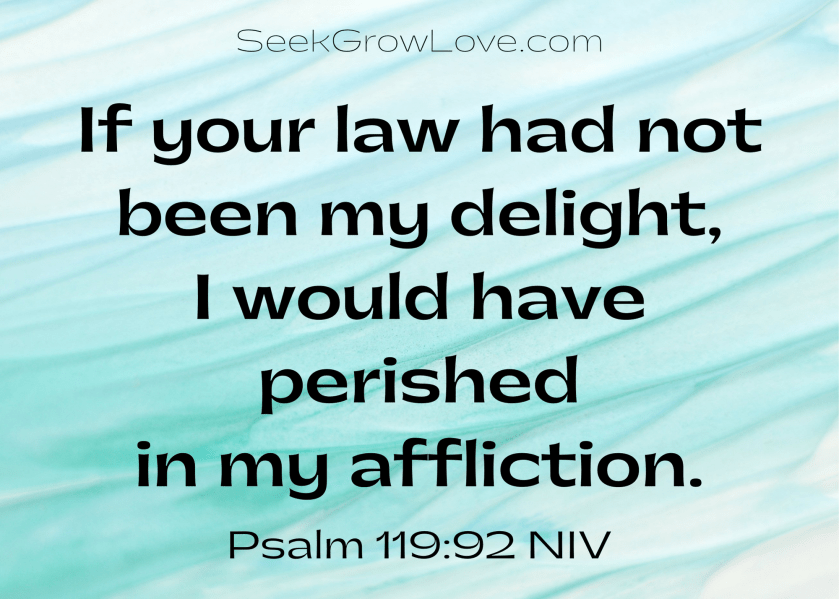
“If your law had not been my delight, I would have perished in my affliction”(Psalm 119:92 ESV) He made laws and commandments not out of selfish reasoning to show his dominion over us but for our good. Just as a parent tells their child not to touch the stove when it is hot, God likewise gave his people commandments to protect them. It is not hard to see in modern culture what it looks like when we mess up. Living our lives selfishly, not following God’s Law. The world stays in turmoil with great nations constantly at war, families being divided, and sin taking over. It Has been like this since The Fall in Genesis 3. If we follow God’s word, he will bless us and be with us.

-Bridger Grable

Hi, my name is Bridger Grable. I am 19 years old and live in Southern California. I have 8 siblings so it’s always a party at my house. I love hiking and the outdoors.

Reflection Questions

  1. How can you keep in mind today that God and His word are firmly fixed in the heavens? What can happen when we forget this?
  2. How can you bring glory to God through obeying His Word today?
  3. Is God’s law your delight? Explain what that does (or would) look like? What afflictions can you handle better when His law is your delight?

No Words

Like God’s Words

Psalm 19

Thursday, July 7, 2022

Have you ever heard the phrase, “There are no words?”  Perhaps you used it in response to receiving a wonderful gift, when you couldn’t find the appropriate words to express your appreciation.  Conversely, maybe something tragic has happened, your heart is broken, and “there are no words” to express the magnitude of your grief. 

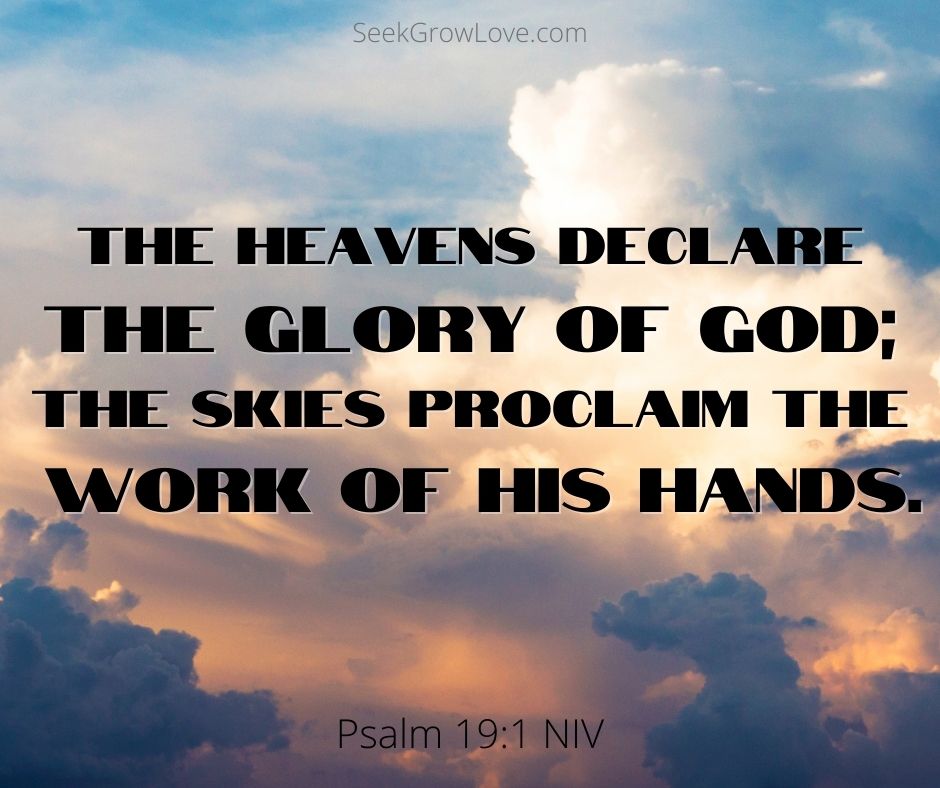
In verses 1-6 of Psalm 19, God reveals Himself in the glorious heavens and celestial bodies.  God’s greatness is proclaimed without a single sound—“NO WORDS.”  The amazing beauty of the skies—unique cloud formations, streaming sun escaping the clouds, indescribable sunrises and sunsets, breathtaking rainbows—boldly declare the majesty of God each day.  Searching for God?  Go outside and look up.  “There are no words.”

BUT, if you NEED words to find God, the second part of Psalm 19 is your answer.  In Psalm 19, God reveals Himself first in nature, (verses 1-6) and then in the Scriptures.  Verses 7-11 give us a perfect progression of what God’s Word, HIS WORDS, can do in our lives. 

“The law of the Lord is perfect, converting the soul.”  (7a) God’s Word gives us everything necessary for salvation.  His law, his commandments, revealed God’s holiness and our sin.  Paul wrote in Romans 10:4, “For Christ is the end of the law for righteousness to everyone who believes.”

“The testimony of the law is sure, (steadfast, trustworthy), making wise the simple.” (7b)  We can put our trust in God’s testimony—it will hold us up.  The “simple” are those open-minded to instruction.  James 1:5 says, “If any of you lacks wisdom let him ask of God, who gives to all men generously, and without reproach, and it will be given him.” 

“The statutes (precepts) of the law are right, rejoicing the heart.”  (8a) God’s Word is just and righteous.  As we understand more and grow in wisdom of God through His Word, it brings joy and gratitude.  Consider Hezekiah, king of Judah, who honored God by repairing the house of the Lord and called the people to consecrate themselves and gather to worship.  Greater understanding produced tremendous joy in the people.  II Chronicles 30: 21, 23 says, “The sons of Israel present in Jerusalem celebrated the Feast of Unleavened Bread for seven days with great joy, and the Levites and the priests were praising the Lord day after day with loud instruments to the Lord.  Then the whole assembly decided to celebrate the feast another seven days, so they celebrated the seven days with joy.”

“The commandment of the Lord is pure, enlightening the eyes.”  (8b) Purity of God’s Word gives us new vision for this life and the one to come.  Matt. 5:8 says, “Blessed are the pure in heart, for they shall see God.”  And consider Ephesians 5:8, “for you were once darkness, but now you are light in the Lord; walk as children of light.” 

“The fear of the Lord is clean, enduring forever.” (9a) Why is the Word of God called “the fear of the Lord?”  When God reveals His will, it is awesome!  God’s will is fearsome because of our sin, and when we are confronted with it, we realize how unrighteous we are. 

Consider Josiah, the boy who became king of Judah when he was eight years old.  Though II Kings tells us he did right in the sight of the Lord, when he was 26, a high priest found a book of the law in the house of the Lord and a scribe read it in the presence of the King.  “When the king heard the words of the Book of the Law, he tore his clothes.”  II Kings 22:11.   

Josiah realized that his people were not following God’s laws, and idol worship had crept into the land.  Josiah instituted reforms that destroyed the idols.  “Before him there was no king like him who turned to the Lord with all his heart, all his soul, and all his might, in conformity to all the Law of Moses; nor did any like him arise after him.”  II Kings 23:25

“The judgments of the Lord are true; they are righteous altogether. (9b) We can depend on God’s judgments.  They are true, trustworthy, and righteous, as Josiah discovered, as we can discover in John 3:16. “For God so loved the world, that He gave His only Son, so that everyone who believes in Him will not perish, but have eternal life.”  Our future is secure, eternal life, because the judgments of the Lord are true. 

Have you FOUND God as you meditate on His Word?  Have you FOUND God as you gaze at the heavens?  He is in plain view, accessible, desiring to be part of our lives, each and every day.  No AUDIBLE WORDS are needed.  But if you would like to respond to His glorious presence in the skies and in His Word, speak out loud the last verse of Psalm 19, as your humble prayer.

“May these words of my mouth and this meditation of my heart
    be pleasing in your sight,
    Lord, my Rock and my Redeemer.”  Psalm 19:14

-Paula Kirkpatrick

Questions for Reflection and Application

  1.  What part of God’s creation moves you to say, “There are no words?” 
  2. Think about Josiah.  The Bible tells us he did right in the sight of the Lord at a very young age, and yet at age 26, he realized how much he and his people needed to improve.  Does Josiah’s story help you realize how much we need to keep growing and learning from the Lord?  (It helps me realize it.) 

Who is Like the Lord?

Micah 1-2

Have you ever wondered, “what’s so special about Jerusalem?”

I mean, think about it. Maybe look at a map. That area has been hotly contested by kingdoms, empires, nations, world religions, and people groups since the dawn of time. Why? The reason for each group is a little different, but practically speaking, it’s the only strip of land that connects Europe, Asia, and Africa all together. Everything around it is pure desert. 

So Israel, since the days of Moses, has been an impossibly small tribe in an ocean of military conquests and empires. Over and over again, though, God had protected Israel and preserved their residence in the top real estate of the ancient world.

Until the days of Micah.

During the time of the Old Testament minor prophets, Israel had walked away from God and His protection. The northern half of the kingdom (which split off from Judah, the southern half)) was about to be destroyed by the kingdom of Assyria. Micah was pleading with his countrymen to return back to God and His protection before they fell to a similar fate.

Micah means “Who is like the LORD?” and his name fits the theme of his message perfectly. Chapter 1 is a call for Judah to start mourning for the fate that is sure to befall them. It’s also a reminder that all of this will happen because they turned away from their covenant to God (see our discussion on Amos 5 earlier this week). 

In chapter 2, Micah goes on and on about the many ways that his country has totally forgotten about their God. My favorite verse in this section is 2:7b: “Do not my words do good to him who walks uprightly?” In other words, God asks Judah, “if you were following my Word, wouldn’t you be so much better off?” And this is the lesson for the reader today: God’s Word is beautiful and practical. We don’t just learn about God in His words! We also find life, love and contentment in God’s words!

-Levi Salyers

Read or listen to today’s Bible Reading Plan passages at BibleGateway.com here – Micah 1-2 and Revelation 8

Don’t Quit

Jeremiah 35 & 36

We sure could use a few more Jeremiahs today!  He was quick to follow God’s instructions, and he boldly spoke God’s truth even when it was quite unpopular.  And, he didn’t quit!

At the time of the events of Jeremiah chapter 36 the prophet had already been preaching to his Jewish brothers and sisters for over 20 years – warning them again and again of God’s displeasure and the coming wrath if they don’t repent and turn from their wicked ways.  Over and over again he has urged the people, the kings, the priests to stop sinning and return to God.  But as a nation, they don’t get it.  They revel in their freedom, follow after the gods of their neighbors and fall further and further from what God designed them to be – His chosen people who love Him and follow Him and are blessed by Him.

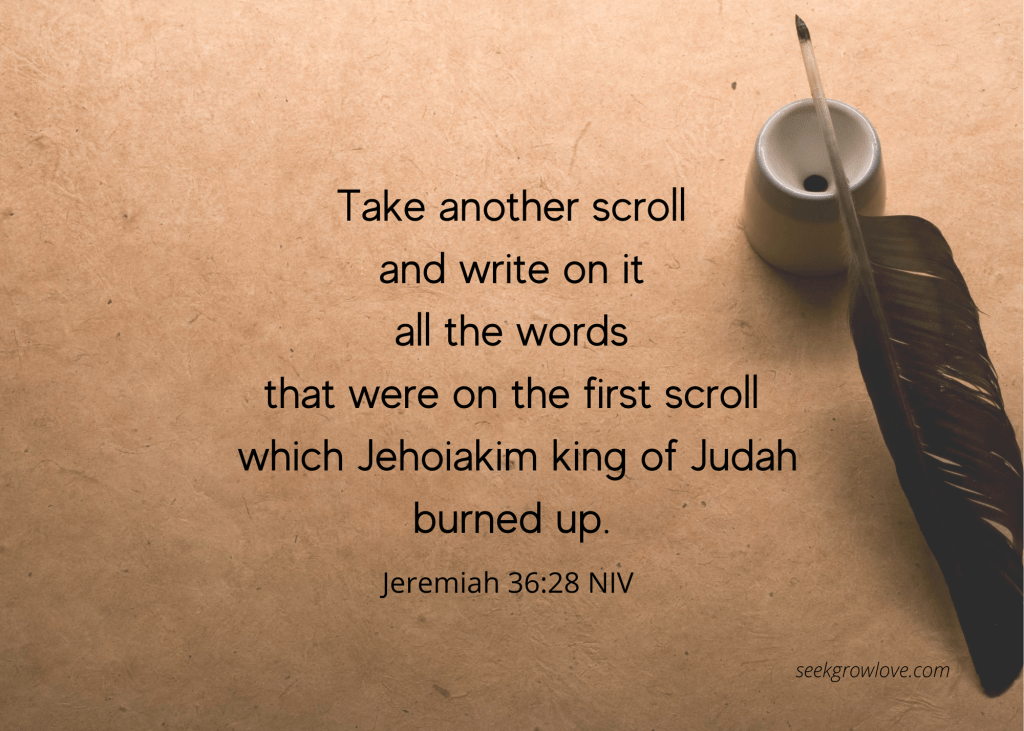
The 20 plus years of preaching hasn’t turned the hearts of Judah back to their Creator.  Maybe if it was ALL written down – would the people listen then?  God tells Jeremiah to write down all the sermons he has ever preached – every word that God has given him from the very start of his ministry.  God said, “Perhaps when the people of Judah hear about every disaster I plan to inflict on them, each of them will turn from his wicked way; then I will forgive their wickedness and their sin.” (Jeremiah 36:3 NIV).  Even though God hates the sins of His people He still loves them and wants to give them another chance to come back to Him.  And so a great project begins.  Jeremiah dictates as his scribe Baruch writes it all down.  Perhaps the people will listen.  They spend over a year writing – God has said a lot.  How will the people respond to this book that lays it all out?

Since Jeremiah’s unpopular (but very Godly) message has already had him personally banned from the temple, Baruch is sent to read God’s words through Jeremiah to the people.  One who hears it, Micaiah, realizes the importance of what has been written and he arranges a reading of it with some of the royal officials.  “When they heard all these words, they looked at each other in fear” (Jeremiah 36:16) and they arrange for the king himself to hear the words on the scroll from Baruch, Jeremiah, and ultimately God.

Here’s the king’s chance.  He can hear God’s word and repent and lead the nation into a time of Godly reformation, thus saving them from God’s wrath at the hands of the Babylonians – just as his father Josiah had done years ago.  But King Jehoiakim thinks he knows better.  His arrogance and hardened heart don’t crack.  Instead, as the scroll is read to him in his chambers, he cuts it apart and burns God’s word, piece by piece.

Can you imagine the anger and defeat and perhaps fear Jeremiah and Baruch may have felt when they heard the fate of their scroll – God’s words?  To know the utter disrespect they (and their God) had received – and how their work was violated and destroyed.  And they didn’t even have a copy saved on their hard drive.  Totally lost.  Over a year’s work, gone.  But, God’s Word stands forever (Isaiah 40:8).  So, when God tells Jeremiah to write it all down again – with an extra word for Jehoiakim – Jeremiah and Baruch get to work – and the second work is completed, more impressive than the first. And perhaps much of what we read today in the book of Jeremiah comes from this second labor of love and obedience and great persistence.

God’s Words are priceless.  Some will hear and respond and pass it on. Like Jeremiah they are motivated to live by, love and share God’s words in order to save themselves and their hearers  (1 Timothy 4:16).  But others will scoff, show no fear and even seek to destroy it.  It does not change the supreme importance and value of the words – or the God who spoke them.  Nations, kings, priests, people; past, present and future will be judged by how they respond to God and His Word.  The king who brazenly cut apart and burned the scroll paid with his life – and his children and country suffered mightily for it as well.  Jeremiah and Baruch had far from an easy life – but they didn’t give up.  They kept at it – writing, sharing, reading, speaking and living God’s Word.  They persistently worked striving to help save those in danger of experiencing God’s wrath.  Will you stand with them today and be a Jeremiah?

-Marcia Railton

Sorry we were late in sending today’s devotion out.

Today’s Bible reading passages can be read or listened to at BibleGateway.com here – Jeremiah 35 & 36 and Hebrews 9

Let the Rains Fall

Isaiah 54-58

Isaiah 55 10a 11 NIV sgl

There is an endless cycle of the outpouring of God’s word followed by Man’s obedience and satisfaction before Man disobeys and becomes dissatisfied. This can manifest itself over the course of generations, as is the case in the story of Noah. God is with Man in the Garden and Man knows God. Man is obedient but his obedience quickly turns to disobedience. Once God decides it is time to pour out His Word, He speaks to Noah and Noah listens. Then the cycle repeats. We see an obedient generation in the early kingdom of Israel under David which becomes disobedient in a matter of generations. The cycle can also be seen in the life of individuals. I was fed the Word from the time I was an infant; I grew up with it and accepted it. Then I became disobedient as I became a teen only to see God’s word in a whole new light and to be brought back to obedience and satisfaction in God. In fact, I have seen this cycle no less than three times in my own life. The cycle can be a minor affair, not having to represent a complete falling out with God but instead moments of spiritual hunger and moments of spiritual contentment.

Isaiah 55:8-11 is a wonderful metaphor for this cycle. We see that God’s word is like the rain, for it exists for a purpose; it exists to nurture the earth and to bear fruit. At times the rain can come as a veritable monsoon, as in the days of the early church when men were prophesying and speaking in tongues and the church was spreading like wildfire. It can come and it can go without warning, bringing with it the full force of a thunderstorm, forcing everyone to watch in awe. It can also come gently in the night and no one will hear it.

Droughts can stretch on seemingly endlessly, but survival is still made possible by the preparations that we make during the rainy season. We store up food for ourselves so that we won’t go hungry. Droughts are tough. Some people don’t survive. Some are victims of their own inaction, unable to survive because they didn’t reap a harvest while it was available to them. Yet still others seem to be innocent, faithful in the harvest and responsible in the draught, but they fall victim to it nevertheless. It is possible that there was water nearby and all they had to do was search for it. Sometimes it requires the wisdom to move on from a place to survive a draught. After all, there is a reason that not many people live in the desert.  The draught is difficult to overcome but one thing is certain: the rain will come again.

Nathaniel Johnson


Today’s Bible reading passage can be read or listened to at https://www.biblegateway.com/passage/?search=Isaiah+54-58&version=NIV

Tomorrow’s reading will be Isaiah 59-63 as we continue on the 2020 Chronological Bible Reading Plan


Thought Checker

Psalm 119:1-88

Psalm 119 11 NIV sgl

(We will read the second half of the longest chapter of the Bible on Sunday – but feel free to actually read the whole thing both days – it is full of good stuff!)

What comes to mind when you hear the word purity? Because we currently live in a fallen world where sin is part of our human nature, we are all impure. Think about it… what about your thoughts? What do you think about? Are there any sins that don’t start with a thought? I’m sure we could learn a whole lot about someone if we could read their thoughts, because the thing about our thoughts is that they are essentially hidden from the rest of the world. And this is why it can be so dangerous. What starts to be a single almost innocent thought can then eventually or suddenly develop from good to bad to ugly. So when would be a better time than now to examine our thoughts and heart. God knows our thoughts, we can’t hide anything from Him, remember? Our thoughts do matter. They reveal what is in our heart. 


Thankfully, we can find in Psalm 119 how to stay pure. 


Psalm 119:9 How can a young person stay pure? By obeying your word.


Psalm 119: 11 I have hidden your word in my heart that I might not sin against you.


Because God’s word should be our treasure in life we should hide it in our heart and meditate on it so that we can obey it and therefore stay pure. So let’s see what Philippians 4:8 says. “ And now dear brothers and sisters, one final thing. Fix your thoughts on what is true, and honorable, and right, and pure, and lovely, and admirable. Think about things that are excellent and worthy of praise.” This makes staying pure a little harder, not only should they be pure, they should be honorable as well.


 I am so glad this verse made it into our Bibles because it has certainly helped me. When I was little I used to have trouble falling asleep from worrying, until my mom wrote out Philippians 4:6-8 and hung it up next to my bed. Suddenly I had a way to check my thoughts. A thought checker. If it doesn’t align with Philippians 4:8 throw it out of your mind. And even more than that, I was able to memorize it and because of that I’ve been able to use it throughout the years. 


Starting some habits can be really helpful in controlling your thoughts. But the first step is to really know the scriptures so you know what is right and wrong. Because how else can we know what the Bible says if we don’t take the time to study, meditate, memorize, and know what it says? Also you will need to commit to memorizing scripture so that when the time comes that they are needed you will be able to pull them out of our pocket and meditate on them. 

Here are some great verses to memorize and hide in our hearts.


1 Timothy 4:12 “ Don’t let anyone think less of you because you are young. Be an example to all believers in what you say, in the way  you live, in your love, your faith, and your purity. 


Romans 8:1-2 “And so dear brothers and sisters, I plead with you to give your bodies to God because of all he has done for your. Let them be a living and holy sacrifice – the kind he will find acceptable. This is truly the way to worship him. Don’t copy the behavior and customs of this world but let God transform you into a new person by changing the way you think. Then you will learn to know God’s will for you, which is good and pleasing and perfect.”

Or 2 Corinthians 6:6, Romans 8:6, or 2 Corinthians 10:5, and many many others. 


So the next time you feel like your thoughts are controlling you, make it a habit to test your thoughts and make sure they align with Philippians 4:8.  When they don’t, affirm that it is a thought that doesn’t align with God’s word and toss it out. Just like Jesus said, “Get behind me Satan,” when Peter was a stumbling block for him, you might choose to say something in response to it to help combat it. Then, ask God to renew your mind and help you strive to live a life pleasing to Him. Lastly and one of the most important steps, meditate on scripture. Choose a specific verse that is personal and recite it over and over again. 


So how can a young person stay pure? By living according to God’s word. By meditating on Scripture and hiding it in your heart so that you don’t sin. 


Makayla Railton


Today’s Bible reading can be read or listened to at https://www.biblegateway.com/passage/?search=Psalm+119%3A1-88&version=NIV

Tomorrow’s reading will be 1 Kings 3-4, 2 Chronicles 1 and Psalm 72 as we continue the 2020 Chronological Bible Reading Plan


Tell the Next Generation

1 Chronicles 7-10

Psalm 78 4b NIV


I believe today’s reading will be the last of the genealogies for awhile.  There are a lot of names, a lot of generations.  Father to son.  Father to son.  Father to son – and sometimes a daughter.  Father to son. A whole lot of heritage.  A whole lot of passing along from one generation to the next.  It reminds us that our life is not just what we see and experience today.  We have a past that has shaped us and we (and our children) have a future for which to prepare.


I am reminded of a passage in Psalm 78 that we read last week but didn’t have time to discuss directly.


My people, hear my teaching;
listen to the words of my mouth.
I will open my mouth with a parable;
I will utter hidden things, things from of old—
things we have heard and known,
things our ancestors have told us.
We will not hide them from their descendants;
we will tell the next generation
the praiseworthy deeds of the Lord,
his power, and the wonders he has done.
He decreed statutes for Jacob
and established the law in Israel,
which he commanded our ancestors
to teach their children,
so the next generation would know them,
even the children yet to be born,
and they in turn would tell their children.
Then they would put their trust in God
and would not forget his deeds
but would keep his commands.
They would not be like their ancestors—
a stubborn and rebellious generation,
whose hearts were not loyal to God,
whose spirits were not faithful to him.

Psalm 78:1-8


I am thankful for a father who passed along to me the spiritual heritage he received from his father and grandfather.  Both of my parents brought their children up to seek and serve the Lord first – it is by far the most important life lessons that they taught.  In fact, today’s photo is a Bible timeline that I inherited from my dad, and one of my favorite treasures from him. He spent hours researching and meticulously drawing out this timeline to help illustrate for his Bible students (including his children) God’s faithfulness and plan for the ages.  And, he lived it out with his life, too.


So, now it is my turn to pass along what I have heard and learned.  How do I do that with the words I speak, with the priorities I set and with the life I live?  How do I help my children seek God, grow in faith and love Him more and more?


There are so many negative influences and evil that would love to help us and our children forget God’s great deeds, His law, His faithfulness and His plan for the ages.  But we must not forget.  Nor is it enough to just remember for ourselves.  We have a great responsibility to hand these truths down to the next generation so they can hand them down to the generation after them, etc…until Jesus returns.


Maybe you cannot celebrate an upright Godly spiritual heritage in your genetic past.  You don’t have the benefit of an antique family heirloom Bible timeline rolled up in your closet.  That’s okay.  Paper rips and ink fades, but if you have a love for the LORD you have priceless spiritual mentors you can call mom and dad.  And, then, we must in turn create a spiritual heritage rich in God’s goodness, laws, and plan for salvation for those around us: our children, grandchildren and those children of all ages and colors and countries who need to know what God’s Word says and who God is.


God’s genealogy doesn’t end here in 1st Chronicles.  It is continuing today, and into the future.  Will it be recorded that you passed along what is of the most importance to those that came after you?  Don’t let yourself, or your children, be listed as the ones that forgot.  Tell of His goodness.  Put God first.  Pass it on.

Marcia Railton


Too important to not mention: I love verse 6 in Psalm 78 (above) where we see the value and great worth of, “the children yet to be born”.  Whether the children are conceived or not, born or not, they were planned to play a part in God’s design of the passing along of family and faith.  How tragic that this link has been broken time and time again when the children yet to be born are killed for convenience before they even get a chance to hear, learn and share of their Creator.  Tell of His goodness.  And His Word and His law.  Do not forget.  And do not ignore the evil that rejoices when God is forgotten.  We need to speak louder since voices in the chain are silenced.


Today’s Bible reading can be read or listened to at https://www.biblegateway.com/passage/?search=1+Chronicles+7-10&version=NIV

Tomorrow’s reading will be Psalms 102-104 as we continue the 2020 Chronological Bible Reading Plan

Starving for God

Job 21-23

Job 23 12b NIV

Poor Job.  I do pity him.  But not just for the extreme losses and suffering he endured.  Not just for the additional pain of unsympathetic, accusing friends.  But for being born when he was.

Previously we have mentioned Job’s yearning for a mediator – someone to stand before God on his behalf.  Someone in the middle who would reach out his hands to touch both God and man and draw them together.  Wise Job.  Can you imagine how thrilled he would have been to have the opportunity to meet, listen to, accept and follow the Messiah, God’s Son Jesus?  But, it wasn’t time yet.

It also wasn’t time yet for him to hold God’s precious living, giving words of life in his lap.  Job knew the power and gift of God’s words.  He stated, “I have treasured the words of his mouth more than my daily bread” (Job 23:12).  But, at this time in history God would speak when He chose, where He chose, to whom He chose, and the record of his words would be passed down, mostly orally, to any who would listen. It was a good start – but Job longed for more.  He said:

“If only I knew where to find him;
if only I could go to his dwelling!
 I would state my case before him
and fill my mouth with arguments.
 I would find out what he would answer me,
and consider what he would say to me.”

(Job 23:3-5, NIV)

We know that Job will get the amazing opportunity to have the Almighty speak directly to him (that is coming in next week’s reading).  But that didn’t help him yet at the time of today’s passage.  He is searching for God.  He is starving for God’s word.  He needs to hear from God.  And he does not yet have the gift of God-breathed scriptures on his lap or in the palm of his hand.  God’s Word is powerful and a great treasure.  What a blessing we have in the gift of the Bible – where we find God, His wisdom, love, majesty, truth, encouragement, correction, as well as His Son, forgiveness, and a hope and a plan for eternal life.  It is an incredible gift to hear God.  It is an incredible gift to read the words of God.  It is a gift we too often ignore.

God warns that His Word will not always be readily available.  “The days are coming,” declares the Sovereign LORD, “when I will send a famine through the land– not a famine of food or a thirst for water, but a famine of hearing the words of the LORD.” (Amos 8:11). Perhaps He was first referring to the 400 years of silence that would take place between the inspired Old Testament and New Testament.  But, I fear that it also refers to a time in the end days.  Perhaps we are seeing the beginnings of it even now.  Prepare by stockpiling God’s Word in your heart now.  It will help you both today and tomorrow.

If you ever feel God is distant – check to see how far away your closest Bible is.

If you ever feel you can’t hear God – turn off the distractions and open His Word.

If you ever feel you are starving for God – feast on His Word.


Seeking God in His Word,

Marcia Railton


To read or listen to today’s passage – https://www.biblegateway.com/passage/?search=Job+21-23&version=NIV

Tomorrow’s reading will be Job 24-28 in our 2020 Chronological Bible Reading Plan