Unredeemable?

Acts 9-10

Devotion by Rachel Cain (Ohio)

Saul was hell-bent on getting rid of those pesky “little Christs” by any means necessary. But as he marched to Damascus to arrest any he could find, Saul was literally blindsided by Jesus. Ananias, aware that Saul was in the area to persecute The Way but willing to obey God’s call to reach out to Saul anyway, bravely befriended blind Saul, which ironically helped Saul to see more clearly than he ever had before. Just as Jesus spent three days physically dead and then was resurrected, Saul’s three days of visual darkness prepared him to be resurrected to a new kind of life as a bold follower of Jesus, one of the most prolific missionaries the world has ever known. Saul realized that though he followed the law and had an impressive resume, he was actually the worst of all sinners. It was this outpouring of God’s amazing grace that created such dramatic change. 

I always assumed that Saul’s name was changed to Paul to represent this big change in his life, much like Abram to Abraham, but in reality the two names were just different versions of the same name: Saul (or “Sha’ul”) was a Hebrew name, and Paul was the equivalent name in Roman circles. As a Jewish Roman citizen, he would have been called both names. The fact that the New Testament increasingly refers to him as Paul probably indicates his growing involvement in the Gentile world. 

Speaking of Gentiles… God gave Peter quite an obscure vision (Acts 10:9-16) which left him befuddled. Finally, in verse 28, he seemed to figure out the meaning: “God has shown me not to call any person common or unclean.” Jews had sometimes viewed Gentiles as unclean, but now Peter had confirmation from God that the hope of Jesus is for Gentiles too. 

Some Jewish people still thought that Jesus had come only for their race, their “clean” kind. This might sound silly, but some today still try to discriminate against those who can go to a church or be saved based on how “clean” their lives are. We too can be prone to unconsciously judge people’s faith by the unnatural color of their hair, the number of tattoos or piercings, clothing choices, marital status, past mistakes, etc. It’s important to remember that “man looks at the outward appearance, but the Lord looks at the heart” (I Samuel 16:7). I suspect that some churches wouldn’t recognize or welcome even Jesus himself if he came through their doors. 

God had created Saul with such passion, and God knew if he could just channel that passion for saving Christians instead of killing them, the wonderful Gospel could spread. What a testimony! God brings Saul to my mind every time my finite, sinful, human, faith-lacking brain tries to label someone as unredeemable. 

What if we took the time to hear the stories of people who look different from us, to listen to stories of how Jesus has changed their lives, to experience their excitement as they learn things about Jesus that we take for granted because we’ve heard it so many times? Jesus came for all of us. We all are in need of the saving grace of Jesus.

I love to hear 180 stories – people who were completely changed, “flipped turned upside down” – because of Jesus. Some of us were raised in Christian homes and grew up in church and don’t have a dramatic testimony, but that doesn’t make our faith any less valid! We as humans can tend to think that someone is too far gone, but God… God can change the unchangeable, love the unloveable, save the unsaveable – and all of those would be all of us, if not for His mercy. 

Reflections: 

Listen to this song and consider how we might overlook Jesus if he were here with us today. 

Have you had a spiritual epiphany or eureka moment? It’s probably not quite as dramatic as that of Saul, but still very important. Write it down and share it with someone to show how your life has been changed by God! 
Ominous Lines

Acts 7-8

Devotion by Rachel Cain (Ohio)

“Marley was dead, to begin with.”

These ominous lines commence the first stave of Charles Dicken’s classic novella, A Christmas Carol, which my children and I read together for the first time last year. Such chilling inaugural language sets the tone for the serious nature of the story. The tale delves deep into the meaning of life and Ebeneezer Scrooge’s radical transformation before concluding the final stave with these hopeful words: “And so, as Tiny Tim observed, God bless us, everyone!” 

As I read Acts 8, I was struck by the similarity between the forbidding opening phrases of A Christmas Carol and this sinister introduction to Saul: 

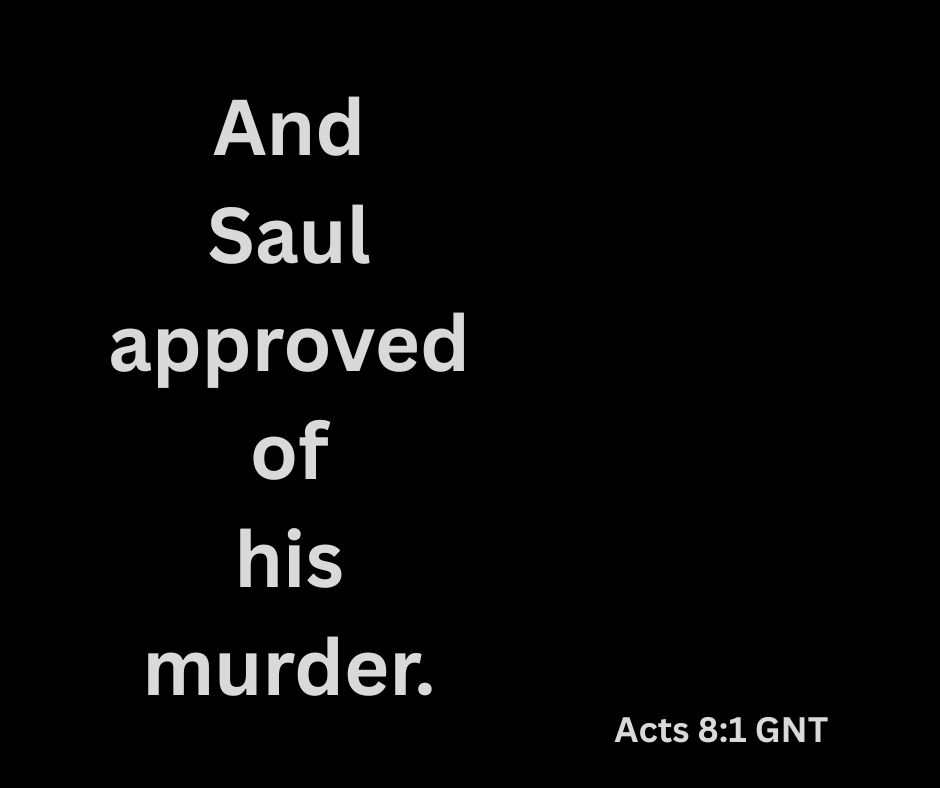
“And Saul gave approval to his murder” (8:1). 

Saul, a devout pharisee who kept every letter of the law and then some, was complicit in the death of the first martyr. But he didn’t stop there: Saul made it his mission to destroy the church by going house to house, imprisoning people who followed the ways of this Jesus guy. Saul thought he was working passionately for God by persecuting the followers of this heretic Jesus who claimed to be the Messiah. 

I always wonder how such heinous acts can be justified in the name of God. Did pride take over his heart? Was Saul so wallowing in his prideful Pharisee ways that he could not understand the grace and love that Jesus had shown and that his people were demonstrating? Was he blind to the prophecies that were fulfilled in Jesus? (Spoiler: In Acts 26, Saul gives some insight into his thoughts during that time, but ultimately he realizes that he was for sure NOT doing the work of God by persecuting his church.)

This is a good reminder that just because we claim to follow God doesn’t mean that everything we feel so strongly about is correct or God’s way. We can be sincere and still be sincerely wrong. Since it can be difficult to distinguish God’s voice from the myriad of opinions we hear constantly, it is important to be regularly grounded in the Word and prayer, truly seeking God’s desires more than our own preconceived notions or cultural norms. 

Just like with Scrooge’s interactions with the three spirits, all it took was one encounter with Jesus to turn everything on its head, transforming Saul’s heart and ultimately leaving us with many hopeful words in the New Testament. But you’ll just have to come back here tomorrow to read more of that story!

Reflections: 

Think about your life before vs. after you decided to fully live for God. What would be the opening line to your “before” chapter? 

What do you want the closing line of your chapter of life to be (like your epitaph)? Write it out as a guide and inspiration to keep you focused on what truly matters. 

Ordinary People – Who Have Been with Jesus

Acts 4-6

Devotion by Rachel Cain (Ohio)

Abraham Lincoln (president), Charles Dickens (author), Steve Jobs (Apple creator), Dave Thomas (founder of Wendy’s), and Ingvar Kamprad (IKEA originator) seem like an unlikely bunch to be grouped into a similar category, but they all have this in common: each one either had little formal training or dropped out of school early, and yet became very successful. Our protagonists in Acts 4, Peter and John, also fit among this list. 

“Now when they saw the boldness of Peter and John, and perceived that they were uneducated, common men, they were astonished. And they recognized that they had been with Jesus.” (Acts 4:13, ESV) Though Peter and John lacked formal training, their time of hands-on learning with Jesus probably equated to an advanced doctorate degree! Their accusers probably recognized that they had been taught by Jesus because their teaching styles and tones so closely matched that of their Rabbi. 

We, too, are disciples! We are called to share the gospel to a hurting world, following closely to the way of our Rabbi, Jesus. So remember your mission! Here are some tips from this text to help us be more like the early church. 

Share Jesus Boldly and Without Shame

Word about Jesus’ resurrection power spread, people were healed in Jesus’ name, and the number of followers was growing exponentially. The jealous religious leaders, however, did not appreciate this threat to their authority. So the council – likely the same one that condemned Jesus to death – tried to silence the ragtag bunch and ordered them to keep quiet. The disciples’ bold response? “We can’t keep quiet about what we have seen and heard!” (Acts 4:20). Their lives had been totally changed, and they just had to spread the word! 

Humans haven’t changed much – we still can’t keep quiet about the good stuff! If you compliment a woman’s new dress, she will tell you three things about it: where she purchased it, how inexpensive it was, and that it has pockets! She is just so excited that she can’t keep it to herself! Likewise, if you visit a fantastic new restaurant and they’re offering a ton of great deals, you’ll probably tell all your friends so that they can get in on it, too. We love to spread good news to other people, so why do we shy away from sharing Jesus with the same zeal? (I’m preaching to myself here. I long to have that kind of boldness that I just can’t keep quiet about all things Jesus, don’t you?) Pray for boldness to share with others how Jesus has changed your life. 

Obey Only God 

When the religious leaders tried to shut them up again, the disciples replied, “We must obey God, not men.” (Acts 5:29) It’s always been so easy for us to slowly assimilate to the culture around us and begin to obey the gods of this world or match the expectations of the people around us. The Israelites did this chapter after chapter in the Old Testament, and we still stray today. Romans 12:2 warns us about getting too conformed with the world. Though it would eventually cost many of them their very lives, the disciples in Acts were compelled to continue sharing the hope of Jesus with everyone. Jesus had cautioned: “Do not be afraid of those who kill the body but cannot kill the soul. Rather, be afraid of the One who can destroy both soul and body in hell.” (Matthew 10:28) Pray that we – the global Church – would stay faithful until the end. 

Maybe you’re like me – never been to Bible college, don’t know an ounce of Greek or Hebrew, just living an uneventful, mundane life. God can use us still! Even without special training, we can be bold lights in a dark world. God can, and will, use you right where you are to make a difference for Him! 

Reflections: 

Your prayer prompts are within the text. Take a moment to pray over those.

  1. How do you spend time with Jesus? Can others tell that you do? What can you do to spend more quality time with Jesus?
  2. How can you lovingly, humbly, courageously show the world (including, but not limited to your family, your church, your neighbors, your “enemies”, the disadvantaged, the other side of the world, etc…) what you have seen and heard and learned from Jesus?
  3. When/how have you fallen into the trap of obeying men rather than God? What can that look like? What can you do to strengthen your resolve to Obey Only God?
  4. What courageous task will you do today to obey God?

Shifting Our Perspective

Acts 1-3

Devotion by Kaitlyn Hamilton (Michigan – and Indiana)

One of my close friends in high school, while dealing with the loss of someone she knew, asked me the question, “Is it a bad thing that I’m concerned about his soul for eternity?”  This question, this concern, about a soul’s place in eternity is something that many people often consider when faced with the loss of someone they know.  This is great and all, but there’s one big problem with this – for many people, this is the only time they seriously consider what is going to happen to people in the grand scheme of eternity.  Do you spend significant time considering the number of people around you who you know aren’t part of the church?  But, it’s not enough just to consider it; once we realize the large quantity of people that we care about who are currently on the path of destruction for eternity, we should be ready to do something about it.

In reading Acts 2, we see that Peter recognized what was at stake.  The same person, who earlier, was too afraid to be associated with Jesus for fear of his life, takes a stand before a large crowd of people, including a group who were mocking them saying, “They are full of sweet wine.” (Acts 2:13)  Peter chose to shift his perspective away from the thoughts of the world, of what this crowd could do to him if they disliked his message, of what these same people did to Jesus only 53 days earlier.  Instead, he shifted his perspective towards that of God’s will, focused on the message these people needed to hear.  In Acts 2:22-24, instead of focusing on how to keep peace with all the men who Peter knew, instead of trying to remain on agreeable terms as friends, Peter was willing to stand up for his faith, was willing to tell the Jews gathered in Jerusalem the truth of what their actions did.  The Messiah that they had been watching for all their lives and the lives of all their parents and grandparents and all their ancestors before them, they had put to death, they had crucified.  Can you imagine having the courage to stand before just one person and telling them that their actions, their sins, were the reason that an innocent man was put to death?  But, Peter didn’t just tell one person, he told a huge crowd – a crowd that should they be angry enough could easily turn into a mob and kill him.  This choice to tell everyone the truth about Jesus, the Messiah, and what they had done to him, took courage that comes only from shifting your perspective away from the worries of this world to that of the hope and peace that come from God.

What would happen if we all shifted our perspective like Peter did?  If we all chose to focus on God’s will for our life instead of the fears that try to stop us from seeking him?

What would happen if we were willing to all stand up for our faith to everyone we know?

What would happen if we let everyone know that we were Christians and weren’t willing to budge on any of our morals?

What type of revival would we see if we did all this?  

Peter saw a revival that day of 3,000 people.  Imagine just how big of a revival we would see if we all chose to stand up together and proclaim our faith.  It’s not going to be easy.  It means going against your human nature.  It’s not going to be automatic.  It won’t be a switch being flipped overnight.  But, it will change you and the world.  So, I encourage you to start shifting your perspective today, to start recognizing what is at stake, and to start standing up for your faith today!

Reflection Questions

  1. What could it look like for you to stand up for your faith today, and the rest of this week, month, year, life?
  2. What fears do you think Peter might have had to overcome that day? What fears do you currently have about boldly proclaiming your faith? How might Peter respond to you if you could discuss with him about your fears? How do you think Jesus, or Jesus’ Father, would respond if you were to tell them about these fears? Go ahead, tell them and pray about it.
  3. What “Helper” was assisting Peter? (Hint: it wasn’t wine.) What benefits does this Helper provide? Do you use the same Helper?

Unmet Expectations

Luke 24 & John 20-21

Devotion by Rachel Cain (Ohio)

Unmet expectations are a leading cause of relational conflicts. 

Sometimes the expectations were simply not communicated, so the offending person had no idea what was expected. Other times the expectation was communicated but not met, such as a broken promise. Sometimes it is no fault of anyone, but life and happenstance got in the way of the anticipated outcome. 

In the case of Jesus’ resurrection, multiple prophecies and even Jesus himself foretold what would happen, but still the disciples had their expectations shattered: “We had hoped that he would be the one to liberate Israel!” (Luke 24:21). 

They were disappointed in Jesus because their expectations did not match his reality. The disciples, among others, had believed he was the Messiah, but then they were confused when he didn’t fix their political problem by conquering the Romans and establishing an earthly kingdom – even though he had never promised to do those things. He had a much larger spiritual plan to save all of humanity by conquering the sin within their hearts. Perhaps they didn’t understand God’s big-picture promise of an eternal Kingdom. 

Today we look back with disbelief on their disbelief. DUH! Of course he’s the Messiah! Why couldn’t they just listen to him and recognize him and his plan? But how many of us today fail to recognize Jesus and his mission because it looks different than we expect? 

I think sometimes we expect a clean-cut Jesus, tidy Christians, an easy life. But none of that is promised; in fact, following Jesus guarantees quite the opposite (see John 16:33). How often do we fail to recognize the gifts of God because they don’t come packaged the way we expect? Can we see the blessing of prayers that were not answered the way we asked? Do we see every person – annoying, incarcerated, stinky, unborn, elderly, troubled, or just plain “different” – as God’s precious children, and view every interaction with them as a mission for the Kingdom? 

It’s so easy to be hostile toward fellow Christians over all kinds of unmet expectations – differing doctrines or political views, whether or not Christians should be involved in this activity or celebrate that holiday, etc. We definitely should encourage each other to keep seeking Jesus in these and all areas of our lives, but if we just put half that energy we use fighting one another into uniting to spread the love of Jesus to a hurting world, united we could have a tremendous Kingdom impact. God’s ways are not our ways (Isaiah 55:8-9), so we should always expect the unexpected. 

Reflections:

Listen to this song. How have some trials turned out to be unexpected blessings? 

What are some things that you are waiting for with expectant hope, and how can you share that hope with others around you? 

Just Like He Said!

Matthew 28 & Mark 16

Devotion by Rachel Cain (Ohio)

He is RISEN! 

Here’s where you respond aloud: “He is risen INDEED!”

PS It’s fine to say that phrase throughout the year, not only on a specific Sunday when we celebrate Jesus’ resurrection. This is the best news in all of history! Sure, every religion’s leader has died or will one day die. But Jesus? He died and was raised back to life eternal! Now THAT is the real deal and something to celebrate! 

I could end right here on such good news! … But I have a few more verses I want to point out. 

* Matthew 28:6 – “He is not here, because he has been raised – just like he said!” 

I used to read this verse in an excited tone, but now I imagine it in a slightly-annoyed, “per my previous email” tone. Have you ever had to mitigate the frustrations of people who are upset with you for something that was clearly stated, but you still have to remain professional? Like when you very clearly texted that you needed to cancel a meeting because you would be out of town – and the person acknowledged that they received the information – but they still checked in at the assumed meeting time annoyed that you were not present for the meeting, and everything in you wanted to just use the pointer finger emoji so they would refer to the previous text about your planned absence, but instead you assumed the blame and simply apologized that you’re still traveling and promised you’ll see them next week? Ok, maybe that was a too-specific run-on example, but that is how my human nature envisions the attitude of the angel in this situation. So it’s a good thing I’m not the translator for this text, because I would probably write this verse as, “GUYS! He is not here, because God raised him back to life, just like he said a gazillion times! Weren’t you paying attention?”

Everything happened just as Jesus said it would and as numerous prophecies had stated – his death, burial, and resurrection – and yet people still were surprised when he showed up alive. Maybe it was because they were too close to the situation and still felt the trauma of seeing their best friend and leader brutally murdered. Maybe it didn’t play out the way they had envisioned or hoped. Maybe they questioned whether or not they’d heard correctly. For some reason or another, maybe they really weren’t expecting the tomb to be empty. 

* Matthew 28:20 – “Therefore, go and make disciples of all nations… and surely I will be with you always…”

This eternal hope is for ALL nations, everyone! 

Most likely, the Jewish people would have assumed the Messiah to be only for them, or at least not for the whole world. But Jesus came to bring life to all people who would choose to follow him, not just the descendants of Israel. In this passage, called The Great Commission, Jesus gives the charge to carry on his mission for all time to the ends of the earth. I believe that the “go and make disciples” command still applies to us too. We can make disciples right where we are: in our own jobs, school, communities, homes, and cities.

I’ve always found great comfort in his promise to be with us always. Sometimes, this world seems so hopeless, but we have assurance that we are never truly alone! Praise God that Gentiles are welcome in the Kingdom, too! 

Reflections: 


How do you think you would have reacted if you had found the tomb empty? 

In what ways might God be calling you to actively make disciples? Pray that He would send people into your life to disciple – and you would faithfully disciple them.

“The squeaky wheel gets the grease.” 

Luke 23 & John 18-19

Devotion by Rachel Cain (Ohio)

What a true idiom. I never cease to be amazed at how large a small minority can seem when given a message and a platform. The media spins the truth to sway unsuspecting observers one way or another, leading us to disregard critical thinking and become emotionally attached to the perceived (and sometimes invented) injustices. We begin to see this small, vocal group as representative of the entire population. This happens on both sides of the political spectrum. Even niche groups can seem large if they’re loud and persistent enough. 

In Luke 23 it seems like “everyone” wants Jesus punished! The chapter begins with an emotional interaction between the Sanhedrin (the religious court) and Pilate, the governor of the Roman province of Judaea. The very first verse indicates that “the whole Sanhedrin” brought Jesus before Pilate, hoping for a death sentence.  A text note in my Complete Jewish Study Bible for Jews and Christians (p 1513) clarifies that “this literally means, ‘the multitude of them’- namely, the whole of those present… this reflects not the whole of the Jewish people but instead some members of the religious court…” 

This small-but-loud crowd succeeded. Even though Jesus had been healing multitudes, teaching with authority, and relating the people to God in no way they had ever experienced before, all it took was a small, mad mob to fuel the emotional fire that would cause the crowd to exclaim, “crucify him!” and end Jesus’ life.

We all know these actions fulfilled God’s plan; this is how it had to happen, but that doesn’t mean we can’t learn a lesson from the chaos. We need to be aware of fallacies in arguments that aim to sway us away from God’s Truth. We must be watchful to notice the sly work of the deceiver who “masquerades as an angel of light” (2 Corinthians 11:14). We should constantly compare the cries of the culture to the ways of God so we will not be conformed to the world, but “test and approve what God’s will is” (Romans 12:2). It would behoove us to remember the words of Jesus, that his life-giving way is straight and narrow, not the broad path that leads to destruction (Matthew 7:13-14). 

So, as Christians, let’s be the WD-40 on the “squeaky wheels” that are leading people astray from God. We must help encourage other Christians to stand for what is right, even when it seems like we’re standing alone. Also, we should be a different kind of “squeaky wheel”: unashamedly sharing God’s love to the world around us and shining His light everywhere we go. The world is watching. 

Reflections: 

How have you been influenced by the world around you – or resisted that influence and stayed true to your faith? 

In what ways can you be WD-40? Or be the squeaky wheel for Jesus? 

This is Eternal Life

John 16-17

Devotion by JJ Fletcher (Minnesota)

What is eternal life? According to Jesus in John 17:3, it is “knowing the only true God, and Jesus Christ”. 

John 17 is often referred to as “Jesus’ High Priestly Prayer”. Here we see Jesus praying for the deliverance of his disciples (that they remain in God’s name) and for them to have unity, the same kind of unity that Jesus has with God, his Father. 

John 10:29 quotes Jesus saying, “I and the Father are one”, and I see John 17 as giving that some context. God and Jesus are not one person, they are not one entity, they are not members of a godhead. They are one in purpose. They are united through the will of God and Jesus’ obedience to that will. There is clear subservience to God in Jesus’ words here, but God has also elevated and glorified him. They have a special relationship as we see through Jesus’ prayer life and language. 

Jesus wants his disciples to have that same kind of unity in purpose and in relationship. Jesus also points out that this is not just for the inner circle of his disciples; this unity and deliverance that Jesus is praying for extends to us. All those who came to faith because of the testimony of the Apostles.

There is also an exclusivity claim here. Eternal life is dependent on knowing the true God and his Messiah, Jesus. There are not many paths that lead to God, only one. 

Jesus emphasizes the importance of truth in 17:17-19. As Jesus’ father is the only true God, Jesus recognizes him as the source of truth. He says, “Your word is truth.” Jesus has been the truth bearer throughout the course of his earthly ministry, but soon, his disciples will be bearing that mantle of truth bearers. Jesus is sending them out into the world, just as God sent him into the world. This ties into the Helper that we looked at yesterday.

The Spirit of Truth, the power of God, God’s operational presence, the finger of God. There are a few ways that the spirit is described or defined. But it comes alongside, and that is in Jesus’ mind as he prays for the well-being of his friends and followers. God keep them safe, not from man, but from falling away. 

Reflection Questions:

1.        What jumps out at you from today’s reading? Is there anything here that has been particularly impactful in your faith?

2.        How should the unity that God and Jesus have impact the unity that we have as believers? If our oneness is supposed to be like theirs, how do we navigate disagreements?

3.        You shall know the truth, and the truth shall set you free. I think we read that recently. How does the truth of knowing who God and Jesus are and having the word of truth from God motivate you? Do you often consider the importance of truth in this age of lies?

The Helper

John 14-15

Devotion by JJ Fletcher (Minnesota)

Life is difficult. Even if we believe we have a good life, there is still difficulty. We face temptation, and we sometimes lose our way. We face pressure, and we lose our cool. We have high expectations for ourselves or others, and they are not met. While we may not feel persecution quite like the early church did, we are still likely to face discouragement as we try to live out our faith.

Think about the disciples after Jesus was arrested and executed. They were huddled up and discouraged. The shock and pain of the moment resonated, unlike some words that Jesus had shared with them not too long before then.

Jesus speaks about a helper in John 14 and 15. Let not your heart be troubled. Easier said than done. We all face things at some point that are troubling, but when we have help, it takes the burden off. Certainly, we can be sad and upset when certain events happen, but there is a difference between sadness and despair. Despair is when you are overcome by fear or grief and lose hope. 

What is this helper that Jesus speaks of? The best kind, one that is a direct line from God. Jesus also calls this the Spirit of Truth. When I think about the spirit in the context that Jesus is speaking of, I think of revelation. Through this spirit, God’s people will receive instruction. We see inspiration to write the gospel accounts like the one we’re gleaning from today, and we’ll see letters from Paul and others that instruct and give order to the church. 

I believe the spirit of God will also reveal things to us about ourselves. As Paul instructs us to pray in the Spirit, I believe that this is one way that we get direction from God. As we earnestly seek his will or desire for our lives (beyond the general instruction of scripture), I believe he will reveal it through his Spirit, the helper.

When we face difficulty, we should also be praying in the spirit. This is what we see Jesus modeling in the days leading up to his death. He is earnestly praying for an out but also relying on his father to give him resolve through the Spirit. When Jesus says, “let not your hearts be troubled”, it’s not a matter of resolve; rather, it is a matter of surrender. Allow the Helper, the Spirit of Truth, to guide you through the trouble.

Reflection Questions:

1.        Jesus speaks of the Holy Spirit as The Helper; what are some other ways that you think about the Spirit?

2.        How have you felt the presence of God’s spirit in your life? How can you test the spirits of influence to make sure they are from God?

3.        Think of some of the ways that Jesus was helped by the Spirit through his ministry. What are some ways that the Helper can impact our ministries in the local church? Do we look for that help?

Flesh & Blood

Luke 22 & John 13

Devotion by JJ Fletcher (Minnesota)

Throughout Jesus’ ministry, we see him bring a new level of focus and understanding to different laws or topics. When the Pharisees question Jesus about why his disciples are doing something on the Sabbath, Jesus says that the Sabbath was made for man, not man for the Sabbath. It was a day to honor and remember God, but it was also a day of rest.

In the lead-up to Jesus’ arrest and trial, we see the hustle and bustle of everyone getting ready for the Passover. Passover was the remembrance and celebration of the Israelites’ deliverance from Egypt and takes its moniker from their firstborn being spared during God’s final plague that killed the firstborn of Egypt.

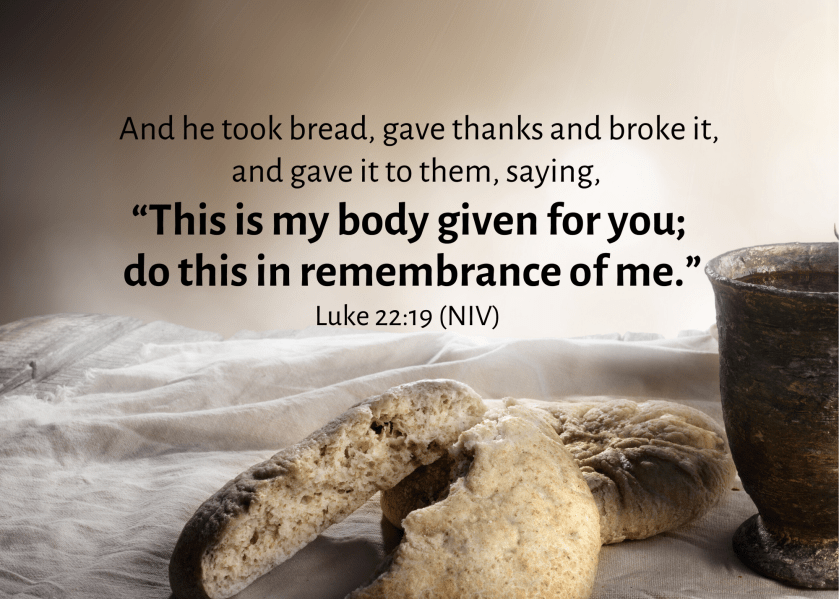
This was already a day of remembrance and of sharing a meal, but Jesus is giving it a new context as the birth of his church grows near. This will be a time to reflect on the New Covenant. Jesus’ physical blood marks the sealing of the New Covenant, so this cup of wine will be a reminder of his blood that would be poured out just a few days after the meal they were sharing. The bread is a reminder of Jesus’ body, which would be beaten and abused. Breaking the bread is a reminder of how his body would essentially be broken through the abuse and execution that were upcoming.

Today, we get to celebrate the Lord’s Supper under much different circumstances. We have the context that the disciples didn’t. A resurrected Jesus and the testimony of his disciples. We can also celebrate this as often as we’d like, but typically it is monthly (at least in my church). We perhaps do the remembrance part right, but later, Paul talks about the need to examine oneself. We should be examining how we’re doing. Are we doing an okay job living our lives for Jesus, or do we need to refocus? I would add that there is also an element of fellowship here. Typically, we observe the Lord’s Supper during a service, but it would perhaps be a good thing to observe it during a meal. Engaging in meaningful interactions with brothers and sisters during celebration.

One other thing to take away from Jesus’ last supper, he’s doing all this with Judas at the table. He knows what’s about to happen, but he doesn’t let that derail this important gathering. When we are having interpersonal issues in the church, we should be striving to repair what is wrong. We should, however, also be able to set aside our differences as we observe the remembrance of Jesus by fellowshipping and breaking bread together. If Jesus can face Judas, you can face someone who has done far less by comparison.

Reflection Questions:

1.        Is it easy to let communion become a rote practice and not a real time of reflection? How can that be changed?

2.        Have you participated in different ways of observing the Lord’s Supper? Were some practices more impactful than others? Why or why not?

3.        A monthly observance was mentioned earlier. Is there a benefit to observing communion more or less frequently? Why do you think this? If you don’t have an opinion, why do you think someone else might have strong opinions on the frequency of observation?