
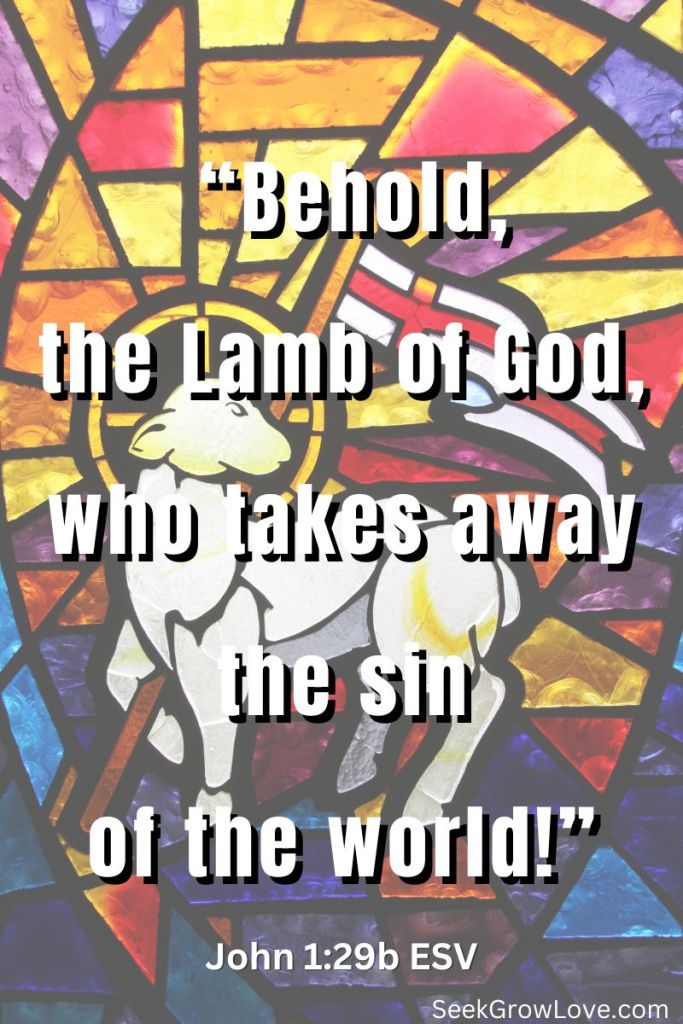
John Introduces Jesus

OLD TESTAMENT: Ezekiel 21 & 22

POETRY: Psalm 123

NEW TESTAMENT: John 1:19-34

Last week in the United States we had our election for President.   For months people campaigned on behalf of the candidates.  There were debates, speeches, and interviews.

2000 years ago in Israel, there were questions surrounding potential leaders.  One man who had developed a large following drew interest in from the leaders who sent religious leaders to question who he was.  He made it clear who he was not.

John 1:19-34

19 Now this was John’s testimony when the Jewish leaders in Jerusalem sent priests and Levites to ask him who he was. 20 He did not fail to confess, but confessed freely, “I am not the Messiah.”

21 They asked him, “Then who are you? Are you Elijah?”

He said, “I am not.”

“Are you the Prophet?”

He answered, “No.”

22 Finally they said, “Who are you? Give us an answer to take back to those who sent us. What do you say about yourself?”

23 John replied in the words of Isaiah the prophet, “I am the voice of one calling in the wilderness, ‘Make straight the way for the Lord.’”

24 Now the Pharisees who had been sent 25 questioned him, “Why then do you baptize if you are not the Messiah, nor Elijah, nor the Prophet?”

26 “I baptize with water,” John replied, “but among you stands one you do not know. 27 He is the one who comes after me, the straps of whose sandals I am not worthy to untie.”

28 This all happened at Bethany on the other side of the Jordan, where John was baptizing.

John Testifies About Jesus

29 The next day John saw Jesus coming toward him and said, “Look, the Lamb of God, who takes away the sin of the world! 30 This is the one I meant when I said, ‘A man who comes after me has surpassed me because he was before me.’ 31 I myself did not know him, but the reason I came baptizing with water was that he might be revealed to Israel.”

32 Then John gave this testimony: “I saw the Spirit come down from heaven as a dove and remain on him. 33 And I myself did not know him, but the one who sent me to baptize with water told me, ‘The man on whom you see the Spirit come down and remain is the one who will baptize with the Holy Spirit.’ 34 I have seen and I testify that this is God’s Chosen One.”

John made clear that he was not the one, he was not the Messiah, the King.  John made it clear that Jesus was the true King.  God himself declared that Jesus was revealed to be the savior of the world.  Jesus was God’s chosen.  He was God’s sacrificial lamb who would take away the sins of the world.

John was a man of great humility.  He did not pursue power and glory.  His call was to witness the truth about God’s true savior.

Presidents come and go, but Jesus is the true Messiah and Savior.  Just as John in all humility pointed people to Jesus, let us all point to Jesus as our savior and king.

Pastor Jeff Fletcher 

Reflection Questions

  1. What characteristics of John do you admire? What makes a good Christian leader?
  2. What evidence did John have that Jesus was God’s Chosen One – God’s Messiah?
  3. Like John, how can you prepare people to meet Jesus? How can you introduce Jesus to your friends/co-workers/neighbors?
Fall and Rise

Old Testament: Genesis 3

Poetry: Psalm 1 (all week)

New Testament: Matthew 3

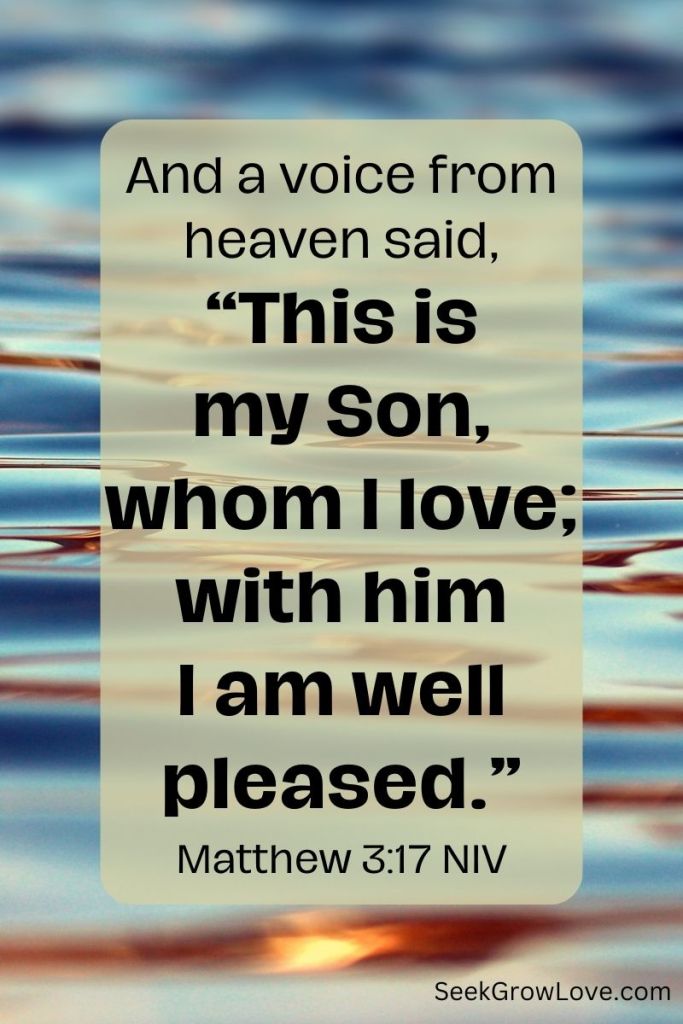
There are some four-thousand years between the first and second Adam, both the bookends of the fall of man.  Through the first Adam, sin found a foothold in the world.  Through the second Adam, Jesus Christ, the sting of eternal destruction in the second death (Rev. 21:6, Rom 6:23) is broken and restoration that comes from God is complete. Being familiar with scripture and his role as Savior, Jesus knew he was the precious Lamb of God, who upon him was transferred the weight and debt of all our sins.  Jesus would go on to fulfill this role as our purification offering, fulfilling the law and the words of prophets.

In a similar manner, Jesus redefines and completes baptism in Matthew 3.  Although not defined by religious laws in the Old Testament, baptism had become a common practice for sects of Judaism from the time of Malachi to the beginning of the Common Era.  It was performed as a ritual cleansing, done in preparation to ready oneself to make a sacrifice at the temple. This could be done time and time again because of the literal and spiritual uncleanliness that would appear between trips to the Temple. John’s baptism took on this role, specifically for the forgiveness of sins. So why would a sinless Savior need to engage in such a symbol?

“Then Jesus came from Galilee to the Jordan to be baptized by John. But John tried to deter him, saying, ‘I need to be baptized by you, and do you come to me?’  Jesus replied, ‘Let it be so now; it is proper for us to do this to fulfill all righteousness.’ Then John consented. As soon as Jesus was baptized, he went up out of the water. At that moment heaven was opened, and he saw the Spirit of God descending like a dove and alighting on him. And a voice from heaven said, ‘This is my Son, whom I love; with him I am well pleased.’ – Matthew 3:13-17

The first reason Jesus is baptized is as simple as he stated, “to fulfill all righteousness.” Baptism is not merely for the forgiveness of sins. It is first and foremost the public dedication of your life to love God, accept Jesus as Lord and Savior, and live for his Kingdom.  To us this means that looking for a pass on sin without submission is not living-saving nor does it accept the grace of God.  Specifically, those who participated in the baptism of John for the forgiveness of sin were told to be rebaptized when they knew this Good News.

The second basis for baptism is the fulfillment of the gracious cleansing we receive by the sacrifice of Jesus. Just like the payment of Christ, baptism is once and for all.  By being fully immersed in water, we demonstrate not only His death, but our own. Likewise, in rising out of the water, we illustrate the cornerstone of our hope, that Jesus has risen from the dead.  Furthermore this illustrates by dying to Him, we are raised to life, asking the raised Christ to live in us as Lord of our life today and being assured of the hope of our own resurrection if we remain faithful. 

Arguably the third purpose for baptism is the invitation of the Holy Spirit in our lives. Jesus is shown this power of God at His baptism, and the Holy Spirit descending onto ministry of miracles.  Baptism, in fullness, is an invitation for the Spirit of God to direct your path (Rom 8:14), bear fruit because of its presence (Gal 5:22-23), and to even comfort in times of hardship or grief. (John 14:26) It is the same power that raised Jesus from the grave that can now live in us. (Rom 8:11)

If you haven’t considered baptism up to this point, what is stopping you from such a confession of faith? Baptism is not the culmination, but the entry point of faith. You do not have to understand the nuances of scripture, only that our Heavenly Father sent His Son into the world to die for your sin, and they are coming back to Earth with eternal life in hand.

If you have already dedicated your life through this public confession, hold close to your heart the promise that is in the symbol.  Time and time again, we trip, stumble, and fall flat on our faces, but with each fall, we are lifted out of the waters of baptism and covered in the grace of God through Jesus Christ.  Thank God we do not have to be reimmersed.  Many of us would spend the vast majority of life underwater. We can confess to Heavenly Father with a repentant heart and the power of baptism in Jesus Christ not only banishes the wages of sin, but gives us the present presence of God for now and for eternity.

-Aaron Winner

Reflection Questions

  1. If you haven’t considered baptism up to this point, what is stopping you from such a confession of faith?
  2. If you are baptized, what does it mean to you?

A Hero Shot

Revelation 5

Sunday, November 20, 2022

I think that Revelation 5 sets up a “hero shot” for us, as a film director might express it. A moment when we really get to be happy with who the main characters of the story are. I don’t expect us so much to explain all the details as to take it in as an image. We are allowed to see Jesus exalted, set apart for how great and powerful and significant he is.

Chapter four has already laid out the main setting, with God in heaven in the midst of thunders and voices, adored and honored by beasts and elders. The start of chapter five focuses in on the hand of the one in the throne (God, of course) – John sees in God’s hand a book covered in writing and sealed with seven seals. Maybe the book was always there and is only just now noticed. Or maybe the book has just emerged, as a gift or challenge or whatever role it takes. And the question is ‘who can open this book,’ and some time must pass because the answer comes back that no one can. No one anywhere is found capable of that act. And in his vision John understands the importance for this book which is being offered by God to be able to be opened, because he weeps.

But John is then told by one of the 24 elders not to weep, because the Lion of the tribe of Judah, the Root of David (two descriptions of Jesus as the Messiah) had prevailed, and would be able to open the book and its seals. (The seven seals themselves are finished being opened by chapter 8, and of course we could view that as setting off the further sequences of the seven trumpets and bowls, but notice that the book itself may be seen as a separate issue which involves a larger scope of God’s intentions.) But John is not shown a lion, but a lamb looking like it had been slain. The one who died for us, alive again and forevermore, victorious, ruling and serving.

He took the book, and the beasts and elders took up a new song proclaiming his worthiness. The lamb redeemed us to God, by his blood, out of every kindred, and tongue, and people, and nation. He is worthy to receive power, and riches, and wisdom, and strength, and honour, and glory, and blessings.

The scene described in this chapter shows us human history in the balance. It shows God providing the right weight to allow things to swing to our redemption. There may be no literal moment in history that this scene matches to, but the scene John describes allows us to see what God has done for us, and to praise Him for it. And it allows us to honour Jesus for what he has done for us. And of course they both continue to work for us. On our own we would never have been able to change the world to what it needs to be. God loved us so much that He gave us what we needed to save our lives, and to reshape our world.

Lord, thank you for your awesomeness. Thank you for allowing us the blessing of seeing some portion of your glory, in your creation, in the scripture, in the blessing of your Spirit in my life, in the work of your Church. Please allow our trust in you to continue to grow. Let us raise our hearts and our words in praise to your name and the name of your Son. Thank you for so carefully preparing and guiding Jesus that he could do what he has done for our lives, and for this world. Amen.

-Daniel Smead

Reflection Questions

  1. What do we learn about God in Revelation 4 & 5? What do we learn about Jesus? What are their similarities and differences?
  2. What is your favorite part of Revelation 5? Why?
  3. What do you praise God for? Tell Him – and others. How will you honor Jesus for what he has done for you and the world?

Graphic Material

Ezekiel 5-9

ezekiel 5 14

Monday, March 20

This portion of Ezekiel is, admittedly, difficult to read.  It’s a pretty graphic account of God impending judgment against the city of Jerusalem and his people, Israel.  God tells Ezekiel to shave his head and beard.  This would have been an act of mourning for most people, but it was double disturbing for Ezekiel, since he was a priest and normally forbidden from shaving his head or beard.  Ezekiel was told to burn, take a sword to, and scatter his cut hair.  This was to symbolize what was to happen to Israel.  A few hairs were kept back, symbolic of the remnant who would not be destroyed.

God accuses his people, Israel, the chosen nation, of being worse than the other nations.  They broke the law more than the nations that did not have the law.  God was bringing his judgment against His own people.  The description of the siege almost defies comprehension, including cannibalism of both parents and children.  This was to serve as a warning to the other nations: if this is how God treats his own people for their idolatry, beware of what he will do to you.

In Ezekiel six God makes it clear that their judgement is upon them because of their idolatry. However, there is a remnant that will be spared and live in captivity and will come to repentance.

In Ezekiel seven, a special emphasis is made regarding their idolatrous attachment to gold and silver.  This wealth that they turned to and fashioned into idols will be unable to save them from the coming judgment.  All the money in the world can’t save you from judgment.

In Chapter eight Ezekiel has a vision of the temple in Jerusalem.  This includes the “Idol of jealousy” which we discover is the pagan god Tammuz.  Tammuz was the Sumerian god of food and vegetation.  At the summer solstice there was a period of mourning as the people saw the shortening of days and the approaching drought.  Sacrifices were made to Tammuz at the door of the Jerusalem Temple.  This was an absolute abomination to Israel’s God, YHWH as He made it clear that He alone was to be worshipped as God (see Deuteronomy 6:4-5).

In Chapter Nine an angel is sent out to put a mark on all of the people of the city who did not commit idolatry and worship Tammuz.  They would be spared.  But then all those who did not receive a mark would be destroyed.  This is reminiscent of the story of Exodus, when the doorposts of the Israelites were to be marked with the blood of the sacrificial lamb, and those with the mark were spared their firstborn sons dying when the Angel of Death passed over their houses.  It also points to the future (See Revelation 13) when the beast will cause people to have a mark on their forehead or they would not be able to buy or sell.  This is contrasted with those in Revelation 14 who have the name of God and of the lamb on their foreheads.

God is a God of love and mercy.  God has provided a means for us to be rescued from the consequences of sin.  There is a way for each of us to be spared the final judgment of God that is coming.  Jesus Christ, the lamb of God is the only means by which we can escape judgment.  Along with God’s mercy is His holiness.  God will not allow sin and rebellion to continue on earth forever.  A day of judgment is coming for all the earth just as it did for the nation of Israel.  God tolerated their sin for only so long, and then came the time for judgment.  Mercifully, God spared those who repented by placing His mark upon them.  God has been tolerating sinful rebellion on earth, but a day is coming when He will destroy sin and sinners who have not repented and turned away from their sins and turned to him through Jesus Christ.  Ezekiel’s harsh imagery should remind us that we must not forget that God’s wrath is coming from which we all need to escape, and we need to warn others.  This won’t make us popular, but doing God’s will is seldom popular among the rebellious.

-Pastor Jeff Fletcher


(Photo Credit: http://w3ace.com/stardust/)