Last year, the young adults at my church went through an in-depth study of the gospel. We discussed what the gospel is and why it is so important to be able to “give an answer for the hope that you have” (1 Peter 3:15). What is your understanding of the gospel? Go ahead a pause for a minute and try to sum up what you think the gospel is in a few sentences.
It’s important to be able to quickly and succinctly sum up what the gospel is. Yes, we can go deeper in our theology. Some things about our Christian walk take a whole life time of wisdom to be able to truly understand. However, when it comes to the basic building blocks of our faith, we need to have an answer for it. We need to understand what we believe. This is the first step towards spiritual maturity.
In today’s reading, Paul begins his letter to the Colossian church. He give thanks to God for the people in the church and then describes to them why Christ should be so highly esteemed. This passage is a good go-to passage for understanding what the gospel is. Paul begins in Colossians 1:18-20, “And [Jesus] is the head of the body, the church. He is the beginning, the firstborn from the dead, that in everything he might be preeminent. For in him all the fullness of God was please to dwell, and through him to reconcile to himself all things, whether on earth or in heaven, making peace by the blood of his cross.” The gospel, or good news, is the reconciling of us to God through the blood of Jesus. Jesus’ sacrifice made peace between God and man. Not only that, the gospel also points to our hope. Jesus was the firstborn from the dead. His resurrection is proof and assurance of our future resurrection.
Paul goes on to describe how the gospel changes us in verses 21-22. He says, “And you, who once were alienated and hostile in mind, doing evil deeds, he has now reconciled in his body of flesh by his death, in order to present you holy and blameless and above reproach before him.” When we were not reconciled, we lived doing evil deeds. We were in darkness. Because we have been justified before God, we also can be sanctified. This is the process of being made holy, blameless, and above reproach before God. We are learning how to be made righteous, be made perfect. This is a process that takes a lifetime. The gospel changes everything about us, maybe not right away – but instead through consistently trying to live for God in the best way we can.
This is why it is so important to understand the gospel and be committed to living for God throughout our life. We will be sanctified “if indeed [we] continue in the fath, stable and steadfast, not shifting from the hope of the gospel that [we] heard” (v. 23). Hold fast to the one who saves!
Mema Ballard owned a set of Encyclopedia Britannicas … or is it Encyclopedias Britannica? That is exactly the kind of question one my be tempted to look up in an encyclopedia. Technically, it’s the latter, but she only owned one Encyclopedia, with multiple volumes. It felt like no matter what question we wanted answered, all we had to do was look in the Encyclopedia and boom! Question answered. Crisis of unknowing averted. “All’s right in the world.”
When I entered college, I thought of the Bible much the same way. One library of books, containing multiple works, and if I came with a question, I would have it answered as soon as I learned to know where to look.
It sure would be nice if the editors of the Bible just put it all into easy-to-read statements of fact and doctrine. Why use all this narrative, all these stories, all these symbols? Poetry; why, couldn’t that lead to interpretation, discussion, and, horror of horrors, more questions?
Obviously, it does.
And yet God did not inspire an encyclopedia. He inspired a library of books that pokes and prods and needles as much as, or much more than, it answers and comforts and assuages.
If we are asking, “what can we know about death and the Kingdom at the end of the age”, and we turn to Revelation 20 (conveniently at the end), suddenly a lot of questions crop up.
Which angel comes down and binds Satan?(20:1) Why does Satan need to be released? (20:3) Why is this the only chapter where the dead in Christ are raised in a resurrection apart from the rest of the dead (20:5), and why is this the only chapter where the 1000 year reign of Christ is spelled out in clear detail (20:4, 6)? How could people who saw immortals ruling over them, as is implied, think that they stood a chance, and join forces as “Gog and Magog,” against the “camp of the saints and the beloved city”? (20:8-9)
I think these questions do have answers; for some, they are complicated, and for others, I don’t know them.
Should I say that again?
I don’t know everything.
Questions unanswered, hurtling directly into the unknown, and I feel the anxiety all around.
Do you sometimes feel the same way? That you don’t know everything and the things you do know you aren’t sure about?
You don’t have to know everything, because we can’t.
But we can know one thing with absolute certainty,
We know the ONE who does know everything.
Which angel? An angel sent by the God who controls all things and cannot lose to Satan. Satan is ALREADY defeated, one day he will be bound.
Satan’s release and turning away of the nations? God gives everyone a choice to believe, and people can make the choice to not believe.
The 1000 year reign and two resurrections?
I don’t know everything, but I know that if we place our hope in Jesus, we receive eternal life. (John 17:3) We can and should argue, teach, and debate theological and doctrinal points, because they are important.
But those are secondary to trusting in the Messiah for salvation, and living the way Jesus showed us to live. Because those who do not give in to the sins of this world, and live for the will of God (20:4), they will be blessed. And they are blessed in this way : “Blessed and holy is the one who shares in the first resurrection! Over such the second death has no power, but they will be priests of God and of Christ, and they will reign with him for a thousand years.” (Rev. 20:6)
Do you believe? Because if you do believe, there is just one more thing I know.
Revelation 21:3-4 “Behold, the tabernacle of God is among men, and He will dwell among them, and they shall be His people, and God Himself will be among them, and He will wipe away every tear from their eyes; and there will no longer be any death; there will no longer be any mourning, or crying, or pain; the first things have passed away.”
I know I want that experience.
No death.
No grief or crying.
No pain.
Every tear of sorrow wiped away.
God with us.
I know I want that for you.
And, even with all your questions, you know you want that too.
Because that is good news.
That’s gospel message.
That’ll preach.
Amen.
-Jake Ballard
Reflection Questions
Describe the ONE that you know with absolute certainty. What do you learn about Him in His words? What do you still want to learn about Him?
Why do you think God inspired the Bible as it is, rather than to be like an encyclopedia?
How often do you think about what happens at/after death or what will happen at the end of this age? What is the benefit of studying what the Bible says about these topics?
Jake Ballard is pastor at Timberland Bible Church. If you’d like to hear more from him, you can find Timberland on Facebook (https://www.facebook.com/TimberlandBibleChurch/ ) and on Instagram (https://instagram.com/timberlandbiblechurch?igshid=t52xoq9esc7e). The church streams the Worship Gathering every Sunday at 10:30. Besides studying and teaching God’s word, he is raising three beautiful children with the love of his life, is a big nerd who likes fantasy (right now, Harry Potter), sci-fi (Star Trek), and board games (FrostHaven). If you’d like to reach out to talk Bible, talk faith, or talk about your favorite nerdy things, look Jacob Ballard up on Facebook (https://www.facebook.com/jacob.ballard.336 ) or email him at jakea.ballard@yahoo.com. God bless you all!
Bible Trivia : The Apocalypse is an apocalypse; the genre of Revelation is not “prophecy” in the strictest sense, but a genre called “apocalypse”.
There is a LOT of prophecy in Revelation. I think Revelation shows us a picture of the future of the cosmos and the end of this age. However, “apocalyptic literature” is a genre that details events, both of the current day and in the future, with a ton of metaphor and allegory. Apocalypse uses symbolism to teach people that God is acting in history. The authors of this genre also usually view this world pessimistically and declare that a new world is coming quickly.
In fact, along with Revelation (which we will talk about tomorrow), the book of Daniel is also considered “Apocalyptic”, especially the visions, chapter 7 forward. At the very end of this book, we see a glimpse into the end. I won’t try and explain in a daily devotional the significance of the archangel Michael, the two men speaking at the River, or the specific length of days at the end. (And to be clear, if I had a large book to write to explain it, there is a lot of disagreement and debate about the full meaning of some parts of this book; all my thoughts are just another disciple adding their musing to what the church has said for centuries.)
But there are a few things I would like to point out about chapter 12 that I can say with much more confidence.
First, in verse 2, the author uses a common expression, “many”, to mean “everyone.” In the end, all will be raised. This one resurrection pictured is to be raised to life and raised to judgement. Everyone’s life will be opened up on display before the Messiah. In Hebrews 9:27-28, we read “And just as it is appointed for man to die once, and after that comes judgment, so Christ, having been offered once to bear the sins of many, will appear a second time, not to deal with sin but to save those who are eagerly waiting for him.” After death comes judgment for all, but those who eagerly wait for Christ will be saved. Some will come up to life, those who have done good will come out to the resurrection of life. (John 5:29) Some will come out to everlasting shame and contempt, those who have done evil to the resurrection of judgment. (John 5:29, again) Those who do not receive life, who do not do the work of God by believing in the name of Jesus (John 6:29), will receive the opposite of life. Those of whom the Messiah is ashamed, whom God contempts, they will not receive the life of the Messiah, or be in the presence of the God who is the source of life.
Second, those whose name are written in the book will be delivered. (12:1) To experience this, you must be numbered among the wise. After the coming of the Messiah, it is not being wise on our own, and certainly not being wise in our own eyes, but being wise by trusting in Him who is the wisdom of God. (1 Corinthians 1:24) Not only should we trust in the Jesus the Messiah, but we should “turn many to righteousness”. (Daniel 12:3) We turn many to righteousness when we preach the message of the Kingdom, when we “make disciples by going into the world, baptizing them, and teaching them all Jesus has commanded.” (Compare Matthew 28:19-20, Mark 16:15-16, Acts 1:8)
Third, and finally, you can be like Daniel. Daniel was told point blank by the angel “you will rest” (die) “and then at the end of the days you will rise to receive your allotted inheritance.” (Daniel 12:13) My friend, if you place your trust in Jesus, if you believe that he died to bring you into relationship with God, that he reigns from heaven at the right hand of God over the church, and that he is coming to reward those who follow his will by the power of the spirit he gives, the words spoken to Daniel, “you will rise to receive your allotted inheritance”, are spoken to you. You WILL have eternal life, the promise of God, given by Christ (Romans 6:23), and confirmed by the Spirit. (Ephesians 1:14)
And that is anything but trivial.
-Jake Ballard
Reflection Questions
Does the order of events matter – in a story, criminal trial, math problem or God’s plan of salvation?
Is the information given to Daniel (including the order of events) widely accepted and believed today? Why or why not? What is different from many ideas held today? What is not mentioned in Daniel 12? Why do you think it is not mentioned?
Are you prepared for the return of Jesus the Messiah? Why or why not? Is there anything God wants you to do before you rest, rise and receive? If so what? And when, where, how will you do it?
I find euphemisms to be imprecise. Usually, they are used to make taboo topics a bit easier to discuss in public, because saying words with plain meanings are just too forward.
There’s the innocuous “over the hill.” (People just get old, and that’s OK. “Gray hair is a crown of glory” Prov. 16:31)
There are quite a number of euphemisms to describe the most intimate act of marriage, which are understandable, because sex is often uncomfortable to talk about.
My least favorite are the ways we try to cover over the fact of death. “Passed on” and “crossed over” both imagine death as a journey. When I’m gone, please say “Jake has kicked the bucket”, because that phrase is stupid and I love it.
But the Bible, strangely, does something similar. Death, the cessation of life, the moment when our bodies cease to self-renew, our brains cease to function, and we cease to exist … is called sleep.
And this is not uncommon. At the death of David, he was said to sleep and join his fathers. (1 Kings 2:10, compare Acts 13:36) Daniel speaks of those “who sleep in the dust of the earth.” (Daniel 12:2) This is extremely common in the New Testament, starting in the life of Christ, where he speaks of those whom he is about to raise as sleeping and waking up, when they clearly died, like the young woman (Matthew 9:24, Mark 5:39, Luke 8:52) or Lazarus (John 11:11). Some saints, at the death of Christ, were raised to life again, after mentioning that they were sleeping. (Matthew 27:52) The language of sleep is continued by the early church. Stephen, dying a violent death of martyrdom, “falls asleep.” (Acts 7:60) Peter uses this euphemism in 2 Peter 3:4; Paul, in 1 Corinthians 15:6, 51, and 1 Thessalonians 5:10.
But, the Bible as the word of God and Christ as the Word of God, teach us something even while using this euphemism. Instead of concealing death from what it is, the Bible and Christ use this as a metaphor that makes more clear what death entails, not less.
In 1 Thessalonians 4, Paul is instructing his dear friends who were grieving the death of loved ones. He wants them to understand their situation, so when he uses the phrase “those who have fallen asleep,” it is used to bring MORE clarity to the subject of death. But, how does it bring this clarity? What does sleep teach us about death? In sleep, when we are at our most tired, we do not dream; we just go down and wake back up, with no memory of the time between. It seems that this is what the lessons we have been going through this week teach us. In Ecclesiastes 9, there is no memory, no work, no knowledge. Death is the cessation of a person but one that is sleep-like. The brain stops firing. Humans are not a kind of spirit-being inside their body but intimately connected to it. So when we die, we cease to be. That is why Lazarus could not tell us about his “afterlife” experience. There was none. And why is it such good news that Jesus was attested by God and raised to life (Acts 2) and how Paul can prove this by the word of over 500 people, and by his own experience, and the continued experience of the church (1 Corinthians 15). Death is not a passage on to a better place, but a time of cessation. When Christ is raised to life, he comes back. That’s good news.
Death is like a sleep we don’t remember.
Sleep is resting and waiting.
For some, it is waiting for reward; for others, punishment.
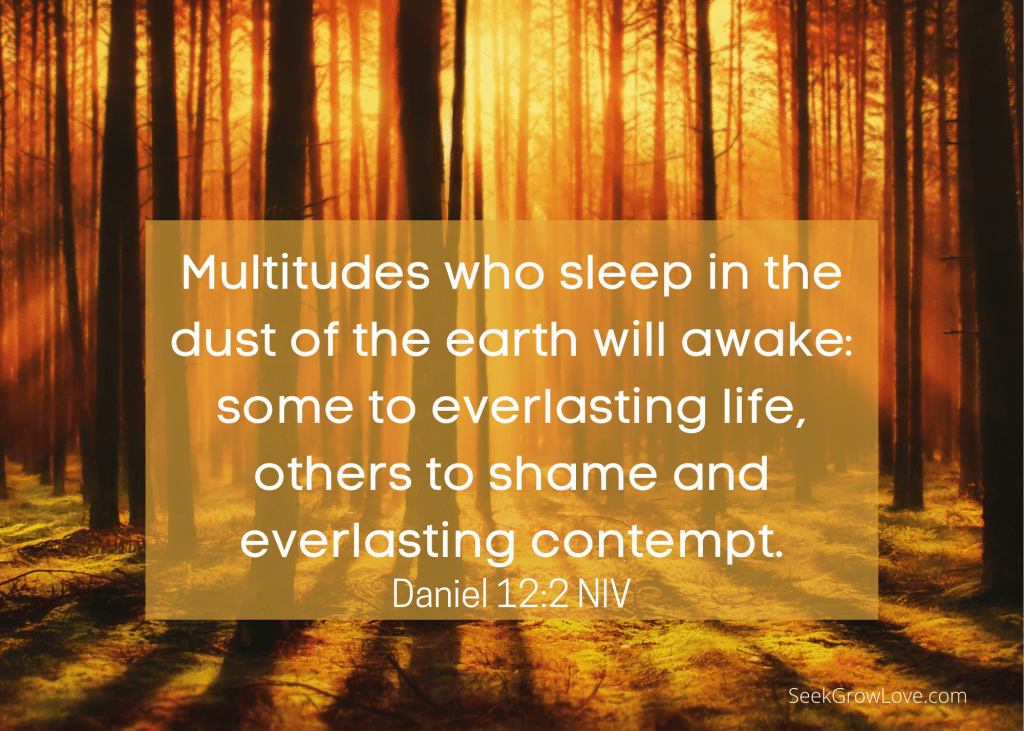
Daniel 12:2 says in it’s fullness “And many of those who sleep in the dust of the earth shall awake, some to everlasting life, and some to shame and everlasting contempt.” Yes, death is a sleep, but like sleep, human death is a sleep from which all will be awakened. But not to a human life again and again, as in Eastern reincarnation, nor a spiritual life in some other place, as with many Western Mythologies. Daniel promises that all people will be raised and judged. We know now that those who are in Christ are those who will receive the gift of eternal life (Acts 2). We are told that whether we live or die, we belong to the Lord (Romans 14:8), and the reason can be found back in 1 Thessalonians 5. Paul twists together the metaphor of being awake with both being alive and being holy, and the metaphor of sleep with both being dead and being unholy. But whether we live or die, whether we are awake or asleep, let us remain spiritually awake and holy (5:9-10), and when the trumpet call blasts out across the cosmos (4:16), we will be raised or we will be changed. That’s good news.
When I have lost family members or friends, people tried to encourage me with the idea of them partying among the angels, or, less vividly, at perfect peace. Very often, people were saying (without meaning to say it), “If you grieve, you wish your loved ones weren’t happy.” However, 1 Thessalonians 4 says that we will not grieve AS THOSE WHO HAVE NO HOPE. Because we know the reality and pain of death, that those who have died are gone from us in sleep, that death was never meant for any of us but a curse from a fall, that it is an enemy that will be defeated, we can live like Jesus.
At the grave of our friends and loved ones, we can cry.
Jesus gets that.
And then, we can take encouragement in the truth that they will one day hear the call of the trumpet, the voice of the archangel, and their Lord, their Savior and their Friend will pull them out of the grave.
Death could not hold him.
Death can not hold our loved ones in Christ.
And, in Christ, death cannot hold you.
So let’s trade our euphemisms for the euangelion;
Trade our “nice words” for the Good News.
-Jake Ballard
Reflection Questions
Can you think of some euphemisms for death that are not supported by Scripture? Where do those ideas come from?
Why does Paul want to correct ignorance regarding death, resurrection and the return of Jesus? Why does it matter what one believes about these topics?
In this devotion I will use words like “philosophical” and “deconstruction” and will even translate a Latin phrase. However, these are not scary concepts, and they are infinitely practical. So please bear with me. This is centrally important.
In our world today, there are many people “deconstructing.”
“Deconstruction” is a term from Jacques Derrida, a postmodern philosopher, which means, basically, picking apart every idea and belief we have to find the core, deep, central “dialectic”, words that are opposites (e.g., “being” and “nothing”) and hierarchy of ideas (e.g. that “being” is better than “nothing”). In a nutshell, Derrida believed we must pull apart an idea until we see what is at the “bottom”. Derrida believed that at base, every idea had opposing words or thoughts that in turn governed how we thought (like “being” and “nothing” governing our idea of “existence”). He believed these words, in opposition and conflict, were needed to make sense of the world, but we need to be aware of them.
However, the “Destruktion” of Derrida has changed.
Today, when people say they are deconstructing, it is almost exclusively of “traditional” Christian values and beliefs. The approach they take to marriage, LGBTQ+ issues, abortion, and other “hot-button” or political topics usually pushes people to reexamine their moral understanding of scripture AND their belief in the factual claims of the Bible. Many have “deconstructed” and no longer believe in large parts of scripture: from famous YouTubers, to our best friends, to some of us reading right now.
Latin, though a “dead” language, is used a lot to convey ideas that might otherwise be clunky. (e.g., “E.G.” comes from “exempli gratia”, or “for example”, which doesn’t really prove my point , i.e., that Latin helps with clunky phrases (“I.E” stands for “id est” or that is.))
“Sine qua non” is a phrase that means “without which, nothing”. The sine qua non is the most essential element of any political body, philosophical system, or religious doctrine; if you take away the sine qua non, that thing no longer functions, it ceases to be what it was.
In 1 Corinthians 15, Paul expresses to the Corinthians the sine qua non of Christianity. Paul says that it was of first importance that Christ died for our sins. That he was buried. That he rose. And that he appeared to many disciples.
However, the rest of the chapter focuses primarily, not on his death, but on the resurrection. Paul indicates a couple things to his readers.
If there is no resurrection, Christ has not been raised.
If Christ has not been raised, we misrepresent God, because the Christian faith says God raised him.
If Christ has not been raised, then we should be pitied above all other people.
If Christ has not been raised, then our preaching is in vain, and our faith is futile, and we remain in our sins. (v.12, 17) In short, the Resurrection is the sine qua non of the Christian faith.
Paul is talking to people who were deconstructing. We can almost hear them speaking through the years. “Well, I held to the resurrection for a long time, but I think I have finally given it up. Why believe in something so backwards, so barbaric, so physical? I think it must have been a spiritual raising. Or, possibly, no real resurrection at all, but that the Christ-Spirit that pervades the universe now lives in our hearts.” Paul is saying “you are losing the essential quality of the faith!” This is THE central point!
Today, you or someone you know might be deconstructing for a number of reasons.
You want “freedom” from the “ancient oppressive norms.”
You want “reality” instead of “naive wish fulfillment.”
You want “truth” rather than “the superstitious ideas of barbaric goat herders.”
But Paul is not claiming that you must believe in oppressive norms that crush the spirit of people, nor is he saying that he believes the reports of people he has never met, nor did he even want Jesus to be raised from the dead.
Paul, in a book that every scholar agrees comes from his own pen, claimed that he saw the man named Jesus who then changed his life. Then Paul, who had nothing to gain and everything to lose, gave up EVERYTHING, nearly died multiple times, to preach about Jesus to people who would often try to kill him. Paul did this all with sophistication and love that preclude the possibility that he was insane.
The resurrection is a fact.
Paul is saying that he would like his readers to trust Jesus; not Paul, not the church, Jesus.
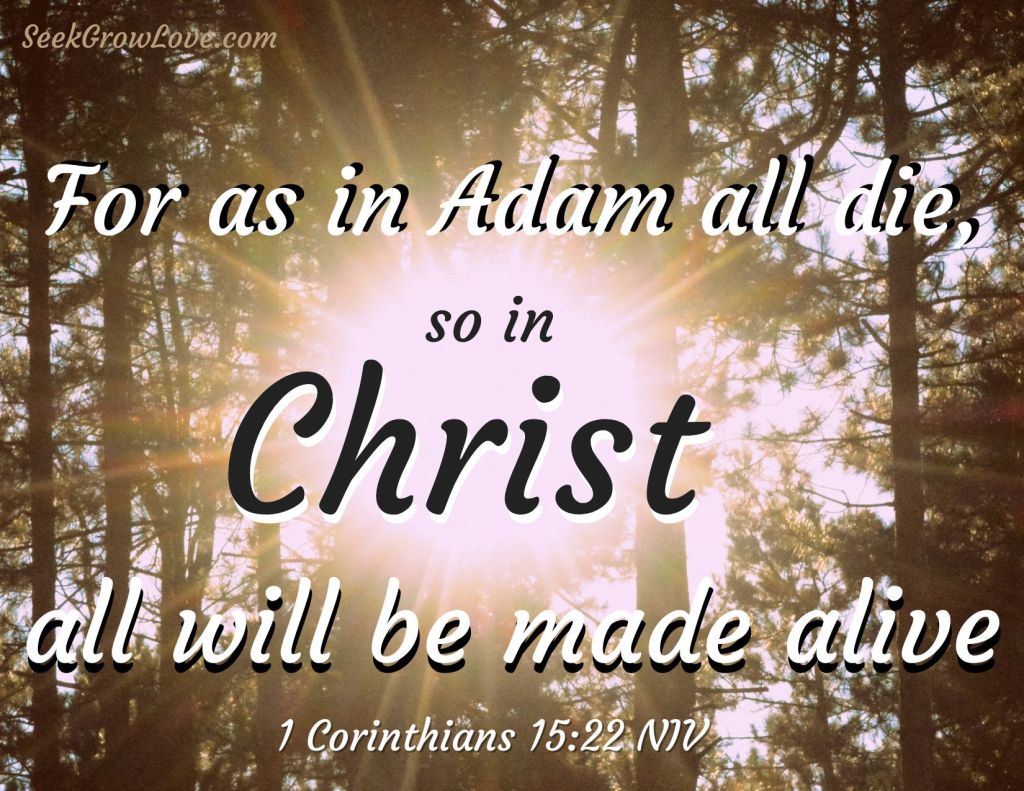
Jesus, the one who gives freedom, because he gives us a new life now and a new life in the world to come. As in Adam all die, so in Christ all will be made alive.
Jesus, the one who is the bedrock for reality, and the cornerstone of the new kingdom of God. Christ at the end will “reign until he has put all his enemies under his feet.”
Jesus, the fountain of truth, the one who can say “I am the way, and the truth, and the life.”
The Christian faith comes with a lot of question marks.
Those hot buttons issues are *hot* for a reason.
The Bible *is* frustrating. So many people have claimed it says different things! And when we actually read it, often the Bible tells us that the best way to live is the opposite of the way we are living right now.
Your questions, your doubts, are pulling at your heart because the world is messy. And dark. I’ve been there too. Where questions and doubt are big, and I feel like I am at the bottom. I look up at the questions wondering “why would I hope? could life get better? wouldn’t it just be better if I wasn’t here?” Too much loss, too much pain, too much death.
“The last enemy to be destroyed is death”
Paul is not playing at wish fulfillment, norms or superstitions. The Jesus he met, the Jesus Christ-followers met, the Jesus the church has met, has led to the fitting conclusion that “death is swallowed up in victory.” Death is no longer victorious. Death can no longer sting. Because we have been given victory.
I have been given victory.
And you have been given victory, if you choose to accept it.
God is not scared of your questions. He is not scared of your doubts. He is not scared of your failures.
What God wants to do is to give:
To give you victory that conquers your failures. Yes, you’ll still make mistakes, but always moving closer to God rather than in circles of pain.
To give you hope, purpose, and passion that will bolster your faith in doubts. You may still ask questions, and you will need other people to sharpen your beliefs, but always moving closer to the God of all comfort.
To give you the Spirit who teachings us all things and guides us into all truth in our questions. You will still have questions but it is no longer the project of deconstruction, of “Destrucktion” where every belief is torn down, but where in the end, they are built anew of Christ the Solid Rock.
In short, “Thanks be to God, who *gives us the victory* through our Lord Jesus Christ.”
-Jake Ballard
(If you need someone to pray for you today, or to hear your questions and doubts, or to tell you it’s gonna be OK, please consider emailing Jake Ballard (jakea.ballard@yahoo.com) or text at (937-561-1000), or find him on Facebook (https://www.facebook.com/jacob.ballard.336_) or Instagram (@jakea.ballard). However, the best thing you can do, is find a local pastor you trust, and speak to them in person. God bless you all.)
Reflection Questions:
Do you believe in the resurrection of Jesus? If so, why? How would you describe it to someone who has never heard of the resurrection? If not, why not?
If you believe in the resurrection of Jesus, does that prompt you to live your life differently? If so, how?
What is the timeline of events Paul gives in 1 Corinthians 15?
What is the final verse of 1 Corinthians 15 and how can you put it into practice?
The title of this post is unassuming. Two words: a noun, the subject, and a verb in the future tense.
I am in the business of speaking, teaching, training, sermonizing. And sometimes (less often than I’d like to admit) I may have a sermon that God uses in spite of all my failures and faults. But if I were to have all the power of the greatest speakers, the powerful conviction of Billy Graham, the clarity and precision of Andy Stanley, the dedication of pastors from Martin Luther to Martin Luther King Jr. and beyond, more than a thousand eloquent sermons could not compare to the truth of the future of the world summed up in these two words.
God wins.
I don’t want to take away from that truth, but I do want to flesh it out a bit.
In the earlier parts of Revelation, the beheaded souls have been calling out from beyond the grave to the God who will give them justice (Rev. 6:9-11). God promised the victors that they would have reward upon reward (Rev. 2:7, 11, 17, 26-28; 3:5, 12, 21). When God wins, those who placed faith in God above even their own lives have the incredible promises. For time out of mind (1000 years) they will reign with Christ, they will not be hurt by the second death. While the language of two resurrections is not common in the rest of the NT*, the truth is that they are SO ASSURED of their salvation its as if they cannot possibly be brought to judgment. The joy of this resurrection is that we who are powerless, weak, poor, and oppressed will one day win, be victorious and live forever with God and his Christ, because God wins.
And Satan can’t win. The dragon’s wings are clipped, and the serpentine body is prepared for the flames. In this world, God has power to throw the serpent of old, the devil and Satan, and bind him for 1000 years. During that time, his temptation and power are cast down. In the end, the devil who deceived the world was thrown into the lake of fire and brimstone. This is a threat and a promise. Moreover, Satan KNOWS this is his end. The battle between God and Satan is not a cinematic, climactic masterpiece. There is no worry about who will win. Satan is not trying to win, because he can’t. He IS trying to make YOU LOSE, because that is a possibility. But God will help you overcome sin, fight temptation, and come through faithful. God can protect you from the defanged, declawed, clipped-wing dragon, because God wins.
In some sense, part of the glory of God, part of his winning, is allowing humans to choose their outcomes. God allows people to determine their final state. While we are only and forever able to be saved by the glory and grace of God, God both does not force his salvific will upon us and does not preclude us from choosing him. God gives people what they desire. The books are opened; the dead are judged. Christ is our hope (Col. 1:27), our peace (Eph. 2:14), our resurrection and life (John 11:25). If any person has rejected Christ, what have they done but rejected peace with God and people? Rejected hope of eternal life? Rejected the resurrection and the life? God gives them exactly what they demanded. God doesn’t put up with those who were rebellious against him in this life. Because…
God wins.
No ifs, ands, buts.
No amount of persuasive words will make it less true.
No force of hell can stop Him, not a dragon or an atheist.
The promise is true:
God wins.
– Jake Ballard.
* There are hints of two resurrections in the rest of the NT, but nowhere is it explicitly stated like here in the apocalyptic work of Revelation.
Reflection Questions
How significant is the phrase “God wins” to you? To elaborate, in what areas of your life are you losing? Temptation and sin? Suffering and pain? Anxiety, depression, stress? What would it mean for you to stop trying to fix it all yourself, and let God win, allowing him to be victorious where you haven’t been yourself?
In the ultimate sense, Satan is powerless. While we might be attacked, tormented, and tempted by evil today, that is not the way the world will be forever. How does it make you feel to know that all evil and wickedness are going to be overcome by the power of God? Will you allow God to protect you, so the battle is one-sided in your favor today?
There is no peace, hope, resurrection or life without Christ. Have you given him control of your life, allowing him to be your savior and lord?
Daniel played many roles in his life including a great prophet of God. We continue to be blessed, inspired and perhaps warned by the writings of Daniel. Not only did he share God’s insights with the kings and people of his time, but today we also see God’s plan unfold in Daniel’s writings. We see the future for those who faithfully follow God. It states, “many of those who sleep in the dust of the ground will awake, these to everlasting life, but the others to disgrace and everlasting contempt. Those who have insight will shine brightly like the brightness of the expanse of heaven, and those who lead the many to righteousness, like the stars forever and ever”.
We read about deliverance for everyone whose name is found written in the book. King David had written of this book of life in Psalm 69:28 and many years later we see the book mentioned again in Revelation 3:5. It states, “He who overcomes will thus be clothed in white garments; and I will not erase his name from the book of life, and I will confess his name before My Father and before His angels.”
These amazing truths were passed down from one group to the next, sometimes one generation to the next. Daniel faithfully served the LORD at the time and in the place that the LORD set for him. We have that same privilege today. Don’t feel that you are unable or are unqualified to share. You have the message from the LORD through the scriptures and when you walk closely with Our LORD, that is all you need. Share the Good News with those around us. We want to share in the assurance that Daniel had. It states, “then you will enter into rest and rise again for your allotted portion at the end of the age.”
-Rebecca Dauksas
Reflection Questions
When you think of the future do you usually think about tomorrow, 5 years down the road, 25 or 50 years from now, or eternity? What part of the future excites you? What part scares you?
How often do you consider the book of life? What are your thoughts and feelings when you do? How many familiar names do you expect will be found there?
How can you lead many to righteousness by sharing the good news? What has God given you to do so?
This time of year can be a little dark-physically and spiritually. Days are getting shorter and common themes of shock, terror and death seem to ride in the wake of Halloween. But several years ago, our church decided we could push back and do something positive for our community. So we host a Fall Festival with all kinds of activities for families. This event is a source of excitement for children and a bright spot for a lot of our church family.
The message of Ezekiel 37 is a huge encouragement in the middle of a very dark time for God’s people. They felt depleted and described their situation as “Our bones are dried up and our hope has perished. We are completely cut off.”
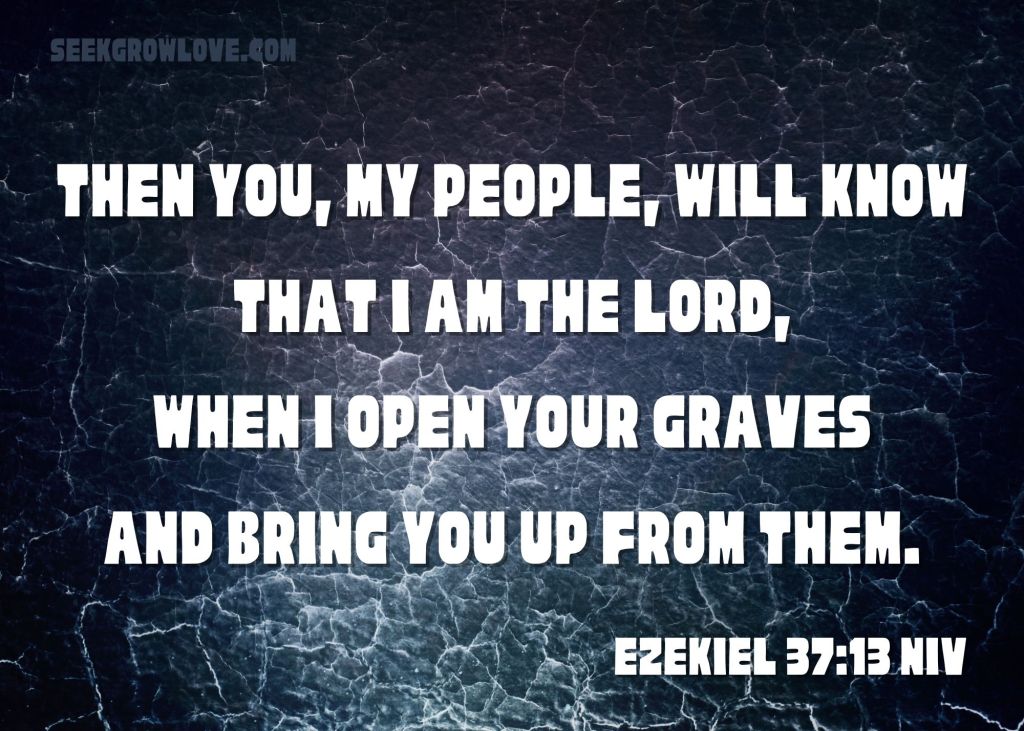
But God is a giver of life! He tells them that He will open their graves and cause them to come up out of those graves. God says that they are His people and He will bring them to the land of Israel.God will put His Spirit within them and they will come to life.
This vision of the Valley of Dry Bones is God’s message of bringing life and hope. God gives us the ability to live in newness of life now, but we also have the promise of the coming resurrection. How exciting to know that there is a resurrection of the righteous someday. We will all have one shepherd and will walk in God’s ordinances and keep and observe His statutes (v. 24). We are so blessed to have the opportunity to have a loving relationship with God in Christ right now and we can also experience the ultimate joy of having God’s dwelling place with us on earth someday. So even when your circumstances may seem dark remember that God abides with His obedient children and lets us know that we are His by the Spirit (1 John 3:24).
-Rebecca Dauksas
Reflection Questions
What does it mean to you to have life because you have God’s Spirit? Do you have God’s Spirit?
Where do you find encouragement in the middle of a dark season? How can you share that encouragement with others?
Everything is dying. Your phone’s battery is draining and will need to be recharged. Your phone itself will someday give out or become so slow or outdated that you’ll need a new and shiny one. But that one will die too. Your car will get you places…until it doesn’t. Your body itself will eventually lose its ability to sustain the delicate balance known as life, and will stop functioning altogether. This will happen to you, everyone you know, and everyone you don’t know.
The human race and life on earth are in deep trouble if the wrong supervolcano decides to erupt or if a very large random rock hurtling through space collides with earth. Our existence is a very delicate thing.
Even the sun as we know it is dying. It’s said that in somewhere around 4 to 5 billion years, our sun will eventually begin to die as its hydrogen fuel runs out. It will swell to a red giant and swallow at least Mercury, Venus, and our own planet before becoming a white dwarf.
It’s predicted that eventually the universe itself will expand hopelessly into a cold and dark nothingness of no usable energy. It’s called “heat death” and is a lot like winter, but much worse.
That’s a lot to take in all at once. The realization that everything we know is fading away can lead us to a dark place. It may remind you of Nietzsche’s caution that “if you gaze long enough into an abyss, the abyss will gaze back into you.” What gives? Is there anything that lasts?
“For ‘All flesh is like grass and all its glory like the flower of grass. The grass withers, and the flower falls, but the word of the Lord endures forever.’ That word is the good news that was announced to you.” (1 Peter 1:24-25 NRSV)
Not everything dies and fades away. Peter is telling us that the good news you were given—the word of God—endures forever. To us, the phrase “word of God” can often mean the Bible, but the way the Bible uses it is so much more broad and rich. I tend to think of it as something like God’s life-giving wisdom, through which he created everything. In John 1 we can read about how Jesus, through his life and ministry, became the perfect embodiment of that word among us, carrying on another chapter of something that was always there.
That chapter seemed to come to a close when Jesus was executed. To his followers, it must have felt like all hope was lost. But we know how that story ends up! We are shown there is more to come when Jesus is resurrected. It’s another chapter of this everlasting word.
As there was more to come for Jesus, there will be more to come for us. Because of Jesus’ resurrection, we are given hope and an inheritance that won’t fade away. Jesus is said to be the “firstfruits” of the resurrection, meaning his was the first resurrection, and we’re given confidence ours will be yet to come.
Paul tells us in 1 Corinthians 15 that through resurrection, the dead are “sown” perishable, but raised imperishable. Resurrection transforms things that have perished (or would perish) into things that can’t perish. It transforms the dust of the ground into something new and alive and beautiful. Remembering that Jesus was transformed from a dead man into some kind of mysterious, eternal, resurrected being, we embrace the living hope that someday we’ll experience the same transformation.
As we reflect on how resurrection will transform us, there are hopeful rumblings that it will transform all of creation into a new heaven and a new earth. How mind-blowing is it to think of an entire universe raised imperishable? What does that even look like? That’s such an amazing mystery to think about!
There’s no way for me to know how long I’m going to live, or how long there will be an earth or sun or universe. I do, however, know that God outlives all of those things! If God is around, there is always more to come. There is always another chapter of the word.
So let’s not grasp at the things that are going to die and fade away. Instead, let’s keep our hope in what will last forever—what Peter calls “the living and enduring word of God.”
-Jay Laurent
Questions to ponder
1. What might Peter say our response should be now that we’ve heard the good news (hint: verses 13-16 might offer a good start)?
2. What other things besides the word of God do you think are “imperishable”?
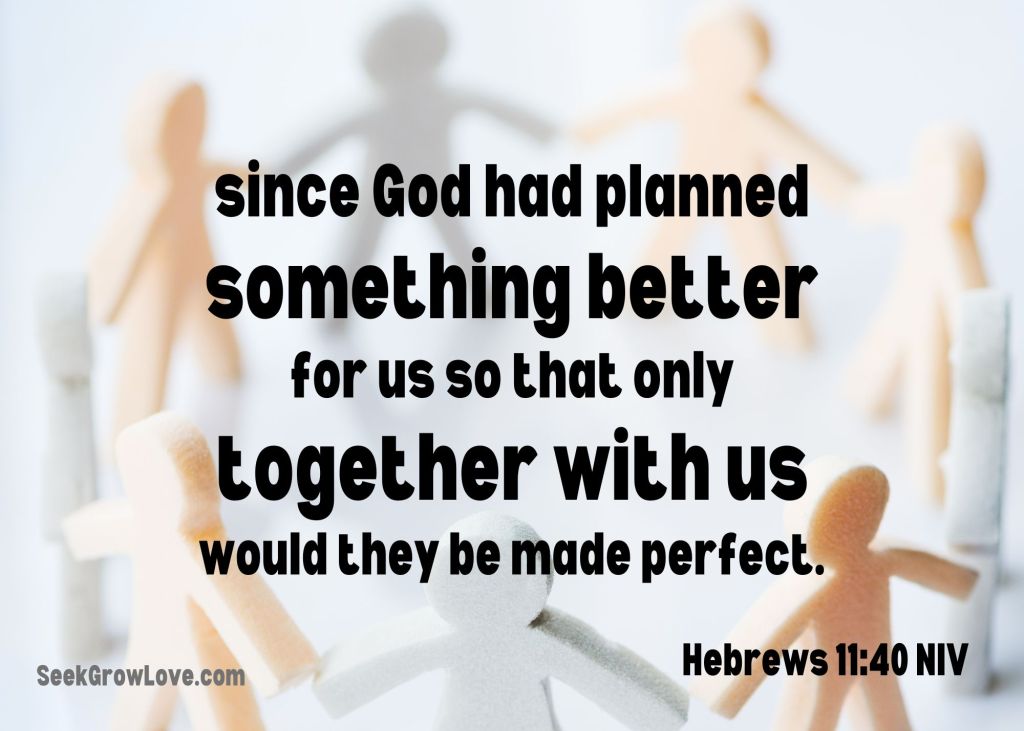
The opening verse of this chapter sets forth the premise of what is to follow: “Now faith is the reality of what is hoped for, the proof of what is not seen” (v. 1). The author will go through no less than 10 explicit individuals, and mentioning a list of several more, who exhibited faith in their life. And then the chapter concludes by saying “All these were approved through their faith, but they did not receive what was promised, since God had provided something better for us, so that they would not be made perfect without us” (vv. 39-40).
The chapter’s conclusion draws together the litany of exemplary witnesses by tying it to the faith that they share with the audience. And while the exemplars of old had not received the promise, it was by no fault of their own, but it was determined beforehand by God that in his grace, he planned for “something better” to be available to the readers that was not available in the past to all those faithful witnesses that were mentioned. And that “something better” was “to be made perfect” (v. 40).
Now, to modern readers the idea of being made perfect might not be the same as the biblical idea of being made perfect. In Hebrews, the idea of “perfection” entails the definitive forgiveness and putting away of sin, purification and consecration to God, and glorification (i.e., resurrection). And so, to be “made perfect” refers ultimately to eschatological salvation that is bestowed on the worshiper through the high priestly ministry of Christ (cf. 10:14).
But let’s think for a moment, why does the author need to go to such a great length throughout the chapter to simply demonstrate that believers prior to the new covenant did not receive what was promised? Why make the emphasis so extravagant?
One reason for the author’s inclusion of such a long description of exemplars of the faith is to celebrate those who stood with faith looking forward to the promise, but yet not receiving it in their lifetime. The testimony of all these witnesses is that “Faith holds onto the promise, even when the evidence of harsh reality impugns its integrity, because the one who promised is himself faithful” (William Lane, Hebrews [WBC], 395).
I think we have all probably dealt with times when we are holding on to faith, but it doesn’t seem like anything is happening or changing, and we didn’t actually get to see the outcome of our faith. This is what it was like for the believers in the old covenant who looked forward to the coming Messiah and the fulfillment of God’s promise. But we don’t have to look forward since Messiah has already come and has begun to fulfill what God promised.
Therefore, while we have not been “made perfect” yet to the fullest extent of what God has planned for those who trust in him, in Christ we have the definitive sacrifice for sin, the cleansing of our conscience, and a taste of the powers of the age to come. Let us continue to hold fast to our faith in hope of what God has promised that is yet to come: resurrection and final victory over the power of death, so that those who stood by faith before us can also be made perfect with us in God’s coming kingdom.
-Jerry Wierwille
Questions
What encouragement do you gain from reading of the heroes of the faith in Hebrews 11?
Which heroes of the faith are you most looking forward to being with when we together receive God’s promise and reward at the resurrection and coming Kingdom? Why?





 Seek Grow Love