A Psalm of Repentance

Psalm 32, 51, 86, 122

Create in me a clean heart, O God, and renew a right spirit within me. Psalm 51:10 ESV

Yesterday, we looked at the narrative and the outcome of David’s tryst with Bathsheba. We see David essentially commit murder to cover up his affair, and we see the prophet Nathan come and confront David about the evil that he has perpetrated.

David could have been dismissive. He could have just shrugged off Nathan’s confrontation and said, “This is where my heart led me.” He could have said, “God wants me to be happy.” But he does not deflect. Despite his error, David still desires to do what God desires of him. He wants to be right before God, and when the clarity and gravity of his treachery sink in, he shows contrition. Not combativeness. Not excuses. Contrition.

David knows that what he has done is wrong, and he knows that he is not capable of fixing himself and reorienting his life and priorities alone. He cannot wash himself clean of his sin, but God can forgive him and cleanse him of the sin that has come forth from him.

David sees what would later be written: God does not desire sacrifice, but repentance. Not a cheap get me out of this mess offering, but a recognition of the sin done and the brokenness of recognizing the gravity of the separation from God that sin causes. God accepts sacrifices, but he accepts these sacrifices from a clear conscience; he doesn’t desire sacrifices from a guilty one.

-JJ Fletcher

Reflection Questions

  1. Why do we struggle to see the gravity of our sin?
  2. How can we truly show contrition, not just be sad that we’ve had our sin found out?
  3. What can we learn from Psalm 51, a psalm of repentance?

Wrong Place, Wrong Time

2 Samuel 11-12
1 Chronicles 20

And in the spring of the year, at the time when kings go out to battle, David sent Joab, and his servants with him, and all Israel, and they laid waste the children of Ammon and besieged Rabbah, but David stayed at Jerusalem. – 2 Samuel 11:1 (REV)

                  In today’s reading, we see two realities. Both happened, but at different times and represent different things. In 2nd Samuel, we see David, king of Israel. Where do we see David? At home. Sitting on his keister and not doing what a king would normally be doing: overseeing his generals as they go out to battle.

                  David is not where he is supposed to be. He should be meeting with his generals. He should be motivating his armies. He should be praying and fasting and seeking out God’s direction for the safety and prosperity of Israel, but he’s back in Jerusalem. Twiddling his thumbs? Playing his harp? We don’t know what he was doing at all hours of the day when he held up in his palace.  We do, however, know what he was doing on one specific evening.

                  David is out walking on the roof, where he shouldn’t be, and he sees Bathsheba bathing. David does not turn away from seeing the nakedness of this woman whom he is not married to. He stares. He dwells. He obsesses. She’s beautiful. He needs to meet her. To be with her.

                  David ends up having her come into his home, and he has sex with her and gets her pregnant. We may have seen this story happen in the lives of some people we know, but this is high profile. This is a problem. A bunch of people are going to know what has happened, and this is going to be hard to explain to Bathsheba’s husband, Uriah, who is out at war, where he is supposed to be: fighting for the armies of the people of Yahweh. While the king is out preying upon the wife of his soldier.

                  David finds himself in a sticky situation, so he sends for Uriah and does his best to get Uriah to go have sex with his wife and cover his… keister. Uriah, however, cannot fathom such a thing while his comrades are off fighting a war. He refuses to even go visit his wife. This poses a major problem. People are going to know that Bathsheba is expecting, and they are going to know that Uriah hasn’t been with her in months, maybe longer. David tries multiple times, but no dice. Uriah is a man of honor and conviction, and that is not going to fly in this situation. David needs an out. David essentially puts out a hit job on Uriah. David cannot control his urges, so a good man dies.

The story unfolds. Uriah is dead. David marries his baby mama, and then the baby dies. Nathan the prophet comes to confront David and gets David worked up with a parable. David wants vengeance for the perpetrator in the story, but then the tables are turned when David is revealed to be the bad guy in the tale. David grieves, David repents, but the baby does not survive. It’s rough.

In 1 Chronicles 20, we see that it is the time when kings go out to war. And David goes out to war. And his armies thrive. He gets an awesome new crown. God blesses the armies of a king who acts in good faith. David is more than capable of doing the right thing, but even a man after God’s own heart can allow himself to fall off the rails.

Here’s the rub: Sometimes we get complacent. Sometimes we get lazy. Sometimes we do things, go places, consume content that we know we shouldn’t, but we’ve allowed ourselves to be in the wrong place at the wrong time, and we fall victim to the allure of the temptations of sin around us.

We’ve all allowed ourselves to be in bad situations that we could have avoided. Sometimes we may come out on top, but given enough opportunities to sin in the situations we create, we are bound to fall. We play with fire… and you know the cliché, but it’s true, we get burned.

-JJ Fletcher

Reflection Questions

  1. Can you recall some times you allowed yourself to be in a place you shouldn’t have been? What was the outcome? How could you have avoided putting yourself in that situation? What did you learn from it?
  2. What do you think of Nathan’s tactics of getting David to see the gravity of the wickedness that he had perpetrated?
  3. What does the story of David and Bathsheba teach us about grace, repentance, and forgiveness?
  4. If David can be forgiven for this travesty, who can you forgive that may have done much less harm in the way that they have wronged you?
  5. How does the contrast of 2 Samuel 11-12 and 1 Chronicles 20 sit with you? Does it give you any insight or change the way you perceive David’s sin?

More Sin and Straying

Judges 20-21

Judges 20-21 picks up where Judges 17-19 left off (and not in a good way). The Israelites assembled to discuss what had happened to the dismembered woman, and the Levite tells them his “truth.” He leaves out a few vital parts that may have drastically shifted how the Israelites handled the situation. He states that the men of Gibeah wanted to kill him and leaves out the part that his concubine was given to them (even though we see with hindsight the truth recorded earlier in 19:22-25). This false witness leads the Israelites down a dark path with lots of stumbling (as sin does to those who commit it and those around them). 

Instead of verifying the account of the Levite with even one or two more witnesses, they decide to confront and accuse the Benjamites. Unfortunately, the responses from the Israelites and the Benjamites reflected just how far they had strayed from God and the truth. The Israelites went to God, but not with a question about whether or not they should fight the Benjamites (or believe the Levite’s story), but with a question about who they should send first (20:18). The Benjamites, instead of searching for a way to settle things peacefully and purge the sin from among them, decide to go to battle as well (v.14). This doesn’t end well for the Benjamites. The Israelites (though experiencing their fair share of casualties) wiped out over twenty-five thousand Benjamites (v.35) and burned up their towns (v.48). However, it also doesn’t go well for the Israelites either. 

After realizing that they may have been a little harsh (or extremely harsh), they decide to find a way to help restore the tribe of Benjamin. Sadly, this only resulted in more death and suffering. People of Jabesh Gilead were killed (21:12), the Israelites grieved with and for the Benjamites (v.15), and the young women of Shiloh were caught in the crossfire (v.23). Israel had no king, no ruler, and they did as they saw fit. God was certainly in the picture for the Israelites but He wasn’t in the foreground (or close to their hearts and minds).

The consequences for sin aren’t anything to scoff at. In James 1:15 we read, “Then desire when it has conceived gives birth to sin, and sin when it is fully grown brings forth death.” Desire is where sin and death start, but it’s also where a Godly and Christ-centered life can begin. As a child, whenever I went to a Zoo or an Aquarium, I desired to be close enough to reach out and touch the animals God had created. However, as an adult, I understand why they took many precautions (such as very thick glass or bars) and certain animals were/are exempt from the petting zoo. Though I long for the day when “The infant will play near the cobra’s den, and the young child will put its hand into the viper’s nest,” (Isaiah 11:8 ESV) I’d like to keep my head, shoulders, knees, and toes intact in between now and then. God has given us desires, which, when handled appropriately, result in life to the fullest (both in this one and the next). However, when we place ourselves as a god, king, or ruler in our hearts and minds, we begin to live like the Israelites and lose God-given opportunities to live the way God intended for us.

-Jeffrey Seiders

REFLECTION Q’s

  1. The Levite told the Israelites his version of the truth and many people suffered. When you tell your version of the truth, is it aligned with God and His truth, purpose, and plan? If not, who can hold you accountable and help realign your truth with God’s?
  2. The Israelites eventually realized they had “gone too far” with the Benjamites. In what ways have you “gone too far” and realized you needed to do something about it? What did you do and could you have done more to prevent further pain and heartache?
  3. In James 1:15, we read about desire giving birth to sin, and sin bringing death. What desires do you have that have led you down a dangerous path? How can those desires, with God and His son in mind, be handled healthily for God’s truth, purpose, and plan in your life?

**Optional question: Some people look forward to seeing certain kinds of animals in God’s kingdom. What are you most looking forward to in God’s kingdom? Why?**

A Wake-Up Call

Judges 17-19

Judges 17-19 begins to paint the picture of how bad things had become amongst the Israelites. Each chapter contains many actions that break God’s commands to His chosen people. Chapter 17 begins with Micah and his mother. He steals from his mother, tells her that he stole from her (only after finding out that his mother had cursed it), his mother blesses him for returning it, and she makes him an idol with it!? What an outlandish way to handle the situation. If Micah was my brother and had stolen from my parents or someone and my parents would’ve found out, things would’ve been very different for Micah. 

As a child, my parents and I thrifted numerous times. We would find lots of fun, cool, odd, and quirky things to look at, touch, or buy (if we had the money). One day, we went shopping and I went to the toy section while my parents shopped elsewhere. I found a Yu-Gi-Oh card lying on a shelf with no price tag and thought it looked awesome. So, I showed it to my parents and brother and they told me something like, “Go and ask the people at the register if you can have it or see what they would charge you for it.” I, being scared to do something so profound (or at least it felt that way to little ol’ me), decided to just slip it in my pocket and take it with us (hoping my parents and brother would forget about it). Unfortunately for me (or fortunately for me now looking back at it), my parents saw me holding and looking at the card and boy did they discipline me for it. Not only did they not “spare the rod” but I was also told I had to take it back to the store, apologize to the staff there, and I was informed about the various biblical methods they could’ve used instead. I learned that day that stealing was not worth the pain it caused me or my family.

Micah, his mother, and the nation of Israel had strayed so far away from God that this kind of behavior (stealing, lying, and idolatry) was deemed to be acceptable behavior in their eyes. Micah would later continue in this foolishness as he had a shrine, made an ephod, household gods, and made one of his sons a priest. The Danites in chapter 18 weren’t doing any better. They burned down a peaceful city, attacked the people of Laish, and decided to set up Micah’s idol they took from him. Yet, if you thought these things were bad, reading chapter 19 we find more repulsive, vile, and cruel actions. A Levite who took for himself a concubine (v.1), a stop in a not-so-god-like place named Gibeah in Benjamin that wouldn’t take them in (v.15, 22), a horrible decision to give the Levite’s concubine over to be raped (v.25), a rude/cold response from the Levite the next morning (v.27, 28), and a brutal yet seemingly necessary decision to send 12 parts of the concubine to all the areas of Israel (v.29). My parents gave me a wake-up call when I needed one, and fortunately for me it didn’t result in death of any kind (though maybe a departure from or “death” to bad habits). All of the Israelites needed a wake-up call to return to God and they received one that spoke volumes (v.30).

-Jeffrey Seiders

REFLECTION Q’s

  1. Micah stole, lied, and practiced idolatry. In what ways have you stolen, lied, and departed from God’s law? How can you use what has happened to glorify God now?
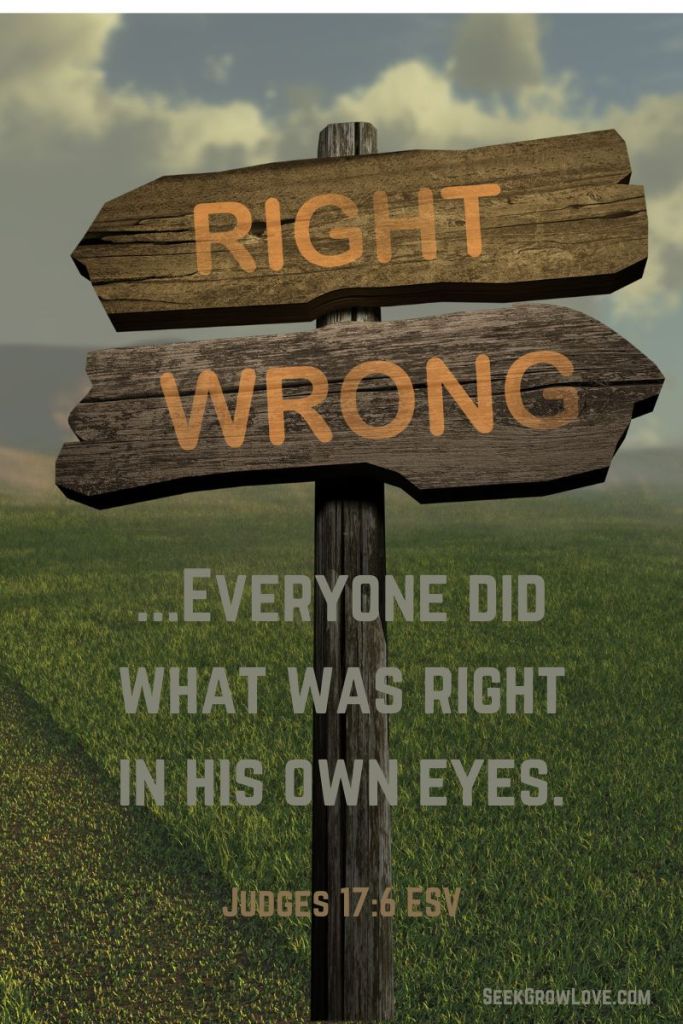
  2. Too often we see the people of this world “doing what they think is right in their own eyes.” How can we speak into their lives without “preaching at them” and bring them into a relationship with God and His son Jesus Christ? Is there anyone in your life you could discuss this with?
  3. Though the Levite did some horrific things, he elicited a response or call to action from the people of Israel. How can we, without acting like the Levite, bring the people around us into a place where they can “imagine” and feel the need to “do something” about their spiritual life?

Burned by Sin

Joshua 5-8

But the Israelites broke faith in regard to the devoted things: Achan son of Carmi son of Zabdi son of Zerah, of the tribe of Judah, took some of the devoted things; and the anger of the LORD burned against the Israelites. Joshua 7:1 (NRSV)

As God promised, He led the Israelites to victory over Jericho. It is to be ransacked and destroyed, and there are to be none left alive, aside from Rahab and her family. There were specific items (gold, silver, etc.) that were taken from the rubble that were to be set aside and placed in the treasury of the house of the Lord.

After this great blessing of victory, one would assume that everyone would honor the directives of God and be obedient to him, but alas, we’ve been here before. Despite God proving himself time and time again to be a God of his word, both in blessing and in punishment, this knucklehead named Achan decides to take a heap of these goods for himself, and he buries them underneath his tent.

The stuff is hidden, there was so much of it, no one is going to know. The only one that this affects is him, and he’s going to keep it a secret. Maybe, eventually, it will just seem like this is some of the swag that was received from the Egyptians as they sent their ancestors out of Egypt. I don’t know what exactly was going through Achan’s mind, but I’m sure we’ve all been there, deceiving ourselves, justifying the stupid decisions that we have made to disobey or to take something that we have no business possessing.

As I sit here, I am reminded of an instance where one of my brothers took something that did not belong to him. This would have been sometime in the mid to late 90s and I’m a little fuzzy on some of the peripheral details. But we get home after a trip to the grocery store (Bohning’s in Ponchatoula, LA, I believe), and we discover that my brother has in his possession a whistle pop. After further investigation, it is discovered that he has many of them; in fact, he has a FULL BOX of whistle pops. At some point while we were standing in the check-out line, he grabbed the box off the candy shelf and shoved it under his shirt or down his pants. Now, I’m assuming that my mom took him back to Bohning’s to return it, as had happened when other contraband candy items had “shown up” in our house.

Now, a 5-year-old is not going to get arrested for petty theft and is probably going to get some sort of punishment for their misbehavior, but that action did not just affect him. There is embarrassment when a parent brings their child in to cop to a misdeed, apologize, and return the uneaten contraband. The stakes are low in this situation, but the principle is there: sin and error do not just affect the perpetrator.

Israel is feeling a kind of high as their God has just handed their enemies to them, and they are going to press forward into the land. They go make military advances on Ai, but they are driven back; they do not experience deliverance against their enemies; they are driven back and several dozen of their comrades fall to the enemy.

How? Why? Why would God deliver them a fortress and then allow them to fall to a less powerful fortification?

Because sin doesn’t happen in a vacuum. Sin affects everything. You don’t have to sin against someone for them to be affected; there are plenty of indirect effects of sin. We don’t have to go into a laundry list of sins, but different sins can cause us to behave and think in certain ways that harm others. Sin can lead to anger. Sin can lead to spousal abuse or neglect. Sin can lead to broken relationships. Sin can lead to more and more sins being perpetrated. Sin can break hearts. Sin can put a wedge between a person and God, and I’m not talking about the person that sinned.

Achan’s sin caused God to be furious, and he withheld his blessing and protection from Israel. Achan’s misappropriation of riches, which had nothing to do with the battle against the people at Ai, led to the loss of a battle. The sin affected all of Israel. In this case, Achan lost his life because of his sin.

So, if there is unrepentant sin in our homes, in our churches, in our relationships, and our individual hiding places, we can expect that it is going to affect others in one way or another. Sin cannot be reconciled with good. Jesus died to free you from sin, not to free you to sin. Yes, sin is crouching at our door; your enemy, the devil, is on the prowl like a lion to devour you with temptation that leads to sin (1 Peter 5:8). But when we sin, we are not to try to justify it or explain it away. I’ve cited it already this week, but here it is again:

“If we confess our sins, he is faithful and just and will forgive us our sins and purify us from all unrighteousness” 1 John 1:9 (NIV)

Achan confessed his sin, but the damage had been done. He waited till he had been found out and others had suffered extreme loss due to his actions.

When we fall short, it is best to confess quickly before it becomes a bigger mess in our lives and the lives of those we love (or don’t even know).

-JJ Fletcher

Reflection Questions:

  1. Why is it so easy to overlook God’s commands?
  2. Is it difficult to read about the punishment for sin that is described in scripture? Does it lead you to a greater appreciation for the New Covenant in Christ’s blood?
  3. What thoughts did you have on Achan’s sin as you read through today’s reading in Joshua 5-8?
  4. Why is it easy to be blind to the way that our sin affects others?

Clean Before the Lord

Leviticus 14-16

Whenever we watch a movie or read a book, we are anticipating “the moment” in the story where everything comes to a climax and all the puzzle pieces finally come together: chapter 16 of Leviticus is that climax within this book. In this chapter, God gives a special ceremony for the Israelite people, later called Yom Kippur (the Day of Atonement). At this special ceremony, the sins of ALL the people were forgiven and forgotten: at this special annual celebration, every person in God’s family gets a fresh start.

Once a year, the high priest would offer a sin offering for himself, his family, and all the people of Israel within the tabernacle. Since atonement and forgiveness are only possible through blood (Leviticus 17:11), the high priest offers this sacrifice on behalf of all the people to cover all their past yearly sins. He also presents a “scapegoat” before the people, a goat that would bear the sins of all the people and be led out into the wilderness, representing their sins being carried away and forgotten forever. Meanwhile, the people were expected to “deny themselves” in humility before God, repenting and mourning over the ways that they had offended their God throughout the year (and likely fasted from food and water).

What a wonderful and merciful act that God blessed His people with! This was the most important day of the year for every Israelite: the day that they could walk into a new year, cleansed and forgiven of every past mistake they’d made. God didn’t have to provide this ceremony: He only allowed it because He loves His people and understands that we are only dust.

As far as the east is from the west, so far has He removed our transgressions from us. Just as a father has compassion on his children, so the LORD has compassion on those who fear Him. For He Himself knows our frame; He is mindful that we are but dust.” – Psalm 103:12-14 NASB1995

Unfortunately, under the Old Covenant, only the high priest was able to bring about this forgiveness and atonement: only he could offer the sacrifice needed to cover over the sins of the people. There hasn’t been a tabernacle, a Temple, or a priesthood for Israel since 70 AD… based on the standards of Leviticus, it is impossible for the people to have their sins forgiven before God. That is, unless God provided a better way, which He did.

We find out in the book of Hebrews that Jesus Christ has taken the role of our new High Priest, and also as the sacrifice we need to take away our sins: not only just for the year, but forever.

Every priest stands daily ministering and offering time after time the same sacrifices, which can never take away sins; but Jesus, having offered one sacrifice for sins for all time, sat down at the right hand of God, waiting for that time onward until his enemies be made a footstool for his feet. For by one offering he has perfected for all time those who are sanctified.” – Hebrews 10:11-14 NASB1995

We all have regrets and understand that we haven’t lived perfectly: what if you knew that tomorrow all those deeply regretful moments would be washed away, never to be remembered again? Would that change the way you lived before God today? Under the New Covenant, we have the opportunity to live completely free from the guilt and pain that comes from regretful sin, because Jesus died in our place: this is an opportunity available to you, not just once a year, but every single day.

We all have the choice to live differently today than we did yesterday, because Jesus has removed all our sins from the past. What will you choose to do?

-Talon Paul

Reflection Questions

  1. What similarities and differences do you see between Aaron as high priest and Jesus as high priest?
  2. What regrets, guilt, and shame have you experienced? Are you living with them today? Do you need to? What are the New Covenant’s steps to accepting God’s free gift of forgiveness? What will you choose to do?
  3. Did living under the Day of Atonement mean they could do whatever they wanted because once a year all the sins would be forgiven? Does living under the sacrifice of Jesus mean we can do whatever we want because we have forgiveness of sins every day of the year?

Just for the Guilty in any Matter…

Leviticus 5-7

Confession – yesterday we talked about Christ’s sacrifice replacing the Old Testament offerings. In those sacrifices, it was just that, a sacrifice – the people had to give something that they could have enjoyed because of their sin.

Even though there was a loss, the people had no clear way to alleviate the weight of guilt and find forgiveness in their lives. God has provided another way to help with that – Confession.

Confession is something that is hard to do. Many lie, deny and push blame on others just to avoid confessing. It is something that God asks of us not for his benefit but for ours. I remember being told often as a kid the only way to fix a problem  is to realize there is one. And that is what confession is.

Further, confession gives a proper view on sin, God and ourselves.

The punishment for sin is death – we need a proper view of sin. I have often heard of people talk about their sin as “Not that big of a deal.” Sin is just that, SIN. If it is wrong, we shouldn’t do it. Sin that is not confessed and not repented of leads to missing out on the Kingdom.

God cannot be in the presence of sin – we need a proper view of God. Our God is a holy God. He expects purity not just in our actions but also in our hearts. (Matt. 5:8 says the pure heart will see God.)

We cannot do it on our own – we need a proper view of ourselves. We often try to fix our problems on our own. Sin is not something we can fix on our own or earn enough to repay the debt. We need a savior and Christ is willing to step in on our behalf.

A couple tips on confession:

Confess immediately – when you know you have done something wrong do not push it off. It is easy to push it off.

Confess specifically – I hear a lot of prayer that vaguely ask for all sins to be forgiven. Make it personal and specific.

Confess honestly – Take it serious and do not make promises you know you will not keep.

Confess to someone else – this is something I push in the church. For some reason people are afraid of letting others know about their sin. Most will acknowledge they are a sinner but would never discuss their struggles for fear of other’s judgement. Find someone you trust and create an open discussion and ask for accountability.

John Wincapaw

(Originally posted February 14, 2020)

Reflection Questions

  1. What are you guilty of? What have you tried (lie, deny, blame, etc…) to avoid correctly addressing the problem?
  2. How does not confessing hurt you? What are the benefits of confession?
  3. What has God been waiting to hear from you? Talk to Him today.
  4. Do you have an accountability partner? If not, who do you know who would make a good accountability partner?

On Your Behalf

Leviticus 1-4

At the end of Exodus, after the Tabernacle has been finally built, God’s glory comes to rest in it, but Moses is unable to enter (Exodus 40:35). However, at the beginning of the next book, Numbers, Moses is speaking with God in the Tabernacle (Numbers 1:1). This middle book, Leviticus, is the explanation about what is necessary to come into God’s presence and enjoy His fellowship. Since God is so holy and separate from us, there are things that we are expected to do in order to come into His presence. Thankfully, out of His love, mercy, and desire to be with us, God provided a way for us to come before Him, both for the Israelites back then and for Christians today.

Immediately in Leviticus 1 and 2, we find descriptions of different animal sacrifices and what is necessary to perform certain rituals in God’s presence. Since we don’t have a Tabernacle or Temple to worship in, and we don’t perform animal sacrifices anymore, how is this really relevant for us?

In Leviticus 1:4, we are told that these animals are dying in the place of the person who is offering it to God. The truth of these sacrifices is simple: sin is serious and deserves death. Whenever you do something that is contrary to God’s laws, both minor and major, it is offensive to the One who gave you life in the first place, and we deserve death for it. The mantra of our age that “everyone is naturally good in their own way” is simply not true; we are all broken, sinful, and corrupt human beings in need of God’s saving grace. For the Israelites back then, the answer to the problem was an animal sacrifice to cover their offense against God; for us today, it is the one sacrifice of Jesus Christ that is sufficient.

The New Testament continues the teaching that sin is serious, offensive to God, and deserves death: “For the wages of sin is death…” (Romans 6:23a) We cannot forget the seriousness of our situation, because when we do, we lose the power of the gospel. The good news for us is that we don’t have to die for the things that we did; Jesus died in our place, like the animal sacrifices in Leviticus. “… but the free gift of God is eternal life through Christ Jesus our Lord.” (Romans 6:23b) The sacrifice of Jesus was sufficient to cover over every sin that we have ever committed or will commit (Hebrews 10:10). We need to thank God for providing a way out of our sinfulness, both in Leviticus and today through Jesus Christ. Through this sacrifice, we can enter the presence of God and enjoy fellowship with our heavenly Father (Hebrews 4:16).

-Talon Paul

(Originally posted February 15, 2021 for SeekGrowLove)

Reflection Questions

  1. What were the duties or responsibilities of the Israelites to come before God to be forgiven? What are the duties or responsibilities of the Christians to come before God to be forgiven?
  2. How many times do you find the phrase ‘without defect’ or blemish? Why was that important to God for the Israelites? How does that apply to Jesus as sacrifice?
  3. As Christians we can bring (living) offerings and sacrifices to God, not to earn salvation and forgiveness, but to thank God and show we live for Him and He has first place. What would you like to offer/sacrifice to God and how can you do it?

Searching for Cause and Effect

Job 21-25 (NLT)

The book of Job is poetry not narrative and in the English it does not necessarily read as well as it could.  Try reading this epic poem in a version of the Bible like the New Living Translation which I am quoting here, as it gives the speeches and poetry more flow. 

We don’t know who wrote the book but it is probably not Job himself.  Maybe Elihu?  Or Moses?  What about Solomon?  We don’t know if the record is exactly what the people involved said or is it the gist of their arguments?  Holy men of God wrote what God showed them to write and the scene in heaven at the beginning argues for someone who is very conversant with God and the Hebrew scriptures.  Remember that the timeframe of this book predates the Law of Moses and the OT writings, but is very complimentary with them.

In today’s chapters Job continues to proclaim his innocence, and the comforters continue to reason with him from their human logic and understanding of God.  Job does not disagree with their logic, but protests that he does not deserve God’s punishment because he has not sinned.

Job 21:1-6(NLT) Job’s Seventh Speech: A Response to Zophar
1 Then Job spoke again:
2 “Listen closely to what I am saying.
That’s one consolation you can give me.
3 Bear with me, and let me speak.
After I have spoken, you may resume mocking me.
4 “My complaint is with God, not with people.
I have good reason to be so impatient.
5 Look at me and be stunned.
Put your hand over your mouth in shock.
6 When I think about what I am saying, I shudder.
My body trembles.

Job 21:34 34 “How can your empty clichés comfort me?
All your explanations are lies!”

Job 22:1-5(NLT) Eliphaz’s Third Response to Job
1 Then Eliphaz the Temanite replied:
2 “Can a person do anything to help God?
Can even a wise person be helpful to him?
3 Is it any advantage to the Almighty if you are righteous?
Would it be any gain to him if you were perfect?
4 Is it because you’re so pious that he accuses you
and brings judgment against you?
5 No, it’s because of your wickedness!
There’s no limit to your sins.

Human logic demands that there is cause and effect in this life, even in our relationship with God.  We continue to try to justify our own selves by pointing out to God all the good and minimizing all the evil of our hearts.  Human nature causes us to want to earn our salvation and position because this is how we do it in the world.  Our positions and wealth, family, friends, and possessions are a result of our hard work and shrewd dealing.  Even if we are Christian we usually see it that God is the giver of all that is good, but I must deserve it because I have served Him so well. 

Job 22:26-30(NLT) “Then you will take delight in the Almighty
and look up to God.
27 You will pray to him, and he will hear you,
and you will fulfill your vows to him.
28 You will succeed in whatever you choose to do,
and light will shine on the road ahead of you.
29 If people are in trouble and you say, ‘Help them,’
God will save them.
30 Even sinners will be rescued;
they will be rescued because your hands are pure.”

Job 23:1-5(NLT)  Job’s Eighth Speech: A Response to Eliphaz
1 Then Job spoke again:
2 “My complaint today is still a bitter one,
and I try hard not to groan aloud.
3 If only I knew where to find God,
I would go to his court.
4 I would lay out my case
and present my arguments.
5 Then I would listen to his reply
and understand what he says to me.

Job 23:10-13 (NLT) “But he knows where I am going.
And when he tests me, I will come out as pure as gold.
11 For I have stayed on God’s paths;
I have followed his ways and not turned aside.
12 I have not departed from his commands,
but have treasured his words more than daily food.
13 But once he has made his decision, who can change his mind?
Whatever he wants to do, he does.

-Tom Siderius

Questions for Reflection:

What are the true motivations of your heart for the things that you do?

Are we trying to earn our way to the grace that God gives freely?

The Righteousness of God

Job 11-15

Our reading today starts with Zophar’s reply to Job’s defense of his righteousness. 

Job 11:1-6(NLT) Then Zophar the Naamathite replied to Job:
2 “Shouldn’t someone answer this torrent of words?
Is a person proved innocent just by a lot of talking?
3 Should I remain silent while you babble on?
When you mock God, shouldn’t someone make you ashamed?
4 You claim, ‘My beliefs are pure,’
and ‘I am clean in the sight of God.’
5 If only God would speak;
if only he would tell you what he thinks!
6 If only he would tell you the secrets of wisdom,
for true wisdom is not a simple matter.
Listen! God is doubtless punishing you
  far less than you deserve!

Job fires right back at Zophar with a defense of his words and his position.

Job 12:1-5(NLT) Then Job spoke again:
2 “You people really know everything, don’t you?
And when you die, wisdom will die with you!
3 Well, I know a few things myself—
and you’re no better than I am.
Who doesn’t know these things you’ve been saying?
4 Yet my friends laugh at me,
for I call on God and expect an answer.
I am a just and blameless man,
yet they laugh at me.
5 People who are at ease mock those in trouble.
They give a push to people who are stumbling

Job continues to plead with the comforters and God that he has no iniquity in him for God to judge him so harshly.  As the book goes on, we see these themes repeat with the “comforters” replying.

Job 13:20-24(NLT) “O God, grant me these two things,
and then I will be able to face you.
21 Remove your heavy hand from me,
and don’t terrify me with your awesome presence.
22 Now summon me, and I will answer!
Or let me speak to you, and you reply.
23 Tell me, what have I done wrong?
Show me my rebellion and my sin.
24 Why do you turn away from me?
Why do you treat me as your enemy?

Job 15:1-6(NLT) Then Eliphaz the Temanite replied:
2 “A wise man wouldn’t answer with such empty talk!
You are nothing but a windbag.
3 The wise don’t engage in empty chatter.
What good are such words?
4 Have you no fear of God,
no reverence for him?
5 Your sins are telling your mouth what to say.
Your words are based on clever deception.
6 Your own mouth condemns you, not I.
Your own lips testify against you.

The direction that all these discourses are going is to bring us to an understanding of what is the essence of the book.  Job is without “sin” it says in Chapter 1.  Job 1:1(NLT) “There once was a man named Job who lived in the land of Uz. He was blameless—a man of complete integrity. He feared God and stayed away from evil.”  But this verse focuses on the works of man in relationship to God, not the righteousness of God and the justice that His righteousness demands from us.  We can never accomplish by our own effort or will the goodness or perfection of the righteousness of God.  We have a rebellious sin nature that needs to be paid for and atoned for.  In order to have a relationship with the just God we need to be changed from what we are.  Today we see this section of Isaiah 53 fulfilled in our lives because Christ is the way that God has made payment for our rebellious nature.  Only by being changed in Christ can we overcome the crushing defeat of our best efforts to be good.  Our lives thankfully are subject to God’s mercy and grace in all we do. 

Isaiah 53:10-12 But it was the LORD’s good plan to crush him
and cause him grief.
Yet when his life is made an offering for sin,
he will have many descendants.
He will enjoy a long life,
and the LORD’s good plan will prosper in his hands.
11 When he sees all that is accomplished by his anguish,
he will be satisfied.
And because of his experience,
my righteous servant will make it possible
for many to be counted righteous,
for he will bear all their sins.
12 I will give him the honors of a victorious soldier,
because he exposed himself to death.
He was counted among the rebels.
He bore the sins of many and interceded for rebels.

Praise God for the gift of the Lord Jesus Christ that has given us new life in him.  Have a great day with God today.

-Tom Siderius

Questions for reflection:

Do you understand the statement about our “bent” nature and what does that mean (hint Rom 7:17-20)?

How can we start to see God in all His grace and mercy today?