Getting Back to Business

1 Corinthians 5-8

Devotion by Emilee (Ross) Christian

I really enjoyed today’s reading. Paul had some zingers that actually got me laughing – my favorite being 8:2. In our reading today, we learn this letter is a response to one from the Corinthians (7:1). After a lengthy introduction in chapters 1-4, Paul gets right to addressing some specific concerns regarding the Corinthian church. There is a lot that can be discussed here, but the key seemed to be Paul encouraging the Corinthian church to remove distractions and get back to the business of spreading the Gospel. 

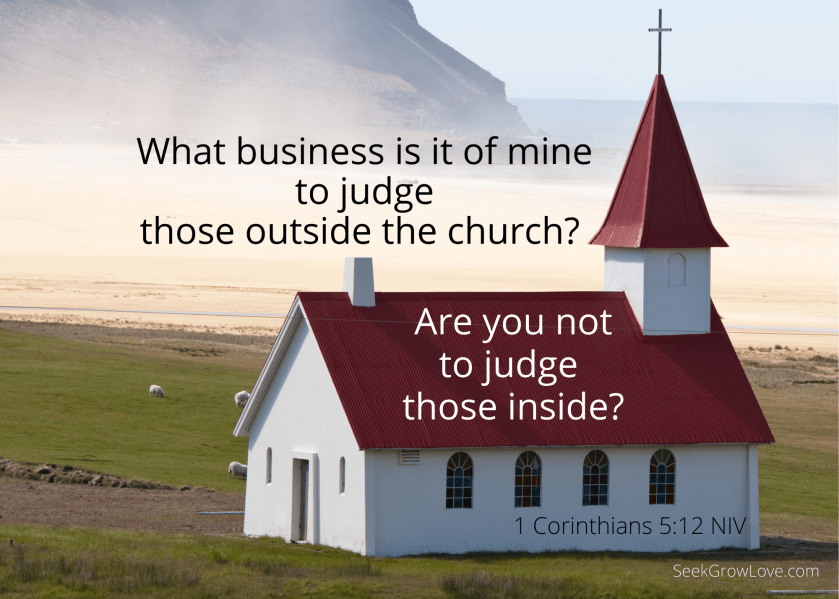
Earlier this week I wrote about how the early church was moving in the days of the Apostles. In today’s reading, we see a church that has come to a standstill. It seems the Cornintian church lost focus on spreading the Gospel and what it meant to be the body of Christ. Paul mentions when he told the church to stay away from people “who indulge in sexual sin, or are greedy, or cheat people, or worship idols” he was referring specifically to believers who partake in these actions (5:10 NLT). Paul plainly puts that to stay away from all such people, you’d have to leave this earth – that was another one of those zingers I found humorous. The problem Paul has with the Corinthians is they are allowing a man living in sexual sin with this step mother to be an active member of their church. It’s a distraction. It’s giving the church a bad name, as Paul writes even pagans don’t tolerate such behavior. Paul is NOT telling the church to avoid sinners, but he is telling us to get the sin out of the church. There is a difference. Allowing one who is actively participating in sin with no signs of repentance within the church causes a distraction. Discord can break out amongst the people in the church over the issue. I believe Paul is also concerned with the Corinthians giving the church a bad name, in turn hindering the spread of “sincerity and truth” (5:8 NLT). He continues this idea in chapter 6, regarding the Corinthians use of the public courts to settle disputes. He doesn’t like that this is being done in front of non-believers. Why? Because, it is distracting from the Gospel message. It’s the same way with the issues of marriage and food discussed in chapters 7 and 8. 

We have to remember the church was on a mission. Our New Testament stories and scripture come from what the early church did. Paul understood the importance of the movement and the urgency to share the Gospel. It seemed this specific Corinthian church had forgotten. Paul is urging the Corinthians to remove distractions and get back to the business of the church. I believe that is the biggest take away from today’s scripture. It’s not about whether we should be married or not, whether we eat this or that. It’s not even about what people we should avoid or allow in the church. It’s about refocusing the efforts of the church to do the work of Christ. Jesus tells us the two most important commandments are to love God and secondly love others. That is the movement to which Paul wants the Corinthians to return. It must be our focus as well. Paul sums it up pretty nicely in his opening statement in chapter 8, “But while knowledge makes us feel important, it is love that strengthens the church” (verse 1 NLT). 

Reflection Questions

  1. What distractions have gotten in the way of you intentionally spreading the Gospel? How can you minimize them (or eliminate them or use them to your advantage – depending on what your distractions are) so that you focus more on how to best love God and love others which must include spreading the good news?
  2. What should our response be to sin in the church? What should our response be to sin outside of the church? Why the difference? What happens when we get it mixed up and treat outside sin as we are supposed to treat inside sin? What happens when we get it mixed up and treat inside sin as we are supposed to treat outside sin?
  3. After reading the whole Bible passage today, re-read 1 Corinthians 8:2. What is Paul saying in this verse? Why is he saying it? What can you learn from it? And how could you put it into practice?
  4. What do you think God wants you personally to learn and put into practice today from this letter from Paul to the church in Corinth?
Are you Zealous for God?

Old Testament Reading: Exodus 22 & 23
Psalms Reading: Psalm 40
* New Testament Reading: Romans 10

Paul starts Romans 10 like he started Romans 9, wishing that Israelites would be saved.  He lamented in verses 2-4, “For I can testify about them that they are zealous for God, but their zeal is not based on knowledge.  Since they did not know the righteousness that comes from God and sought to establish their own, they did not submit to God’s righteousness.  Christ is the end of the law so that there may be righteousness for everyone who believes.”

Are you zealous for God?  If so, great!  But as Paul pointed out, zeal is not enough.  Do you try to establish your own righteousness (through rigidly following a bunch of rules or making up your own rules)?  That didn’t work out too well for the Israelites, and won’t work out well for you either.

Fortunately, Paul revealed what *is* needed in Romans 10:9-10, “If you confess with your mouth, “Jesus is Lord,” and believe in your heart that God raised him from the dead, you will be saved.  For it is with your heart that you believe and are justified, and it is with your mouth that you confess and are saved.”

This sounds too simple to be true, but it is.  We need to publicly proclaim “Jesus is Lord” – and live it, not just say it.  And we need to believe that God raised Jesus from the dead – not just head knowledge, but knowledge that will transform our lives.  If we do this, we will indeed be saved!  Praise God!

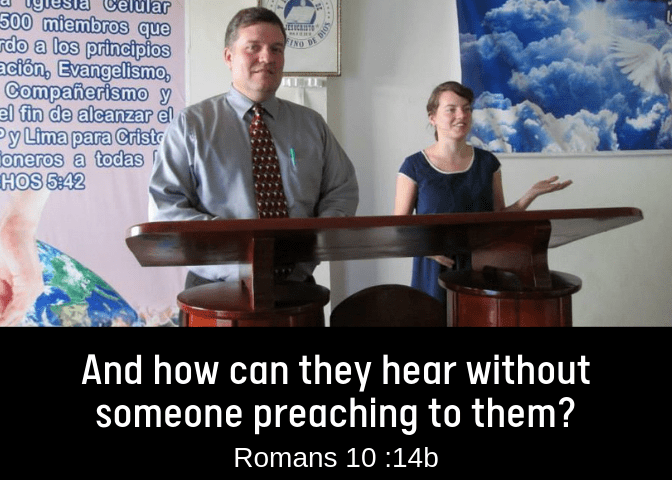
Since this is true, evangelism is critical!  Paul points out in Romans 10:14-15, “How then can they call on the one they have not believed in?  And how can they believe in the one of whom they have not heard?  And how can they hear without someone preaching to them?  And how can they preach unless they are sent?  As it is written, “How beautiful are the feet of those who bring good news!”

If we have the right relationship with God, we will have the love of God in our hearts.  And just as God doesn’t want anyone to perish, we too won’t want anyone to perish.  But how can people be saved if they don’t know about God and Jesus?  And how can they know unless someone tells them?  In the “Steve Mattison” translation, this passage pretty clearly says that you and I have a responsibility to tell others about the good news of the gospel, and you and I have a responsibility to send missionaries to tell even more people.  How are you doing with that?

A lot of people who dabble at Christianity need to get serious about going all in with God or quit pretending.  In Revelation 3:15-16, Jesus said, “I know your deeds, that you are neither cold nor hot.  I wish you were either one or the other!  So because you are lukewarm – neither hot nor cold – I am about to spit you out of my mouth.”

You may be wondering how does this apply to you?  I’m glad you asked.

Have you made a public confession that Jesus is your Lord?  If so, does your life reinforce or contradict that confession?

Do you believe in your heart that God raised Jesus from the dead?  If so, does your life bolster or refute that head knowledge?

Are you actively spreading the gospel and/or funding missionaries so they can spread the gospel?

-Steve Mattison

Reflection Questions

  1. See Above!
  2. What has God revealed about Himself today?

Rapid Spread

2 Thessalonians 3

Sunday, September 4

There is no doubt the last couple years have been in disarray. Mainly because of the Coronavirus. One of, if not the fastest, spreading viruses that has existed in the modern era. Since its unveiling, the world has shut down, economies have crashed, people have died and overall the world has changed. All because of one rapidly spreading disease.

I realized something today as I read the passage for today, 2 Thessalonians 3, if something so negative could change the world so much, why couldn’t something good change it even more. The first verse of 2 Thessalonians 3 reads, “Finally, brethren, pray for us that the word of the Lord will spread rapidly and be glorified, just as it did also with you;”

Now you may see where I am going with this illustration. If a disease can be so impactful why would the Gospel not be even more impactful? Since Jesus was revealed to us by God as the Messiah, the world has changed but for the better, and people are finding more life than ever with his message. We have an opportunity to spread the Gospel, and I know that it is way more beneficial to the world than some dumb virus. With the power of God I hope that you will remember to spread the word just as fast if not even faster than any disease that exists. It is ultimately the Gospel that wins in the end.

-Jesse Allen

Application

  1. Even the great evangelistic missionary Paul asked for prayers in spreading the gospel. Who will you ask to be praying for your efforts to spread the gospel? Who will you be praying for?
  2. What value do you put on the gospel message?
  3. What other instructions did Paul leave with the Thessalonians in this chapter?What were they to do with believers who did not follow these directions?

Even in the Face of Strong Opposition

1 Thessalonians 2

Monday, August 29, 2022

Yesterday, we read about how the Thessalonians turned from their idols to serve the one true God.  However, this caused some problems to arise for them.  Those around them still worshiped the idols and chose to persecute them.  But Paul has advice for them on how to continue to stand firm in their faith in the midst of all this opposition.


At the very beginning of the chapter, in the first two verses, Paul explains that they came to witness to the Thessalonians right after they had faced persecution in Philippi.  Paul says that in Philippi they faced much suffering and mistreatment.  He continues to say that in Thessaloniki they continued to face lots of opposition when they worked to spread the gospel.


Many people would have stopped after facing serious persecution in one city.  Many more would have stopped when they saw the opposition against them in the next city.  But Paul and his companions continued to spread the gospel throughout all these hardships.  By telling the Thessalonians about his problems, Paul encourages them by showing that it is possible, when you have God, to stand firm in the faith and to continue doing God’s will.  We should let this also encourage us because we know that Paul, in the midst of all the troubles of this world, continued to be one of the greatest witnesses to the whole world.


Paul continues by describing their attitudes in sharing the gospel, even while they were faced with persecution.  In verse 7, he describes themselves as “gentle among [them], as a nursing mother tenderly cares for her own children.”  Paul, later in verse 12, explains why they acted in that manner.  He says that it was “so that [the Thessalonians] would walk in a manner worthy of the God who calls [them] into His own kingdom and glory.”


In the midst of suffering and persecution, many people would have acted in anger against those who were causing this.  However, by doing this you are more likely to drive people away from God than you would be to bring them to Him.  But, when you act as Paul and his companions did, being gentle in the midst of persecution, you become an imitator of God, showing love to those who are your enemies.  Through this love, people will come to know God and walk in the way that God has called them to walk.


While this letter may have been written to the Thessalonians, it doesn’t apply only to them.  We also need to make sure that we are not letting persecution stop us from doing God’s will.  When we continue to do the work that God has called us to do in the midst of opposition, we need to make sure that we do it in the attitude of love and gentleness.

-Kaitlyn Hamilton

Questions for Reflection and Discussion

  1. What encouragement do you gain from hearing Paul’s testimony?
  2. Can you think of a time you faced opposition while spreading the gospel? Did it stop you – or did you continue, with God’s help? If you can’t think of a time you were spreading the gospel – how can you start now?
  3. Paul says, “We are not trying to please people but God, who tests our hearts” (1 Thessalonians 2:4 NIV). Can you say the same? Are there any areas where you slip into people pleasing mode rather than concentrating on what God wants to see from you? How does this relate to spreading the gospel?

Not Fair!

Matthew 20

January 20

That is not fair!

Have you ever found yourself saying this very same thing? A coworker or classmate does not seem to be doing their share of the work but they get the same pay or grade as you, maybe even better. Maybe you say it when nothing seems to be going your way; car troubles, relationships fractured, bad grades, your sanity cracking. We all experience situations that make us want to scream at what we perceive as an unjust life.

But what makes one thing fair and another unfair?

In Jesus’ parable of the workers in the vineyard, everyone was paid the same. Is that not fair? The first workers agreed to a set amount, reasonable pay for a day’s labor. The other workers only agreed to work for what was right. They left it to the discretion of the landowner. In his generosity the most recent hires received what he had promised the original workers. Those who were hired first said nothing as the landowner began to dole out the money. Because of his generosity towards the newer workers, they expected more.

And that is the key concept that strains so many aspects of our life; what we expect. Our expectations make it difficult sometimes to see God answering our prayers or His hand actively working in our lives. Our expectations may set us up for failure in our schools, our jobs, our relationships with one another, and certainly in our relationship with God through Jesus. If our expectations are not met then, “I guess I did not really need to learn that,” “It will not matter in the ‘real’ world,” “I will just find a new job,” “I do not need anyone else.”

Our expectations, our limited understanding of all that is makes us think that God must have failed to answer our prayers, He is not here with us, He does not care. The reality is that could not be farther from the truth! God loves us all! He is with us in every moment but rarely how we would expect.

This parable has a double lesson to teach. The first is that God is just. God alone rightly discerns what is fair and unfair. The wages of sin is death (Romans 6:23). If we truly want life to be fair, we would all be dead the first time that we sinned. If that were the case, I doubt that humanity would exist and we would not even be here to debate the fairness of life.

God’s justice is tempered by His abundant love. In His love for us He is merciful and forgiving. Those who come to God through Jesus, will all receive the same wage when the days are done: eternal life and citizenship in God’s Kingdom, to be called His children!

This message is reiterated as Jesus addresses the request of James and John’s mother. They have an expectation of their place in God’s Kingdom and their mother wants assurance that it will be so; after all they were among the first disciples to be called by Jesus. Jesus answered this question through the parable before it could even be asked, and still it was asked.

The second lesson to learn from the parable takes us to Matthew 9:35-38 and 28:18-20. We are the workers, called to go out into all of the world and make disciples of all the nations. We have been given a task, a responsibility, a privilege to live our life for God and preach the Good News of His Coming Kingdom so that everyone would have the opportunity to choose to come to Him through Jesus, our savior!

This is not easy but it is immensely satisfying. What we do and say here in this age can open people’s eyes to see the glorious future our amazing God has planned for all who enter His vineyard. We may never give the physically blind back their sight but thanks to God’s love and power we can heal the spiritual blindness of those we encounter each day. Rely on God’s power, His plan, and His will. Trust in Him with all of your heart, soul, and mind and rejoice in knowing that the God of all creation will wipe away your tears and call you son or daughter!

-Jeff Ransom


Questions for Reflection and Discussion

  1. What are your expectations of God as you pray? Do you have a preconceived notion of what an answered prayer looks like? Can you think of times when you missed His answer initially only to see it later on?
  2. Do you see circumstances in your life as being unfair? Think about how they might be helping you to grow stronger in your relationship with others and especially with God through Jesus. It is difficult sometimes but how can you turn your view of these circumstances around? Our response to situations is often more powerful than the situation itself.
  3. What does your work within the vineyard look like? How are you working to spread the Gospel message of salvation through Jesus and the Coming Kingdom of God? Is there someone specific that you can think of who is blind to God’s love? How can you help them to finally see?

Let the World See

1 Timothy 1

Welcome!

Today’s passages seem to have some different main themes, so while all of these are valuable, we will be focusing mainly on 1 Timothy 1 for the purpose of keeping this devotional to a reasonable length 😊

1 Timothy 1 is written by a very dedicated and enthusiastic believer, Paul.  Paul is a very impressive man with an incredible testimony (that we get to see a little bit here) and clearly has a passion for the Kingdom.  This is why I sometimes have to re-read his messages to better comprehend just how deeply he cares for people and soak up all the energy for spreading the gospel he has!  Paul tells Timothy that God’s plan operates by faith (v. 4) and that our role as believers is to have love that comes from a pure heart, a good conscience, and a sincere faith (v. 5).  I LOVE that description of who Christians should be in the world!  Loving, Good, and Sincere.  Do you think the world today has that view of Christians? Or do you think that unfortunately, the world has the view of Christians who turn to fruitless discussions regarding the law (v.6-7)? 

It can be hard to swallow verses like 1 Timothy 1:9 where it says “the law is not for the righteous, but for the sinful”, if you are a sinner and know a Christian who has fruitless discussions about the law.  However, if more Christians today took their righteousness and expressed the “glorious gospel” that has been entrusted to them (v. 11), I have a feeling that it would be much easier to reach those who do not know the law!  The implied context in this passage is not expressing the idea that once you are a believer you don’t have to follow the law, but rather that once you are a believer your focus should shift off yourself and your “good works”, and move towards reaching others who need to know the law.  Paul models a great example of how to approach others about Jesus, by telling them that Christ came to save ALL sinners, including the worst of them all, which was himself! (v.15) When we openly share the impact Christ has in our lives and humbly recognize that we are all sinners, it becomes much easier to reach those who need salvation just as much as we do.

This is not to say that discussions of the law should not happen amongst believers!  Paul tells Timothy to strongly engage in battle to avoid having a shipwrecked faith (v. 18 -19).  To be prepared for battle, it’s important to know what you are up against and how to combat it!  What is key here is that our battle is not one meant to destroy arguments or put down people by boasting of our own righteousness, but rather our battle is against the evil one who is dedicated to keeping people out of the Kingdom.  Our battle is fighting for the citizenship of an eternal Kingdom, for ourselves and for everyone we meet.  The law is one tool we use to win that battle!  Another tool is our own testimony, another is the story and purpose of Jesus’ life, death, and resurrection, and yet another is simply sharing how amazing our God truly is.

Isaiah 40:28-31 provides a great passage to reach others with; I encourage you to memorize it for the sake of winning the battle!

“Do you not know?  Have you not heard?  Yahweh is the everlasting God, the Creator of the whole earth.  He never grows faint or weary; there is no limit to His understanding.  He gives strength to the weary and strengthens the powerless.  Youths may faint and grow weary, young men stumble and fall, but those who trust in the LORD will renew their strength; they will soar on wings like eagles; they will run and not grow weary; they will walk and not faint.”

-Sarah (Blanchard) Johnson

Today’s Bible reading plan passages can be read or listened to at BibleGateway.com here – Isaiah 39-40 and 1 Timothy 1

Big Bold Prayers

Isaiah 37-38 and 2 Thessalonians 3

Welcome back friends!

Today in Isaiah 37 we see a glimpse of Hezekiah’s prayer life and the boldness he has when asking God for deliverance.  This boldness is not in an outward appearance…when Hezekiah hears the King of Assyria’s threats he rips his clothes and wears sackcloth, both common practices for those who are mourning or in a vulnerable state.  While he seems unsure, Hezekiah is still willing to ask God for deliverance from this threat, even though we do not hear much regarding his faithfulness or attitude towards God until this time.  In my opinion, this makes his request even more bold because he seems to lack relationship with God!  And yet, we see a prayer for his city to be saved for the purpose that they know God is LORD (v.20), and God delivers!  God sends an angel to strike down the Assyrians and scares away the king (v. 36).  While the appearance of Hezekiah almost seems cowardly to human eyes, God saw Hezekiah’s humility and his acknowledgement of the one true God and rewards him for that!

In chapter 38 we see Hezekiah again boldly ask for healing from God.  This bold request for healing shows Hezekiah has confidence in God’s power and knows God can do amazing things.  It’s easy to think, “If I had experienced an answered prayer like Hezekiah I would always pray boldly!”, however, we experience answered prayers daily, but I know I am constantly reminding myself to pray boldly with the concerns I have!  Maybe it’s just me, but when I get caught up in the brokenness of the world it doesn’t always come as my first instinct to offer up a prayer.  Sometimes I may first try to find a solution on my own, other times I may just ignore the problem, or maybe I just sit in the problem!  Although it may seem unlikely, Hezekiah can be a great example of how to pray boldly and have complete trust in God’s power to answer those bold requests.

When we look at our passage in 2 Thessalonians, we see Paul’s encouragement to bold and consistent prayer.  In this chapter, Paul is specifically requesting prayer from the church to guard against the evil one and for the gospel to be spread and honored (v. 1 – 3).  Paul also asks and reminds the church to pray for them to have strength to carry on in good things such as spreading the gospel and working hard to provide for immediate needs.  These requests may not seem as bold as asking God to destroy an army, but I do find them much more relevant to our lives today, and still just as difficult to remember to pray for!  Spreading the gospel is an easy thing to say, but doing so truly does require great effort, dedication, and strength.  Asking for help in this is certainly a bold task, mainly because if you ask God to help you spread the gospel, He is going to put you in places to practice that!  Paul writes “Do not grow weary in doing good” (v. 13), which tells me to expect that doing good will be wearisome.  In this letter we can see the benefit in not only praying bold requests for ourselves, but also praying boldly to encourage our brothers and sisters. 

You may not know, but the Church of God has over 600 fellowships of believers outside of the United States.  We have a LOT of brothers and sisters in Christ that can constantly use our prayers for strength, encouragement, and deliverance.  If you are interested in knowing more about our fellow believers, I encourage you to go to https://lhicog.com/ to learn more about what bold prayers you can bring to God on their behalf!

One thought I had (and maybe you did too) during today’s reading was ‘What about when prayers aren’t answered?’  I prayed about this thought, and here is what I felt based on our reading for today:  We must faithfully know that God’s purpose is greater than our own.  I do not believe there are UNanswered prayers, but rather prayers that have an answer yet to come or an answer we do not want to hear.  There are other stories in the Bible where bold prayers are not answered the way that people want or when they want…  I think of David and Bathsheba’s son dying after David prayed and fasted, Hannah diligently praying for her future son to be born, or Jesus himself who prayed to not have to go through the horrible crucifixion process!  We may not be able to comprehend the purpose God has, but we are always invited to pray with boldness and faith.  We are also invited to pray for “peace in every way” (v. 16) for ourselves and our fellow believers when the prayers don’t result in what we want or when we want them.  I look forward to a day when we will never have to bring another bold request to God because we will be living in a perfect Kingdom where all believers can constantly rejoice in God’s holy presence and perfection!  Until that day, let’s continue to boldly pray and praise our amazing YHWH.

-Sarah (Blanchard) Johnson

Today’s Bible reading plan passages can be read or listened to at BibleGateway.com here – Isaiah 37-38 and 2 Thessalonians 3

Fully Proclaim the Gospel of Christ

2 Chronicles 31-32 and Romans 15

Today’s reading is packed with so much good stuff, it’s hard to know what to write about.

I could comment about the overflowing generosity of King Hezekiah and the people when giving to the Lord, as found in 2 Chronicles 31.  But I won’t.

I could stress how God blessed another faithful king, as found in 2 Chronicles 31:21, which says, “In everything that he undertook in the service of God’s temple and in obedience to the law and the commands, he sought his God and worked wholeheartedly.  And so he prospered.”  But I won’t.

I could comment extensively on how Hezekiah trusted God completely when attacked by the Assyrians, and then God sent the death angel, who killed 185,000 of the Assyrian army.  But I won’t.  (Besides, I prefer the accounts in 2 Kings 18-19 and Isaiah 36-37.)

I could talk about how Hezekiah cried out to God when he was about to die, and God added 15 years to his life, as recorded in 2 Chronicles 32.  But I won’t.  (Again I prefer the 2 Kings 21 and Isaiah 37-38 accounts.) 

I could even expound on 2 Chronicles 32:31, “…God left him to test him and to know everything that was in his heart.”  But I won’t.

Since I already commented yesterday about doing things to build up our neighbor, I won’t comment on that even though it is recorded again in the beginning of Romans 15.

Instead, I’d like to point out Paul’s faithfulness in evangelism.  You may remember that Paul had a vision, where Jesus commanded him to spread the gospel to the Gentiles.  In Romans 15:19-22, we read, “… So from Jerusalem all the way around to Illyricum, I have fully proclaimed the gospel of Christ.  It has always been my ambition to preach the gospel where Christ was not known, so that I would not be building on someone else’s foundation. … This is why I have often been hindered from coming to you.”

It’s easy to pass over what Paul just said, so I’ll point out that according to The Wiersbe Bible Commentary, “from Jerusalem to Illyricum” covers about 14,000 miles (yes, fourteen thousand miles).  When you consider Paul’s mode of travel, and the difficulties he endured (read 2 Corinthians 11:23-27), you can understand the immense achievement of Paul’s missionary work.

For your convenience, I’ll include 2 Corinthians 11:23-27 here:

… I have worked much harder, been in prison more frequently, been flogged more severely, and been exposed to death again and again.  Five times I received from the Jews the forty lashes minus one.  Three times I was beaten with rods, once I was pelted with stones, three times I was shipwrecked, I spent a night and a day in the open sea,  I have been constantly on the move. I have been in danger from rivers, in danger from bandits, in danger from my fellow Jews, in danger from Gentiles; in danger in the city, in danger in the country, in danger at sea; and in danger from false believers.  I have labored and toiled and have often gone without sleep; I have known hunger and thirst and have often gone without food; I have been cold and naked.

The real clincher comes in Romans 15:23, “But now that there is no more place for me to work in these regions…”  Did you catch that?  Paul has traveled 14,000 miles and told everyone he could about Jesus.  Paul is basically saying, “But since there’s nobody else to tell (because they’ve all heard now); I’m done here; so I’ll finally come to visit you.”

What an astounding accomplishment.  What an astounding example.

Jesus commanded His disciples to go into all the world and make disciples, baptizing them, and teaching them to obey all that Jesus commanded.  And part of what was commanded includes making more disciples.  So, through the Great Commission, Jesus commanded you and me to share the good news about Jesus with the whole world.  Maybe we weren’t told as directly as Paul was, but we were told.

I don’t know about you, but I can’t say, “since I’ve told everybody I know about Jesus, I need to move on to find more people to tell.”  I think all of us need a good reminder that God still expects us to make disciples today.
–Steve Mattison

Today’s Bible reading passages can be read or listened to at BibleGateway here – 2 Chronicles 31-32 and Romans 15

Passion for God’s Word

Acts 13-14

Today, we pick back up with Paul, and we have yet to mention his main companion that shows up in chapters 13 and 14 – Barnabas.  Barnabas means “Son of Encouragement”, as he was an encourager to those around him.  Barnabas travelled with Paul frequently when Paul would go to a different region to share the gospel message.  They mostly got along great and accomplished a lot, but they did reach a disagreement down the road.  Barnabas wanted to take his cousin, Mark, with them during one of their missionary journeys, but Paul did not since Mark abandoned them on a previous trip.  We are getting ahead of ourselves a bit here though, so let’s rewind to chapter 13.

            In chapter 13 of Acts, Paul and Barnabas set sail and visited a couple of places, most notably Cyprus and Antioch.  It was at these different locations that they took advantage of their opportunity to share God’s message with others.  It’s important to note that some places that they traveled to the gospel message already was presented and spread a bit, as they weren’t the only ones around spreading this gospel message.  However, they were certainly instrumental in furthering the spread.

            In verses 16-41 of chapter 13, Paul delivers a message to the people on the Sabbath.  At the conclusion of this message that he presented, “the people begged that these things might be told them the next Sabbath,” (Acts 13:42).  From a preacher’s perspective, this would be a dream come true!  The people were so eager to hear the gospel message that they BEGGED!  They didn’t just ask or hope or want, but they BEGGED to hear the gospel message.  When was the last time that you were so eager to hear God’s message being shared?  For most of us, it probably has been a while.  Somehow, someway we need to find that passion again for God’s Word.  Pray to God today, that he would fill your heart with a passion and desire to dig deeper into His Word.  That would be a great place to start.

            We fast forward a week from Paul’s message in verses 16-41, and we arrive at the next Sabbath in verse 44.  Verse 44 reads, “The next Sabbath almost the whole city gathered to hear the word of the Lord,” (Acts 13:44).  How awesome would that be?!  The week prior, the people begged to hear more of God’s word being spoken, as they had so much excitement.  It is evident that they didn’t contain their excitement to themselves.  Apparently, their passion for God’s Word drove them to share with their friends and family about the word of God that they just listened to.

            It’s a general notion that word of mouth is the best mode of advertisement.  The group who listened to Paul’s first message did a great job of advertising to others by word of mouth.  This proved to be extremely effective, as almost the whole city showed up the following week.  This serves as a good reminder for us to advertise God’s Word by word of mouth with our friends and family.  When was the last time that you shared a bit of God’s Word with someone who is not an active believer?

            Paul continued to gain a following in the different locations that he traveled to.  On the other hand, though, his adversaries were continuing to grow.  In chapter 14, Paul was stoned nearly to death for his faith and his part in spreading the gospel message.  My mind cannot stop thinking about the differences in how the early Christians were persecuted versus how we are persecuted (or the lack thereof) today in America.  I’m grateful that we don’t have to experience some of the trials and tribulations that the likes of Paul went through.  However, I can only imagine how much more serious we would take our faith if we had to physically risk our lives in order to share the gospel message with others.  Something for you to ponder.

            We continue to see the great works of some of the heroes of our faith in Acts.  I hope that these great heroes, such as Paul and Barnabas, serve as an encouragement and lesson for all of us.  God bless.

-Kyle McClain

Today’s Bible passage can be read or listened to at BibleGateway here – Acts 13-14.

Tomorrow we will read James 1-5.

God’s Work & Way

Acts 11-12

The past couple of days we have really focused on Saul/Paul, and for very good reason!  Today, we get to highlight another very important figure in the New Testament – Peter.  Peter was seen as one of the pillars of this new Christian movement in the city of Jerusalem.  Jerusalem served as the central hub for the Jews.  Therefore, it served as a central hub for the Christians as well, as many of the Jesus followers were simply Jews who believed that Jesus was the Messiah they had been looking forward to for so long.  Peter was instrumental to share this news with other Jews.

            In chapter 11, Peter went up to Jerusalem.  When he arrived to Jerusalem, he received a lot of flak for eating with and associating with the uncircumcised.  Jews were circumcised, as they followed the law of Moses.  Therefore, Jews did not want to be seen around those who were uncircumcised, but Peter ate with them regardless.  Sounds like Peter learned some lessons from his teacher – Jesus.  Peter shared how the uncircumcised Gentiles received the gift of the Holy Spirit, so who was he to stand in God’s way?

            While Jerusalem was the central hub, we see in chapter 11 that many people who believed in Jesus as the Messiah dispersed because of the persecution.  This was quite common as the early Jesus followers received persecution from non-believing Jews and from the Roman Empire.  Some of the Jesus followers escaped to Antioch, and it was there that the disciples were first called “Christians”.

            In chapter 12, we see more persecution of this Christian movement.  This time, the persecution was directed against two key leaders and figures – James and Peter.  James (the brother of John, not Jesus) was killed at the hands of the treacherous King Herod.  While Herod was at it, he decided to arrest Peter because the Jews were pleased with Herod’s persecution of the Christians.  Evil!  Herod wasn’t able to persecute the Christians for much longer though, as God struck him down and killed him.

            Peter, fortunately, did not spend too much time in prison, as he broke out.  God sent an angel of the Lord to help Peter break out.  This was a semi-common theme in the New Testament of early Christians breaking out of prison, thanks to God.  After breaking out, he was then able to go meet with John, and the mother of John.  What an emotional instance that must have been.

            Praise God for leaders like Peter and James who were willing to suffer for the sake of God and his Son Jesus.  We could see more of this attitude today in 2020.  There is certainly much to take away from their relentless attitude of spreading the gospel message.  

-Kyle McClain


Today’s Bible reading passage can be read or listened to at BibleGateway here – Acts 11-12

Tomorrow we will continue with Acts 13-14.