Help!

Psalm 3-4, 12-13, 28, 55

In today’s reading, I couldn’t help but see some parallels between David and Jesus. In both of these passages, we see a crying out to God in a time of true despair or suffering.  

In Psalm 28, we read David’s heartfelt words:

1 ​​To you, Lord, I call;

    you are my Rock,

    do not turn a deaf ear to me.

For if you remain silent,

    I will be like those who go down to the pit.

Hear my cry for mercy

    as I call to you for help,

as I lift up my hands

    toward your Most Holy Place.
(NIV)

The words, “For if you remain silent” stood out to me. Up until that point, David clearly felt that God had been silent. He wanted to be reminded that God was on his side and actively fighting for him. 

In Matthew 27:46, Jesus also cried out to God in distress:

46 About three in the afternoon Jesus cried out in a loud voice, “Eli, Eli, lema sabachthani?” (which means “My God, my God, why have you forsaken me?”). NIV

To me, that sentence contains some of the most poignant words in scripture. Jesus is truly taking on the weight of the world at this moment by bearing all of humanity’s sins. The weight of it must have been crushing. It must have felt so terribly dark and cold. In this case, he alone had to pay the price and it was not the plan for God to rescue him from death; however, we know how the story ends. We know God did not forsake him in the grave. We read in Acts 2:31: 

31 Seeing what was to come, he spoke of the resurrection of the Messiah, that he was not abandoned to the realm of the dead, nor did his body see decay. (NIV)

When we are in the depths of despair or metaphorically running from danger, it can seem like God is silent and turning a deaf ear to us. However, His word assures us in Romans 8:28 that He is not turning His back to us. 

28 And we know that in all things God works for the good of those who love him, who have been called according to his purpose. (NIV)

In the latter portion of Psalm 28, we read David’s recognition that God came through for him.  

Praise be to the Lord,

    for he has heard my cry for mercy.

The Lord is my strength and my shield;

    my heart trusts in him, and he helps me.

My heart leaps for joy,

    and with my song I praise him. (NIV)

Notice the words from verse 7: “my heart trusts in him.” How do we cultivate trust in God? One of the best ways is to learn about Him through His word. His character radiates beautifully all throughout scripture. One aspect of God’s character that really spoke to me in today’s reading is His tenderness. In Psalm 28:9 we read: “Save your people! Bless Israel, your special possession. Lead them like a shepherd, and carry them in your arms forever.” (NLT)

Isaiah 40:11 gives us more insight into how He shepherds His flock: 

He tends his flock like a shepherd:

    He gathers the lambs in his arms

and carries them close to his heart;

    he gently leads those that have young. (NIV)

God carries us close to His heart. Now that’s an amazing image! Where we are might feel very cold and alone in the moment, but God is there holding us close to His heart. Unlike Jesus on the cross, we never have to bear the weight of our burdens alone. He is working things out for the good for those who love Him. It might not look like how we imagined, but it will be beautiful in the long run. Trust His timing. Trust His goodness. 

-Kristy Cisneros

Kristy is married to Pastor Andy Cisneros who pastors Guthrie Grove Church in Pelzer, SC. This May they will celebrate their 27th wedding anniversary! They are the proud parents of two awesome children: Brooke and Logan. 

(originally posted January 29, 2023 when our Bible reading plan for the year included a New Testament reading from Matthew 27 and a Psalm, 28)

Reflection Questions:

  1. Do you feel that you trust in God’s timing and goodness? If not or maybe not as much as you should, make it an intentional prayer that God will help you grow in these areas.
  2. How can you use this year’s Bible reading plan to grow further in your appreciation of God’s timing and goodness?

A Psalm of Repentance

Psalm 32, 51, 86, 122

Create in me a clean heart, O God, and renew a right spirit within me. Psalm 51:10 ESV

Yesterday, we looked at the narrative and the outcome of David’s tryst with Bathsheba. We see David essentially commit murder to cover up his affair, and we see the prophet Nathan come and confront David about the evil that he has perpetrated.

David could have been dismissive. He could have just shrugged off Nathan’s confrontation and said, “This is where my heart led me.” He could have said, “God wants me to be happy.” But he does not deflect. Despite his error, David still desires to do what God desires of him. He wants to be right before God, and when the clarity and gravity of his treachery sink in, he shows contrition. Not combativeness. Not excuses. Contrition.

David knows that what he has done is wrong, and he knows that he is not capable of fixing himself and reorienting his life and priorities alone. He cannot wash himself clean of his sin, but God can forgive him and cleanse him of the sin that has come forth from him.

David sees what would later be written: God does not desire sacrifice, but repentance. Not a cheap get me out of this mess offering, but a recognition of the sin done and the brokenness of recognizing the gravity of the separation from God that sin causes. God accepts sacrifices, but he accepts these sacrifices from a clear conscience; he doesn’t desire sacrifices from a guilty one.

-JJ Fletcher

Reflection Questions

  1. Why do we struggle to see the gravity of our sin?
  2. How can we truly show contrition, not just be sad that we’ve had our sin found out?
  3. What can we learn from Psalm 51, a psalm of repentance?

Let the Nations be Glad

Psalm 65-67, 69-70

So many of the psalms focus on directly worshipping and declaring the goodness of God, which is good, but this psalm takes that knowledge of God and comes in with a missional view: Let God be known and praised by all the people. All the nations. Not just Israel, his covenant people, but by everyone.

The psalmist recognizes the goodness of God and what he has done for his people. In light of this fact, they want the goodness of God to be experienced by all people and for there to be abounding joy for all.

God provides sustenance for all people, the earth yields its produce. It does so because God designed it that way, so may the nations recognize that Yahweh created life and sustains it through his order.

Verse 4 talks about the nations being judged with equity. Equity here is the Hebrew word mishor, which literally means levelness or uprightness. God will not play favorites with his judgment, he will judge with prejudice, but he will judge fairly and give the same outcomes to the faithful of all tongues and tribes. In the same way, destruction comes from rejecting God, regardless of the background of the individual.

We can look at this through the lens of Jesus, but even without a clear picture, the psalmist saw a future where there was no Jew nor Greek, nor slave nor free, but a world where all could bask in and enjoy the glory of God and worship him in spirit and in truth.

Let the nations be glad.

-JJ Fletcher

Reflection Questions

  1. Where does your joy come from?
  2. Do you view your role as a believer to be missional? To bring others into a saving relationship with Jesus and his Father?
  3. Do you have trouble with being equitable in your sharing? Can it be difficult to share with people from different backgrounds?
  4. If you find great hope and strength in the gospel, shouldn’t you share it? Why are we worried about “offending people” with the gospel?

Remember & Trust Yahweh our God

Psalm 20

1 Chronicles 19

2 Samuel 10

Some trust in chariots, and some in horses, but we remember the name of Yahweh our God.  – Psalm 20:7 (REV)

It is very easy to rely on our modern technologies for help. The United States spent around 1 trillion dollars on defense last year, and it is easy to look at that high spending and have some confidence that the US would have an upper hand in any conflicts that it is engaged in, and that soldiers might enjoy a higher level of safety. We can look at medical technologies and pharmaceuticals and have confidence that something out there can diagnose and treat our potential maladies.

Yet despite these great resources, soldiers still die, and people still get sick and do not receive the diagnosis or treatment that they want or need. Confidence can lead to letdowns when placed in earthly things.

In 1 Chronicles 19, we see King David extend kindness to his potential foes, only for it to be repaid with treachery and opposition. When the Ammonites realize that they have put themselves at odds with David, they amass a significant force of chariots to fend off any attacks. They put confidence in the technology of the day to help deliver them from the potential conflict with Israel.

As Psalm 20:7 says, some people put their trust in chariots and horses, but we remember – or put our trust in – Yahweh. David trusted his God to deliver him and his armies from whatever his enemies devised as a means of attack or defense strategy. David recognized God as sovereign and that God is capable of anything. Historically and personally, David knew that God used underdogs and laughably small forces to conquer the enemies of his chosen people.

We do not have promises from God that we will never suffer or experience pain, death, or illness. God does promise us redemption through the blood of his son Jesus. We have a promise of restoration for the earth, which is something that has never been accomplished by human effort, whether governmental or environmental.

-JJ Fletcher

Reflection Questions

  1. What will you put your trust in?
  2. Who will you put your trust in?
  3. Why is God’s provision so much more powerful than earthly promises?

God’s Desire

Psalm 50, 53, 60, & 75

Psalm 50 cuts through the noise of empty ritual and gets to the core of what God truly wants from us- genuine worship. 

God doesn’t need us to sacrifice animals to him- he already owns all the beasts of the forest and all the cattle of the hills and all the birds of the sky.  God doesn’t need anything that we can give him, there is nothing we can offer him that he doesn’t already have.  

Verses 14-15 say, “Offer to God a sacrifice of thanksgiving, and  perform your vows to the Most High, and call upon me in the day of trouble; I will deliver you, and you shall glorify me.“  God’s desire is for our hearts to be turned towards him. He asks for thanksgiving and for us to call on him when we’re in trouble, to remember that we depend on him so that He can help us.

This Psalm is a great reminder that there is no use in just going through the motions.  Our spiritual practices shouldn’t be a show to look good in front of others, nor is our faith a series of boxes to check to make sure we’re being Christian enough.  Our faith is a relationship with a real and true God who loves us and wants us to come to him.

-Hope Fletcher

Reflection Questions

  1. What does God desire from you?
  2. How would you describe your relationship with God right now? Are there changes you think God would like to see? Describe. Are you wanting to make any changes? Describe.
  3. What will you give thanks to God for today? And tomorrow? And next week?

Help for the Struggle

Psalm 25, 29, 33, 36 & 39

With the rates rising steadily over the years, I can bet that about 20% of you reading this now are struggling with anxiety of some kind.  I understand this struggle personally, having navigated periods of severe anxiety that required medication and endured panic attacks with lingering effects, to feeling totally and completely normal.  I won’t pretend to have any fabulous cure-all to share with you, but I can tell you something that has helped me and others. 

Cultivating gratitude can shift your perspective and reduce stress. Experts confirm that gratitude releases dopamine, lowers cortisol levels, and improves sleep. While gratitude won’t eliminate life’s challenges, it can provide balance and stability.

If you’re searching for things to be thankful for, explore the Psalms- many of which sing praises about the great things God has done. Psalm 33 is one worth bookmarking to have handy when you’re searching for things to be grateful for.  

Psalm 33 reminds us that we can praise God because his word is upright, and he is faithful.  We can be thankful that by His words, God created the heavens and the earth and knows the depths of the sea.  We can be grateful that God shares his wisdom with us and that it is unchanging and reliable.  What’s more, we needn’t worry because everything is in God’s hands. Even kings can’t guarantee their safety, just like the strongest among us can’t guarantee our success.  The same God that created this world is the same God that created you.  Throughout our anxiety, we are encouraged to “wait for the Lord” and trust that our creator can handle it.

-Hope Fletcher

Reflection Questions

  1. When do you feel anxious?
  2. Practice gratitude. Remember back to a difficult time in your life. What can you be grateful for even during those troubles? What can you be thankful for today?
  3. Read through Psalm 33 again. Look for all the things God has done and all He is that you can give thanks for and that can give you peace. What will it look like to wait on Him today?

The Blameless Way

Psalm 89, 96, 100-101, 105 & 132

Integrity is a part of your character that you can’t develop overnight- it involves a lifetime of good, honest, and moral decision-making. In Psalm 101, we read words written by David telling us how he desires to live with integrity in both his personal life and in his rule. Though none of us are likely to ever be kings, we can still apply a lot of this wisdom to our own lives, but you should probably leave the destruction of the wicked to others.

So, how can we walk with integrity like David? First, we see that he will “ponder the way that is blameless.” It’s a good practice to consider what it means to live in a way that glorifies God.  Ponder your life and seek to be blameless in the way you live and make changes that you need to make. 

Then, “I will not set anything worthless before my eyes.” What are you focusing on?  What gets most of your attention throughout the day?  Do me a favor and take a moment to check your Screen Time Report on your phone.  Now, answer honestly- how many of the things you set before your eyes are worthless?  Replace these worthless things with things that will improve your life, your mental health, and your relationship with God.

We also see that David is actively avoiding “perverse hearts,” “those who slander their neighbors,” “those with a haughty look and arrogant heart,” and those who “practice deceit.” Take a look at the people you allow to influence you, the people in your inner circle. Are they fostering your growth or hindering it?  Surround yourself with people who will offer you godly advice and support.  Build a community around you that will carry you when you can’t carry yourself.

-Hope Fletcher

Reflection Questions

  1. What do you see as the importance of pondering the way that is blameless? What in your life this month has brought glory to God? What has not?
  2. What is worthless? What is not? “What are you focusing on?  What gets most of your attention throughout the day?”
  3. “Take a look at the people you allow to influence you, the people in your inner circle. Are they fostering your growth or hindering it?” Who could you intentionally spend more time with in order to work towards your own godly growth? Set up some time together with this person/these people and pray about your time together.
  4. How can you be a good influence to others?

Who Shall Dwell on God’s Holy Hill?

Psalm 1-2, 15, 22-24, 47, & 68

Today, in Psalm 15, David gives us some great advice for living in a way that glorifies God.  The things listed here are kind of no-brainers, but are also things that I think are so simple that perhaps we tend not to think of these things as being important.  

Be honest. All the time.  And not just with the words that come out of your mouth- make sure your intentions and motivations are truthful as well.  Being honest in your heart is just as important as being honest with your words.

Don’t talk poorly about others. Even when everyone else is venting about that annoying co-worker that you all can’t stand.  Or even if it’s your dorky sibling that just won’t leave you alone.  Protect the reputation of others by holding your tongue.

Keep your promises.  Even if a more appealing offer comes up, stick with what you’ve agreed to do.  Even if it becomes costly to you, honor your agreement.  Let your “yes” be “yes” and your “no” be “no.”

Be generous with people- be compassionate and share with others without wondering how they can pay you back.

This Psalm reminds us that true Godliness is woven into the fabric of our everyday lives. It’s about choosing honesty, kindness, integrity, and generosity in every interaction, big or small. These qualities, though simple, are the very things that shape us into people who are fit to dwell in God’s presence.

-Hope Fletcher

Reflection Questions

  1. Of these four characteristics which one do you struggle with most?
  2. When have you recently missed the mark of “true Godliness”? What could you have done instead? What difference would this have made – to yourself, others and God?
  3. Next time you find yourself in a similar situation how might you steer yourself towards the “true Godliness” response?

God’s Wonderful Works

Psalms 106-107, 133

Thank you for joining me this week as we examined Scripture together!  Let’s close out with a few more Psalms, written by David.

The word ‘wonderful’ primarily means “very good”, but can also mean “astonishing”. Today’s Psalms are beautiful reflections of God’s wonderful works. Despite some of those works being consequences of rebelling against God, and certainly not our definition of “good”,  there is no denying they are still wonderful in the sense of the astonishing, awe-inspiring, power God displayed in these moments. 

All people were created by the omnipotent God, whether or not they acknowledge Him.  All people experience God’s wonderful works, whether or not they know those works are done by God alone.  In our world today, there are plenty of people that either do not know or choose to deny God’s power.  But that lack of understanding does not change the undeniable truth that God is the Almighty, and that someday, every knee will bow in acknowledgment of Him.  And oh what a glorious day that will be! 

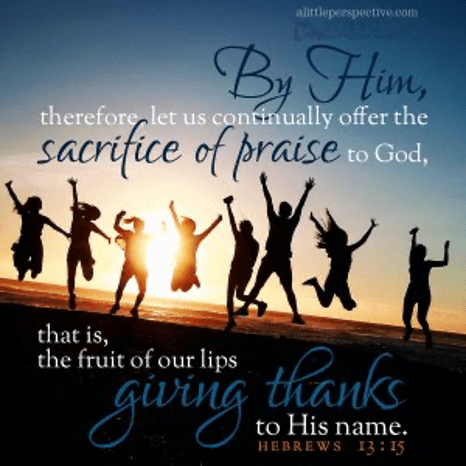
Until then, as Christians, we should be remembering God’s wonderful works, and sharing them with others regularly. We should praise the doer of these works, giving thanks and announcing them with shouts of joy (107:22)! Our God is truly an awesome God, and worthy of all praise and recognition.  In our day to day, it can be challenging at times to pause and reflect on how God is working in the world and in our life, but it can make so much of a difference in our day when we simply say, “Thank You, awesome God.”.  

Sarah Johnson

Reflection Questions

  1. From today’s reading, which verse stuck out to you most? 
  2. As we close out the week together, I challenge you to not only take some extra time to give God praise for all He has done, but find a brother or sister to share in all His wonderful works, together!

Personal Prayer Journal

Psalms 102-104

1 Chronicles 9-10

Today we are reading three brief, but powerful, psalms, totaling 85 verses.  The phrase “Praise God” (or some similar variation) is found 12 times in these passages.  And that’s just that phrase, not the verses describing why God is worthy of praise, which make up the majority of the text!  

Much of the praises today are focused on God’s compassionate character as the Creator of the world and everything in it.  The praise is focused on God’s works, and forgiveness, despite humanity’s faults. Even in Psalms 102, where the author is lamenting over their life circumstances, they still give praise and recognition to an eternal and compassionate God before the psalm ends!

Most Psalms have all these similar themes of praise and recognition of God’s character, just phrased differently and from different perspectives in different life situations.  They are not written to recount a story from long ago like most of the other books in the Bible, but are written by people experiencing very real, raw, emotions.  It’s basically like reading someone’s personal prayer journal!  Because these authors were real people, there is a strong likelihood you resonate with their real feelings of real life situations.  And because we praise an unchanging God, we can have confidence that we too, can experience the same comfort and joy when we praise Him.  No matter if you are in a time of lament, a time of needing redemption, or a time of awesome recognition of our creator, you can find a way to Praise Yahweh.  

Sarah Johnson

Reflection Questions

  1. How’s your “praise life” been lately? Are you taking opportunities to Praise God instead of just petition Him in your prayers? How can you improve this week?
  2. Pick your favorite “praise” verse from today’s reading to focus on this week.  Consider memorizing it to add to your own prayers! 
  3. In our 1 Chronicles passages today we read about the death of Saul due to his unfaithfulness towards God.  Saul began consulting others instead of God, and certainly did not praise Him for all the provision he had been provided.  Read Psalms 103 again, keeping this story in mind.  What can you apply from the message of this Psalm to Saul’s life and death?