It is easy to get discouraged. It happens all the time. As Christians, Christmas is a special time of year. Our hearts turn to the Christ child and the miracle that is the birth of God’s son. While this gives us hope, we live in a fast paced, difficult world. All around us people are hurting. Evil seems to grow every day. Unbelievers ask us “Where is your Jesus”? Before long, we find ourselves depressed and doubting the goodness of God. At least I do.
The writer of Hebrews knew there would be days like this. That is why he spent so much time writing in his letter to the Hebrews that “we can have confidence to enter the Most Holy Place by the blood of Jesus” (we can go before God Himself through our prayers)…so let us draw near to God with a sincere heart and with the full assurance that faith brings… (Hebrews 10:19-22a). The wise writer knew that the people of God were hurting. He continues by encouraging them to “consider how we may spur one another on toward love and good deeds, not giving up meeting together, as some are in the habit of doing, but ENCOURAGING one another… (10:24).
Sometimes the Christmas season can be lonely. We remember Christmas’ of long ago and the fun we shared with people that we loved. Parents, brothers and sisters, friends…perhaps gone now and only existing within our hearts. As children of God, we can trust in the incredible hope that is found only in Jesus. It is our duty, to help each other and encourage each other to keep on living…and loving. Each of us pushing each other onwards towards good deeds – and new, happy memories.
In this Christmas season, my hope is that you dear reader will remember the love of Christ, the forgiveness and grace of the Father, and the promise of the coming Kingdom of God.
Questions for Discussion:
Who might you “spur on to love and good deeds” this Christmas season? (10:24)
What does it mean to “persevere” in the faith? (Hebrews 10:36)
When I was a kid, I often had to do the dishes. I was not a fan of having to take time to soak the dishes and scrub them, inside and out. One time, I decided to save time and only cleaned the outside of the cups. They looked super clean! I put the cups away and everything looked clean and ready for the next meal. Later, when my Mom pulled a cup from the cabinet, it looked nice and clean. But the inside was a mess. Milk had spoiled in the cup and was caked along the bottom. She was not very happy and found the cup to be completely unusable. I had to pull all the cups out and get the job done the right way!
In the Old Testament, God’s people were instructed to offer sacrifices to God. These sacrifices of animals, grain, and oil were expressions of devotion to God, addressed sin, and maintained covenant relationship between God and Israel. Animals were burned on an altar symbolizing total surrender to God. Sometimes, animal blood was applied to the altar. In this case, the offering was a sin offering – usually a lamb.
The writer of Hebrews compares the offerings of the Old Testament with the new offering through the death of Jesus Christ. Hebrews 9:11-14 tells us that “the blood of goats and bulls and the ashes of a heifer sprinkled on those who are ceremonially unclean sanctify them so that they are outwardly clean”. They became sanctified – set apart for God’s special use – because of the spilled blood of an animal. However, people were only ceremonially clean on the outside of their body. They were now clean to worship God and come before Him, but on the inside sin would return. Again and again, people would have to continually offer animals in sacrifice to God to maintain their ceremonial purity before Him.
Jesus, as the sinless, perfect, lamb of God is clean on the inside as well as the outside. In other words, after His resurrection, He was able to ascend to Heaven and sit at the right hand of God because of His perfect, redeeming blood. Since He died and was resurrected in perfection (because He was always perfect), he could now spend eternity with His Father in Heaven! Jesus had no sin, so He did not need to be “saved from sin” like you and me. The very blood of Jesus, shed on the cross for you and for me, is the blood that makes us clean on the inside (Hebrews 9:14). No longer do we have to make sacrifices repeatedly. He died for us, once and for all (1 Peter 3:18, Romans 6:10, 1 John 2:2). Hebrews 9:15 teaches us that Jesus is the perfect mediator of a NEW covenant (not like the Old Testament…). Those who put their faith in Him may “receive the promised eternal inheritance – now that he has died as a ransom to set them free from the sins committed under the first covenant” (Hebrews 9:15). Jesus is the Lamb of God who takes away the sin of the world. We are now “clean” on the outside and inside. Like one of my cups – finally spotless and useful for the Kingdom of God.
Questions for Discussion:
Why did God want blood as payment for sin? (Hebrews 9:22)
Why does Jesus appear for us in God’s presence? (Hebrews 9:24)
When my son was a little boy, he asked for a pocketknife for Christmas. He was interested with those who could take a piece of wood or a stick and whittle it into a figure or an animal. Watching an experienced woodworker use a little knife to create amazing little figures was fascinating to a young boy.
Of course, I got him his first pocketknife, and we talked about how it was very sharp. We talked about how to hold the knife and how to begin the process of whittling away. I warned him not to put his finger on the blade and to respect it. Of course, the first thing he did was rub his finger across the blade – and cut himself. Just a slight bump against the blade and the cut was deep enough to draw blood – and a few tears.
The writer of the book of Hebrews describes the Word of God as being sharper than any type of edged weapon (4:12). Like a pocketknife, it can cut deep – deep into the mind and heart of the believer. God’s Word judges the thoughts and attitudes of the heart. Like an impartial judge sitting on the judgement seat, the Word of God judges what is within us. The Word of God judges if we are resting in God’s grace or in human works. We can work hard and perform many good deeds for ministry. But those good deeds will not save us. Only the grace of God through faith in Jesus can save us from our sin. We can fool other people, but the Word of God makes it very plain that we cannot fool God. He will judge us rightly and with justice. If our faith is in Christ, we will find a sympathetic savior, who while tempted in every way, did not sin. He is perfect – and wants us to trust in His father as He did. The Word of God makes it very plain – our salvation is through grace by faith alone (Ephesians 2:8-9). We cannot pretend to “earn” our way into God’s Kingdom. His Word testifies to the truth – that Jesus is the way, the truth, and the life (John 14:6) and trusting in him allows us to receive mercy and find grace to help us in our time of need (Hebrews 4:16).
Remember to honor and obey God’s Word. While it contains the awesome message of salvation, it also opens our lives up to the all-knowing, all seeing eyes of God. Sharp indeed!
Questions for Discussion:
How could Jesus experience EVERY temptation? (4:15)
One of the great truths of the Bible is the humanity of Jesus Christ. Jesus, our Lord and Our Savior, was born of the virgin Mary through the power of God’s Holy Spirit. Our God created Jesus to be His messiah – God’s chosen One to save his people and rule as King in His future kingdom. Jesus always existed in the mind of God. In the beginning was the Word (John 1:1). The Word, or Logos in Greek, is the eternal program of salvation and restoration through Jesus Christ. It is the wonderful plan of God to make a way for believers to enjoy fellowship with Him in the eternal coming Kingdom. As such, at a time of God’s choosing, He created his messiah. He brought his great plan of salvation, the Logos, into reality. Our Lord Jesus was born into the world, a little baby, born of the virgin Mary and celebrated as our Lord and Savior. He was born into the world through God’s power to be fully human, and fully God’s son. He is the begotten one (first among everything).
The book of Hebrews tries to explain why Jesus had to be made perfect and why he had to be a human – like you and me. But why did Jesus have to be just like us? Jesus was created by God to be His only Son. In order to serve both God and mankind, Jesus had to be a special man – the sinless and perfect Son of man. Both divine (Son of God) and human (Son of Mary) – He is the perfect one to exist as the “mediator between God and men, the man Jesus Christ” (1 Timothy 2:5). Hebrews 2:14-18 teaches us that He had to be made with flesh and blood – he had to be a man. This is so His death on the cross might break the power of the fear of death. His resurrection is proof that a man can be raised up to eternal life. He was created specifically to save Abraham’s descendants of faith (that’s you and me). In being a man, he could be God’s High Priest, serving God and making atonement for the sins of the world (Hebrews 2:17,18).
With Christmas coming very soon, we remember the birth of Christ. That little child, born and placed in a manger, the son of Mary, would become the savior of the world. In God’s great wisdom, He made a way for us to enjoy fellowship with Him forever in His coming Kingdom. Thank Him for the gift of his Son, His human Son, the Christ Child who takes away the sin of the world.
It’s hunting season here in Ohio! All around the countryside, hunters are sneaking though the fields, climbing tree stands, and checking their trail cams. The deer are careful and on alert, listening and sniffing the air for the sign of trouble. Failure to sniff out the enemy can have deadly results for the hunted.
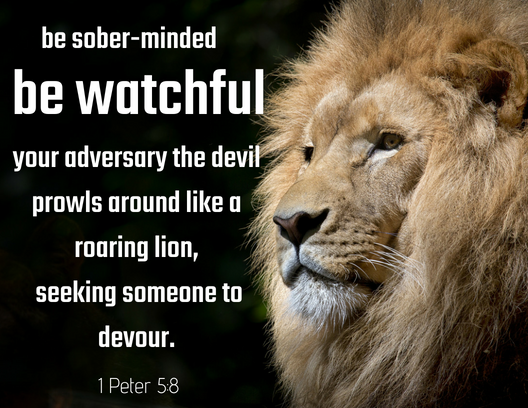
As Christians, we have to be on guard against temptations and situations that can cause us to fall away from the Lord God. 1 Peter 5:8 warns us to “Be alert and of sober mind. Your enemy the devil prowls around like a roaring lion looking for someone to devour”. Peter, in his letter to the Christians across Asia Minor (modern Turkey), has tried to encourage the believers to stand firm in the face of persecution. Instead of getting revenge or lashing out against people who have hurt us, Peter encourages us to rejoice in our sufferings and be thankful for the opportunity to do good to those who hurt us (1 Peter 3:8-12).
It is easy to want to strike back, to say something hurtful, or to defend ourselves. But God has a higher purpose in mind behind our suffering. He wants to shape and mold us into mature Christians. Sometimes, we have to endure hard times to allow that change towards maturity to occur. It is tempting to want to respond in kind to those who hurt us. We have to stand firm and resist the urge to take the bait!
Peter reminds the Christians that this is a sneaky trap, set by our enemy, the devil. We have to be on the alert, and watchful to avoid falling into the traps set by the enemy. Like deer trying to avoid the hunter, we avoid the traps of temptation by seeking to do God’s will. Peter asks us to be alert and sober minded. Resisting the temptation to lash out at our enemies or to hurt other people is not easy. But the more we resist, the easier it is to stand firm against the schemes of the devil. God wants us to trust Him. As we obey Him, He will “restore you and make you strong, firm and steadfast” (1 Peter 5:10).
One of the strongest building materials is steel. All the great towers and skyscrapers today are built out of steel. It is a very hard metal and very durable. But it does not start that way. It begins as a piece of iron ore. To transform the iron ore into steel, the iron must be heated to extreme temperatures and exposed to blasts of super hot air to blow out the impurities. When it is quickly cooled, the result is steel – a pure form, durable, and able to stand the test of time. It is only tough and useable because of the intense “heat and violent blasts of air” that transforms it.
The apostle Peter wrote his letters to Christians scattered out across Asia Minor (Turkey today). The Christians there were struggling because of hardship and persecution. Living a life of faith in God was very difficult and dangerous. As the Roman empire continued to persecute the Christians across the empire, the apostles, like Peter, worked hard to encourage the children of God.
Peter reminds us in his letter that we have a “living hope” (1 Peter 1:3-4). No matter what kinds of trouble we experience in life, we can be assured that the hope that we have in Jesus is true and eternal. We know this because Jesus has been raised from the dead, proving that every promise that He made is true. No matter what kinds of sorrow we face in this life, we can be assured of an “inheritance that can never perish, spoil or fade. Kept in heaven for you” (1 Peter 1:3-4). Jesus promised to return to this world to make things right. Then, our promise will be revealed before our very eyes as we enjoy eternity with God the Father and His son Jesus Christ in God’s glorious earthly kingdom.
Despite being persecuted and threatened by the Romans, Peter reminds the Christians that they are to put their faith in God and serve Him. Like the first Christians, God allows us to experience trouble and sorrow because, like heat to iron, He wants to create a tougher, more usable child of God. God desires for each of us to endure troubling times. We are a chosen people (1 Peter 2:9-10). As God’s chosen people, we can be assured that He will use hard times to strengthen us. It is God’s will that we suffer for doing good (1 Peter 3:17). Jesus suffered greatly on the cross. But the result of His suffering has brought us closer to God (3:18). Who knows what incredible things God will bring about because His people are willing to suffer for doing good?
Questions for Discussion:
Are good works the way to earn a blessing? (1 Peter 3:9-12)
Why be gentle and respectful to unbelievers? (1 Peter 3:15)
Everyone likes to get a letter in the mail! Especially around Christmas time. Getting a letter from a friend or loved one might seem old fashioned, but letters have a way of being more personal and intimate. Receiving a letter from a mentor or person you respect is especially important when the letter includes an important message.
The Book of Titus is a letter written by Paul to his “true son in the common faith” Titus. Titus was an early Christian leader and a close friend of the apostle Paul. He is best known as being the leader of the churches in Crete and Corinth. He was sent by Paul to these churches to help them solve problems. In this letter, he asks Titus to ask the people in the churches to stop arguing with each other over silly things and to focus on doing good things in the name of Jesus.
To help the church at Crete, Paul sent recommendations on how to pick good leaders to look after the church (Titus 1:5-9). Having leaders who are qualified is important in leading a church. Like shepherds of a flock of sheep, the “elders” of the church look after us and protect us from making mistakes that can harm us. Their job is to help us do good works for God.
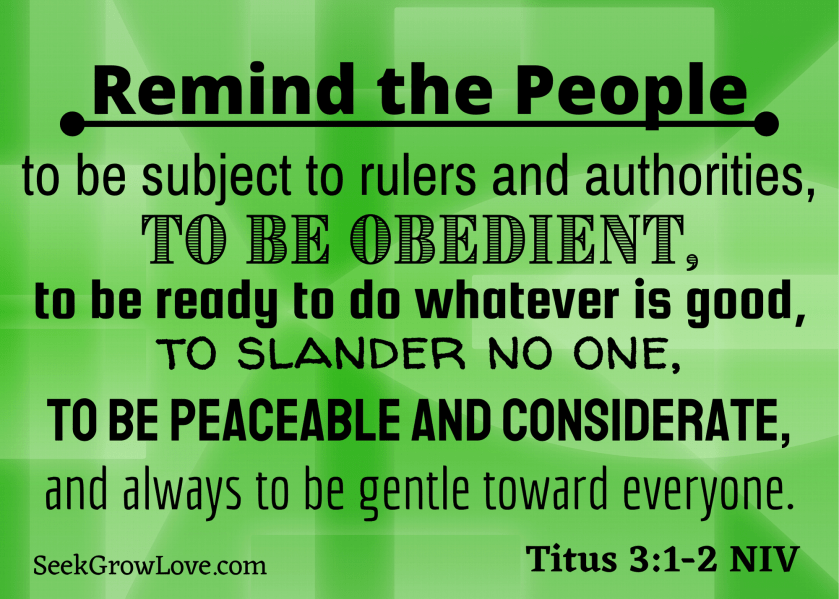
Paul also reminds us that we should always do good because we are Christians. Paul writes that the grace of God “teaches us to say ‘No’ to ungodliness and worldly passions”. As Christians we should always seek to serve other people and be good to them. Sometimes it is hard to live obediently for God. Paul asks us to be “self-controlled” and live upright and godly lives. It’s not easy, but God wants to help us and to “purify for himself a people that are his very own, eager to do what is good”. (Titus 2:11-15).
It is important to always remember that God has shown His mercy to us not only because He wants us to be good, but so that He could adopt us into His family. Paul hopes that each of us “might become heirs having the hope of eternal life” (Titus 3:7). Living a godly life is how we declare our thankfulness for His great mercy. As we accept God’s gift of grace, it makes us want to do good things for the Kingdom of God.
Questions for Discussion:
In Titus 2:2, what does it mean to be “self-controlled”?
What does Paul mean when he says to “avoid foolish controversies” in Titus 3:9?
I’m not sure when contentment became a dirty word to so many people. We now equate it with a lack of drive or sometimes even laziness. We liken it to “settling.” The definition of contentment is actually a state of happiness or satisfaction. But we live in a world where bigger is better, and newer is better, and we can always achieve more if we just work a little harder for it.
For a little while I went through a faze where I looked on Zillow a lot. I got it into my head that we could potentially get a bigger or nicer house and therefore we should at least look. I just wanted to see what was out there that might be in our potential price range. And then I was looking at things slightly above that, because honestly we could probably make that work too.
You can see where this is going. It’s a slippery slope, and soon you’re borrowing more money than you should and all because you weren’t content with what you have. I deleted the app and fell in love with my home all over again. Contentment is something intentional, and it’s most definitely not settling. It’s looking at your blessings and recognizing them as such. It’s being thankful to your heavenly father for where you are, when you are, who you are, and who you are with.
These last chapters of 1 Timothy are a mix of advice from Paul on how to live, both for Timothy and for the people he’s ministering to. There’s a good deal in there about working hard so that we can take care of ourselves and take care of others. We are also called to not be so focused on money that we are neglecting our true purpose in ministry. Do good, be rich in good deeds, and be generous. Rather than focusing on our wealth and what we have or don’t have, we should be focused on how to serve others with our blessings.
1 Timothy 6:6-7 “But godliness with contentment is great gain. For we brought nothing into the world, and we can take nothing out of it.”
This is the true idea behind contentment. We can be ambitious in our careers and are encouraged to do well financially if that is where we are called. But we have to be wary of what’s actually driving us. If having wealth and status is our motivation, then we will never be in a “state of happiness or satisfaction.” We will never be content.
1 Timothy 6:9 “Those who want to get rich fall into temptation and a trap and into many foolish and harmful desires that plunge people into ruin and destruction.”
But if we are guided by an ambition to serve the Lord, then we can truly practice contentment. Paul describes these people as those who “will lay up treasure for themselves as a firm foundation for the coming age, so that they may take hold of the life that is truly life.” I love how that is phrased. “Life that is truly life.” And living a life that is truly life? Definitely not settling.
Reflection questions:
Where do you find yourselves in a state of discontent? Is it distracting you from God’s purpose for you? We have a lot of areas where discontentment can sprout up like a weed and make our lives more difficult and less full of the peace and joy that God longs for us to experience. Some common ones to watch out for: our physical appearance, financial status, possessions, our home, our relationships, our jobs. Is there a distracting discontentment in your life that is robbing you of peace?
How can you look at that area of your life and find the blessings? What sort of habits can you set for yourself so that you can better practice contentment? How can you take your blessings and offer them as a pleasing sacrifice to God?
Prayer:
My prayer for you is that you recognize God working in your life as it is now, and see the blessings he has given to you. I pray for discernment to see areas where you can grow and where he can further bless you and that your efforts be put there. I pray that you long to reach the goals HE has for you, rather than the goals you have for yourself, and that you live a life that is truly life.
There was a time when I didn’t think very much of Paul. It was as a teenager reading his instructions to Timothy here in Chapter 2. I had faith, though, that God was speaking through this man, and SURELY there was something here that I just wasn’t understanding correctly. It wouldn’t be the first or last time that I had to look at a scripture passage and throw up my hands, admitting that I just didn’t have an answer.
I’ve gone back and forth, looking at explanations and trying to get insight on what exactly was happening at this church. I got the impression that the women there were not behaving the way they should be. Admittedly, some scholars use Chapter 2 as absolute reasoning for why women should not be leaders in the church. Obviously, this doesn’t sit well with me, being a female church leader. Many say that it’s specifically addressing a problem within that church, where women were using wealth, fashion, and beauty to loudly and boldly repeat false teachings that they didn’t fully understand, and it was turning others away. Also, some translations point not to Paul refusing to give women authority over men, but rather specifically not giving them authority over their husbands. I heartily agree here, as that would cause disharmony within a balanced marriage that is seeking to honor Christ.
Looking into the whole of scripture, we actually do see female leaders throughout the Old and New Testaments. Those female leaders had wisdom, were full of grace and mercy, and were servant leaders as we are all called to be. They strove toward truth and righteousness, and they were held up for those qualities. We see many of those qualities listed here in the first chapters of Timothy, giving us a wonderful outline of what a good leader looks like.
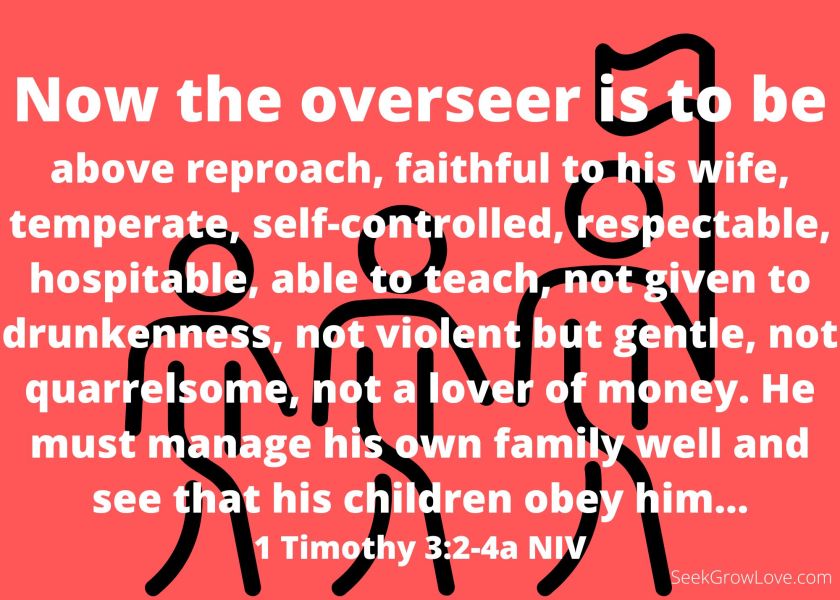
We are to worship and pray together without anger. We are to focus more on our actions than our appearances. We are to be faithful to our spouses and full of self-control, managing our lives, money, and families in a way that honors God. We are all to be worthy of respect.
That’s a lot to place on an imperfect human being. We hear about scandals with our leaders all the time. They make for sensational news. But this is not what we want to see in anyone, especially in our church leaders who are to be leading others to Christ.
Stepping up as a leader in our church means greater accountability. James 3:1 warns us about this: “Not many of you should become teachers, my fellow believers, because you know that we who teach will be judged more strictly.”
How many people have turned away from Christ because of the actions of those in his church? Too many.
Reflection Questions:
Are you a sort of leader in your church? Even if you don’t have a named role, are there those who would follow your example? Have you ever thought deeply about what kind of responsibility that is? People are looking to you and your example when you proclaim yourself to be a Christ follower. Are you following his example in your words and actions?
Go through Paul’s list of qualifications of a good leader. Where do you hold up to the standard, and where could you use improvement? How could you do better to be a good example for others, someone others would respect and want to follow.
Prayer:
My prayer is that we all take to heart the fact that we are representing Christ when we call ourselves Christians. Pray that God opens your eyes to where you can be a better example to others and that you lead those around you closer to a relationship with him.
Let’s talk about distractions. One of my greatest frustrations and fears while driving is distracted drivers. I feel a bit ridiculous when I say things like, “It didn’t used to be like this,” with the unsaid “back in my day” hanging uncomfortably in the air. But it’s true. I started driving before cell phones, screens in cars, and most other technology that might take my attention from the road. But now I can’t go anywhere without being cut off or having to swerve my car out of the way of someone crossing that center line. I notice it even more now that I’m teaching my daughter to drive. It’s terrifying.
Speaking of teenage daughters, it seems every time I give them a task and come back later to see it is not done, the response is always, “I got distracted.” I’m just as guilty. We all are. We are a distracted society.
I had to read through these two chapters a few times, trying to decide where I wanted to focus this devotion. What was God trying to tell me here? But I saw a common theme that I’ve never noticed before, and it was distractions.
Paul talks first about being too focused on our own past and on ourselves. We get so wrapped up in everything we’ve done and said that we lose sight of the fact that none of that matters. Pride or shame sets in. Paul lists why he had every reason to be proud of who he was and where he came from, but that it all meant nothing. We get distracted by ourselves and are no longer focused on a relationship with the only one who can actually save us. Paul tells us in 3:13, “But one thing I do: Forgetting what is behind and straining toward what is ahead.” Don’t get distracted by the past or yourself but push on toward Christ.
Next, we are distracted by worldly people and their ways. He says in 3:17, “keep your eyes on those who live as we do.” Stop trying to be like those of the world and surround yourselves instead with Christ-like examples. Stop trying to impress those that don’t matter with what you wear, what you do, and what you say. Reserve your attention and your actions for Christ and his message.
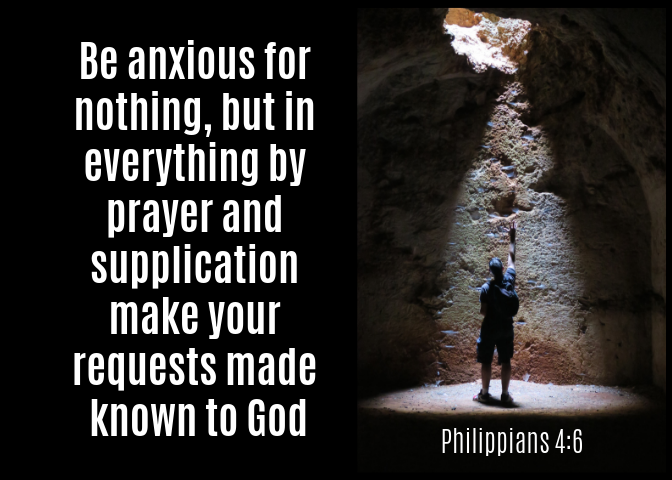
And, finally, my personal favorite distraction – anxiety. Whether you worry about everything, or overthink, or are overly concerned with what others think or do – all distractions. Paul tells us what to focus on instead: “Whatever is true, whatever is noble, whatever is right, whatever is pure, whatever is lovely, whatever is admirable—if anything is excellent or praiseworthy—think about such things.”
Reflection Questions:
What is distracting you from a real relationship with Christ? What attitude within yourself should you change? What habits should you destroy and with what should you replace them?
What are some true, noble, pure, and praiseworthy things you should be focused on and how can you shift your attention toward them more often?
Prayer:
My prayer for you today is that you are able to pick out distractions in your life and burn them away. I pray that you have a closer relationship with Christ and that it outshines everything else. Like Paul said, “…press on to take hold of that for which Christ Jesus took hold of me.” Press on and focus on Jesus.



 Seek Grow Love