When I’m writing these, I find a section or verse that stands out to me. Today, 1 Timothy 6:11-16 particularly stood out. I would encourage you all to reread it before reading this article.
Whenever I read this I can’t help but hear a rallying voice, the type of speech given in a movie right before they enter the final battle for the fate of the universe or something equally important. It just strikes me in that way. In a way, that’s what this section is. It’s written from a leader of the church to a member. Like how a leader tells his troops an inspiring thing before the battle. For Timothy and us, every day is a battle. Paul in verse 12 writes: “Fight the good fight of the faith.” Sounds pretty similar to me. So, let’s look at this through the lens of an inspiring speech given to us in our daily battles. I’m gonna go through two verses here.
Do your best here to think about this in an inspiring way. If you’re feeling ambitious, you could even speak it aloud. If you’re having trouble imagining it think about an actor in an intense scene, and try to channel that energy. Verse 11 reads: “But you, man of God, flee from all this, and pursue righteousness, godliness, faith, love, endurance and gentleness.” Right here, Paul is writing about what we are to do. He calls us to pursue righteousness, godliness, faith, and love. These are pretty straightforward things, but we all have room to improve on all accounts, so read each with the gravity they deserve.
In verse 16, Paul is talking about God here: “who alone is immortal and who lives in unapproachable light, whom no one has seen or can see. To him be honor and might forever. Amen.” In the idea of a rallying speech, I think this is the best way to end one for a Christian. It’s giving God the glory; it just feels right. We learn in the Lord’s Prayer that a fair portion of our prayers should be giving glory and praise to God. So, in this case, it seems right too. I also like that this verse ends with ‘amen’.
Let me close this out with a challenge. On days when you’re maybe a bit tired and are reading your Bible, envision in your mind it as a speech, an inspiring one. It might not work for every verse, but maybe it’ll give you the energy to focus a bit more on what you’re reading.
-Philip Kirkpatrick
Reflection Questions
What do you think Paul was preparing Timothy for? What battles are you facing? How can Paul’s words motivate and inspire you to fight the good fight of the faith? What would that look like for you?
My name is Philip Kirkpatrick. I’m 17, live in Minnesota, and attend Pine Grove Bible Church. Some of you may have met me before and some of you may have no idea who I am. I share this for two reasons, the first is to give those who don’t know me a little bit of background on who’s writing, and the second is because it relates to what I’m writing about. As I was reading 1 Timothy 4, one of the verses stuck out to me. That is verse 12, the NIV version states:
‘Don’t let anyone look down on you because you are young, but set an example for the believers in speech, in conduct, in love, in faith and in purity.’
Considering my age and youthfulness, this verse stuck out to me. Reading it over, it seems pretty straightforward to me. I’m going to break this up into two parts. The first part simply states that just because of someone’s young age, it doesn’t mean they should be looked down on. Looking back now, I can think of times that I surprised my parents by having an answer they didn’t expect me to get, or knowing a big word and casually dropping it in the middle of a sentence. Even today I find myself surprised at times by those younger than me when they find answers I didn’t expect or know things that I don’t. Something to keep in mind here is that just because someone is young doesn’t mean that person doesn’t have good ideas.
This also plays into something called a logical fallacy. A logical fallacy is an illogical argument in its simplest form. In this case, it’s an Ad Hominem fallacy. This logical fallacy can be used to state that someone who may typically not have good ideas, someone young and inexperienced in this case, can’t come up with good ideas. The Ad Hominem Fallacy in other words; it is an attack against the person, not the argument or idea they are proposing. So in the case of someone young, it’s saying you can’t dismiss it simply due to age.
The second part of this verse here tells us that we should set an example for others in 5 ways: speech, conduct, love, faith, and purity. I’m not going to dig into all those and explain them all. Overall it can be defined by how we act. We should act in a manner befitting a Christian.
To the younger: set an example to the older on how to act.
To the older: set an example to the younger on how to act.
And to all, don’t look down on someone because of their age, listen, and consider what they have to say.
-Philip Kirkpatrick
Reflection Questions
When have you taken notice of a good example set by someone young? Have you ever been guilty of looking down on someone just because of their age?
Consider each of the ways we are to set an example for believers: in speech, in conduct, in love, in faith and in purity. Think of times when you set an example in each of these areas. Are you strongest in one of those areas? Which ones could you work on more this week?
Have you ever felt like you don’t know what to do in life? You feel like you need a book of instructions to take with you everywhere you go? Well, there may not be any instruction manuals available, but the Bible as our guide is. In 1 Timothy chapter 2, Paul lists these sets of rules that we should live by, either through worship, or living through daily life.
In 1 Timothy 2, it states: “8 Therefore I want the men everywhere to pray, lifting up holy hands without anger or disputing. 9 I also want the women to dress modestly, with decency and propriety, adorning themselves, not with elaborate hairstyles or gold or pearls or expensive clothes, 10 but with good deeds, appropriate for women who profess to worship God.”
Paul says that God wants us to live peaceably with all people, making prayer and petitions, and thanksgiving amongst everyone, as it pleases Him. He also mentions that God doesn’t want people to be flashy in their worship to Him. In verse 9 he states that he wants women to dress modestly and adorn themselves with good deeds rather than gold or pearls. When we dress for worship, we should dress with good intentions and be pleasing in God’s sight. Also in worship, we should pray for each other. Our family, our friends, church friends, even the people you dislike the most. The point is, even if you feel that you think you’re not going to have an easy life, just remember that you have an incredible book of life to guide you through the tough times, and that these simple rules are things that we should live by. Praying for people and dressing modestly may seem difficult at times, but with God, anything is possible.
-Hannah Bormes
Reflection Questions
What rules for life do you find in 1 Timothy 2 that you want to live by better and better?
Can you think of a time of anger and disputing when it would have been better to lift up holy hands in prayer? How can you use this method next time?
Why do you think Paul addressed modesty? Do you think it should be addressed today – if so, how?
The 2024 Summer Olympics has just been completed in Paris. During the two weeks of competition, there were 32 sports and 329 events across 48 disciplines. Around 10,500 athletes from 206 National Olympic Committees competed. Among those athletes, several shared their Christian witness with the media.
Hezley Rivera, Women’s Gymnastics, was asked how she made the 2024 team. Her first response was to give God credit for her success. Later she posted Philippians 4:13 on her Instagram account under pictures of her with the Olympian team. In a recent interview, she said, “I’m just enjoying the journey and the process, and I’m so blessed, and I thank God every day.” Hezley won a team Olympic gold medal on July 30th in Paris.
Sydney McLaughlin-Levrone, who competes in the Women’s 400 Hurdles, shared her personal testimony in her memoir, Far Beyond Gold: Running from Fear to Faith. Her perspective changed from gaging her worth by a perfect run, to being balanced spiritually in her personal life as well as her sport. In January, Sydney told “Women’s Running” this– “My life wasn’t about me. It was about showing the world God’s power, wisdom, kindness, love, and forgiveness.”
McLaughlin-Levrone won her second consecutive Olympic gold medal in the 400-meter hurdles on Aug. 8th, posting another world record time at 50.37. As the only woman to win the event in two consecutive Olympic Games, she said, “Just grateful for all that has been taking place. God has been good to me.”
In our reading of I Timothy 1 today, Paul begins his letter to Timothy, his son in the faith, by urging him to stay in Ephesus, even though the work might be difficult. The Ephesians needed to hear God’s truth, and Timothy had been called by God to deliver that truth to them. Then, in a way to encourage Timothy to stay strong, Paul shared HIS PERSONAL TESTIMONY.
“I thank Christ Jesus our Lord, who has given me strength, that he considered me trustworthy, appointing me to his service. 13 Even though I was once a blasphemer and a persecutor and a violent man, I was shown mercy because I acted in ignorance and unbelief. 14 The grace of our Lord was poured out on me abundantly, along with the faith and love that are in Christ Jesus.
15 Here is a trustworthy saying that deserves full acceptance: Christ Jesus came into the world to save sinners—of whom I am the worst. 16 But for that very reason I was shown mercy so that in me, the worst of sinners, Christ Jesus might display his immense patience as an example for those who would believe in him and receive eternal life. 17 Now to the King eternal, immortal, invisible, the only God, be honor and glory for ever and ever. Amen.” I Timothy 1:12-17
What a plain, powerful testimony Paul shared with Timothy. Paul’s past persecution of Christians didn’t make him ineligible to serve God. Mercy and grace were given to him on the road to Damascus. He claims to be the worst of sinners, but Jesus saw the potential in Paul to be a mighty missionary for him. And in verse 17, his one sentence prayer expresses his highest allegiance and worship to Almighty God.
These heartfelt words were meant to encourage Timothy, who might have felt unworthy to deal with the challenges at Ephesus.
Paul had a moving testimony, the Olympians above have shared their testimonies. What is your testimony?
Amy Blanchard, the Christian Education Director for the Pine Grove Bible Church, Brooklyn Park, MN developed a plan for willing adults in the church to share their testimonies with the high school and young adult Sunday School classes. The testimony sharing time takes place every few years over a period of several months—that way each young person growing up in the church eventually hears the Pine Grove members’ stories of their personal calls to follow Jesus.
Her goals, (in her own words) are as follows;
“To allow kids to meet/get to know others in our church and hear their stories and see how they can relate to them (and for you to see how you can relate to our kids)
To open the door for the kids to hear that there are many times and ways one can come to the Lord
So our kids can hear how others influence us and see that we, in turn, influence others
To allow us to share our testimonies – we all have a story. Sharing our personal story helps us to, ‘…have a full understanding of every good thing we have in Christ.’ “
What a tremendous way to hear conversion experiences, and to show by example that everyone has a story that needs to be told –not only to our brothers and sisters in Christ, but with those we interact with each day.
Paul shared his personal testimony with Timothy to strengthen and embolden him. But it also encourages us to think about our “call to Christ” and how our lives can impact those around us.
I Peter 3:15 says, “Always be prepared to give an answer to everyone who asks you to give the reason for the hope that you have. Do this with gentleness and respect.”
What is your personal testimony? Pray for opportunities to share it, and you will be blessed in ways you never could have imagined.
-Paula Kirkpatrick
Reflection Questions
Do you have a personal testimony? If the answer is no, why not?
Has someone ever encouraged you with their personal testimony? Have you later told them how it impacted your life?
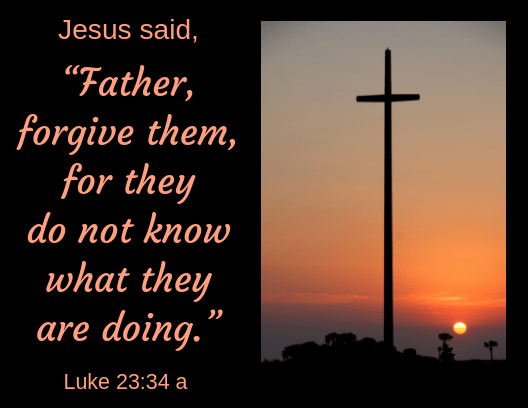
Scripture: “He did evil in the eyes of Yahweh according to the detestable things of the nations whom Yahweh drove out before the Israelites.” — 2 Kings 21:2 (LEB) “Listen, Yahweh, to my prayer, and attend to the voice of my supplications.” — Psalm 86:6 (LEB) “And Jesus said, ‘Father, forgive them, for they do not know what they are doing.’ And they cast lots to divide his clothes.” — Luke 23:34 (LEB)
2 Kings 21 describes the reign of Manasseh, who led Judah into idolatry and wickedness, turning away from the faithfulness of his father, Hezekiah. Manasseh’s actions had devastating consequences for Judah, but even in the midst of such darkness, we can find lessons of hope and redemption when we look at the prayers of Psalm 86 and the forgiveness offered by Jesus in Luke 23.
Manasseh’s reign was marked by the restoration of idolatrous practices that his father had abolished. He erected altars to Baal, worshipped the stars, and desecrated the temple by placing an idol within it. His actions not only provoked God’s anger but also led the people of Judah into deep sin and rebellion against God.
Manasseh’s actions demonstrate the destructive power of idolatry and disobedience. When we turn away from God and pursue false gods, it leads to moral and spiritual decay. Psalm 86 is a heartfelt plea for God’s attention and mercy. In times of spiritual decline, prayer becomes a vital connection to God, seeking His guidance and forgiveness. Despite the evil of Manasseh’s reign, the story of Jesus on the cross in Luke 23 reminds us of the power of forgiveness. Jesus’ prayer for those who crucified Him highlights God’s boundless grace and the possibility of redemption even for those who have strayed far from Him.
-Jeff Ransom
Reflection Questions:
Are there any “high places” or idols in your life that you need to remove to fully commit yourself to God?
How can the prayers of Psalm 86 inspire you to seek God more earnestly and sincerely in your daily life?
How does Jesus’ example of forgiveness on the cross in Luke 23 challenge you to extend grace and forgiveness to others?
This week, reflect on the life and reign of Manasseh, and consider how you can remain faithful to God. Seek to remove any idols and influence others toward righteousness. Let the prayers of Psalm 86 inspire your own prayers, and remember the forgiveness and redemption offered through Jesus Christ.
The world could use more knowledge of the Old Testament minor prophets. I should become more familiar with them, too. I wonder what would happen if they became required reading in every college or high school curriculum? Could our world, our nation, our church, our family, me, learn a lesson from what God spoke through His prophets so many years ago? Would they listen?
This week our Bible reading will include one chapter of Micah every day. Some years we have read the whole thing in just one or two days. But this year let’s slow down a little and digest one chapter a day. Some days this week our devotions will be over other parts of our Bible reading, but still take the time to work through one chapter of Micah every day, as if it were required reading from God.
Unlike several of the books of prophecy which are directed to just one nation or city, Micah addresses both Israel and Judah and many specific cities in those countries. Micah includes three sections which each begin imploring his audience to listen and pay attention to the messages God gave him to tell of the capital cities, the leaders and the people of these countries (1:2, 3:1, 6:1).
As you read through Micah this week be watching for what we can learn about God. What are His characteristics, what does God like, what does He hate, what has He done, and what will He do? Not to spoil the whole plot, but you will find many instances of God’s justice and also many instances of His love.
Here in chapter 1 then we begin with Micah telling the people of the world to listen to the visions he has received from God in regards to the capital cities of Samaria and Jerusalem because “The Sovereign Lord is making accusations against you” (Micah 1:2). What does it mean to you that God is sovereign? Sometimes when we are accused of something we can easily dismiss the accusation because of who it comes from. But, not so easily done when the accusations are coming from the Sovereign God. Maybe this is something we ought to sit up and pay close attention to.
The next verse says, “Look! The Lord is coming! He leaves his throne in heaven …” So – we are not just to use our ears to listen – but also use our eyes to look and see the evidence. The Lord God is getting up off his throne. As a teacher or parent or baby-sitter it is interesting to watch a child who has heard the person in authority say what to do or not to do, but the child continues disobeying – until they see that authority figure start to stand up…and then they know it’s time to fall in line. It’s time to listen – and look – and obey. Because the LORD is not coming to give hugs and high-fives this time around. He isn’t bringing congratulations but accusations – and it’s not just talk. It’s time to act. The mountains are melting beneath His feet – because of the sins He has seen.
It is interesting that our other passages today share many of the same warnings and pictures of God. In Psalm 81 we hear, “Listen to me, O my people, while I give you stern warnings.” (vs 8). We see a people who did not want God around (vs. 11). We also see in this Psalm, what we will later see in Micah – what God does when His people DO come back to Him. When they DO repent, listen, follow Him and walk in His paths – THEN God subdues their enemies, and feeds them the finest wheat and satisfies them with wild honey from the rock (Psalm 81:13, 14, 16). While those who hate the Lord will be doomed forever (vs. 15).
Will you be eating wild honey from the rock or doomed forever?
Will you be like the rich man Lazarus or the beggar in Luke 16? If you are wanting some more information and discussion on this interesting parable, you might want to read the online REV Bible commentary on this passage.
-Marcia Railton
Reflection Questions
Seriously consider, what accusations do you think the Sovereign Lord would make today against you, your church, your city, your capital city? Why are these accusations important to know and consider?
The verse about the city of Lachish caught my attention, “You were the first city in Judah to follow Israel in her rebellion, and you led Jerusalem into sin.” (Micah 1:13) Your sins don’t just affect you. Where have you seen this slippery slope and growing snowball before? Thinking of your own life – who have you followed into sin – and then were you aware of who followed you and your sin? Could repentance work the same way?
If ever there was a dynasty in collegiate sports, it was the UCLA Bruins in the 1960s and 1970s. Over the course of a dozen years, they won 10 NCAA basketball championships. At one point during this spell, they didn’t even lose a single game for three years. There hasn’t been a run like it, or may never be again, and much credit goes to Coach John Wooden and his staff. Wooden didn’t seek out cutting edge strategies or even the most talented players. He cared about self-management and stewardship. Before stepping on the court each player was taught how to put on their socks and tie their shoes. While this may seem demeaning or elementary, it had a dual purpose. The first, to minimize blisters and injury that could prevent a loss of practice time. The second, to see if his players were faithful in the small things. If there was fidelity and discipline to this aspect, it is more likely this same commitment would be found to honing all the fundamentals of the game.
The connection of John Wooden doesn’t initially seem apparent when we examine the Parable of the Shrewd Manager. Initially it seems like a sneaky story about self-preservation instead of faithfulness. An accusation from the owners comes against a middle level management, misusing company resources. When the news reaches the manager’s ear that he will be receiving a pink slip, he makes a game plan that will move him from one company ladder to another. He quickly calls in those who have business dealings with the owner to settle their debts quickly and at a far lesser rate than what they owe in hopes of getting his back scratched in return upon his dismissal. These executive decisions do not get ire, but instead the praise of his employer. Our takeaway is likewise to be shrewd with our resources, taking responsibility for what is directly in front of us.
“Whoever can be trusted with very little can also be trusted with much, and whoever is dishonest with very little will also be dishonest with much. So if you have not been trustworthy in handling worldly wealth, who will trust you with true riches? – Luke 16:10-11
In every aspect of our dealings with others, whether with little or much, there is a responsibility to take disciplined, calculated action. Instead of acting in fear of losing our livelihood, we work on becoming the best version of ourselves because this shrewdness makes us trustworthy and impactful for the sake of the Gospel. Jesus emphasizes that even the smallest actions are important, and really the basis for the amount of work that will be assigned to us. If we don’t take the time to tie our shoes right, and ultimately miss out on practice or games, we need to sit on a bench. Furthermore, we cannot be expected to lead a revival, or even a Sunday School class, if we cannot be trusted with being disciplined enough to do our own Bible study. We can’t be expected to receive God’s blessing on our business if we keep a tight grip on our purse when it is time to tithe. Going back to the beginning of our week, staying true to a system or fundamentals, will not only develop a single resource, but ultimately encompasses every aspect of our lives, including our relationships, time, and talents.
Finally, one more theme to quickly revisit appears in today’s reading. Despite Israel’s mismanagement, let us again be reminded God’s desire is not to let them go, but to bring them back into the fold when he says: “I will heal their waywardness and love them freely, for my anger has turned away from them” (Hosea 14:4, NIV). This restoration is contingent upon living a life of integrity and faithfulness to God. If we’re going to set foot on the court, let’s not even think about winning first. Let’s make sure first that our socks and shoes are put on properly, looking at our calendar, our bank accounts, and our relationship, and demonstrating to God that we will be faithful with those things that are already set before us, so we may be shrewd managers, benefitting the greatest dynasty yet to come, the Kingdom of God.
-Aaron Winner
Reflection Questions
What small actions have you (now or in the past) tried to skip over? What is the importance of doing these small steps consistently and well before trying to jump ahead to bigger things?
What resources has God currently put you in charge of? What can you do to care for these well?
How do you think God would rate your faithfulness?
What is the biggest take-away you learned from Hosea this week?
One of the toughest things to do as a parent is to let your child take a great risk, manage their own protection, or walk into a mistake. There is a realization that your sway and shielding over another willed being is truly limited, even in the smallest stages of life. You turn them loose, simply hoping they heed your instructions. You let them crawl and explore your home, you put them on a bus for the school day, you let them sleepover at a friend’s house, and slowly but surely they become independent humans who make their own way from their own place. While many who read this blog have walked their children through some or all of these stages in life, today, we will all take the perspective of a child, not the parent.
Through our study of Hosea paired alongside our slow walk through Luke 15, we have focused on the restoration of those who are lost and our responsibility to be ever-searching for those who have stayed or strayed away from the care of the Good Shepherd. Today, we look more inwardly as we walk with the Prodigal Son, specifically looking at how each of us have wandered in our own right and making sure that we have come to the realities of repentance.
“Do not hold against us the sins of past generations, may your mercy come quickly to meet us, for we are in desperate need. Help us, God our Savior, for the glory of your name;” – Psalm 79:8-9
“How can I give you up, Ephraim? How can I hand you over, Israel? … My heart is changed within me; all my compassion is aroused” – Hosea 11:8
“So he got up and went to his father. But while he was still a long way off, his father saw him and was filled with compassion for him; he ran to his son, threw his arms around him and kissed him” – Luke 15:20
The first reality is that we have all squandered the blessing of God. Today’s Psalm is estimated to be written some 150 years after Hosea, as captivity and destruction set in. We see the lament of a nation whose possessions are long carried off, whose temple is destroyed, and their freedom now limited by their lack of resources. God’s blessing can only extend to those who walk in His ways. If we are seeking repentance or even identifying our need to repent, we need only reflect on the way we describe the blessings in our life. Do we see our wealth as our own or God’s? Our time as our own or God’s? Is it our relationship, our ministry, our accolades, or God’s? If we are fortunate enough to be blessed even in a single area, we should not take it for granted, turning our back and hitting the road to make our own way.
The second reality is that all this world has to offer us is pig slop. While there is an overwhelming abundance of beauty on this earth, it is not found through any pursuit other than God. We often picture an endless rave alongside the Prodigal Son in his “wild living”, but not everyone of us is a party animal. Sometimes our pursuits for pleasure and meaning come in more temperant forms. In isolation from God, pursuing education, taking a leadership role, traveling the world, and many more noble activities are vanity and unfulfilling if they are not done with God at the forefront. If we are filling our plates with these things, we will be left with food that is fit for swine, an important image when we think to Jewish dietary laws, an animal that is unclean because of its diet.
Finally, the third reality is that we must be mindful that God’s favor makes us belong, but it does not make us supreme. The lie we have been sold for the whole of mankind is that we can be like God, knowing what is best for our own life. We look to the older brother, who has a grievance that his younger sibling could be invited back so easily. God forgives us all when we act as a maître d’ to His table, deciding who eats, and who sits where. Repentance is reconciliation to God and no other. While it is important to seek forgiveness from our brothers and sisters in Christ, it is not dependent upon it. Thankfully, it is God alone who restores us to our place at the table, and we can only hope to scoot down to make room for one more who has accepted His invitation.
-Aaron Winner
Reflection Questions
Do you realize how YOU were (or are) dead and lost? When/where has God seen you stay or stray away from His table?
In what ways are you guilty of not giving God the credit He deserves for the blessings He has given? How could you take steps to repent and remedy this problem?
What pig slop have you tried living on? How does it differ from what is available at your Father’s table?
Where/when do you see yourself in the big brother’s resentment and wish for exclusion? How can you adjust your heart to reflect God’s instead – and scoot down to make more room? How can you extend the invitation to His table?
It is fairly maddening how quickly I can lose an object. I will set down car keys to load a child into the car and they are gone. I can be in the middle of a text conversation, get up for a drink, and my phone disappears. Parking passes, debit cards, proof of insurance, checks, grade verifications, etc – there is no limit to what I can lose. My students will even tell you that I don’t collect work directly into my hands because if I touch it, I’ll subconsciously place it near my next conversation. It is infuriating to lose items so important, but each time, I rise to the occasion to search with determination that matches the importance of what is missing.
When we consider those who have not yet heard the Good News of Jesus Christ, what responsibility do we have to recover the lost? If it is gauged upon the importance of the object, and we are searching for those who were paid for with the blood of Christ, then it requires all the strength we can muster. We do not sit patiently in our homes and churches, waiting for our doors to be darkened by their presence. If we do this, then the searching is being done by the wrong party. We are to turn on the light, get our butts moving, and carefully search each room where our feet land.
Fallen out and forgotten, lost in the shuffle, moved out of place, and never properly cared for are the people of God we are looking for. They are every bit as equal in value, but they need to be found with the Gospel in hand. It is possible that they choose to remain wherever they are. Unlike lost coins and keys, there very well may be a struggle. Like a teenager who slips back under the covers on a school morning, they too may crawl back into the couch cushion or make a home with the dust bunnies. No matter, our role is the same in the search, to find them and expose them to the Light.
God remains steadfast in his desire to continue the search despite Israel’s determination to commit to being unfaithful. While Israel acknowledges guilt and recognizes revival is needed, their actions do not yet match their lips,“Come, let us return to the LORD. He has torn us to pieces but he will heal us; he has injured us but he will bind up our wounds.” They continue to reject what is good and are forced to deal with the consequences of a rebelling nation.
“We will not hide them from their descendants; we will tell the next generation the praiseworthy deeds of the LORD, his power, and the wonders he has done” – Psalm 78:4
Whether it is with a coworker, an acquaintance, a straying brother or sister in Christ, or our own children, we do not simply wait patiently, but continue to pursue the lost coin. We share our own experiences of feeling lost. We share the consequences of our own rebellion against God. We share our testimony and the promises of God, not hiding our faith for the sake of relationship. We cannot simply pick them up and place them in our pocket, but we can surround them in love and prayer. We extend the love of God to them determinedly and unconditionally. No one is less valuable in the eyes of God. Ultimately, we hope to rejoice and reap a return, giving praise to our gracious God who has searched for all of us with salvation’s plan.
-Aaron Winner
Reflection Questions
What does Hosea, the woman searching for her lost coin, the writer of Psalm 78, and the heart of God have in common?
Do you most often sit and wait for the lost to come find you and the gospel message – or do you spend time and effort seeking out the lost?
“No one is less valuable in the eyes of God.” Do you believe this? Can you find Scriptural evidence to support it? Do you live like this is true?
What lost coin can you pursue this week? Why? When, where and how? Pray for God’s heart, guidance, wisdom, words, and love.
I have a free pizza awaiting me today. I couldn’t be more excited. Every year around my birthday, as a reward for not dying, I redeem a voucher for an entire pie of my choosing at my favorite pizzeria. There is something more satisfying about good food when you haven’t paid for it, although I’m not advocating for dining and dashing, simply making friends with chefs, restaurant owners, or in this case, signing up for an email newsletter. As I read for today, and I think about greasy-cupped pepperonis, I can’t help but think deeper about redemption.
Befriend a realist, and it won’t be long before you hear the wisdom, “nothing is free.” Redemption rings true to this adage because by definition it means that the price or obligation has already been fulfilled. Therefore, you receive the reward without the typical settling of debt. The dough, the cheese, the sauce, and the toppings have already been purchased, but I wasn’t the buyer. In a more significant example, enslaved men and women could be released of bondage, receive paperwork, and be transported to the North due to the fundraising efforts of American abolitionists. In the Old Testament, God’s laws command redemption of property, or giving back land, houses, animals, and freedom, to the impoverished when they sell as a last resort to make ends meet, with the buyer gaining nothing in their return (Lev. 25:25-55). But in a much greater way than any of these examples, we have redemption through Christ.
There is absolutely nothing we can do to deserve the Love of God, yet it is poured out upon us as an abundant gift. God demonstrates His love and redemption in Hosea’s actions in redeeming Gomer in the midst of adultery, “The LORD said to me, ‘Go, show your love to your wife again, though she is loved by another man and is an adulteress. Love her as the LORD loves the Israelites, though they turn to other gods’” These words tell us that God does not simply pine for relationship with us while we are in sin, but that He actively pursues in the midst of our fall. God hates sin, but He is unrelenting. His grace goes farther than the guilt, and hopefully, guides us back to Him.
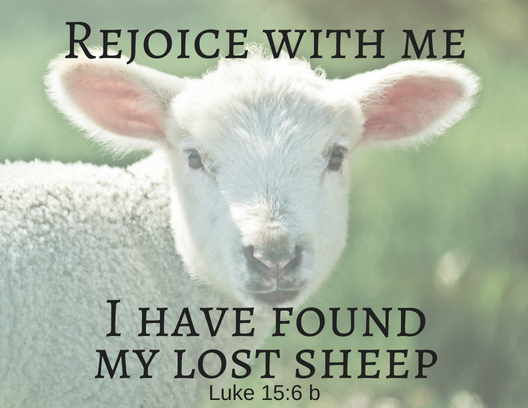
In the same manner, Jesus demonstrates this as the Good Shepherd watching over His flock. “Suppose one of you has a hundred sheep and loses one of them. Doesn’t he leave the ninety-nine in the open country and go after the lost sheep until he finds it? And when he finds it, he joyfully puts it on his shoulders and goes home.” Again, Jesus illustrates the commitment of the Father and His love for all within the body. It says heaven rejoices, but aren’t we too supposed to rejoice in the redemption? As those who already know Christ, we should not be lining up for apologies, but instead extending the hands of grace. If we were robbed by the redeemed of our possessions, our time, or our emotions, they have all become forfeit for the sake of redemption.
Despite our own unfaithfulness and wandering, God’s love has found us and refuses to let go. He has already executed the campaign to offer you an eternal reward far greater than we could ever imagine (and I can imagine quite a bit of pizza). Therefore it is our job to continue the work of Jesus, tending to His sheep. We search the fields for the lost one, giving constant and enduring love to those failing to be victorious over temptation. It is simply put, but the practice is daunting. It is having an awkward conversation at the gas station with someone who hasn’t been to church in a few years. It is offering a listening ear to someone in distress, possibly never knowing if you have heard the truth. It is showing kindness and compassion at business close when all you wanted was to get home to relax. Every act of love is a step toward spiritual restoration, not only for others, but ourselves, because we too have hope in life eternal at the expense of the Creator through His Seeking Shepherd.
-Aaron Winner
Reflection Questions
What similarities do you find between the lives of Hosea and Gomer and the parable of the lost sheep?
What lost sheep have you seen restored?
What sheep do you know who are still lost? What acts of love can you be a part of to demonstrate the Father’s love to them?






 Seek Grow Love