The Action Story

Old Testament: Zechariah 9-10

Poetry: Psalm 146

*Theme Week – Celebrating Jesus: Mark 1

            Every writer, speaker, film-maker has their own particular style for telling a story or giving a presentation.  When I preach a sermon I usually choose one particular theme.  I often start with a story that I have personally experienced and then try to help the listener make a connection to that same kind of story/situation and then connect the Bible story/text to that same theme.  It’s a slow build up to the main theme.  That’s one way to do it.

            Some choose to jump right in and focus on the action.  If you’ve ever seen a James Bond movie or a Tom Cruise Mission Impossible movie, you notice that almost always it begins right in the midst of the action.. very little warm up, just a kind of… boom! You’re right in the middle of the action- jumping out of an airplane, skiing down a mountain, climbing up the outside of a skyscraper, whatever.

            When it comes to the four Gospels, each one is different in how they begin.  Matthew goes back to the Old Testament and give a genealogy for Jesus, showing how his is connected to some of Israel’s great people like Abraham, Isaac, Jacob and King David and then he tells the story of Jesus’s birth in Bethlehem and how Mary’s betrothed, Joseph, was a good and honorable man.  Luke starts with the announcements of the pregnancies of John the Baptist and Jesus followed by their birth stories.  John’s Gospel follows the pattern of Genesis one and goes back to the beginning with God’s word, his promise and plan and then showing that Jesus fulfills that plan.  All three of those Gospels give back stories and slow roll outs.  Then there’s Mark.  Mark starts out… Boom!  John the Baptist is an adult and doing his ministry of preaching and baptizing.  Then Jesus appears as a grown adult and gets baptized by John and God’s voice descends upon Jesus proclaiming that he is God’s son and that God is pleased with him.

            Mark’s Gospel is an action story.  We know nothing about Jesus as a baby, how he came to be conceived of a virgin or in a manger.  Mark doesn’t mention wise men.  What matters to Mark is:  “What’s Jesus doing now that his mission is getting ready to start?”  We still know from Mark that Jesus is the son of God, because God announces it from heaven.  Mark doesn’t feel the need to share how Jesus happened to be the son of God, God just tells us.  Boom! Action!

            Mark’s favorite word seems to be “immediately”.  Jesus comes out of the water and “immediately” the heavens are torn open and God’s speaks.  Then “immediately” the spirit sends Jesus out to the wilderness to be tempted by Satan.  Compared to the other Gospels not a lot of detail.  We don’t hear from Mark how Jesus was tempted by Satan or how he responded, just that it happened.  Then Jesus is suddenly back in Galilee announcing- “It’s time! The kingdom of God is coming right away”.  Can you feel the urgency in Mark’s storytelling? 

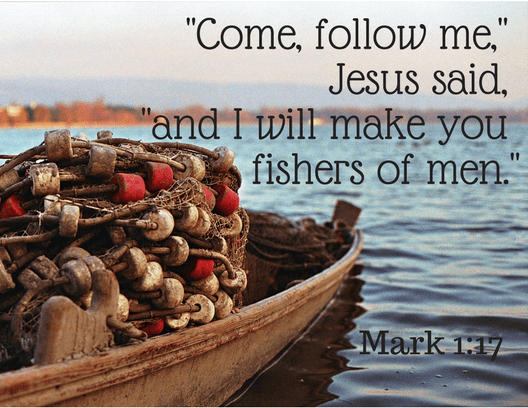
            Next, Jesus is by the sea calling the fishermen to follow him and “immediately they follow him.” He moves on down and finds two more fishermen and “immediately” he calls them.  He goes to Capernaum and “immediately” enters the synagogue and starts teaching.  Then he “immediately” casts out an unclean spirit from a young man. Then he “immediately” leaves the synagogue and goes to the home of Simon and Andrew where Simon’s mother in law is sick and “immediately” they tell Jesus about her illness and he heals her.  From there every sick person in town is being brought to him to be healed.

            Next, Jesus is getting up very early in the morning to go pray and the disciples come looking for him.  There is urgency- “everyone is looking for you.”  Jesus then leads them from town to town preaching and casting out demons.  He meets a leper and touches him and “immediately” the leper is healed.

            Each of the four gospels tell the story of Jesus but do it in different styles.  Luke spends over 19,000 words telling the story, Matthew is right behind at over 18,000 words, John uses just over 15,000 words, and Mark, you guessed it- it is by far the shortest, telling the story of Jesus at just over 11,000 words- in just a little over half the words that Luke uses.  Mark probably had his own reasons for telling the story with so much action and so few words.  It’s still the story of Jesus, told from Mark’s perspective and it still touches on the main points- Jesus is the son of God, Jesus was baptized and tempted, Jesus preached the good news and healed people, and Jesus was on the move.  Mark goes on to show that Jesus was crucified and that God raised him from the dead.

            Isn’t it great that God allows us to keep our own personality and style as we serve him?  The story of Jesus has never and will never change, but how we present Jesus to others may depend on all kinds of factors including our own personality and style as well as the needs of our conversation partners.  God doesn’t make cookie cutter disciples.  God tells the story of Jesus through many different people.  How is he using you to tell the story of Jesus?

-Jeff Fletcher

Reflection Questions

  1. Why do you think God chose four different writers to tell the story of Jesus? 
  2. What do you appreciate about Mark chapter 1?
  3. God tells the story of Jesus through many different people.  How is he using you to tell the story of Jesus?
No Excuses

Old Testament: Isaiah 23 & 24

Poetry: Psalm 70

New Testament: Mark 1

In Mark 1 Jesus calls his first disciples.  He calls four people.  Now these four are all fisherman with jobs and lives.  But they leave those lives and jobs to follow Jesus.  Take a second to really think about how much they’re giving up there.  They’re losing their job, their lifestyle and leaving their own homes.  All to follow someone after he says just one thing to them.  Now it doesn’t say that they stopped ,thought about it, and followed Jesus, but that “At once they left their nets and followed him” (Mark 1:18 NIV) and “Without delay he called them, and they left their father Zebedee in the boat with the hired men and follow him” (Mark 1:20 NIV).  They left immediately to follow Jesus; they were willing to give up their own lives which they had plans for.  They gave that all up to follow Jesus.  They did it quickly and without hesitation.  Now they could have had insight like in Matthew 16:17, “Jesus replied, ‘Blessed are you, Simon son of Jonah, for this was not revealed to you by flesh and blood, but by my Father in heaven’”.  I would think that they did but we can still learn from their example here.

Another thing to notice here is that Jesus is not calling scribes or priests who might know the old testament the best and who are the most well educated.  There is plenty of reasons for this.  He is calling fishermen as his first.  The first time something is done it’s setting a precedent.  Everything Jesus did set a precedent for us to follow.  But he’s showing us here that you don’t need to be the most educated, or the smartest to follow and serve him.  That is the precedent he is setting for us.  The precedent that continues even to this day.  And he took these fishermen and made them into the vessels he would use to spread the gospel even after he was gone, when they were no longer fishermen, but fishers of men. 

Now we can apply this to our own lives as well.  We’ve all been called to follow Jesus just as the first disciples were.  Yet so many times we hesitate, because we don’t want to give up things, or we’re too scared.  Take a page from these disciples, they left their lives and their homes to follow.  We should be willing to do what is asked of us as well. Most of the time what we are called to give up isn’t even as much as they gave up.  Not only that, but when we are called to do something, we should be doing it right away.  They didn’t have the full picture of who he was and were willing to follow, we should be able to as well.  Let me qualify all that by saying we should give thought and prayer if we’re going to do something, and if we are called to do something that doesn’t mean you have to give up everything you know like the disciples, they were after all in a different situation than most of us. 

And if you’re stuck thinking that “I’m not qualified” or “Someone else better can do it because I’m not good enough” you should forget those thoughts.  Because Jesus set the precedent that we all, no matter how skilled or unskilled, can serve.  Just like the disciples he equips us for what we are called to do.   You don’t need to be the best to serve.  Moses who is famous for leading the Israelites out of Egypt was a flawed person.  And if you’re saying “I’m not ready yet because I’m too young, not good enough, etc yet” then when do you become ready.  Setting a random age where you say that you know enough now?  We are called to serve, not called to serve in 20 years. 

Don’t be afraid to serve in what way you are called and do it without delay when you are called. 

-Philip Kirkpatrick

Reflection Questions

  1. What do you feel the Lord has called you to do? How are you being called to follow Jesus? If you are unsure, pray to hear directions more clearly.
  2. What excuses have you given in the past for not following the calling right away?
  3. Would Jesus think any of these excuses are valid?
  4. What are you willing to give up in order to follow Jesus well?

Feed My Sheep

Theme Week – Peter: John 21

Old Testament: Ezra 9 & 10

Poetry: Psalm 17

Peter has experienced so much with Jesus that it is difficult to wrap our minds around everything. Miracles, explanations of the Kingdom, who God is, how to live, even being resurrected to life are some of the actions and ideas that God accomplished and conveyed through His Son. Peter took it all in. Peter was undergoing a transformation through his relationship with Jesus.

Peter knew and stated that Jesus was the Messiah (the Christ), the Son of the Living God. (Matthew 16:16) This idea was revealed to him by God, but Peter stumbled when Jesus was on trial. He was terrified and rightly so. He saw the cruelty, the brutality released on Jesus so he denied him three times.

On the shore that morning, Jesus wants Peter to understand that he forgives him. After a miraculous catch of fish and eating a fish and bread breakfast, Jesus asks Peter if he loves him more than these?  “Yes, Lord,” he said, “you know that I love you.” Jesus said, “Feed my lambs.” Again Jesus said, “Simon son of John, do you love me?” He answered, “Yes, Lord, you know that I love you.” Jesus said, “Take care of my sheep.” The third time he said to him, “Simon son of John, do you love me?” This time Peter was hurt because Jesus asked him the third time, “Do you love me?” Peter said, “Lord, you know all things; you know that I love you.” Jesus said, “Feed my sheep.”

Jesus is direct with Peter. He will express his love for Jesus by feeding, by taking care of his sheep. Of course, Jesus had taught them that his followers were his sheep. At that time, we were the ones that had not yet entered the sheep pen by the gate. But Praise God that Peter showed his love for Christ. He truly Followed Jesus. He became brave speaking to the crowds about believing and being baptized into Jesus. We are encouraged and challenged by what Peter said and did. He did feed the followers of Jesus then and we are still receiving that food and care today through the scriptures. Along with Peter, we have the chance to feed and care for the followers of Christ. We will faithfully follow the plan that God sets for our lives. We will follow Jesus Christ.

-Rebecca Dauksas

Reflection Questions

  1. Do you love Jesus (even if you have failed him before)?
  2. What job do you think Jesus has for you to do for him? How will you do it?
  3. Will you follow Jesus? How?

What does following Jesus look like?

Old Testament: Judges 5 & 6

Poetry: Psalm 109

* New Testament: Luke 9

In Luke 9, Jesus sends out the twelve disciples. He gave them power and authority to drive out all demons and to cure diseases, and they were to proclaim the kingdom of God and to heal the sick. They went from village to village, proclaiming the good news and healing people everywhere. That sounds amazing, but later Jesus explains that there is a lot more to being his disciple. There is sacrifice. We must be willing to offer up our own lives-our desires, our agenda- in the service for God. Jesus told them all that whoever wants to be his disciple must deny themselves and take up their cross daily and follow him. Notice that we do it daily. Our sacrifice is about gaining life, a better life, an eternal life. As Paul would write, “I urge you, brothers and sisters, in view of God’s mercy, to offer your bodies as a living sacrifice, holy and pleasing to God—this is your true and proper worship.” (Romans 12:1)  Jesus told them that “whoever wants to save their life will lose it, but whoever loses their life for me will save it. What good is it for someone to gain the whole world, and yet lose or forfeit their very self?” (Luke 9:24 & 25)

Jesus assures us that what we are giving up and what the world offers us is nothing compared to what he has in store for us. Even though we must go through many hardships to enter the kingdom of God (Acts 14:22), Christ wants us to fully rely on him every day. May he give us the strength and encouragement to always Follow Him.

-Rebecca Dauksas

Reflection Questions

  1. How can you proclaim the Kingdom of God and help heal the sick?
  2. What have you given up in order to follow Jesus? What are you still hanging on to too tightly? What might taking up your cross daily look like today? And tomorrow? And Saturday? Etc…
  3. What do we learn about who Jesus is in Luke 9? What did Peter not say? Why is what he did say important?

Preparing with Your Actions

* Theme Week – Jesus: Mark 14

Old Testament: Joshua Intro below

Psalms Reading: Psalm 94

This entire chapter is full of various preparations for the crucifixion of our Savior. 

It starts with a simple act of pure love and devotion. Jesus was in Bethany, eating with Lazarus and his sisters. And after this meal, a woman (John’s account tells us that it was Lazarus’ sister Mary) comes in with an expensive alabaster jar of fragrant oil and anoints Jesus. She has brought Jesus only the best and has complete disregard for its monetary value. Jesus tells us that what she is actually doing is anointing him for his burial. She isn’t giving to Christ for her sake, or out of guilt or in a rush of emotion. She prepared an offering of the best of what she had and gave. Jesus says that “She did what she could,” and she did it without direction or suggestion. She thought and found a way to serve her Lord and Savior whom she loved. 

In a different act of preparation we see the disciples taking direction from Jesus to go and prepare the passover meal. Jesus gives them all the direction they need, and when they follow those directions all is provided for them. They were given a mission, and all they had to do was follow – the means to complete it was supplied. 

And yet after the supper, when Christ asked a few of them to go with him and help him prepare for his coming death through prayer and fellowship, they couldn’t follow through. They fell asleep time and again. They fell short three times. Three times he checked on them, and reminded Peter to pray because the flesh is weak. Three times he came back and woke them and asked them to stay watchful and pray. Three times they proved themselves weak. Just as Peter would deny him three times. 

Take some time to prepare yourself with me by examining your actions and intentions today. Ask yourself: 

What can I do to show my love and appreciation for my savior? Am I too concerned with how others see my devotion to Jesus? How can I show my devotion as purely as Mary did?

When I’m given a task by God, do I follow through? Do I have faith that he will provide for my needs and give me a way to complete any task he gives me? 

My spirit is willing and like Peter I refuse to believe that I could ever deny or disobey my savior. But is my flesh weak? In what areas of my life am I sleeping rather than remaining watchful?

My prayer for you today is that you are able to look over your life and the decisions you’re making and analyze your motives and intentions. Take stock of how you are serving. Are you able to serve in faith and without worrying about whether or not you’ll be given what you need? Are you able to serve with the purest of intentions? I pray that you find a way to serve and follow and do it in a way that is pure and devoted. 

Jenn Haynes

Having finished Deuteronomy yesterday in our Old Testament reading, here is our introduction to the book of Joshua which we will begin reading tomorrow.

Joshua Introduction

The book of Joshua details the time from immediately following Moses’ death through the conquest of the land of Canaan.  We’re not told, but it is likely that Joshua himself wrote most of the book, since it sounds like a first-hand account of the events that happened and were recorded at the time.  At least the end of the book that records Joshua’s death had to have been written by someone else.

This book details the fulfillment of God’s promise to Abraham that his descendants would be slaves in Egypt, but afterward would return to the promised land – the land of Canaan.  A promise God repeated to Moses.  We see this from the very beginning of the book, where in Joshua 1:2-3, God told Joshua, “Moses my servant is dead.  Now then, you and all these people, get ready to cross the Jordan River into the land I am about to give them – to the Israelites.  I will give you every place where you set your foot, as I promised Moses.”

The first 12 chapters detail the miraculous crossing of the Jordan River, the battle of Jericho, the sun standing still over Gibeon for about a whole day during the battle with the Amorites, and the conquest of all of the land of Canaan.  Chapters 13-22 discuss the division of the land among the tribes of Israel.  Chapters 23-24 close with a challenge to worship God alone.

Some well-known verses in Joshua include:

Joshua 1:7-8, “Be strong and very courageous.  Be careful to obey all the law my servant Moses gave you; do not turn from it to the right or to the left, that you may be successful wherever you go.  Do not let this Book of the Law depart from your mouth; meditate on it day and night, so that you may be careful to do everything written in it.  Then you will be prosperous and successful.”

Joshua 23:14, “…You know with all your heart and soul that not one of all the good promises the Lord your God gave you has failed.  Every promise has been fulfilled; not one has failed.”

Joshua 24:14, “But if serving the Lord seems undesirable to you, then choose for yourselves this day whom you will serve, whether the gods your forefathers served beyond the River, or the gods of the Amorites in whose land you are living. But as for me and my house, we will serve the Lord.”

This is an exciting book.  As you read it, consider the blessing and successes of Joshua, who faithfully followed God, contrasted with the punishment of people like Achan for disobedience.

Interestingly, the Hebrew name Joshua is the same as the new testament name Jesus.

-Steve Mattison

Ordinary Moments

Old Testament Reading: Exodus 31 & 32
Psalms Reading: Psalm 42
* New Testament Reading: Romans 12

The vast majority of life’s moments are simply ordinary for most of us. Even people who have exciting careers or riches and fame still have low-key moments in their lives. As a homeschooling mom, I like to think that I spend my days helping my children pursue an excellent education and engaging them in infinite stimulating activities with their full cooperation; in reality, though, I find that much of my time passes by tidying up messes I didn’t make, preparing meals that will soon be rejected, arguing about why they actually do need to learn the process of simplifying fractions, and washing laundry that has mysteriously amassed into a mountain overnight.

Even as a young adult, before my four Blessings were born, I often felt overwhelmed with the mundane. I wanted to do something BIG for God, not spend my long days as a teacher begging my students to stop throwing spitballs during the read-aloud.

Around that time, God showed me Romans 12 in a new light, through The Message paraphrase. The first verse, which was revolutionary to me, goes like this: “Take your everyday, ordinary, life – your sleeping, eating, going-to-work and walking-around life, and place it before God as an offering.” For decades now, I have had that scripture posted around my home so I am always reminded of the value of the humdrum rhythms of life, the chance to make a difference in even the most unremarkable situations. Because most of life is without pomp and circumstance, we must learn to live each day with purpose, as all of our interactions with others have a kingdom impact. We should consider ourselves missionaries in the midst of our own school, job, and life.

Intrigued by the Danish lifestyle of hygge that represents a more simplistic and intentional way of living, I picked up the book “Holy Hygge” by Jamie Erickson. Have you heard of hygge (pronounced “HYOO-guh”)? Hygge is a word with complex meaning that is not directly translatable to English, but I believe that it goes along well with realizing that every moment of our lives is an offering to God. Simply put, “Hygge is a mindset – a way of making the mundane and necessary tasks of life more meaningful and beautiful… [hygge] helps us see that the whole of our lives is greater than the sum total of all the individual moments. The cup of coffee we sip with our roommate at the breakfast table each morning, the quick chat with the coworker as we share an elevator on our way into the office, the smile-and-wave we offer to the playground supervisor each afternoon while sitting in the pickup line – these all become a daily liturgy. We no longer grudge the monotony of a routine because hygge compels us to find the extra of each ordinary moment. In the words of author Annie Dillard, ‘How we spend our days, is, of course, how we spend our lives.’ ” (Holy Hygge, p. 15, 79-80).

Therefore, as followers of Jesus, it behooves us to realize the eternal importance of each action and interaction.  To quote Brennan Manning, “In every encounter, we either give life or we drain it. There is no neutral exchange.” Everything we do – or don’t do – makes an impression for the good or the bad. Every interaction is a chance to point to – or away from – Jesus through our actions. Every moment of our lives is meant to be an offering to God. 

Romans 12 goes on to share a lot about standing out from the world rather than blending into it (verses 1-2) and recognizing our gifts of grace from God and sharing our gifts with the right attitudes (verses 3-8). The rest of the chapter is almost like “popcorn proverbs” – little tidbits of reminders about how we should handle life’s challenges. In The Message version, each piece of advice has a second part to either reinforce the concept, show cause and effect, or suggest what NOT to do. I’ve put them into a chart below so you can see how they go together: 

Love from who you are;Don’t fake it.
Run for dear life from evil;Hold on for dear life to good.
Be good friends who love deeply;Practice playing second fiddle.
Don’t burn out;Keep yourselves fueled and aflame.
Be alert servants of the Master,cheerfully expectant.
Don’t quit in hard times;Pray all the harder.
Help needy Christians;Be inventive in hospitality.
Bless your enemies;No cursing under your breath.
Laugh with your happy friends when they’re happy;Share tears when they’re down.
Get along with each other;Don’t be stuck up.
Make friends with nobodies;Don’t be the great somebody.
Don’t hit back;Discover beauty in everyone.
If you’ve got it in you, get along with everybody.Don’t insist on getting even; that’s not for you to do. “I’ll do the judging,” says God. “I’ll take care of it.”
Our Scriptures tell us that if you see your enemy hungry… go buy that person lunch.
if he’s thirsty…get him a drink.
Your generositywill surprise him with goodness.
Don’t let evil get the best of you; get the best of evil by doing good.

This is a great list of things we can practice in the midst of our ordinary moments, and doing so will help shine the light of Jesus to the world around us, helping them see him in the monotony of life, too. 

-Rachel Cain

Rachel is the wife to Pastor Dan Cain and homeschooling mama to four children.

Reflection questions:

  1. Choose one or two of the “popcorn proverbs” in the chart that are a struggle for you. How and when will you apply them to the monotony of your days? 
  2. Romans 12:2 (MSG) says, “Don’t become so well-adjusted to your culture that you fit into it without even thinking.” What are some ways that you have fit in with the culture, but God is calling you to stand out for Him? 
  3. Think about the most monotonous part of your day. How can you redirect to focus on God during those times? (Listen to the Bible on audio while driving, pray while doing dishes, etc). 
  4. What has God shown about Himself in your reading of His words today?

Take It Up Daily

Luke 9

Friday, December 17, 2022


“Then he said to them all: ‘Whoever wants to be my disciple must deny themselves and take up their cross daily and follow me. For whoever wants to save their life will lose it, but whoever loses their life for me will save it. What good is it for someone to gain the whole world, and yet lose or forfeit their very self? Whoever is ashamed of me and my words, the Son of Man will be ashamed of them when he comes in his glory and in the glory of the Father and of the holy angels.” – Luke 9:23-26


What does the cross mean to you? Today, it is often seen around us as a symbol of Christianity, a beacon of hope, and a reminder of God’s love. Sometimes in our culture, it is even used in fashion and design outside the church for its aesthetic appeal. It’s “cool.”


But in ancient times, under the Roman Empire, it was feared. The cross was a means of torture and death. To hear their Lord say, “Take up your cross daily” was a terrifying concept. Early Christians died for the cross; for what it meant. Sometimes they even took up their cross literally. They denied themselves at all costs to take up their cross and be a true disciple.

To take up your cross is the noblest thing you can do. Jesus was a cross-bearer, leading the way for all who wish to follow him. He took up the ultimate cross, and denied himself in the ultimate way, giving up his entire life for a world of undeserving people. Following in his footsteps doesn’t mean giving oneself up for crucifixion, but being willing to deny your own wants and desires and follow God’s calling for your life daily, no matter what that is.

-Isabella Osborn


Reflection Questions:

  1. What cross are you being called to bear? Will you make the decision to answer that call today?
  2. Even if you are in a season of unknowns, what is the universal cross we are all called to bear?
  3. Bearing a cross, while unimaginably fulfilling, can definitely come with difficulty and be a huge burden. In what ways can you find joy in taking up your cross, even when the endeavor you’ve been charged with is a challenging one?

You Follow Me!

John 21

April 18

After his resurrection from the dead, Jesus asked Peter three times if he loved him. He answered yes three times. Then Jesus told Peter how he would die—apparently by crucifixion. Peter wondered about how it would go with John. So he asked Jesus, “What about this man?” Jesus brushed off the question and said, “What is that to you? You follow me!” Here’s the whole exchange.

“Truly, truly, I say to you, when you were young, you used to dress yourself and walk wherever you wanted, but when you are old, you will stretch out your hands, and another will dress you and carry you where you do not want to go.” (This he said to show by what kind of death he was to glorify God.) And after saying this he said to him, “Follow me.” Peter turned and saw the disciple whom Jesus loved following them, the one who had been reclining at the table close to him and had said, “Lord, who is it that is going to betray you?” When Peter saw him, he said to Jesus, “Lord, what about this man?” Jesus said to him, “If it is my will that he remain until I come, what is that to you? You follow me!” (John 21:18-22)

Jesus words “None of your business, follow me” are sweet to my ears. They are liberating from the depressing bondage of fatal comparing. Of looking at someone else’s life and feeling inadequate.

I was encouraged by Jesus’ word to me (and you): “What is that to you? You follow me!” Peter had just heard a very hard word. You will die…painfully. His first thought was comparison. What about John? If I have to suffer, will he have to suffer? If my ministry ends like that, will his end like that? If I don’t get to live a long life, will he get to?

That’s the way we sinners are wired. Compare. Compare. Compare. We crave to know how we stack up in comparison to others.

That word landed on me with great joy. Jesus will not judge me according to my superiority or inferiority over anybody. No sibling. No friend. No ministry. These are not the standard. Jesus has a work for me to do (and a different one for you). It is not what he has given anyone else to do. There is a grace to do it. Will I trust him for that grace and do what he has given me to do? That is the question.

I hope you find encouragement and freedom today when you hear Jesus say to all your comparisons: “What is that to you? You follow me!”

Learning to walk in freedom with you.

-Andy Cisneros

Questions for Reflection and Discussion

  1. In what areas do you most often fall into the trap of comparing yourself to others? When you compare yourself to others, do you more often see yourself on the shorter end of the stick or above others? What is the danger in either direction?
  2. How can we remember and put in action Jesus words: “What is that to you? You follow me!”
  3. What adjectives would you use to describe Jesus in this chapter? What are his priorities? Page through the previous chapters of John asking the same questions? How can you seek to be Christ-like this week? What work does Jesus have for you to do?

Do You See?

John 20

April 17

Do You See? Have you recognized Jesus’ resurrection? Is it a foreign idea to you?

Here’s the issue: In verse 8 it says, “Then the other disciple [John], who had reached the tomb first, also went in, and he saw and believed” (John 20:8). What did he see? What did he believe? Jesus wasn’t there—just some cloths that he left behind.

Compare this to Mary in verse 18: She has met Jesus in the garden and spoken to him. She returns to the disciples and says, “I have seen the Lord” (John 20:18). We don’t have Mary’s direct evidence. We are more like John in the tomb—there is evidence, and either we see through it or we don’t. The issue is: Do you see? The issue is: Do I care? Do I find that idea helpful? Do I feel that it helps me flourish as a human being? And if it seems like it doesn’t, then I will just view it the way I view UFOs and possible life in some distant galaxy—I just don’t need to bother with it.

Mary Magdalene, one of Jesus’ followers, goes to His tomb only to find that He’s not there! Jesus appears to Mary and several others, fulfilling all that He had said about rising from the dead.

Either you see Christ risen and that changes you or Christ’s death is some obscure event that happened in the past.

The reality is Jesus is alive! He is risen! He can change us like he promised. We have no hope of changing ourselves. The only way we can put away sinful habits is through a relationship with Jesus made possible by His death and resurrection.

On the cross, Jesus clothed Himself in our sin. When Peter and John looked into the empty tomb, they saw Jesus was not there and He had left His burial clothes. John 20 shows us that Jesus left our sinful nature in the grave when He rose from the dead.

“Because you have seen me, you have believed; blessed are those who have not seen and yet have believed” (John 20:29).

We do not have to be controlled by our desire to sin. Not only do we not have to be clothed in sin, the resurrection means we get to be clothed in something better. In Colossians 3:12, Paul says, “Clothe yourselves with compassion, kindness, humility, gentleness and patience.” Following Jesus allows us to put away our old lives and begin new ones.

If you think this does not matter to you, remember, those who are in Christ—that is, who believe on him, and belong to him, and receive forgiveness and reconciliation from him—will be raised with him. And Paul says in Philippians 3:21 that Jesus “will transform our lowly body to be like his glorious body, by the power that enables him even to subject all things to himself.” This is not a UFO, or irrelevant life on another galaxy. This is what will happen when God judges the world by a man, Jesus Christ.

Do you see?

-Andy Cisneros

Questions for Reflection and Discussion

  1. Do you see that Jesus is alive? What evidence leads you to believe that Jesus rose from the dead and is living today?
  2. What does it mean to you that you don’t have to be clothed in sin any more? Are you still? What does one do to make the transition from living the old life to the new? If you aren’t sure, who can you talk to about it?
  3. Who do you know who needs to see? What can you show them about Jesus – today?

Known by Your Love

John 13

April 10

Do the people you pass in your daily life know that you follow Jesus? Your coworker in the adjacent cubicle, the cashier at the grocery store, your neighbor down the street? How do they know? It’s probably not the length of your prayers, the Bible verses you have memorized, the fancy church jargon you use, or the gourmet casseroles you bring to your church potlucks. 

They will know you by your love. 

“A new command I give you: Love one another. As I have loved you, so you must love one another. By this everyone will know that you are my disciples, if you love one another” (John 13:34-35).

Following Jesus isn’t about knowing the most, but loving the most. 

Love is our faith in action. It might not always make sense to unbelievers, especially in the midst of our self-obsessed culture. 

Love your enemies and pray for those who persecute you (Matthew 5:44). 

Sell your possessions and give to the poor (Luke 12:33). 

Honor one another above yourselves (Romans 12:10).

Look after orphans and widows in their distress (James 1:27). 

Carry each other’s burdens (Galatians 6:2). 

We ought to lay down our lives for our brothers and sisters (1 John 3:16). 

When we love—even when it doesn’t make sense—we show our allegiance to Jesus. He is the perfect personification of love. This week, we celebrate the love he showed on the cross, where he bled and died to win your heart, where he was scoffed at by a world who couldn’t make sense of such great love. 

If we’re followers of Jesus, we’ll do as Jesus did. We’re called to pour even when our cup is empty, to give when it hurts, to expect nothing in return, and to lay down our lives for others. By this, the world will know you belong to Jesus. 

-Mackenzie McClain

Discussion & Reflection Questions: 

  1. Who will you show this nonsensical love to this week? How will you do it?
  2. Loving others cost Jesus his life. What might loving others cost you?
  3. By being known as a follower of Jesus, people will make assumptions about who Jesus is based upon how they see you act. What implications does this have for how you live your daily life?