Oh that God would Reveal Himself

Psalm 119 Part 2 (verses 41-80)

Do you ever think about just how amazing this blog is?

First, humans have languages all across the world. Then, in some places, human societies developed in such a way that business transactions needed to be written down. Then, they decided they could write about more than business transactions and began to codify spoken word into written words, then those words develop for centuries. New technologies like the printing press and then the internet allow those words that express the concepts of all language to reach wider and then near global audiences. The reason human society was able to be where it is now is not just because humans are smart, but because we are able to take the best of the best ideas and pass them on in written format. That’s what allows our massive growth of collective knowledge to be used by and benefit future generations. 

In around 1400 BC, a community of slaves, leaving behind literate, powerful, imperial Egypt, write down, in words and letters, their story of the beginning of all things, how they got out of the mess their people were in, and what they were going to do about it. These people write “In the beginning, God created the heavens and the earth.” It was at this point that the Jewish people, an enslaved community, became a community focused around words. They were not just focusing on what their hands could produce, but on what these words said. Because the words were not simply words. 

How can we know the mind of another person? 

We can know their actions, know what they say. In legal proceedings, the prosecution and defense will try and show both the action a person took but also the state of mind behind the action. But we can’t know, we can only deduce and guess. 

Unless, we can trust someone and they tell us exactly what they were thinking. 

I don’t trust people to guess the mind of God. Too many people through the years have said “God wants it to be this way” to me in the midst of pain, and their words rang hollow. Too many people said “This is the judgement of God” and their words feel cruel. 

I only trust what is going on in the mind of God if God tells me. 

THAT is the beauty of the words of the Torah. A bunch of slaves leave Egypt, taking the money, the power, the labor force that made Egypt a superpower of it’s day. Moses writes about the experience in the Torah, and the Jews believed and believe that it is the word of God given to know his mind, his heart, who God is. 

Reason shows that God is probable. 

Intuitions about justice and beauty shows God makes sense. 

History shows that God is powerful. 

But the Torah gave the Jews something beyond general truths about God. It showed the Jews the best way to live. The way to live in accord with the God of the universe, to keep themselves pure and holy. All in words written down on a page so that generations upon generations could read them. 

We will talk more about the way that the author of psalm 119 writes about the Torah tomorrow, but I want you to realize that God did not have to reveal Godself. God reveals his desires as one trustworthy and tells us exactly what he means. We don’t have to guess, because we wouldn’t get him right. The Jews experienced the fire of God on the mountain, and trusted that what Moses received was the word of God. David believed that, as did the prophets, as did John the Baptist, as did Jesus. 

As amazing as this blog is, isn’t it even more amazing that God in his goodness and grace would reveal himself to humans. What a gracious gift to know the mind of the Lord. May we continually remember that as we read Psalm 119 this week.

-Jake Ballard

Today’s Bible reading plan passages can be read or listened to at BibleGateway.com here – Ezekiel 27-28 and Psalm 119:41-80

Don’t Miss the Artistry

Psalm 119 – part 1

For the weekdays of this week, I do encourage you to continue to read through Ezekiel. In Saturday’s devotion, we will catch the highlights of those verses. However, our focus for the next few days will be Psalm 119. The longest chapter in the Bible, by both verse and words, Psalm 119 is worth the time we are going to spend with it. Rather than going through verse by verse (we will do a bit of that on Wednesday and Thursday), I’d like to talk about the themes that come out of reading Psalm 119. We’ll talk about God’s self-revelation, in both the Torah and the whole Bible, and we’ll discuss some ways that we can honor God’s word by keeping it close to us. 

But today, I want to talk about Psalms in general, and this Psalm in particular. The Bible is a dense book. Often we can treat it like a study guide, a how-to manual, a game plan for life. And, these are not incorrect. But that is NOT ALL the Bible is. It is not simply an owner’s manual for our life, but it is a vast collection of biographies, histories, letters, and poems that are inspired by God’s Words, authoritative about our lives, and true in everything it affirms. 

The Psalms in general help disabuse us of our study guide/owner’s manual/game plan approach to the Bible, because they are not always God’s words to people, but people’s words BACK TO GOD. In the Psalms there is rage, despair, longing, frustration, ecstasy, devastation, joy, sorrow, wrath, contentment, love. The whole gamut of the human experience is on display. But more than just these emotions, they are the human experience, recreated and retold in beauty.

Think about your favorite song. Do you hear the twang of a steel guitar? Do you feel the rumble of the bass from the hook? Does the distortion make you want to turn up the speakers to 11? What do the lyrics mean? What do the lyrics SAY? Are those two the same, or is the meaning conveyed not in words but in how they are sung or how the music crescendos at the same time they are singing of silence? Let me venture a guess; you like your favorite song. This genius insight of mine is because we all think our song has a certain beauty. I like metal and the screams of the vocalists and the distortion of their guitars are just wonderful and gorgeous. But more often than not, in metal and rock, the music and the lyrics work in tandem to make the pain, betrayal, loss, anger, and even love of the musicians real and visceral. There is beauty in my favorite songs, and in yours, even if you like country. 

Psalm 119 is also beautiful, a labor of love that took the artist hours of labor spent crafting the art to perfection. Just because God guided the Psalmist doesn’t mean the Psalmist didn’t put his blood sweat and tears into crafting a beautiful poem in honor of God and his word. What I want you to notice today is the beauty. Read all of Psalm 119. Read it from start to finish, top to bottom. But DON’T MISS THE ARTISTRY. Think about why the Psalmist used this word in this place. Why? Does one line jump out at you? Why is that? Does one line not sit well with you? Why do you not connect with that line? 

Moreover, think about the breakdown of the Psalm. There are 22 sections of 8 verses of Psalm 119. In your Bibles, there may even be a strange mark and word. For many this would be something that looks like an X and the word “Aleph” or “Alef”. The translators are helping you see that this poem is an acrostic. The first letter of each verse is aleph. Eight times over. Then the same with beth, then gimmel, so on and so forth. The artist had to be intentional to work out each line to build off the previous one, but also each verse needed a new word. That takes time, commitment, dedication. Artistry. 

Don’t miss the artistry. 

Don’t miss the passion or the beauty of this psalm. That is why when you saw””Read all of Psalm 119” and you skipped that and kept reading the devotion, you really should go read the entire Psalm today. The beauty the artist wanted to display for God is in the text, and I don’t want you to miss it. 

Don’t miss the artistry. 

-Jake Ballard

Today’s Bible reading plan passages can be read or listened to at BibleGateway.com here – Ezekiel 25-26 and Psalm 119:1-40

Grace and Discipline

Psalm 117 & 118 and Ezekiel 23 & 24

Read Psalm 118, or read it again. What is this Psalm all about? What is the refrain? “Give thanks to the Lord for he is good; his love endures forever.” God’s people look back on what has happened in their past and speak of God’s grace goodness and love. The Psalmist says that “he” (we don’t know the psalmist, but we will use he as the pronoun) speaks from his own perspective. The people from all nations were against him, but GOD is for him. In verse 6 he asks the great question, “What can humans do to me?” If God is for us, then who or what could ever stop us? God will save and send protection and salvation. The author says that this does not only hold true for him but it’s true for ALL of God’s people. The community asks God to save. “O LORD, do save, we ask you!” And when God answers, salvation, grace, and protection are for both the individual and the community. Upon his people he gives light (v.27) and to the individual he has become his strength, his song, and his salvation. (V. 14)

Now, compare that with Ezekiel 24:15-27 (go read it). All the words God has said in Psalm 118 don’t seem to make sense in light of Ezekiel 24. Ezekiel is God’s servant. He is a “good man” speaking to the “bad people” of Jerusalem. So what does God do? 

God kills Ezekiel’s wife. 

You may say “Jake, that’s extreme. God doesn’t kill people. He just allows her to die.” I could agree with you, maybe, if all we had was Ezekiel 24:18. Ezekiel reports the fact that his wife dies and he wasn’t allowed to mourn. But just two verses earlier, God explains that HE is taking  Ezekiel’s desire with a blow. God killed her. An innocent wife of a good man, to teach bad and rebellious men. 

Does Ezekiel say, “His love endures forever?”

Do we expect him to?

How do we reconcile this?

First, let me start with the fact that Ezekiel, his wife, and all the prophets recognized that their life was totally forfeit to the God who had power over life and death. I don’t think we should think of Ezekiel’s wife as an innocent bystander caught in the crossfire, no matter how much her story may suggest it. Ezekiel knew that everything he owned and everyone he loved was ultimately owned by God and loved by him more. 

Second, YES love. The love of God is the most fundamental element of his being. “God is love.” “For God loved the world in this way: He gave his one and only Son.” “What great love the father has lavished on us that we should be called the children of God!”

“His love endures forever!” 

So, the primary text is not Ezekiel but the Psalm. The Psalm prescribes who God is in love. And even there, we get our answer for Ezekiel. 

“The Lord has disciplined me severely.” 

Words alone weren’t cutting it with the people. They had heard the voice of the prophets again and again to return to the Lord. In Ezekiel 24, God is done telling them what they will experience, but will show them WHAT he will do. He was going to take his own sanctuary away from the sinning, unfaithful Israelites. He was going to discipline them. But they were not going to mourn even the presence of God being taken from them. Ezekiel showed them that they were going to lose the presence and be totally OK with it. They needed to see it, because it proved that God is the one in control. 

Finally, we need to recognize that too often we are worried too much about this life. Ezekiel’s wife may not have wanted to die, but she trusted in the Lord, as did her husband. Psalm 118 itself reminds those of us who are faithful followers of Christ that this is not the end. The stone that the builders rejected that has become the chief cornerstone. That one is Jesus of Nazareth. This work of God is marvelous in our eyes. God has made our days, our night, our beginning, and our ending. But for the faithful, this life is NOT the end. God has promised that the one who came in the name of the Lord to the shouts of “Hosanna”, or “Save us”, that same Jesus will be the one who comes in power to raise the living and the dead and give the reward to those who love him. 

Life eternal.

Goodness for forever.

Since God’s love endures forever, he promises those he loves will endure forever. 

So, give thanks to the Lord for he is good. 

His love endures forever. 

-Jake Ballard

(P.S. Not part of the main devotional text, but for those who are going through or know someone going through pain, read on. 

This post may have made you uncomfortable. Let me add the following thoughts. 

Quick summary of my points:

  1. Ezekiel’s wife had given God her life
  2. God’s love, not his judgement or anger, defines his divine actions
  3. We limited humans are too worried about the short time here when we have eternity of joy through faith

However, let me be clear :  these are not the words you share with the hurting, nor will these be your first thoughts in pain. Death is an enemy that God will destroy. We are to weep with those who weep. Understanding Ezekiel in light of the Psalm 118 is our ideal, but it may take time. If you are not in a place of pain, do NOT tell the suffering to “just get over it”. Do NOT say that God took someone’s loved one away. If you are in pain, I am not saying God took your loved one or that their life did not matter.

Ezekiel’s wife’s situation is not the way scripture speaks about every death. 

But God loves everyone, and God wishes that none perish; God is a God of life, wholeness, and health. One day, creation will again reflect the life, wholeness and health of it’s Creator, but it’s not there yet. But God may use even his enemies, death, brokenness, sickness, and pain, to bring about a greater goodness in spite of their wickedness. If you are suffering, in need of someone to hear your story, just be with you in your pain, I would encourage you to reach out to a pastor or trusted friend and ask them to listen. If you need someone to listen who doesn’t know you from Adam, but is willing to walk through your pain, please reach out to the author (Jake Ballard) via https://www.facebook.com/jacob.ballard.336. You can also find his contact information at TimberlandBibleChurch.org

May God bless show his love to you in the midst of whatever pain you experience.)

Read or listen to today’s Bible reading plan passages at BibleGateway.com here – Ezekiel 23& 24 and Psalm 117 & 118

Joy Forevermore

Make Yourself Ready!

Over the last week we have focused on Philippians, and especially the theme of joy. Joy is a state of happiness and contentment in the midst of any and every circumstance because of our response to the gospel and our connection to God through Christ. When we live like Christ, we experience deep levels of joy. Joy is found also in overcoming those who try to turn us away from the gospel message, and those tendencies within ourselves. Finally, we are reminded, even commanded, to rejoice in the Lord always. Joy is available to us in every situation, not just good ones, but in suffering and pain, because of who we are and whose we are. (We are brothers of Christ, which makes God our Father!) We are able to have joy at all times; what great news!

In the Christian tradition there have been some documents that have really helped Christians explain their faith or aspects of their faith well. The Confessions of St. Augustine, The Institutes of the Christian Religion, The Chronicles of Narnia. Even if we don’t agree with everything in these works, they have made quite an impact on the Christian faith. (Especially the Chronicles of Narnia.) One other document is the Westminster Shorter Catechism, a document used to teach the Christian faith that has been around from the 1640s. The first question it asks and answers is :

What is the chief end of man?

Man’s chief end is to glorify God, and enjoy him forever. 

To explain, this is saying “the greatest goal of every person is to give God glory and praise, and to be in joyous relationship with him forever.” It’s not scripture exactly, but that sounds about right to me. The last state of the believer is joy with God.

In Revelation Chapter 19, there are three times that a great multitude exalts God and praises his name for casting down wickedness in the world. Revelation 19:6-8 say. “6 Then I heard what seemed to be the voice of a great multitude, like the roar of many waters and like the sound of mighty peals of thunder, crying out, “Hallelujah! For the Lord our God the Almighty reigns.7 Let us rejoice and exult and give him the glory, for the marriage of the Lamb has come, and his Bride has made herself ready; 8 it was granted her to clothe herself with fine linen, bright and pure…” In this picture of the great multitude, which are those who have been saved by the Messiah, they are saying that what they will do is to exalt and glorify God, but also to REJOICE in him. They are finding joy in God. 

That is the final state of those who have followed Jesus. When we think of the eternal life of the saved, it is not just living for a really long time, it is a fulfilled, joy, content life. It is life to the fullest. Yes, it will last forever but it will not be dull, boring and monochromatic, and it won’t be sorrow, struggle filled, and just like this life. 

We will feast with Jesus at his wedding to his bride, the Church. (Rev. 19:9) We will be exalted to live and reign with Christ, whatever that looks like. (Rev. 20:6) My favorite promise is that we will look into the face of God, and he will wipe away our tears. (Rev. 21:4) That is what it means to enjoy God forever. We will have EVERY REASON to find joy, because “God will dwell with us, and we will be God’s people, and God himself will be with us as our God.” (Rev. 21:3, in the first person) 

My brothers and sisters may Jesus be your savior and lord so you may feast and rejoice at his wedding supper.

May you be raised again so that death will have no power over you. 

May your tears be wiped away, and may you enjoy God forever. 

“Rejoice in the Lord, always” and forevermore!

-Jake Ballard

——————————

Jake Ballard is pastor at Timberland Bible Church. If you’d like to hear more from him, you can find Timberland on Facebook (https://www.facebook.com/TimberlandBibleChurch/ ) and on Instagram (https://instagram.com/timberlandbiblechurch?igshid=t52xoq9esc7e). The church streams the Worship Gathering every Sunday at 10:30. Besides studying and teaching God’s word, he is raising three beautiful children with the love of his life, plays Dungeons and Dragons and is really excited about going to a Renaissance Fair this Fall. If you’d like to reach out to talk Bible, talk faith, or talk about your favorite D&D monster, look Jacob Ballard up on Facebook (https://www.facebook.com/jacob.ballard.336 )or email him at jakea.ballard@yahoo.com
God bl
ess you all!

Read or listen to today’s Bible reading plan passages at BibleGateway.com here – Isaiah 17-18 and Colossians 2

Introduction to Joy

Philippians 1

I’m not gonna lie to you : it’s been a bit rough. Since March of 2020 until now, we have seen a pandemic that caused suffering and panic across the globe, racial and political division across the US, an even greater erosion of trust in our institutions of power, particularly of the media, and financial and political instability the world over, as well as claims from some that some or all of these issues don’t even exist! 

We need to know how to respond to these situations. The Bible doesn’t have a “read this passage in case of global pandemic and division” section, but there are multiple places that describe the appropriate attitude to take in the midst of suffering.

In the book of Philippians, we see Paul in the midst of suffering. In 1:12-13, we learn of Paul’s predicament. He is imprisoned, probably in Rome or Ephesus. (You can read more about Paul’s imprisonment for the Gospel in Acts 25-28.) He seems to believe that he may be going to his death, though he would love to both visit the Philippians again, and to go on to Spain. He wants to continue to do God’s will, but he recognizes that death may be a better alternative, as he would finally rest and have peace in Christ. (1:21)

“To die is gain” is a strange statement from the same man who said “the last enemy to be destroyed is death.” (1 Cor. 15:26) Is death a gain or an enemy? As we said before, Paul is suffering. Being in prison isn’t a cakewalk. But he is not only experiencing suffering for the sake of Christ, but telling the Philippians they will suffer for the sake of Christ as well. (1:29-30) If all this is true, then what should our response be? Gloom? Doom? Wailing and mourning?

ABSOLUTELY NOT! The letter of Philippians is drenched in a word : Joy, or rejoice. This is the theme that pervades the thought of Paul in Philippians, using the word 16 times and talking about joy throughout the letter. He says that he offers his prayers with joy because of the Philippians and what they have done for him (1:4). Paul rejoices over the fact that Christ is preached and that the Philippians will bear Paul up in their prayers. (1:18-19) 

How can Paul have joy in the midst of suffering? What is the joy that Paul talks about? Answering these questions and more like them is the goal of this week. Over the next few days we will be walking with joy. Tomorrow we will see how joy is used in the rest of the New Testament to know what Paul means by joy. Then we will see the joy of being like Christ and the joy of overcoming sin. We will discuss what it means to rejoice always. Finally, we will look to the end of the age and try and rejoice in the joy that we will experience forever. 

Today, my brothers and sisters, may you begin to be excited about the joy that Christ brings. May you taste the joy on this beautiful day, and may it carry you through this week.

-Jake Ballard

Read or listen to today’s Bible reading plan passages at BibleGateway here – Isaiah 7-8 and Philippians 1

The Early Church : The Message

John 20


I love the book of John, and I am so glad I get to lead us in this week, because John 20 is one of my favorite chapters. 


This week we are discussing the early church. We will be ending John and moving into Acts. While Luke shows us the crucifixion, resurrection, and later the coming of the Spirit at Pentecost as the beginning of the church, John shows us the beginning of the church here in chapter 20. 


In the opening verses, Jesus is RISEN! Jesus, in John, clearly laid down his life of his own accord, and clearly takes it up again. There is no doubt in the mind of Jesus or the author about what he was doing. Jesus was saving humanity! Jesus was giving the final sign that he is the Messiah, and 8th sign, signifying that he is creating something new. The disciples sprint to see the empty tomb but go away. Mary stays. Jesus sends her to let them know that his words were true, he had been raised, just as he said. He sends her out.


This sending of Mary is mirrored in what Jesus does to the apostles is verse 19. They are sitting in fear, but Jesus shows up and gives them his peace. Then in verse 22-23 we get a weird picture. Jesus breathes on his disciples, post-CoViD, masks, and social distancing, we may feel like Jesus was in their personal space. But he says, “Receive the spirit”. The Holy Spirit, the power, presence, and promise of God to those who would believe in the Messiah, is the very breath of Jesus. What John is showing is that this powerful spirit that shows up in Acts and shakes the city and changes the world, is the breath of Christ. He gives his disciples spirit for power, for forgiveness, for judgement. This is John showing us the birth of the church. 


However, the verses I want us to really see are the last three of the chapter. “Doubting” Thomas gets an unfair, if earned, nickname. Yes he doubted. But no one has ever brushed off a crucifixion before. No one gets executed and wakes up a couple days later. Jesus is the exception to the rule. But when Jesus shows up, Thomas believes, declaring “My Lord and My God.” Jesus recognizes the belief of Thomas and says “Because you have seen me, you believe. Blessed are those who did not see, and yet believed.”


My brothers and sisters, that is you. Jesus spoke of how YOU are blessed for having faith without sight. Jesus knows that it is a difficult thing to believe, to be the church. But, like Mary, like Peter, like Thomas, like John, we are called, in faith, to tell others the message of the early church, the message that is still true today. “These things (the book of John) are written so that you may believe that Jesus is the Christ, the Son of God and that by believing you may have life in His name.” (John 20:31) If you believe, have faith without sight, that Jesus is the Christ, as John has been showing, as Peter and Paul declared, as Jesus himself testified to for 40 days on earth, then YOU have life in his name. That is the message of the early church, it is the message of the medieval church, it is the message of the contemporary church, and it will be the message of the church until the end of the age. Jesus is the Christ, the Son of God, and we have life in his name. 


Let us, his breath-filled, Spirit-empowered followers, be his witnesses to the world. 

-Jake Ballard

Today’s Bible reading passages can be read or listened to at Bible Gateway here 1 Samuel 9-10 and John 20

Good Gifts

Luke 11 

There is so much we haven’t covered in this past week. Just today both the Queen of Sheba and Beelzebul get mentioned in the span of a few verses.  And we never even touched on Numbers or Deuteronomy. But today I want to touch on two things in chapter 11 that I hope will encourage you through the end of lent up to Resurrection Sunday. 

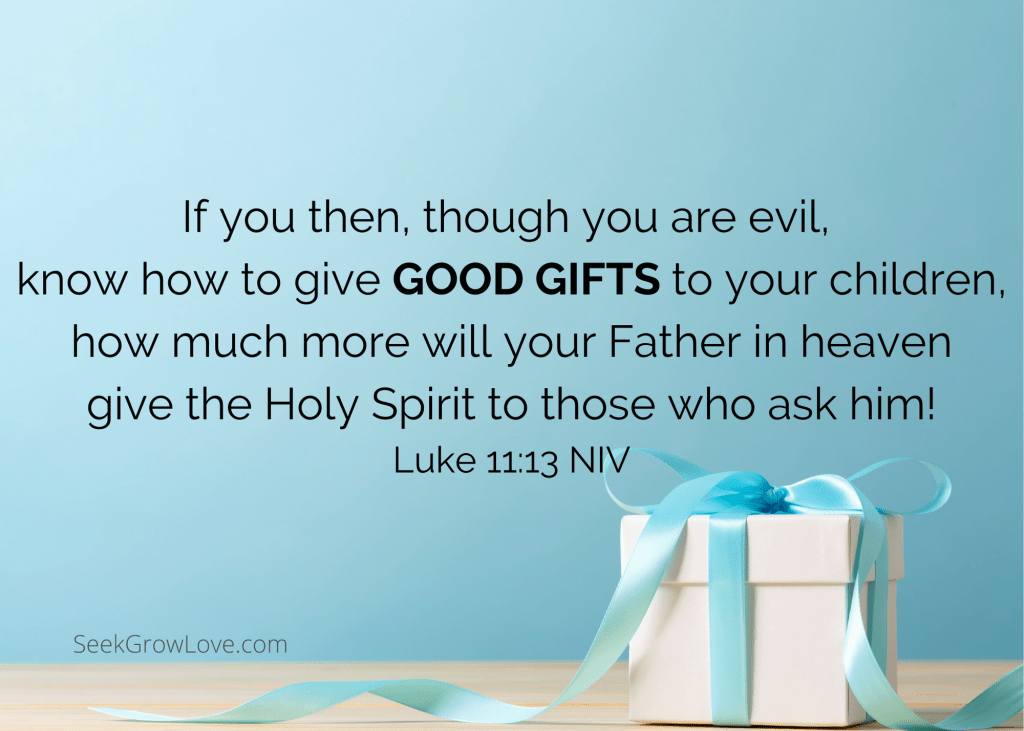
The first is the hope in the good gifts from our Good Good Father. Jesus teaches that reluctant friends are willing to help to persistent demands. I’m a dad; I understand the power of persistent asking! But if my precious (and slightly precocious) daughter asks me for a unicorn, I’m not going to give her a spider. If she wants a PB&J, I won’t give her rotten ham and toe jam. I know what she wants and I WANT to give her gifts, because it brings her joy. 

God wants to see that joy on your face. He is willing to give you his Spirit. God’s Spirit is a powerful, active, guiding, teaching, comforting, and encouraging reality for the church. Called the comforter, the advocate, the Spirit of truth, the Spirit, though mysterious, is how God wants to interact with and empower you for his ministry and for your living. All you have to do is ask, and God is ready to give you this great gift. 

At the other end of the chapter, after Jesus thoroughly ticks off the scribes and pharisees for a majority of the chapter, we read that the Pharisees “began to get hostile” and were “plotting to catch him” in his words. But I want you to remember 9:52. Jesus set his face toward Jerusalem. He is walking there on purpose. While we could try and analyze God’s sovereign control versus human free will in a passage like this, I think there is something more life changing than that. God’s smart enough to work out all things for the good of his people. Jesus knows where his story leads; God is going to use human pride and sin to erase sin and pride. He is going to use the taking of life to bring about eternal life. He is going to transform the pain of this world into joy of the next. Think about that. These leaders think they are taking out a revolutionary “rabbi of the people” who has wounded their egos. Satan is stoking the flames of pride and stubbornness because he wants to take out the Messiah. But God is using all of this in his plan to save humanity. 

Today, when life feels out of control, or overwhelming…

When you are stressed, depressed or obsessed…

When you don’t know where to go, what to do, or how you’ll get through… 

Ask God for the Spirit. To empower you. Embolden you. Comfort you. Teach you. Guide you. Speak through you. 

And he will pour it out. 

Ask God to work all his for your good. Ask your dad to help. Your wise father to work things out in ways you don’t or can’t see. And believe he is already working. Not every pain will end. Sometimes victory is shaped like a cross. But, the end will be a world made better by you, a world blessed by you, and you blessed by the God over all things. Eternal life and eternal peace, in the presence of God, through the death of Jesus, by the power of the Spirit. 

God be with you during these final days of Lent and Easter. 

-Jake Ballard

—————————————————

Jake Ballard is pastor at Timberland Bible Church. If you’d like to hear more from him, find Timberland on Facebook (https://www.facebook.com/TimberlandBibleChurch/ ) and on Instagram (https://instagram.com/timberlandbiblechurch?igshid=t52xoq9esc7e). The church streams the Worship Gathering every Sunday at 10:30 and Sunday School at 9:30. Besides studying and teaching God’s word, he is raising three beautiful children with the love of his life, plays board games and roleplaying games with amazing friends weekly and tries and fails to be less nerdy every day. If you’d like to reach out to talk Bible, talk faith, or talk about Star Trek, look Jacob Ballard up on Facebook (https://www.facebook.com/jacob.ballard.336 )or email him at jakea.ballard@yahoo.com

God bless you all!

Read or listen to today’s Bible reading passages at BibleGateway – Deuteronomy 5-6 and Luke 11

Blessed are…


Luke 6

Recently, both my Sunday School and Wednesday night groups went through the first part of Matthew, chapter 5. This is the beginning of Matthew’s rendition of “The Sermon on the Mount”, and it starts with “the Beatitudes”. It is a list of traits that show who are the blessed ones. When you read the list of the eight “Blessed Attitudes” in Matthew, you could easily see implicit commands. Be more poor in spirit, be more gentle, hunger and thirst for righteousness better. Something like that. 

In the recent years, I read an interesting take on the Beatitudes in Matthew. This author said that the first four are brokenness and oppression that no one chooses, and that God is on the side of those oppressed ones. This would seem clear with “mourn” (Matthew 5:4); but if poor in spirit means “impoverished of God’s goodness” rather than “humble”, we could see that this would be a rather impressive switch. 

The reason I bring up this reading in Matthew is because Luke doesn’t need a ton of interpretive work to see the blessedness of the broken. In your reading you read Luke 6. This is part of the passage we read:

20 And turning His gaze toward His disciples, He began to say, “Blessed are you who are poor, for yours is the kingdom of God.

21 Blessed are you who hunger now, for you shall be satisfied. Blessed are you who weep now, for you shall laugh.

22 Blessed are you when men hate you, and ostracize you, and insult you, and scorn your name as evil, for the sake of the Son of Man.

23 Be glad in that day and leap for joy, for behold, your reward is great in heaven. For in the same way their fathers used to treat the prophets. 

24 But woe to you who are rich, for you are receiving your comfort in full.

25 Woe to you who are well-fed now, for you shall be hungry. Woe to you who laugh now, for you shall mourn and weep.

26 Woe to you when all men speak well of you, for their fathers used to treat the false prophets in the same way.

Blessed are the poor. Not the poor in spirit, the humble, the ones who recognize their own spiritual poverty.

Jesus blesses those who don’t have coins to rub together. 

Because God wants to give them a kingdom. 


Blessed are you who hunger. No hunger for righteousness, thirst for truth, and desire the goodness of God. 

Jesus blesses those whose stomachs are growling. 

Because God wants to give them food for now and eternity.


Blessed are you who weep. Not mourn over the sins of the world and the things that drag us away from God. 

Jesus blesses those who cry because of stress, pain, heartache, and loss. 

Because God will give them laughter. 

Blessed are you when you are hated because of Jesus. 

Jesus blesses those who are only trying to follow in his footsteps in the middle of a world that may hate them. 

Because God has a great reward in heaven, waiting to be given. 


And Jesus follows up with some strong language : woe to the rich, the well-fed, the laughing, and the well-thought-of. Those who have all the blessings this world has to offer don’t share any in the world to come. 

What does this have to do with you?

Jesus clearly doesn’t want us to suffer needlessly. He never wants anyone to suffer needlessly.

And part of what we are called to do is to end the needless suffering around us. 


Jesus told his disciples “you will always have the poor with you”, and what that text is really saying is “never stop giving to those who need help.” (Deuteronomy 15:11) 

God is on the side of the poor; He will bless them in his kingdom, but he is using YOU to alleviate their poverty now. 

Jesus told his disciples “you give them something to eat” (Luke 9:13), and the early church made sure that every person was fed and taken care of. (Acts 2:44-46)

God is on the side of the hungry; He will give them food in his kingdom, but he is using YOU to feed them now. 


Jesus always encouraged and comforted his disciples (John 14), and the church lived life together, weeping together so they could rejoice together (Romans 12:15). 

God is on the side of the weeping; He will give them comfort in his kingdom, but he is using YOU to comfort them now. 


Jesus said “I will never leave you nor forsake you” (Hebrews 13:5) and that “the one who endures to the end will be saved.” (Matthew 24:13)

God is on the side of those hated for his son; He will bless them beyond all measure in his kingdom. 


Your call is to be a great blessing to all those whom God desires to bless. May you bring blessing wherever you go; you are blessed to be a blessing

-Jake Ballard

You can read or listen to today’s Bible reading at BibleGateway – Numbers 31-32 and Luke 6

Jesus is Looking for You

Luke 5

In this time of year, the wider church celebrates Lent. In this period leading up to Easter, we take time to examine ourselves, our sins, our motives, our hearts and souls, and recognize that it was for our sins that Christ died, not only to free us but to change us. While the reading in Numbers is very important, and I am glad you are reading the Old Testament, I want us to focus on Christ this week and his life as portrayed by Luke. 

There are two stories in Luke 5 to which I want you to pay particular attention. Let’s look first at Luke 5:1-11. Jesus is already an established teacher, a rabbi, and has a ministry going. He is probably on the lookout for disciples. Disciples were usually chosen from a core group of aspiring, promising young men. They would have excelled at learning the language, would be able to read the Torah, memorize the Torah, study and debate the Torah. In the learning institutions, those who were not promising, or who had to work with their parents to feed the family, were sent home to learn the family trade. So Jesus meets up with a guy named Simon. We might recognize him more from his nickname, Peter. Simon is a fisherman, who has his lot in life, knows what his station is. He KNOWS he’s not meant to be a rabbi’s disciple. He KNOWS he wasn’t smart enough or rich enough to make the cut. But Jesus isn’t looking for the richest or the smartest. Jesus says “cast out your net” and Simon says “because you say so.” They’d been fishing all night. They ain’t got nuthin’, as we say in the South. (SC represent) These good ol’ country boys know what they are doing, but Simon likes Jesus, trusts him, and does what he says. 

And that is what Jesus is looking for. 

And there is a miracle.

So many fish the nets tore, and the ships sank, and it took two crews. 

That’s a lotta fish. 


Simon, James, and John were all amazed and astonished, and Jesus said “You will now fish for people.”

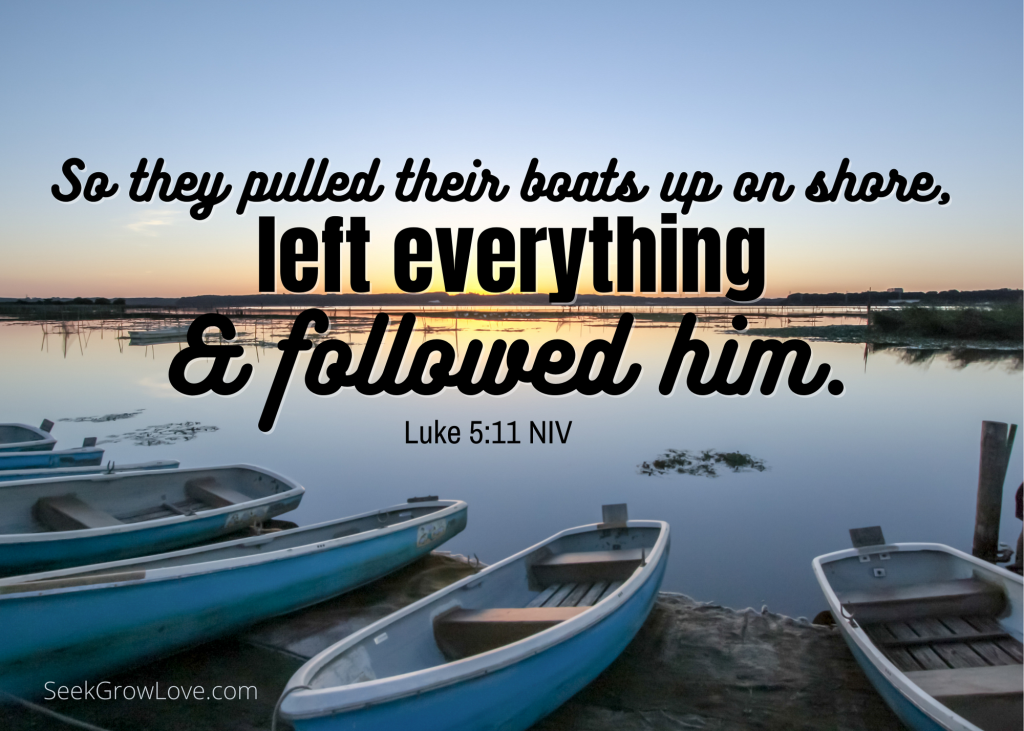
And they pulled up their boats. 

Left everything. 

And followed him. 


Later on in the chapter, we read about Levi the tax collector. We may know him better by the name Matthew, who we think is the same guy. Now tax collectors were hated. Jews despised by their brothers and sisters because they were thought of as traitors. They were Jews, collecting money from other Jews for Rome, the occupying military force. To get rich, they would overcharge the Jews and keep the rest, which was legal, but tantamount to stealing. And this traitorous thief is sitting in his tax booth. Jesus sees this guy and says two words to him : “Follow me”


Levi followed him. 

Left everything. 

Right there in the booth. 

Levi is amazed and astonished that a holy rabbi would look for him, would choose him to follow, would send him out to work. 


A whole lotta tax collectors and sinners heard this good news that God’s kingdom was open to them. Jesus said that he came to call the sick, and heal them.  He healed the sick there that night, and it was miraculous. 

Jesus is looking for you. 

He is seeking those who will listen, whether it is to let down a net or to let down your guard. The call will always be “Follow me.” If you listen, he will accept you.  We know we aren’t rich enough. He KNOWS we are. (Colossians 1:27) We know we aren’t smart enough. He KNOWS we are. (1 Corinthians 1:25) We know we aren’t good enough. He KNOWS we are. (2 Corinthians 5:21)
He says to you today: “Follow me.” Pull up the boat, get out of the booth. Leave EVERYTHING behind. And follow him. 

-Jake Ballard

Read or listen to today’s Bible reading at BibleGateway.com – Numbers 29-30 and Luke 5

2 Chapters; 2 Books

2nd & 3rd John


Today, you are racing through two books at a blazing speed. Some of the shortest books in the Bible by word count, verse count, chapter count. However, a sad reality happens with Biblical books. The smaller they are, the less they are read. Out of the top 10 least read books on BibleGateway, you have read three this week. Jude is number 8 on the list of least read books. Though Obadiah takes home the #1 spot, 2 John and 3 John take spots 3 and 4, respectively. It’s sad, because what we get in 2 John and 3 John is the same God-inspired message, just in much smaller, some would say, bite-sized portions. 


Let’s talk about the letter’s collectively. Both are written to smaller groups than 1 John. 1 John was to a general audience; 3 John is to one man, and 2 John is to one woman, or one church. Either way, 2 John’s statements make sense. John says that he is joyous that some “children” are walking in truth. In 3 John 4, we see that this is his greatest joy. Walking in truth means believing in Jesus and following his way of living. Those young people he loves, who he has “raised in the faith”, his “children”, he loves to know they have remained faithful to Jesus.


We have already talked about this remaining faithful. You must follow the commands of Jesus. It is not a new commandment but an old way. LOVE our brothers and sisters, one another in the body! If you don’t understand loving a brother and sister, you don’t understand the gospel. John is clear. This is THE commandment of Jesus. 3 John gives us an example of this. John is commending Gaius for supporting the work of brothers and sisters who were passing through preaching the gospel. He welcomed them in, allowed them to teach, gave them money and sent them on their way. This was the right thing to do. And a man named Diotrephes DIDN’T do the right thing, but in jealousy and out of a lack of love, did not support them and kicked out those who helped them. 


But Diotrephes isn’t alone in harming the message of Jesus. Diotrephes wanted to be the top dog, and his ego was hurt that respected teachers were coming into town. He wanted to be the greatest in the eyes of the church. His arrogance earned him disapproval from John. Moreover, John’s CONDEMNATION is poured out onto those who are deceivers, false teachers. People come along who are denying that Jesus came in the flesh, that he was born in the Little Town of Bethlehem on a Silent, Holy Night. John roundly condemns this attitude, this belief. 


We don’t have people claiming that to us, but we can learn from this. John encourages “the woman” to compare the claims of these “teachers” with the claims of the apostles. If they didn’t match up, follow the trusted source. For you, test the claims that you hear about God, Jesus, the world, the afterlife, against the claims of those who have known and followed God, in scripture and the church. Trust those who have known and experienced God over those who want to be “first among everyone”. Don’t let false teachers and “Big-Headed-Egoists” harm THE faith or harm YOUR faith. 


My brothers and sisters, I am glad to have been reading along with you this week, this week when we remember the birth of Christ. Whether we celebrate together or separately, we are bound together in love, affirming together the truths of Jesus and his message of eternal life. 


May you love your brothers and sisters in faith. 

May the church you call home be a beacon of love in a hurting world. 

May you never be divided by the arrogant or the false teachers, but if they try, may you stay true to the faith of scripture. 

My brothers and sisters, may you forever live in the words of 3 John 2 – Beloved, I pray that in all respects you may prosper and be in good health, just as your soul prospers.


May you prosper in all respects. 

-Jake Ballard
————————————————————————————————(Jake Ballard is Pastor at Timberland Bible Church in South Bend, IN. He lives in the Michiana Area with his wife and three kids. If you’d like to say hi you can find him on Facebook at https://www.facebook.com/jacob.ballard.336  You can also hear more teachings on FaceBook at https://www.facebook.com/TimberlandBibleChurch or at YouTube at https://www.youtube.com/channel/UCs_awyI1LyPZ4QEZVN7HqKQ/videos. Finally, Baby Yoda/Grogu is the best Star Wars Character hands down; change my mind. I look forward to hearing from you!  God bless!)

Today’s Bible passages can be read or listened to at Bible Gateway here – 2nd John & 3rd John.

Tomorrow we begin the final book and read Revelation 1-3.