Throughout Jesus’ ministry, we see him bring a new level of focus and understanding to different laws or topics. When the Pharisees question Jesus about why his disciples are doing something on the Sabbath, Jesus says that the Sabbath was made for man, not man for the Sabbath. It was a day to honor and remember God, but it was also a day of rest.
In the lead-up to Jesus’ arrest and trial, we see the hustle and bustle of everyone getting ready for the Passover. Passover was the remembrance and celebration of the Israelites’ deliverance from Egypt and takes its moniker from their firstborn being spared during God’s final plague that killed the firstborn of Egypt.
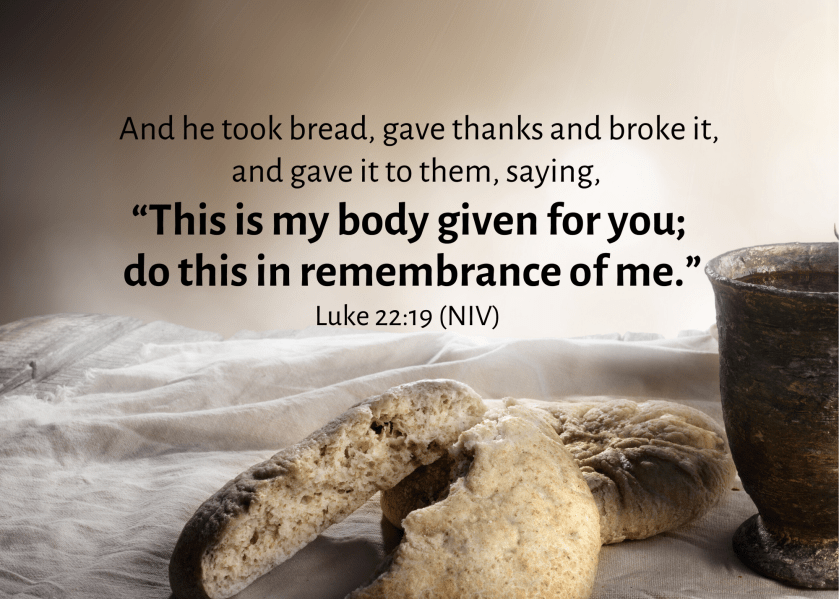
This was already a day of remembrance and of sharing a meal, but Jesus is giving it a new context as the birth of his church grows near. This will be a time to reflect on the New Covenant. Jesus’ physical blood marks the sealing of the New Covenant, so this cup of wine will be a reminder of his blood that would be poured out just a few days after the meal they were sharing. The bread is a reminder of Jesus’ body, which would be beaten and abused. Breaking the bread is a reminder of how his body would essentially be broken through the abuse and execution that were upcoming.
Today, we get to celebrate the Lord’s Supper under much different circumstances. We have the context that the disciples didn’t. A resurrected Jesus and the testimony of his disciples. We can also celebrate this as often as we’d like, but typically it is monthly (at least in my church). We perhaps do the remembrance part right, but later, Paul talks about the need to examine oneself. We should be examining how we’re doing. Are we doing an okay job living our lives for Jesus, or do we need to refocus? I would add that there is also an element of fellowship here. Typically, we observe the Lord’s Supper during a service, but it would perhaps be a good thing to observe it during a meal. Engaging in meaningful interactions with brothers and sisters during celebration.
One other thing to take away from Jesus’ last supper, he’s doing all this with Judas at the table. He knows what’s about to happen, but he doesn’t let that derail this important gathering. When we are having interpersonal issues in the church, we should be striving to repair what is wrong. We should, however, also be able to set aside our differences as we observe the remembrance of Jesus by fellowshipping and breaking bread together. If Jesus can face Judas, you can face someone who has done far less by comparison.
Reflection Questions:
1. Is it easy to let communion become a rote practice and not a real time of reflection? How can that be changed?
2. Have you participated in different ways of observing the Lord’s Supper? Were some practices more impactful than others? Why or why not?
3. A monthly observance was mentioned earlier. Is there a benefit to observing communion more or less frequently? Why do you think this? If you don’t have an opinion, why do you think someone else might have strong opinions on the frequency of observation?
People are complex. We have ideals that we want to live by, but often fall short and fall into patterns of behavior that disgust us. I’m sure all of us want to live like the gospel is the primary motivator for our lives. We want to care for others, we want to honor God and Jesus with our behavior, and we want to shine the light of truth into a dark world. We hit speed bumps, we have a bad day, someone slights us, and we are consumed by disappointment, anger, or frustration, and take our eye off the ball.
We want to honor God, but we also want to be comfortable. We want to be well off financially or to be perceived in a certain way, and we sometimes will slide into behaviors that are focused on taking care of our needs and desires rather than building God’s Kingdom.
Sometimes fear is a motivator rather than hope. How will people view us if we stand out as different from the status quo? What if the movement or organization that we are a part of falls apart? Will we be seen as a failure? Will we be shunned? Will we suffer the same defeat or demise as those whom we have followed or associated ourselves with?
In Matthew 26, we are in the lead-up to the Passover celebration. While this is in view, Jesus also knows what is about to happen… His arrest and execution.
The Pharisees are frustrated. They have been seeing Jesus grow in influence and popularity, which in turn has diminished their influence and the perception that they are the leaders and influencers of the Jewish people. They confront Jesus constantly, yet they are no match for his wisdom and insight. Jesus, in his spirit-filled wisdom, always has the upper hand over the Pharisees, who seem far more interested in discrediting and diminishing Jesus than actually considering that he may be the Messiah. They want to remain the thought leaders of the people, and Jesus is putting the kibosh on them.
As I’ve already brought up, Jesus is popular, and if the Pharisees were seen to be actively trying to dispose of him, they would face some severe backlash. With Passover just around the corner, they see the need to be careful. There are extra eyes everywhere as people have come into Jerusalem to celebrate. So, they start plotting how to secretly apprehend Jesus and quietly have him put to death. They want to make it seem like this is not of their doing, but how? They are dealing in back-channel communications to figure out how to proceed. A golden, or maybe silver, opportunity will soon present itself.
Enter Judas. He’s been with Jesus through the thick of his ministry. But Judas perhaps is not a fan of Jesus’ teaching on wealth. No one is identified specifically in Matthew 26:8-9, but I wonder if Judas is a driver of the indignant attitude of the disciples about this valuable ointment that Jesus is anointed with. In John 12, we are told that Judas would help himself to the money that was collected, and the sale of this ointment would give him more funds to dip into. Judas doesn’t care about the poor; he cares about himself. Judas sees the success of Jesus’ ministry as an opportunity to enrich himself. Perhaps Judas does believe that Jesus is who he claims to be, but he is motivated by his own desires, and this gives an opening for some back-channel dealings with the Pharisees. Judas goes to the Pharisees in secret and asks how much of a payoff they will give him if he delivers Jesus to them. What a backstabber, the ultimate betrayal. Jesus, of course, knows this is going to happen, which must make his preparations for the upcoming events even more brutal to contemplate.
Peter is bold. But he’s also kind of a coward. Jesus knows this. Deep down, maybe Peter knows this, but he’s not willing to cop to it. When Jesus is about to be arrested, Peter is willing to go on the offensive in the moment; he’s willing to go down to protect Jesus, but after Jesus is arrested, Peter has time to think, and he perhaps ponders what will happen to those who were closely associated with Jesus if he is convicted and executed. He ends up denying Jesus as his fear gets the better of him. A bit of a stab in the back to Jesus.
Both Peter and Judas fell into the trap of doing what they saw as best for them, rather than what was right. Judas ends up committing suicide; he can’t live with what he has done, or the repercussions of what this will do to his standing and life outlook. Peter, however, finds redemption. Jesus gives him three opportunities to affirm him, and after Jesus ascends to heaven, Peter becomes the primary leader of the church. Never again will he deny Jesus; he will die for the sake of the gospel.
Reflection Questions:
1. In what ways have you experienced failures in your walk? What has allowed you to overcome failure and not let it defeat you?
2. How can we navigate our pride and celebrate the successes of others, rather than act like the Pharisees and look to undermine or defeat others? How can these attitude dynamics make or break a church?
3. Can you think of some ways that help set you up to put faith before your wants and superficial needs?
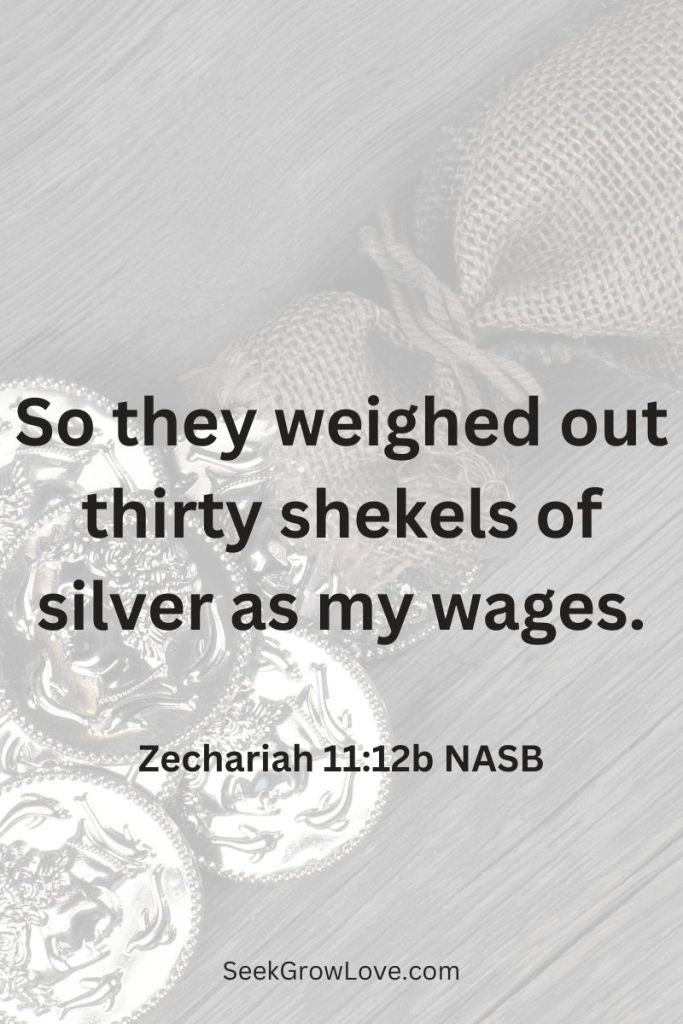
Zechariah 11:10-13(NLT) Then I took my staff called Favor and cut it in two, showing that I had revoked the covenant I had made with all the nations. 11 That was the end of my covenant with them. The suffering flock was watching me, and they knew that the LORD was speaking through my actions. 12 And I said to them, “If you like, give me my wages, whatever I am worth; but only if you want to.” So they counted out for my wages thirty pieces of silver. 13 And the LORD said to me, “Throw it to the potter”—this magnificent sum at which they valued me! So I took the thirty coins and threw them to the potter in the Temple of the LORD.
Zechariah 12:10(NLT) Then I will pour out a spirit of grace and prayer on the family of David and on the people of Jerusalem. They will look on me whom they have pierced and mourn for him as for an only son. They will grieve bitterly for him as for a firstborn son who has died.
Psalms 146:1-4 (NLT) Praise the LORD! Let all that I am praise the LORD. 2 I will praise the LORD as long as I live. I will sing praises to my God with my dying breath. 3 Don’t put your confidence in powerful people; there is no help for you there. 4 When they breathe their last, they return to the earth, and all their plans die with them.
John 18:19-23(NLT) Inside, the high priest began asking Jesus about his followers and what he had been teaching them. 20 Jesus replied, “Everyone knows what I teach. I have preached regularly in the synagogues and the Temple, where the people gather. I have not spoken in secret. 21 Why are you asking me this question? Ask those who heard me. They know what I said.” 22 Then one of the Temple guards standing nearby slapped Jesus across the face. “Is that the way to answer the high priest?” he demanded. 23 Jesus replied, “If I said anything wrong, you must prove it. But if I’m speaking the truth, why are you beating me?”
What an intense experience Jesus Christ has that we are reading this week. The tears come to my eyes when I read what they do to him and what they say about him. Jesus all through this ordeal keeps his eyes and heart steadfast on the truth of what God is planning to do. God is the author of salvation, which is to make people whole or healed. Jesus many times in his ministry corrects the Jews in their thinking about earthly kingdoms and power with what God really wants from people.
Once again in this reading today we see two significant prophecies which are fulfilled in the passion of Christ. Zechariah prophecies the payment of the thirty pieces of silver as the price for the life of Jesus. Judas goes to the authorities and makes the arrangements to betray Jesus to them. He demands that they pay him and they agree. The price which is set is the thirty pieces of silver. This price is the amount that would be paid for a slave. The most precious Son of God who is without price has his life sold for the common price of a slave. Judas then when things don’t go well comes back to the temple and throws the thirty pieces to floor. The money is used to buy the potter’s field and used for a burial ground for poor people.
The other prophecy that we see in this section is that “we will look on him who is pierced” which foretells the spearing of Jesus at the end of the crucifixion.
John 19:37(NKJV) And again another Scripture says, “They shall look on Him whom they pierced.”
His bones are not broken, foretold in Psalms, but he is pierced with a spear and blood and water come out, which is an indicator of heart failure. Jesus dies of a broken heart on the cross for you and for me. What love God has to let Jesus who knew no sin be the sacrifice for us today.
Christmas is coming soon and our thoughts in this season are on his birth. But here we see greater evidence again of who he was, and what is accomplished on the cross.
-Tom Siderius
Reflection Questions:
What is the value of a man’s soul?
Who can we tell this good news gospel message to today?
Quite a long title, but Matthew 27 is quite a long chapter. So much happens; more than we will have the space to touch on here.
Betrayal and Regret
Yesterday, we read about the two betrayers of Jesus. I want to finish that story thread. In the first portion of Matthew 27, we see Judas regret betraying Jesus. But Peter also regretted what he did. He went out from the courtyard and wept bitterly. However, it is not in the betrayal that these men were different, but in trusting the grace of God.
Judas, in an act of cowardice and pain, hung himself. For those of us who have been harmed by a friend or family member taking his or her own life, we all know that the act is coming from a place of pain, hurt, and torment. In some more clear moments, we also see the selfishness of the act, the self-centered-ness of it. I know this is a painful topic, but please hear this with all love and grace : Judas is at his worst in this act. All Judas focuses on is his own pain, his own hurt, his own shame, his own betrayal, and therefore takes his own life. He acts in a way to stop what he did and the consequences acting upon him. Not every suicide is like this, but Judas’s suicide clearly was. His regret cost him everything.
Peter, on the other hand, does not focus on himself. Peter sees the pain of his master Jesus, the hurt Jesus is enduring, the shame Jesus is feeling, the fact that Jesus is being betrayed. Peter regrets his choice, but he also trusts in the grace of God. That grace is not free. It costs Peter everything, even his own life. But it gives so much more. Grace is Jesus sitting across the fire from Peter after breakfast and saying “Peter, do you love me?” Grace restored Peter to a place of leadership among his brothers. Grace is what led Peter all the days of his life. Grace is what will raise Peter in the last days, and will say to him, “Well done, good and faithful servant.” Peter believed, in his worst moment, in the moment of his greatest weakness, that the grace of God could reach him even there.
Beating and Condemning
It is the grace of God that pushed Jesus to be condemned. The crowds shout for his death, though they cannot even find a compelling case against him even among the liars. The crowds get a prisoner back free for appeasement and they want the insurrectionist Barabbas rather than Rabbi Jesus. Pilate washes his hands of the matter, but he is as guilty as those who claim the blood of Jesus on their heads.
But we stand in no better place. The blood of Jesus covers our heads. We circle the King enrobed in scarlet, asking him to prophesy and speak who hit him. But he remains silent. But it is the grace of God that he remains silent. He knows that the blood on the heads of the Jews, the blood on the hands of the soldiers, the blood that covers each one of us as we stood condemning him, is the same blood that will wash away their sins. He could call twelve legions of angels to rescue him (Matt. 26:53) but instead he remains silent so that his death might save the world. It is the grace of God that held Jesus to the cross, not the nails, nor the Romans or Jews. Grace.
Tearing the Veil
At the death of Jesus one of the immediate effects was the tearing of the veil. This seems like a minor detail; of course in the midst of darkness, earthquakes, and storms there will be some torn tapestries. But this is not a small thing. This is the veil in the heart of the Temple in Jerusalem. In the temple was the holy place. Inside the holy place, behind the veil, was the holy of holies, where at one point the Ark of the Covenant sat. When the Jews would sacrifice, the priest would go into the Holy Place and sprinkle the blood of the bull before the veil.
The death of Jesus brings about the end of sacrifices. There is no need to continue to sacrifice and have the blood sprinkled before the veil. The veil is torn. But even more glorious and gracious, the Holy of Holies is no longer kept away from people. The center point of the dwelling of God on the Earth was in the Holy of Holies. But because of Christ, God dwells in us. We, the collective church, have become the temple as we are built together in love. (1 Cor. 3:16, Eph. 2:21) It is by the grace of God that the Veil was torn and the dwelling place of God is now in the hearts of people, just as one day the dwelling of God will be upon the earth.
In the midst of earthquakes, darkness and storm, some may think it was the terror, or madness, that drove the Roman soldier to say, “Surely this man was the Son of God.”
But I don’t. I think it was the grace of God.
-Jake Ballard
Questions for Reflection and Discussion
To be very clear: if you are struggling with mental issues, especially thoughts of suicide, get help today. You are loved, you are cared for, and no one wants you to go that way. During the pandemic, anxiety, depression, and self harm levels have also risen. You are not alone! Your church family and pastor love you, as do your brothers and sisters here on SeekGrowLove. If you do not have a safe person to contact in your family or church, please reach out to the national suicide prevention hotline : 800-273-8255 or https://suicidepreventionlifeline.org OR you can call or text the crisis text line : https://www.crisistextline.org
There was strain of the devotion today that implied we were guilty of the crucifixion of Jesus. While we weren’t there, and it may not be our ancestors (because guilt isn’t passed from parent to child that way), it is because of our sins that Christ died. Have you ever considered your actions worthy of this kind of ignoble death? Do you recognize that the love of Christ FOR YOU kept him on the cross? Do you see the grace of God FOR YOU that allow his son to be a sacrifice?
While those questions are difficult, do you also see the grace of God in tearing the veil? Do believe that God himself dwells IN YOU and especially in US as we gather as believers? What amazing grace we see from God in being and becoming his temple. Have you said along with the Roman Centurion by the grace of God, that Jesus truly is the Son of God?
At this point in our reading, things start to get serious, so before we get into that I’d like to give you this meme for your sharing pleasure. I hope that you can enjoy the humor, because the stories and questions today should give us time to pause and think, to pray, and to trust in the grace of God.
We start with this meme because of the story in verses 6-13. While there are multiple proposed solutions to how many times Jesus was anointed (see note), at this point I lean to the idea that Jesus was anointed with oil in two different scenarios, the one recorded in Luke, and the one recorded in Matthew, Mark, and John. In Matthew a woman pours very costly perfume on Jesus, and the disciples were livid. “HOW MUCH GOOD COULD WE HAVE DONE WITH THAT MONEY?!” They all berate the woman. But Jesus recognizes the act of utter worship and adoration that this woman desired to give him.
When Jesus said “you always have the poor with you” was he saying that we shouldn’t give to the poor? After all, if we give to the poor person in front of us, won’t there be another the next day, right? For the latter question, yes there will always be another poor person. But for the first question, Jesus was referencing Deuteronomy 15:10-11 “Give generously to him, and do not let your heart be grieved when you do so. And because of this the LORD your God will bless you in all your work and in everything to which you put your hand. For there will never cease to be poor in the land; that is why I am commanding you to open wide your hand to your brother and to the poor and needy in your land.” Jesus wasn’t saying “don’t give” but instead “if you are so concerned about the poor, you will be able to give to them with OTHER gifts.” In fact, Judas was berating the woman because he would have had access to the funds for himself, as he stole money from the group. Maybe other disciples were upset that this woman was showing greater devotion for Jesus than they were willing to show. Jesus is, in effect, calling their bluff : “If you truly want to serve the poor, you’ll be able to do so the rest of your life. She is choosing to serve me now!”
The rest of the chapter is full of familiar stories that we remember during the Season of Lent, Passover and Easter/Resurrection Sunday every year.
Jesus at this time institutes the act of communion, a time to remember what Christ has done for us. To be fair, Jesus does not begin something new, but changes the focus of something ancient. Passover is a holy Jewish meal that signified God’s redemption of Israel from Egypt. Jesus says it’s no longer just about that. Now, this bread that was about fleeing slavery is about the body broken for us to free us from sin. The wine is now about the blood of Jesus spilt for the forgiveness of our sins.
Judas decided to betray Jesus and feigns offense when Jesus accuses the disciples there is a betrayer in their midst. Jesus knows what he has decided and is not fooled by his act. But we shouldn’t miss that Peter ALSO betrays Jesus. Judas desired money. Some postulate that Judas was trying to force Jesus and God to bring the Kingdom now. But whatever his motives, the betrayal was still evil and unjustified. But the betrayal of Peter was just as significant and just as thorough. Peter’s betrayal was fueled by self-preservation and fear. Both denied their Lord, their Savior… their friend.
Jesus is broken hearted by what is happening to him. He knows that the woman who anointed his feet just days before was preparing him for burial, but still he did not want to die. He asks God if he can be spared, not only from the pain of death, but the rejection he is about to receive from God on behalf of all people. Jesus is about to have all sin heaped on him. God is about to cut all ties from his Son, and their connection will be severed so sin can be destroyed. Jesus, in his love for all of us, decided to follow the plan of God. He decides that he will drink the cup of the wrath of God, so that those who trust in Christ will not have to drink that cup themselves.
While we began with a meme, we need to take time for serious remembrance of what Christ decided to do for us.
Let us remember the anointing and worship of the woman.
Let us remember the poor that Jesus calls us to serve.
Let us remember Jesus by taking communion as we are able.
Let us remember Peter and Judas so that we may not betray Jesus like they did.
Let us remember a savior who was willing to die for us, who was willing to take the cup of wrath, and was willing to do the will of God so that we may have grace and peace and life.
-Jake Ballard
Questions for Reflection and Discussion
Are we willing to anoint the feet of Jesus with everything we have? Are you willing to give extravagant worship to Christ that others call outrageous, because you know how you have been forgiven? How deep does your love and worship go?
Go back to yesterday’s question 3 (are you taking care of the least of these?) Ask yourself those questions again. Are you serving the poor, giving to them no matter how many there will be in the land? Or is your heart hardened by the reality of this world? Will you ask God to change your heart and make you love the poor?
Have you participated in the grace of communion recently? The next time you do, take a moment to reflect on the thousands of years that the faithful people of God have celebrated this meal and emblem, first as freedom from slavery in Egypt, and now, through Christ as freedom for slavery from sin. How does it make you feel that you participate in thousands of years of history along with all of God’s people?
In our sin, do we betray the savior who loves us? In what ways can we overcome the sin we have so we do not betray and deny our savior and lord?
As we move through the Gospel of Matthew one chapter per day it’s pretty amazing how quickly we move through the life of Jesus. Matthew brings us through the entire earthly life of Jesus so quickly. Think about it for a minute. Less than a month ago we were celebrating Christmas and the birth of Jesus. Just a week later we were celebrating the start of a new year, 2021 and we started the book of Matthew which summarized roughly 2000 years of Israel’s history from Abraham down to Jesus. We heard the angels announcement to Joseph that Mary was going to give birth to God’s son. We read of his birth, the visit from the magi and Herod’s attempt to have Jesus killed and his rescue to Egypt. We fast forwarded to his 12th year visiting the temple and being precocious in his questions of the learned doctors of Jewish Law. Just like that Jesus is 30 and being baptized by John in the Jordan River and going into the wilderness to be tempted by Satan. Then he’s calling disciples, performing miracles, preaching the Torah in a way that is more authoritative than the average rabbi. Before we know it 3 more years have passed and Jesus is in Jerusalem having his last supper with his disciples and preparing them for his approaching death.
Now, here we are reaching the climax of Matthew’s Gospel. Jesus is tried, condemned and crucified. This was not how any of his followers or any of the Jews for over 1000 years imagined how the story would go. They envisioned the son of David as a triumphant King leading an armed rebellion and defeating the powerful and oppressive Romans and being free to finally worship God under the rule of God’s anointed King, descended from the great King David of old. Instead, they get a meek and gentle man being falsely accused and refusing to defend himself, being rejected by his own people and, despite his complete innocence, meekly suffering and going to his death in the most shameful way imaginable: beaten, stripped naked and nailed to an execution pole for all to see and mock and serve as warning to any who might dare to defy Rome’s hegemony over the whole world.
For the Apostle Paul and most every Christian since that day, this is foundational to the entire Christian message and the central event in the history of the world.
Paul wrote in I Corinthians 15:
15 Now, brothers, I must remind you of the Good News which I proclaimed to you, and which you received, and on which you have taken your stand, 2 and by which you are being saved — provided you keep holding fast to the message I proclaimed to you. For if you don’t, your trust will have been in vain. 3 For among the first things I passed on to you was what I also received, namely this: the Messiah died for our sins, in accordance with what the Tanakh says; 4 and he was buried; and he was raised on the third day, in accordance with what the Tanakh says; 5 and he was seen by Kefa, then by the Twelve;
(Complete Jewish Bible Translation)
Paul reminds his readers that one of the first things he passed on to his students was the death of the Messiah, Jesus, for their sins as a fulfillment of the teaching of the Hebrew Bible (Tanakh or Old Testament). Matthew tells the story more or less chronologically and it builds up to this. But for Paul, this was among the first things he taught. Whether it’s shared first as in Paul or toward the end as in Matthew, either way the death of Jesus and with it his resurrection, is the most important thing for Christianity.
There is much for you to think about in this chapter but I will simply pause to name two and they both have to do with despair and death. Matthew places side by side two men who have reached a crisis in their life, Judas and Jesus. For both their crisis has brought them into great anguish and to the brink of death.
Judas is in despair because he has betrayed his teacher and friend. He sold Jesus out for 30 pieces of silver. One might try to get Judas off of the hook by suggesting that he didn’t really have a choice in the matter. It was God’s plan. I’ve even heard it suggested and even wondered myself if Judas wasn’t simply trying to force Jesus to go to war against Rome. Judas was a Zealot and growing impatient with Jesus. Maybe he assumed that when Jesus was arrested he and the other disciples would defend him and bring him into his Kingdom. When Judas realized that his plan backfired and Jesus was going to die without bringing in the Kingdom he was overcome with guilt and despair. Or maybe he was just greedy and sold out his friend for the money. Or maybe some combination of things. Sometimes we humans beings do things and we don’t even understand why we did it, but afterwards we are filled with shame and regret and despair of life.
Judas responded to his despair by taking his own life. Suicide is the final act of despair. The suicide rate in the US has been going up each year. I imagine when the deaths related to Covid are finally tallied we will see a significant number of deaths were not from Covid but because of people’s despair over Covid and the Covid related isolation, economic losses, disenfranchised grief, increased substance abuse and loss of connection with faith communities and other sources of hope and meaning. Judas’ story ends in a tragic death of despair.
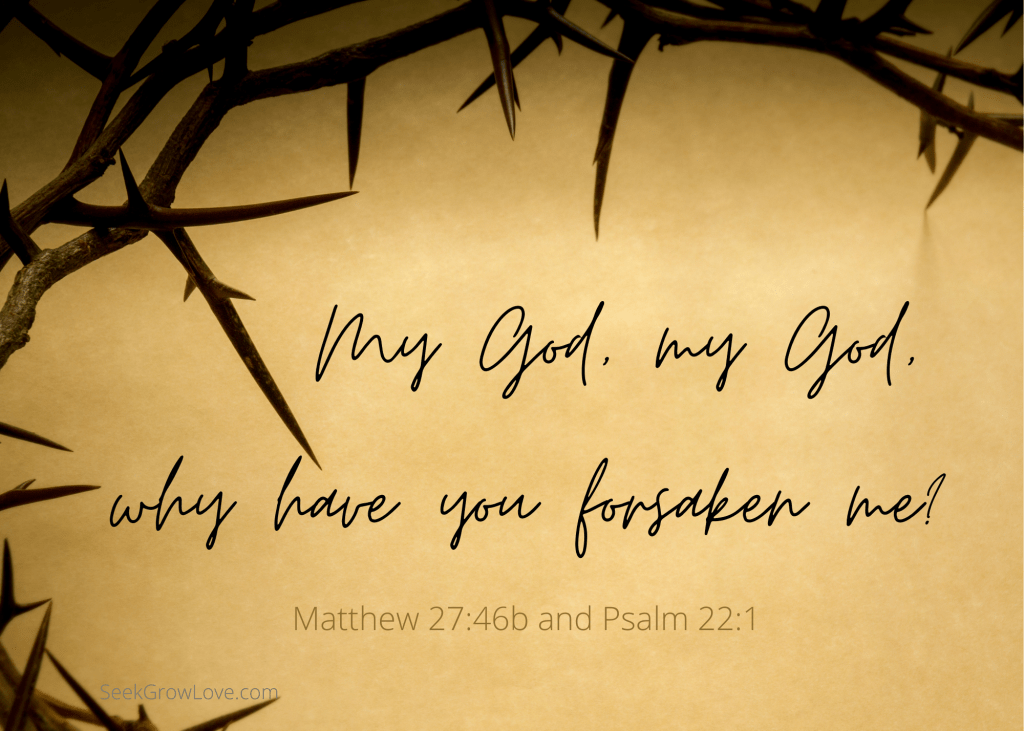
Jesus is also facing his own existential despair. He’s been betrayed, denied, abandoned and rejected by his friends and followers and all his fellow Jews. Jesus was beaten nearly to death and is alone on the cross and has all of the guilt and shame of the world heaped upon him. In his agony and isolation he cries out to God in despair ,“My God, my God why have you forsaken me?” Jesus is having the worst day of his life, just as Judas did and Jesus is in extreme pain, just as Judas was and Jesus was about to die, just as Judas did. And yet, their deaths couldn’t be more different. Jesus never lost his connection to and faith in his father, even at this point of greatest pain. Even as Jesus cries out, he is praying and maintaining his connection to his faith tradition. “My God, My God why have you forsaken me” is the opening prayer of Psalm 22. This was a Lament Psalm. The Hebrews were very familiar with suffering. They had been slaves for over 400 years in Egypt. They spent 40 years traveling in the wilderness. They spent 70 years in exile in Babylon. The Hebrews knew suffering and it was in suffering that God continued to sustain them and draw them back unto himself. Every Psalm of lament, no matter how much hurt or pain they processed, no matter how angry or betrayed by God they felt, there was always a remembering of the ways God had been with them and helped them in the past, and there was the hope and trust that God would sustain them through the suffering and restore them to wholeness and joy.
Jesus never lost his connection to the father, even in the depths of pain and despair. He surrendered his life to God, but he did not take his own life as Judas did. Judas’ tragic death ends with no hope for him. Jesus’ tragic death ends with hope for him and for everyone.
We all go through periods of hurt, pain, disillusionment, brokenness, anger, shame, guilt and pain. When we go through those time we are in a moment of decision. Do we give in completely to the despair and give up on God, or do we cling to faith, remembering God’s faithfulness in the past and hope in the future. That will make all the difference in how our story ends. It doesn’t have to end like Judas. Jesus offers the path to hope and life.
I have often heard that there can be no forgiveness for Judas. After all, Judas committed the worst crime imaginable; he delivered Jesus into the hands of the executioner. Not only did he betray his closest friend, he sold Jesus for the price of 30 silver coins. People estimate this to be worth anywhere from $90-$3000. If you ever watch crime shows, you know that $3000 is a miserly sum to ask for a task such as that. This just shows how greedy Judas was. In fact, in John 12:3-6, we see that Judas frequently steals from the money box. Judas is the one who was upset with the woman who poured the expensive perfume on Jesus’ head. He claimed that he wanted to give the money to the poor, but he actually wanted to take some of the money for himself. According to some, these sins aren’t even the worst that he committed. The worst sin was denying forgiveness.
I want to challenge this idea. I believe it is entirely possible that Judas could have been forgiven and we will see him in the kingdom of God. In 1 John 1:9, it says, “If we confess our sins, he is faithful and just and will forgive us our sins and purify us from all unrighteousness.” Did Judas confess his sins? We can read in Matthew 27 that Judas “was filled with remorse.” He even declares openly to the priests, saying, “I have sinned.” Judas confessed. Is God not faithful and just? We know that he is, so there must be forgiveness available even for Judas.
Mark 3:28 says that “all sin and blasphemy can be forgiven, but anyone who blasphemes the Holy Spirit will never be forgiven.” Now we must ask, did Judas blaspheme the Holy Spirit? First, we must determine what it means to blaspheme the Holy Spirit. In Catholic teaching, six acts constitute blasphemy of the Holy Spirit and three of them could apply to Judas, those being despair, obstinacy in sin and final impenitence.
To despair is to believe that your sins are beyond forgiveness. It’s hard for me to say that this applies to Judas after he returned to the priests and tried to return the money. He was seeking forgiveness and the priests turned him away saying, “What do we care? That’s your problem.” If anything, this is a sin by the priests for refusing Judas the support that he needed. The argument that Judas did despair is that he proceeded to hang himself. Why would he do this if he believed that he was forgiven? This is a fair point, but once again, this seems to hang on the priests who refused to tell him that there was forgiveness for his sins. Perhaps Judas despaired, and perhaps not, but I can’t see his heart. Only God can.
Obstinacy in sin is the persistence in sin even after sufficient admonishment. It appears as though Judas was persistent in his greed and thievery, seeing as John wrote about it. Here, there are a few questions to ask. How much is too much to be forgiven? How long had Judas been doing this? I can’t answer either of those questions. I personally believe in change of heart. Even if Judas had been continuing in this sin for a long time, he could have had a change of heart once Jesus was sentenced to die and he realized the error of his sin. Thus, he sought forgiveness. This question leads to another, more philosophical question: Can a man who has lived his whole life in sin receive forgiveness in the last moments of his life? Once again, I don’t have a firm answer, but I tend to believe that obstinacy in sin isn’t even a blasphemy against the spirit. If one sin can be forgiven, then two sins can be forgiven. Jesus said to forgive others 77 times. He also said if you forgive others, our heavenly Father will forgive us. Hence, we can receive forgiveness for the same sins over and over. It’s never too late to receive forgiveness.
The final blasphemy is final impenitence. This is the only one that I could see applying to Judas. Impenitence means failure to repent. Did Judas fail to repent before his death? I think not because of the way he sought out the priests, but once again, I don’t know Judas’ heart. Only God does.
Either way, if Judas is guilty or forgiven, I think it is dangerous to talk in terms of absolute forgiveness because in the end, we are not the judges. God is.
Which is more important in God’s eyes, justice or mercy? That might be a difficult question to answer, but let me give it a try.
First let’s talk about justice. There are many examples of God’s justice in today’s reading. In the parable of the ten virgins, those who were not ready for the return of Christ were told by Jesus that he did not know them. They were receiving justice for the lives they lived. In the parable of the talents, the man who did not use the talents that were given to him was sent to the place where there shall be weeping and gnashing of teeth. Justice was on display again. In Matthew 25:31-46, those that did not help the needy were sentenced to eternal punishment. Justice served. Judas betrayed Jesus and Jesus said it would have been better for Judas if he had not been born. That was a warning that justice was on its way. There was no mercy shown in any of these instances, only justice.
In Matthew 26, Jesus is arrested and his death on the cross is imminent. We know why Jesus needed to die – to pay the debt for our sins. The wages of sin is death so we all deserve to die since we have all sinned. But think about this for a minute. Couldn’t there have been a different way to make it right? Jesus even prayed that prayer three times. He didn’t want to die and he was hoping there was a different way to handle this. God is in charge of everything so certainly he could have come up with an alternative solution to this problem. Maybe if we sincerely repented for our sins, God could have shown us mercy and wiped our slates clean without anyone having to die. Or maybe if we showed Him that we loved Him he could have overlooked our sins. There had to be a different way. Why did someone have to die? The reason someone had to die is because of justice. God is such a just God that He could not ignore justice. It is very clear to me that God believes justice must always occur.
So where does that leave mercy? Let’s go back to the death of Jesus. Jesus was God’s own son. He was also without sin. There has only been one person on this earth in the history of mankind that did not deserve death, and that was Jesus. God watched his only son be tortured and killed on the cross for something he did not do. I can’t even imagine how painful it would be to watch one of my children suffer and die for something they did not do. Yet God allowed it to happen, even though He could have stepped in and rescued him at any time. Why would He just watch and do nothing? It was because of His immense love for each of us. He let His own son die for our sins so that we would not have to. I believe that is the greatest act of mercy that has ever taken place.
So the answer to justice vs. mercy is “both”. God will make sure justice occurs 100% of the time and He is on record as committing the most merciful act in history.





 Seek Grow Love