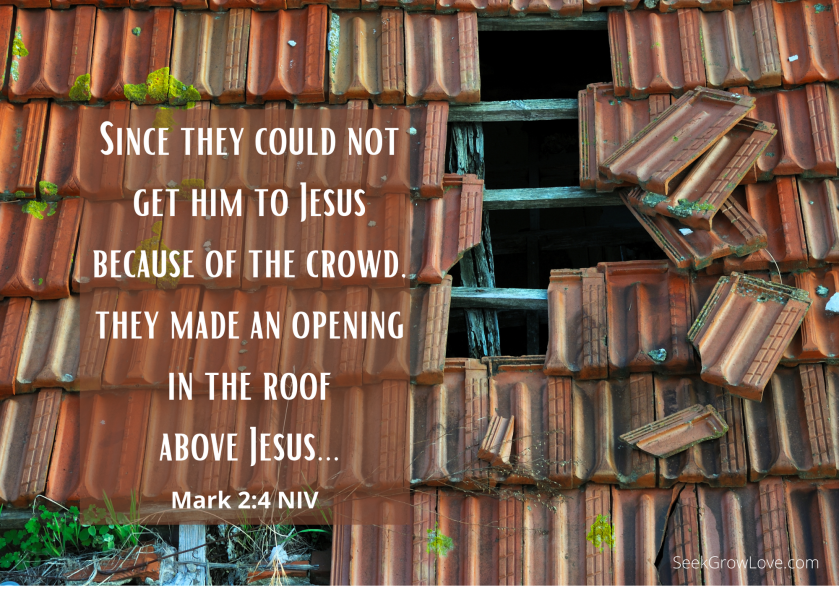
In Mark 2, we find the story of Jesus healing a paralyzed man. Jesus was becoming more well known, and more popular. He was inside a house, and some men brought their friend to Jesus so Jesus could heal him. But because such a big crowd had gathered, there wasn’t room to bring him to Jesus, not even outside the door. So the friends took the man onto the roof, dug through the roof, and let him down in front of Jesus.
I have to admire these friends. They were very concerned about their friend, and wanted to see him healed. They believed Jesus could and would heal him, if they could just get him to Jesus. They didn’t just “pray about it”, they stepped out on faith and did something about it. They dug through the roof, and let their friend get close to Jesus – and Jesus rewarded their efforts.
Mark 2:5 tells us, “When Jesus saw their faith, he said to the paralytic, “Son, your sins are forgiven.” Jesus obviously saw that the man was crippled, but Jesus saw what wouldn’t have been nearly as obvious to us. The man’s biggest problem was his sin – so Jesus healed him of that first. This is the greatest miracle Jesus performed (and still performs).
The teachers of the law said that Jesus was blaspheming, believing only God can forgive sin. I’m guessing they were thinking, “it’s easy to tell someone their sins are forgiven, since you can’t prove they are really forgiven.” Jesus then told them, “But that you may know that the Son of Man has authority on earth to forgive sins…” He said to the paralytic, “I tell you, get up, take up your mat, and go home.” So the man got up, took his mat, and walked out.
I love this story, not only because I love reading about all of Jesus’ miracles, but specifically because this is the only story I can think of where someone is healed because of the faith of his friends. We’re not told, maybe the paralyzed man asked to be taken to Jesus. But any way about it, Jesus saw the faith of the friends, forgave the man’s sins, and ultimately healed him.
This story puts me to shame. I invite you to ask yourself some questions…
Am I this concerned about my friends?
Am I willing to be uncomfortable – maybe even make a scene – to bring someone to Jesus?
Am I willing to not just “pray for” someone, but actually “do something” for someone?
Would Jesus see my faith and forgive and even heal someone I care deeply about?
Finally, do I need Jesus’ ultimate miracle for myself – to have him forgive me of my sins? This miracle meets the greatest need. It costs the most. It brings the greatest blessing. It has the longest lasting results. And Jesus is still doing it daily.
–Steve Mattison
(Originally posted for SeekGrowLove on October 6, 2020)
God had promised Abraham, in Genesis 17:19, “Your wife Sarah will bear you a son, and you will call him Isaac. I will establish my covenant with him as an everlasting covenant for his descendants after him.”
At this point, Abraham was over 100 years old, and had faithfully followed God. In Genesis 12, Abraham obeyed when God told him to leave his country and family. Abraham allowed Lot to take the lush land around Sodom in Genesis 13, and trusted God to provide for his own flocks and herds on barren mountains. In Genesis 15, Abraham trusted God’s promise that he would have a son in his old age, and God counted that faith as righteousness.
In Genesis 22:2, we find God commanding Abraham, “Take your son, your only son, Isaac, whom you love and go to the region of Moriah. Sacrifice him there as a burnt offering on one of the mountains I will tell you about.”
This doesn’t make sense. God had explicitly promised that God’s promises to Abraham would be passed down through Isaac’s descendants, and now God was commanding Abraham to sacrifice him – apparently destroying the promise He had made to Abraham.
By this point, Abraham had developed a very close relationship with God. In fact, we’re told 3 times in the Bible that Abraham was God’s friend (2 Chron 20:7, Isaiah 41:8, James 2:23) – and as far as I know, Abraham is the only person in the Bible of whom this is said.
We’re told in Hebrews 11:19 that Abraham reasoned that God was able to raise the dead, and that He was going to keep His promise.
So early the next morning, Abraham took Isaac and 2 servants and left for the place God told him to go. When they got close, Abraham told the servants, “Stay here with the donkey while I and the boy go over there. We will worship and we (emphasis added) will come back to you.”
As they got even closer, Isaac asked his dad, “The fire and wood are here, but where is the lamb for the burnt offering?”
Can you imagine how this must have broken Abraham’s heart, looking down into his son’s questioning face, knowing that in a few minutes he would be killing his beloved son, who would be the offering? Abraham answered, “God himself will provide the lamb.” (Actually, God had provided Isaac – as a miracle baby in his parent’s old age.) When they reached the place God had told him about, Abraham built an altar, arranged the wood, tied up Isaac, and laid him on the altar.
As he was getting ready to kill Isaac, the angel of the Lord called to him from heaven and stopped him. Abraham then saw a ram caught in the brush by its horns, and sacrificed it instead. God then promised Abraham, as recorded in Genesis 22:16-18, “I swear by myself, declared the Lord, that because you have done this and have not withheld your son, your only son, I will surely bless you and make your descendants as numerous as the stars in the sky and as the sand on the seashore… and through your offspring, all nations on earth will be blessed, because you have obeyed me.”
I could point out all the similarities of Abraham’s being willing to sacrifice his son Isaac, and God being willing to sacrifice His Son, Jesus. I could point out the significance of another quote from this chapter, “Jehovah Jireh – on the mountain of the Lord it will be provided.” (This was the mountain where Soloman’s temple was built hundreds of years later.) I could point out the importance of obeying God, and the benefits that result.
Instead, I want to comment on who, when, where, how, and why of God’s provision.
Who: God tested Abraham with a very difficult test even after a life of serving God. We see that God provided the ram in this case only after Abraham trusted and obeyed God – even though it didn’t make sense. Assertion: God provides for those who trust Him and obey Him.
When: God provided for Abraham at the very last minute, not before. We’re told in Hebrews 4:16 that we will “receive mercy and find grace to help us in our time of need.” Assertion: God provides precisely when we need something, not when we think we need it. (i.e. according to God’s timing.)
Where: God provided for Abraham only after Abraham went where God told him to go, and after he obeyed everything God told him to do. Assertion: God will provide if we are where He wants us to be. We should have no expectation of receiving God’s provision if we aren’t where He wants us to be.
How: God didn’t send an angel from heaven with an offering for Abraham to sacrifice, God provided a normal ram, caught in a normal thicket, by it’s normal horns. And God didn’t send a whole flock of sheep, just one ram, because that was all that was needed. Assertion: God will usually provide in ways that are very natural – don’t look for miracles.
Why: In times of testing, it’s easy to only think about our problems, and focus on, “why is this happening to me?” I think there may be two general reasons why trials come. First, we are told in Romans 8:28, “And we know that in all things God works for the good of those who love Him, who have been called according to His purpose.” Note that this only applies if we are living according to His purpose. Also note that trials are by definition difficult, and won’t seem to be beneficial at the time. Second, ultimately, everything is for God’s glory. Isaiah 43:7 says, “everyone who is called by my name, whom I created for my glory…” We see an example of this with God destroying Pharaoh and his army for God’s glory in Ex 14:4, 17. Assertion: God allows trials and gives provision for our good and for His glory.
The bottom line is, if we are faithfully following God, times of testing will come. If we remain true to God, if we are where He wants us to be, and if we are obedient to Him, he will provide what we need (not necessarily what we want), at the very last minute, usually through normal means – and this is for our good. If we aren’t following God, the times of testing may just be to bring Glory to Him. I’d rather be in that first group. How about you?
–Steve Mattison
(originally posted January 11, 2021 for SeekGrowLove)
I am sorry this was not posted this morning – I thought it was – and then was surprised to see it still sitting here this evening. We are enjoying a weekend of reFuel North, a youth retreat in northern Indiana and haven’t been on the computer today.
Reflection Questions
In what times of testing have you seen God provide for you? How?
Are you where God wants you to be now so that He can provide for you?
What do you learn from Abraham in Genesis 21 & 22?
In Ezekiel 14, we’re told that some of the elders of Israel came to Ezekiel. God told Ezekiel in 14:3-6, “Son of man, these men have set up idols in their hearts and put wicked stumbling blocks before their faces. Should I let them inquire of me at all? Therefore speak to them and tell them, ‘This is what the Sovereign Lord says: When any of the Israelites set up idols in their hearts and put a wicked stumbling block before their faces and then go to a prophet, I the Lord will answer them myself in keeping with their great idolatry. I will do this to recapture the hearts of the people of Israel, who have all deserted me for their idols.’
“Therefore say to the people of Israel, ‘This is what the Sovereign Lord says: Repent! Turn from your idols and renounce all your detestable practices!’”
I see two attributes of God at work here: justice and mercy. For those claiming to follow God, but not really following Him, there will be justice (i.e. punishment). They will be made an example so others will see and turn to God. This is a scary concept, and should cause us to repent and turn completely back to God so this doesn’t happen to us.
We see God’s mercy as he says to those not following him, “Repent!” and “Renounce all your detestable practices!”. This too should cause us to repent and turn completely to God.
It doesn’t matter whether we respond better to a carrot or to a stick, since we’re given both. The simple fact remains that we need to repent, renounce all our detestable practices, and turn completely to God.
And once that happens, we’re told in 14:11, “Then the people of Israel will no longer stray from me, nor will they defile themselves anymore with all their sins. They will be my people, and I will be their God, declares the Sovereign Lord.”
May this be said of us too. But it is conditional upon repenting and turning completely to God. The choice is yours.
Steve Mattison
Reflection Questions
What idols and abominations (many of which the world says are okay – or even championed) are in front of you? What will it look like to turn away from them and turn completely to God?
What is God waiting for you to repent of? How long do you think He will wait? What is dangerous about waiting to repent?
What do we learn about God in the Bible passages today? What do you think of his justice and mercy?
Are you in for a special treat today! Not just because we are discussing Song of Songs (otherwise known as Song of Songs), but also because I looked into the SeekGrowLove archives and found not one, not two, but three great devotions on Song of Solomon (and then I stopped looking). So, today is a bit of a compilation with pieces from three previous devotions. The full devotions are linked below and are all worthy of a read/re-read.
From Rick McClain:
“The visuals painted in these chapters about a bride and groom are very sexual in nature, but is that what this book is about? Some say it is an allegory of Jesus and his bride, the church. I doubt this is true because Jesus wasn’t even around in the Old Testament when this was written. I don’t think the concept of the church being the bride of Jesus was known back then so why would someone write an allegory about that? It is also believed by some that it could be an allegory about God and the people of Israel. There are no doubt similarities between the relationship of a bride and groom and the relationship between God and His people, but why would someone use such erotic sexual material to describe how God thinks about Israel and vice versa?
I believe it is love poetry and I am thrilled that the Bible has affirmed that the sexual desire I have for my wife is a good thing. I know that will make some of you squirm a bit because we don’t usually talk about this stuff, especially in church. However, I think one of the main points of this book is to show that the physical attraction between a bride and groom is a beautiful thing that God has created for them to enjoy.”
“But back to the song of all songs. I am not going to go in great detail here about this book because you should read it for yourself. I couldn’t stop thinking about how much in love these two seemed to be. It reminded me of when you see two young people in love, and their love is just oozing all over each other so much so that they don’t even notice anyone else is around. They can’t stop smiling at each other and they are on cloud nine. We usually roll our eyes at them and think they are being ridiculous, but this is exactly the kind of love that was on display in these eight chapters. Solomon gushed about her eyes, hair, neck, lips, and body parts that reminded him of fawns, but it didn’t stop there. I knew this was a story about real, intense, true love when he mentioned her teeth. He didn’t just say she had beautiful teeth, he said her teeth were like a flock of newly shorn ewes. Don’t picture dirty ewes that have been rolling around in the dirt, Solomon said the ewes had just come up from their washing. Moreover, all these ewes bore twins, and not one of them had lost their young. He said all of that about her teeth!?!? That dude was crazy in love! And she was just as ridiculous as him, which can be seen when she says her beloved is like a cluster of henna blossoms from the vineyards of Engedi.”
From Steve Mattison:
SoS 2:2 says, “Like a lily among thorns is my darling among the maidens.” Husbands and future husbands take note. Highlight what you appreciate about your wife, and make sure she knows it well and often. But the praise must be sincere. And if it’s appropriate and if she would appreciate it, make sure you extend this praise publicly. But don’t just stop with praise. Treat her like she is precious because she is.
SoS 2:4 contains part of the wife’s response, “His banner over me is love.” All by itself, this sounds pretty weird. I think this is saying that her husband is publicly proclaiming his love for her – sort of like writing it on a flag, and waving it around for everyone to see. He is not ashamed to acknowledge her publicly. Again, husbands take note.
In SoS 2:6, the wife goes on to say, “His left arm is under my head, and his right arm embraces me.” I’ll leave it to your imagination to consider their position and presumed activity. Husband’s again take note. If you shower your wife with love. If you make her a priority, and she knows it. If she knows you’re never ashamed of having her at your side. Things will go a lot better with your love life.
She goes on to say in SoS 2:7, “Do not arouse or awaken love until it so desires.” I would say that differently. I would say “save sex for marriage” – and then, it is a wonderful blessing from God for both husband and wife to enjoy to the fullest together.
In his reply, in SoS 2:15, the husband says, “Catch for us the foxes, the little foxes that ruin the vineyards, our vineyards that are in bloom”. I think the idea here is that there are always little things that can attack the relationship, and these things need to be caught and stopped. Some examples may include selfishness, pride, never admitting that you are wrong, finding fault, unforgiveness, mistrust, etc. All of these have to be dealt with and removed in order for the love to blossom and flourish.
And you have to love that part in verse 17 where she says, “until the day breaks and the shadows flee…”. It sounds like she is talking about being intimate all night long. So, husbands, if you want verse 17, you have to have to practice verses 2 and 4 and 7 and 15. In other words, if you want a great sex life in your marriage, adore your wife. Let that show in everything you do and in every way you treat her, and you will see results.
Oh yeah, and do the same with your relationship with God, and you’ll see great results there too – both now and forever.”
From Maria Knowlton:
“So how do you use SOS to make a difference in your life? How do you make this a part of your devotion? A friend of mine told me that her pastor recently preached a sermon on it and encouraged husbands to tell their wives they are beautiful. So there you go husbands! God wants you to complement your wives! Use lots of flowery words! (Check out youtube for examples on how to use King Solomon’s words to make your woman swoon!) Ok, that was a little facetious. Seriously, most woman do want to know her man desires her (but maybe not in the words of chapter 4) and God has provided an example of this along with His blessings. My friend thought of another take on SOS. She thought that since her husband was being encouraged to tell her she’s beautiful, she should make more of an effort to be beautiful. She looked at verse 1:6 when the Shulammite woman tries to hide from Solomon. So my friend decided that in addition to not wearing sweats all day, she would close the door while using the powder room and not burp or otherwise display gross behaviors in front of her husband. We all laughed when she told us that he didn’t notice but her point was that we shouldn’t take our husbands for granted and we should make an effort to be beautiful for our husbands. We also need to keep in mind verse 2:15, “ Catch for us the foxes, the little foxes that ruin the vineyards, our vineyards that are in bloom. The chorus talking here, saying not to allow anything to spoil the man and woman’s relationship. Good advice for all of us in any relationship. The world may have cheapened the physical relationship between a man and a woman, likening it to something as casual as a game of ping pong. SOS reminds us that it is truly a wedding gift from God that is to be treasured, embraced, and protected. So if you are married, read today’s reading with your spouse and have a great night! ; )”
God made sex. And He made it good. To be enjoyed by one man and one woman who are married – meaning they have committed their lives to one another til death do them part. There are a lot of verses in Song of Solomon that have never been made into refrigerator magnets or wedding invitations – but I do love 2:16a “My beloved is mine and I am his.” Such a beautiful declaration of a deep, mutual devotion to the love of your life. It is indeed perfect for a wedding invitation! But, how many couples can say the same thing 10, 20, 30, 50 or more years down the road. How do we keep the love from growing cold – which will happen when the fire isn’t tended? Marriage is complex and there is no one easy answer – but Song of Songs does have some useful tips for fanning that flame with your spouse.
If you aren’t married yet – what is the greatest take-away you found in Song of Solomon?
If you are married – what is the greatest take-away you found in Song of Solomon?
Why do you think God included Song of Solomon in the Bible?
Hebrews Introduction
The title of the book of Hebrews suggests it was written to Jewish Christians. We don’t know who wrote the book. Although some suggest the author may have been Paul, Hebrews 2:3 almost certainly refutes this. Whoever it was knew their Old Testament very well, and wrote persuasive arguments showing that Jesus is greater than everyone and everything in the Old Testament, including angels, priests, the law, Moses, sacrifices, etc.
The book of Hebrews points out that the law was only a shadow of the good things that are coming (Hebrews 10:1). Colossians 2:16-17 goes on to say that the reality is found in Christ. And Jesus became the ultimate high priest, who offered himself as the ultimate sacrifice once and for all.
The two main points of Hebrews are to encourage Christians to endure, and to warn Christians to remain faithful in following Christ.
Hebrews 11, the faith chapter, is probably the best well-known chapter in Hebrews. One of the most well-known verses is 11:4, “And without faith, it is impossible to please God, because anyone who comes to him must believe that he exists and that he rewards those who earnestly seek him.”
Paul wrote the book of Ephesians to the saints in Ephesus while he was in jail in Rome.
In chapter one, Paul pointed out that it was God’s will “to bring all things in heaven and on earth together under one head, even Christ.”
Chapter two starts out by reminding us that we were dead in our transgressions and sins, gratifying the cravings of our sinful nature and following its desires and thoughts. But because of God’s great love for us, God made us alive with Christ by grace. Paul then shared Ephesians 2:8-10, “For it is by grace you have been saved, through faith – and this not from yourselves, it is the gift of God – not by works, so that no one can boast. For we are God’s workmanship, created in Christ Jesus to do good works.”
Paul then pointed out that Gentiles had originally been excluded from citizenship in Israel – without access to Israel’s covenants and promises – without hope. But Jesus’s sacrifice abolished the law with its commandments and regulations, and reconciled not only Jews and Gentiles but also gave Jews and Gentiles peace with God.
Paul shared in 3:16-19, “I pray that out of his glorious riches, he may strengthen you with power through his Spirit in your inner being, so that Christ may dwell in your hearts through faith. And I pray that you, being rooted and established in love, may have power together with all the saints, to grasp how wide and long and high and deep is the love of Christ, and to know this love that surpasses knowledge – that you may be filled to the measure of all the fulness of God.”
I love how Paul squashed “spiritual elitism” in 4:4-6, when he said, “There is one body and one Spirit – just as you were called to one hope when you were called – one Lord, one faith, one baptism; one God and Father of all, who is over all and through all and in all.”
Paul then went on to say that as Christians, we must live as new people, “Do not let any unwholesome talk come out of your mouths, but only what is helpful for building others up according to their needs, that it may benefit those who listen. … Get rid of all bitterness, rage and anger, brawling, and slander, along with every form of malice. Be kind and compassionate to one another, forgiving each other, just as in Christ God has forgiven you.”
And if this wasn’t hard enough, Paul went on to say, “Be imitators of God, therefore, as dearly loved children and live a life of love, just as Christ loved us and gave himself for us.”
In Ephesians 5, Paul showed that the marriage relationship is a beautiful reflection of the relationship between Christ and the church. The husband is supposed to be the head of the wife, as Christ is the head of the church. And the husband should love his wife, and sacrifice himself for his wife – as Christ sacrificed himself for the church. In turn, the wife should submit to her husband – just like the church submits to Christ. (I am absolutely convinced that this is the only pattern to follow in order to be happily married.)
Paul closed the book of Ephesians with the warning that we’re in a battle against spiritual forces – so we need to put on the whole armor of God and stand firm.
In closing, I’d like to echo Paul’s words from Ephesians 1:17, “I keep asking that the God of our Lord Jesus Christ, the glorious Father, may give you the Spirit of wisdom and revelation, so that you may know him better.”
Editor’s Note: I apologize for missing the fact that three days ago our reading plan jumped to 3 chapters a day in our Old Testament reading – it will do that occasionally (mostly during genealogies, land surveys, and detailed “building” descriptions) to fit the whole OT into one year. If you have been following the devotions reading schedule not the printable schedule/download you might have a little bit of catching up to do in Exodus. Sorry!
We’ve talked the last two days about the Israelite’s rejection of God, and the subsequent grace God has shown us Gentile believers who he has adopted into His family. Gentiles, both in Paul’s day and also today, might be tempted to condemn the Israelites and also become conceited because of God’s grace toward us.
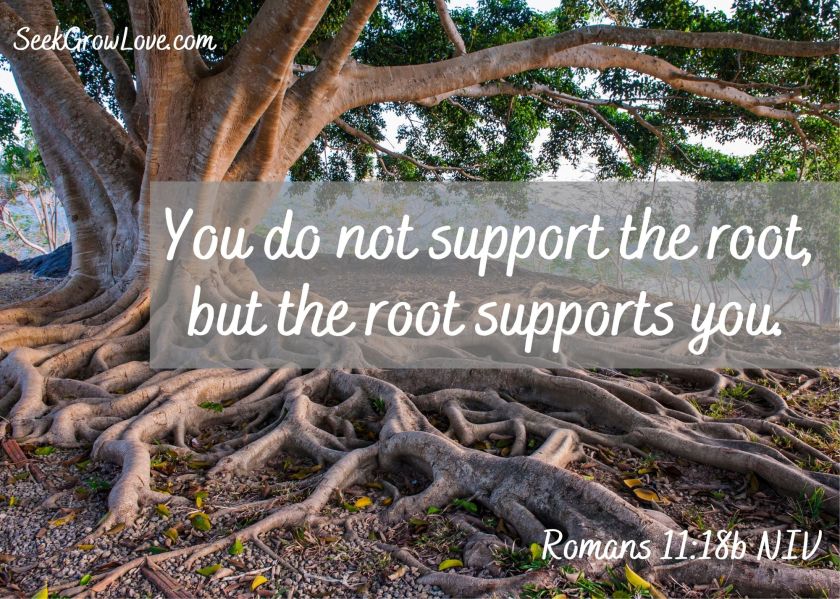
Paul addressed the potential conceit we might feel in Romans 11:17-21 which says, “If some of the branches have been broken off, and you, though a wild olive shoot, have been grafted in among the others and now share in the nourishing sap from the olive root, do not boast over those branches. If you do, consider this: You do not support the root, but the root supports you. You will say then, “Branches were broken off so that I could be grafted in.” Granted. But they were broken off because of unbelief, and you stand by faith. Do not be arrogant, but be afraid. For if God did not spare the natural branches, he will not spare you either.”
I find this analogy interesting. In orchards, often a wild rootstock is more hearty than a domesticated rootstock. So when grafting, someone will graft a desirable shoot that will produce good fruit onto a strong rootstock to get the best tree possible. Nobody would ever consider grafting an autumn olive (or Russian olive) branch onto a productive olive tree. Autumn olives are an invasive species, have thorns, and are completely undesirable. Even deer don’t eat autumn olives.
So, given Paul’s analogy, we are worthless. Israelites, in the analogy, were far more valuable than we are. If God pruned them off because of their unfaithfulness, and then grafted us in, we should be thankful, not conceited. Because if God pruned them, he will certainly prune us who are worth so much less, if we don’t continue in our faith.
Paul said that some of the motivation for his preaching to the Gentiles was to make the Israelites jealous, and want to be reconciled with God. Some wonder if God would ever accept back a person who walks away from God. Romans 11: 23-24 suggests that God will welcome rebels back, “And if they do not persist in unbelief, they will be grafted in, for God is able to graft them in again. After all, if you were cut out of an olive tree that is wild by nature, and contrary to nature were grafted into a cultivated olive tree, how much more readily will these, the natural branches be grafted into their own olive tree!”
This is great news, not only for Israelites, but also for us. First, we have been extended the opportunity of salvation because of the Israelites’ rejection of God. And secondly, because if God will welcome them back when they have walked away from Him, this suggests He will welcome us back if we have turned away from Him.
It’s a dangerous thing to presume on the grace of God. But if you have wandered, come back to God while there is still time. 2 Corinthians 6:2 says, “For he says, ‘In the time of my favor I heard you, and in the day of salvation I helped you.’ I tell you, now is the time of God’s favor, now is the day of salvation.“
If you haven’t yet accepted Christ as your Lord and Savior, today is the day of salvation. If you accepted Him in the past, but have wandered away, today is the day to come back. We don’t know when Jesus will return. I assume it will be relatively soon. Once He does return, it will be too late to accept Him. Today is the day. Seize the day.
-Steve Mattison
Reflection Questions
What do you need to do since Now is the day of salvation? How will you do it?
How have you been a recipient of God’s grace? Tell Him how you feel about it.
What do you think of God’s grafting skills? What have you learned about Him in our Bible reading today?
Paul starts Romans 10 like he started Romans 9, wishing that Israelites would be saved. He lamented in verses 2-4, “For I can testify about them that they are zealous for God, but their zeal is not based on knowledge. Since they did not know the righteousness that comes from God and sought to establish their own, they did not submit to God’s righteousness. Christ is the end of the law so that there may be righteousness for everyone who believes.”
Are you zealous for God? If so, great! But as Paul pointed out, zeal is not enough. Do you try to establish your own righteousness (through rigidly following a bunch of rules or making up your own rules)? That didn’t work out too well for the Israelites, and won’t work out well for you either.
Fortunately, Paul revealed what *is* needed in Romans 10:9-10, “If you confess with your mouth, “Jesus is Lord,” and believe in your heart that God raised him from the dead, you will be saved. For it is with your heart that you believe and are justified, and it is with your mouth that you confess and are saved.”
This sounds too simple to be true, but it is. We need to publicly proclaim “Jesus is Lord” – and live it, not just say it. And we need to believe that God raised Jesus from the dead – not just head knowledge, but knowledge that will transform our lives. If we do this, we will indeed be saved! Praise God!
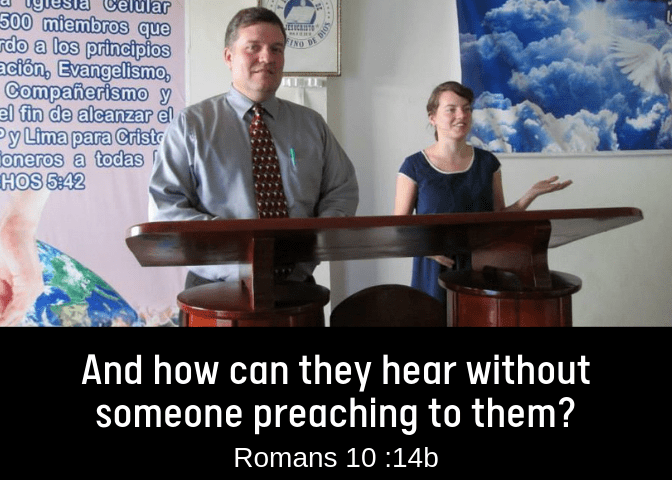
Since this is true, evangelism is critical! Paul points out in Romans 10:14-15, “How then can they call on the one they have not believed in? And how can they believe in the one of whom they have not heard? And how can they hear without someone preaching to them? And how can they preach unless they are sent? As it is written, “How beautiful are the feet of those who bring good news!”
If we have the right relationship with God, we will have the love of God in our hearts. And just as God doesn’t want anyone to perish, we too won’t want anyone to perish. But how can people be saved if they don’t know about God and Jesus? And how can they know unless someone tells them? In the “Steve Mattison” translation, this passage pretty clearly says that you and I have a responsibility to tell others about the good news of the gospel, and you and I have a responsibility to send missionaries to tell even more people. How are you doing with that?
A lot of people who dabble at Christianity need to get serious about going all in with God or quit pretending. In Revelation 3:15-16, Jesus said, “I know your deeds, that you are neither cold nor hot. I wish you were either one or the other! So because you are lukewarm – neither hot nor cold – I am about to spit you out of my mouth.”
You may be wondering how does this apply to you? I’m glad you asked.
Have you made a public confession that Jesus is your Lord? If so, does your life reinforce or contradict that confession?
Do you believe in your heart that God raised Jesus from the dead? If so, does your life bolster or refute that head knowledge?
Are you actively spreading the gospel and/or funding missionaries so they can spread the gospel?
Romans 8 ended with the promise that nothing can separate us from the love of God. But then in the next chapter, we find Paul saying, in Romans 9:2-4, “I have great sorrow and unceasing anguish in my heart. For I could wish that I myself were cursed and cut off from Christ for the sake of my brothers… the people of Israel.”
You may be thinking, “Wait a minute, is God faithful, or not? Didn’t he choose the Israelites as His chosen people originally? Apparently, that didn’t work out so well, so then God threw them away, and now Christians are His chosen people. Will God get tired of us too, and throw us away too?”
I’m glad you asked. Let’s look at that.
God chose the Israelites. They were His people. God gave the Israelites the law, the temple worship, and the promises, the patriarchs, and the human ancestry of Jesus. God extended tremendous grace to them. God was (and is) faithful. But despite that, many turned their back on God. Romans 9:6 says, “It is not as though God’s word had failed. For not all who are descended from Israel are Israel.” The problem was with the Israelites. They weren’t faithful to God. Even though they had the right ancestor (Abraham), they didn’t have the right heart.
Romans 9:27-28 later says, “Though the number of the Israelites be like the sand by the sea, only the remnant will be saved. For the Lord will carry out his sentence on earth with speed and finality.”
This should be a warning to us. God told us in Romans 8 that nothing external can separate us from the love of God. But we are free to walk away from Him if we choose. Even though God extended tremendous grace to Israel, many rejected God, and only a remnant will be saved. God has now extended tremendous grace to us Gentiles through Christ. Unfortunately, I fear the same will be true of those of us who call ourselves Christians.
Romans 9:30-32 then stresses again the importance of righteousness by faith, “What shall we say then? That the Gentiles, who did not pursue righteousness, have obtained it, a righteousness that is by faith; but Israel, who pursued a law of righteousness, has not attained it. Why not? Because they pursued it not by faith but as if it were by works…”
To recap, God is merciful, gracious, and faithful. He showered His love on the Israelites, but many rejected him. And many who didn’t reject Him tried to please God by just following a bunch of rules. I picture their attitude as something like this: “I’m going to do what God demands, but it doesn’t mean I have to like it.” God then rejected those who rejected Him and those who tried to earn their way into his favor.
God has showered his love on us through Jesus, and has invited us to be adopted as His children. How will you respond? Will you reject Him? Will you try to earn His favor by following a bunch of rules? Or will you develop a loving relationship with Him and live by faith? Only one of these choices will result in eternal life. Which will you choose?
-Steve Mattison
Reflection Questions
In this chapter on God’s Sovereign Choice how many times does Paul quote the Old Testament? Why do you think Paul does so?
Are there times you have questioned if God is faithful? Do you find anything in Romans 9 that would have helped you (or did help you) through these times? How can you help someone else who is questioning?
What do we learn about God and His character and roles and desires in our reading of His words today?
Romans 7 pointed out the fact that we aren’t able to live the righteous life that God requires in our own strength. “Live through the Spirit” is the title for Romans 8 in my Bible. The word “spirit” or “Spirit” occurs 19 times in Romans 8, so it must be important.
Yesterday, we pointed out that Paul was describing the war within someone trying to please God by trying to follow a bunch of rules. That section culminated in Romans 7:24, which says, “What a wretched man I am! Who will rescue me from this body of death?
Romans 8:1 starts by saying, “Therefore, there is now no condemnation for those who are in Christ Jesus, because through Christ Jesus, the law of the Spirit of life set me free from the law of sin and death.” No condemnation? Tell me more! I want in on that.
Paul then said that the law was only able to point out sin, but could not address our sinful nature.
He then went on to describe two types of people, one sinful and one spiritual. He’s describing someone who lives according to their sinful nature versus someone who lives in accordance with the Spirit – he is not describing two types of Christians.
Note the contrast:
Live according to the sinful nature
Those who live according to the sinful nature have their minds set on what the sinful nature desires. (8:5)
The mind of sinful man is death. (8:6)
The sinful mind is hostile to God. (8:7)
It does not submit to God’s law, nor can it do so. (8:7)
For if you live according to the sinful nature, you will die (8:13)
Live in accordance with the Spirit
Those who live in accordance with the Spirit have their minds set on what the Spirit desires. (8:5)
The mind controlled by the Spirit is life and peace. (8:6)
If by the Spirit you put to death the misdeeds of the body, you will live. ( 8:13)
Those who are led by the Spirit of God are sons of God. (8:14)
And if sons of God, then heirs of God and co-heirs with Christ. (8:15)
Paul said in Romans 8:9, “You, however, are controlled not by the sinful nature but by the Spirit, if the Spirit of God lives in you. And if anyone does not have the Spirit of Christ, he does not belong to Christ.” So if the Spirit of God lives in us, our mind is controlled by the Spirit – we aren’t controlled by our sinful nature. If the Spirit of God doesn’t live in us, we don’t belong to Christ.
Romans 8:10-11 goes on to say, “But if Christ is in you, your body is dead because of sin, yet your spirit is alive because of righteousness. And if the Spirit of Him who raised Jesus from the dead is living in you, He who raised Christ from the dead will also give life to your mortal bodies through His Spirit, who lives in you.” Can you imagine the power it took to raise Jesus from the dead to eternal life? That same power is in us – if and only if we are controlled by the Spirit of God.
Ultimately, it’s my choice. Am I going to completely surrender my will, my future, and my all to God, and live for Him (with His help)? Anything less is failure to surrender to God, meaning I continue living according to my sinful nature, which will result in death. I get to make the choice. And so do you.
This doesn’t mean that someone living according to their sinful nature can’t do good. It also doesn’t mean that someone living according to the Spirit can’t sin. I picture this as more of what motivates a person’s life and actions.
This doesn’t mean that we won’t have troubles in our lives. Paul went on to say that suffering will come, but the future reward is more than worth it. Paul said in Romans 8:18, “I consider that our present sufferings are not worth comparing with the glory that will be revealed in us.” And I’ll point out that Paul had lots of suffering, as he told us in 2 Corinthians 11:23-26, “… been in prison more frequently, been flogged more severely, and been exposed to death again and again. Five times I received from the Jews the forty lashes minus one. Three times I was beaten with rods, once I was pelted with stones, three times I was shipwrecked, I spent a night and a day in the open sea, I have been constantly on the move. I have been in danger from rivers, in danger from bandits, in danger from my fellow Jews, in danger from Gentiles; in danger in the city, in danger in the country, in danger at sea; and in danger from false believers.”
Paul then went on to say that these sufferings make us long all the more for the redemption of our bodies we will experience when Jesus returns.
Romans 8:28 says, “And we know that in all things God works for the good of those who love him, who have been called according to his purpose.” So even problems in our lives turn out for good for those who love Him.
Paul then went on to say that God is for us, and Jesus not only died for us but currently intercedes for us. Because of this, nothing can separate us from the love of Christ (8:35) and the love of God (8:29). Because of this, we can not just conquer our sinful nature, we are “more than conquerors” or super-conquerors through Him who loved us.
Romans 8:38-29 closes with, “For I am convinced that neither death nor life, neither angels nor demons, neither the present nor the future, nor any powers, neither height nor depth, nor anything else in all creation, will be able to separate us from the love of God that is in Christ Jesus our Lord.”
If you completely surrender your life to God, the same power that raised Christ from the dead will live in you. By having your mind controlled by the Spirit, you can overcome your sinful nature and live the life God called you to live. And if you do, absolutely nothing can separate you from the love of God that is in Christ Jesus our Lord. And when Jesus returns, you’ll live forever in paradise with God and Jesus.
Only one question remains: will you completely surrender your life to God?
-Steve Mattison
Reflection Questions
Why did Paul say that the law can only reveal sin, but not save?
If you truly live according to the Spirit, will you break the 10 commandments (or any of God’s other laws)? Why or why not?
What did God reveal about Himself by giving the 10 commandments? (Note: He tells us something specific about Himself with each of the first 5 and had a direct purpose for each of the other 5.) What does He continue to reveal about Himself in Psalm 38 (a psalm about the oppressive weight of sin and guilt) & Romans 8?
Romans 6 talked about God’s requirement that Christians die to sin. Romans 7 points out that we can’t do this in our own power alone. Romans 8 will give us the solution.
But today, we’re stuck in a quandary. We know that God requires that we put to death the sinful nature in our life. How do we do that? The obvious first thought is by following a long set of rules. (We call this Legalism – the idea that we can get right with God by following a bunch of rules.)
For a while, things seem to go along well. We’re following the rules, and we feel more spiritual. We develop a long list of “dos” and “don’ts”. Over time, the list grows, and it gets harder and harder to follow. The problem with this is that it addresses our actions, but doesn’t change our hearts. In our mind, we want to follow God, but our sinful nature wars against our mind, wanting to do whatever our sinful nature wants.
Paul said it like this in Romans 7: 15, “I do not understand what I do. For what I want to do, I do not do, but what I hate, I do.” And in 7:19, “For what I do is not the good I want to do; no, the evil I do not want to do – this I keep doing.”
Over time, it gets harder and harder to follow all the rules. If we carry legalism to its logical conclusion, eventually, either we get to the point where we just pretend (we become a hypocrite), or we abandon the whole farce and just walk away.
Paul sums up the desperation like this in Romans 7:24, “What a wretched man I am! Who will rescue me from this body of death?” If we are perfectly honest, I suspect all of us who profess to be Christians have experienced this.
Fortunately, the chapter doesn’t stop there. Paul goes on in 7:25a, “Thanks be to God – through Jesus Christ our Lord.” We don’t get into the details until Romans 8 of how we can not just overcome, but be “more than conquerors.”
In Romans 6, Paul said that we must die to sin. Here in Romans 7, he goes on to say that we also die to the law. This may seem crazy, since God’s law was good – pointing out what sin was. So we’re not bound by the law, and we’re not free to continue to sin. What is the solution?
We’ll find out tomorrow.
Spoiler alert:
Romans 8:10-11 says, “But if Christ is in you, your body is dead because of sin, yet your spirit is alive because of righteousness. And if the Spirit of Him who raised Jesus from the dead is living in you, He who raised Christ from the dead will also give life to your mortal bodies through His Spirit, who lives in you.”
-Steve Mattison
Reflection Questions
What has your experience been with your sinful nature? What good do you want to do that you haven’t? What evil have you done that you didn’t want to do?
Have you had any experience with legalism? How did you do at trying to follow every rule? Where was your heart? Did you tend more towards hypocrisy and going through the motions or giving up and walking away from God?
What is God’s desire for you? How do you know? What does He reveal about Himself in your reading of His words today?







 Seek Grow Love