Is Paul Disobedient to God???

Acts 20:4-23:35

The next few days we are going to read the record of Paul’s journey to Jerusalem and then in the end to Rome and imprisonment.  The story is one of great believing but also a cautionary story to us about listening to the voice of God in every situation.  The apostle Paul is most responsible for the revelation of the mystery of the church of the body of Christ being given by God to us.  He proclaims in Galatians:

Galatians 1:11-12(NLT) Dear brothers and sisters, I want you to understand that the gospel message I preach is not based on mere human reasoning. 12 I received my message from no human source, and no one taught me. Instead, I received it by direct revelation from Jesus Christ.

Paul is the person chosen by God and equipped to do the ministry to the Gentiles and the formation of churches all over the known world at that time.  There are no other so central to this ministry and growth of the body of Christ.  Try to read the book of Acts records with this perspective in mind.  Also that most of the Gentile church looks to Paul as their father in the Word.  

Is the apostle Paul really susceptible to disobeying God???

Acts 20:22-24(NKJV)  And see, now I go bound in the spirit to Jerusalem, not knowing the things that will happen to me there, 23 except that the Holy Spirit testifies in every city, saying that chains and tribulations await me. 24 But none of these things move me; nor do I count my life dear to myself, so that I may finish my race with joy, and the ministry which I received from the Lord Jesus, to testify to the gospel of the grace of God.

Bold speech Paul.  I go bound in the spirit and don’t count the cost of my decision.  Is this the best that Paul can do in this situation?  I appreciate his desire to go back to Jerusalem and to try to convince his countrymen of the same truth of the Word of God he has preached all over the known world.  But early Christianity in Jerusalem has many persons that have accepted Jesus as Messiah but continue to promote the doing of the whole law of the scribes and Pharisees also.  These persons are not doing the will of God as God has revealed to Paul in his letters.  Read Galatians in concert with Acts for more perspective on both.  Then even revelation is given to other believers to warn Paul of the consequences of going to Jerusalem.

Acts 21:10-13(NKJV) And as we stayed many days, a certain prophet named Agabus came down from Judea. 11 When he had come to us, he took Paul’s belt, bound his own hands and feet, and said, “Thus says the Holy Spirit, So shall the Jews at Jerusalem bind the man who owns this belt, and deliver him into the hands of the Gentiles.’ ”
12 Now when we heard these things, both we and those from that place pleaded with him not to go up to Jerusalem. 13 Then Paul answered, “What do you mean by weeping and breaking my heart? For I am ready not only to be bound, but also to die at Jerusalem for the name of the Lord Jesus.”

Paul is not moved by anyone’s advice.  He is determined to do what he has decided to do.  

How are we like Paul in our lives?

Acts 21:27-30(NKJV) Now when the seven days were almost ended, the Jews from Asia, seeing him in the temple, stirred up the whole crowd and laid hands on him, 28 crying out, “Men of Israel, help! This is the man who teaches all men everywhere against the people, the law, and this place; and furthermore he also brought Greeks into the temple and has defiled this holy place.” 29 (For they had previously seen Trophimus the Ephesian with him in the city, whom they supposed that Paul had brought into the temple.)
  30 And all the city was disturbed; and the people ran together, seized Paul, and dragged him out of the temple; and immediately the doors were shut.

Acts 23:11(NKJV) But the following night the Lord stood by him and said, “Be of good cheer, Paul; for as you have testified for Me in Jerusalem, so you must also bear witness at Rome.”

God goes with Paul’s decision but then shows him what will happen.  Going to Rome ad imprisonment is not part of Paul’s plan but God will give it help  to make it the best outcome for Paul and also for the church.

Acts 23:31-35(NLT) So that night, as ordered, the soldiers took Paul as far as Antipatris. 32 They returned to the fortress the next morning, while the mounted troops took him on to Caesarea. 33 When they arrived in Caesarea, they presented Paul and the letter to Governor Felix. 34 He read it and then asked Paul what province he was from. “Cilicia,” Paul answered.
35 “I will hear your case myself when your accusers arrive,” the governor told him. Then the governor ordered him kept in the prison at Herod’s headquarters.

Stay tuned for the  next episode of the Adventures of Paul Going to Rome tomorrow.

Love in Christ, Tom Siderius

Exhortation

OLD TESTAMENT: Isaiah 34 & 35

POETRY: Song of Songs 7

NEW TESTAMENT: Hebrews 13

The end of the book of Hebrews gives an exhortation to them to listen to what was likely just read. Exhortation is a pleading with someone to act. I hope they did. I’ve been persuaded to. 

What they, and by extension we, should have understood by the end of this portion of the letter was that Jesus is a better high priest than the Levitical priests because his sacrifice was perfect. We learned that he was chosen by God. We learned that to be chosen means that you choose God back. Jesus chose God back by being faithful to his part in God’s plan of salvation, which was to shed his sinless blood on the cross to save us. This inaugurated the New Covenant through him, with better promises so that we can all partake in the Kingdom of God.

What he saved us from was being slaves to sin that kills. We learned that we are saved from sin because his sinless sacrifice takes away sins (makes people perfect). We learned that the Old Covenant sacrifices of animal blood couldn’t take away sins, but they did remind the people of God of their sin (to help them stop sinning and live well).

God is perfect because he is always faithful to do what he says he’ll do according to his promises, which are always for our good. Jesus was made perfect as a result of his faith, causing him to always do what his father asked of him, for his good, and for the good of the world. We were made perfect when we entered into the New Covenant with God through Jesus.

Remaining perfect happens by being faithful to do what we said we’d do until our race is finished, just like the people of old were required to do whatever was required of them under their covenant. What God required of them, of Jesus, and of us, is to do his will; to be faithful.  

The will of God for us is to love as Jesus loved, which is the new commandment in the New Covenant. The way Jesus loved was through self-sacrifice to save the world. Self-sacrifice saves because it demonstrates one’s love for others. Those who love others are those who will be in God’s Kingdom for all eternity. Self-sacrifice for us is doing whatever it takes (according to God’s will) to save someone; to bring them into the covenant so that they too can be made perfect. If we are doing this, we are freed from sin. We are freed from sin because we chose to do the will of God.

We read however that we can get sluggish in doing God’s will. We can even get entangled back in sin. We heard that to get out of being sluggish, sinning, and to get back to doing God’s will, that we need endurance. We learned that endurance comes through discipline.

The last chapter in Hebrews gives us a few more practical examples of how to be disciplined. We were taught that being disciplined by our father who loves us is for our good. Being disciplined helps us to adhere to our part in God’s plan of salvation. It helps us to be faithful, with endurance to the end of our race.

The Hebrews were given a grand letter reminding them of how awe-inspiring Jesus is, how much better God’s work is through him than any work he’s done before, and that it’s available to everyone who comes through Jesus. They tasted of it, but they got sluggish, and were in need of some exhortation to finish their race faithfully.

The children of God, including us, have a high calling. We’re being exhorted to endure this life race with faith all the way to the end through discipline. The stakes are high, we can’t faint back into our old ways. Said more with the desire written on my heart, we’re being exhorted to be Jesus to the world to save it.

-Juliet Taylor

Reflection Questions

1. If this exhortation has persuaded you to act, what are you going to do (how will you discipline yourself)? You can find many examples in the chapter.

2. God is pleased with what 3 sacrifices according to Hebrews chapter 13?

3. The Hebrews were exhorted to imitate the faith of the ones who taught them the word. What action stands out the most that you’d like to imitate from someone who taught you?

The Great Debate

Matthew 12:22-50 and Luke 11

Do you know who I would love to see debate in a globally televised event? Jesus and the Pharisees. Sure, Jesus could take on the whole crew of them. For people who had so much in common, they sure were polar opposites.

What did Jesus and the Pharisees have in common? They were from the same family. They could trace their ancestry back to Abraham. They were Jews born at the same time in history. Both Jesus and the Pharisees knew well and deeply appreciated the Old Testament scriptures. They both knew the importance of the coming Messiah the Jews anticipated. They both spoke of how to please God and urged people to follow the way they laid out in order to be saved in the life to come. They had so much in common. Imagine what they could have done together for God’s work – if only the Pharisees hadn’t been so pharisaical.

The Pharisees loved the law of Moses so much (as well as the additions they added to the Law to make themselves look even more saintly) that they were blinded to the true Messiah in front of them. In the end they were much more interested in making themselves look good (and pointing out others’ shortcomings) than in doing what God actually desired – and that is a dangerous place to be.

In today’s reading we come across a few topics that would surely come up in our much anticipated debate between the Pharisees and Jesus.

The Pharisees felt threatened by Jesus’ growing popularity and his displays of God’s power. But, rather than accepting him for who he was showing himself to be – they preferred creating lies and rumors for something they didn’t fully understand. So, when the crowd was amazed at Jesus’ healing of a demon possessed man, the Pharisees tried to explain it away by saying Jesus must be working with Beelzebub, the prince of demons (Matthew 12:24 & Luke 11:15). I don’t think I would take that very well, but Jesus calmly rebuttals that if indeed Satan were working at driving out Satan, his house wouldn’t be standing for long. He goes on to say that from evil you can expect evil, but from good you can expect good – for what is stored up in a man overflows for all to see and hear. And, he reminds them that there is a day coming when all will be judged for “every careless word they have spoken.” (Matthew 12:36)

But, they fail to realize the wisdom and truth and warnings Jesus spoke. So, the debate topics continue. They notice Jesus didn’t wash his hands before he ate (this definitely sounds like a debate topic that could be used today against a political opponent – times never change). Jesus counters with a truth stinger – the Pharisees spend so much time making sure they look good on the outside, but they neglect the more important work of cleaning up their own greed and wickedness on the inside. They are so busy harping on the itty-bitty showing-off, do-good outside acts (like tithing on the produce from their herb garden) and expecting praise for their goodness – but they completely overlook the weighty matters of justice and God’s love. In trying to make themselves look holy, they have neglected to care for others. And Jesus was telling them that is a dangerous place to be. Judgment will also be coming for today’s Pharisees.

Thankfully, there is another option. Jesus laid it out. Be his family – accept who Jesus is – do the will and work of his Father in heaven – not your own selfish agenda, or what will make you look good in the eyes of today’s twisted Pharisees who try to tell us how to be godly but have totally missed the boat themselves. Draw closer to Jesus than you ever have been before so you can tell the difference between the truth that he offers and the lies of the Pharisees. Your life depends on it – as well as the lives of those who are watching you.

There will be a time coming when the whole world will see and know who is the clear winner of this debate.

-Marcia Railton

Today’s Bible passage can be read or listened to at BibleGateway – Matthew 12:22-50 and Luke 11

Tomorrow we will read Matthew 13 and Luke 8 as we continue on our…

What’s in a Name?

matthew 2 13

MATTHEW 2


In the Bible, there is be a great deal of naming done for the sake of conveying a purpose or message.  It could tell the story of a birth (Samuel: God has Heard), a unique physical trait (Esau: Covered- with hair), to make a theological point (Abraham: Father of Many), or a prophecy (Yeshua: Saving One); nonetheless, these men and women (Ruth; Companion) are born-to or given to testify of the the glorious God we serve.


In the first two chapters of Matthew, a name that appears in equal amounts to the name of Jesus is Joseph.  As discussed yesterday, Matthew 1 is the genealogy of the line of Joseph, but equally important to note is Joseph’s role in the early part of Christ’s story – the announcement, advent, and escape.  This man entrusted with the care of Jesus was named, whether coincidentally or purposefully, for his famous great (great, great, great…) uncle Joseph, who was the famous dreamer and interpreter. It is then fitting that Joseph is given the word of God, not by messengers or a family member as we see with Mary (Luke 1), but in a dream.


Between Matthew 1:18 and Matthew 2:23, or a span of a couple of years, Joseph is recorded as spoken to by God in a dream on four different occasions. He is told not to be afraid to take Mary as a wife (1:20), move to Egypt (2:13), move to Israel (2:19-20), and finally, specific guidance to stay away from Judea, and go to Nazareth (2:22). Joseph, who may have initially been filled with doubt, becomes incredibly faithful to the will of God.  Just like his liked-name predecessor, He goes hither and yon to follow the will of God. At times, he looks incredibly foolish. He goes from the comforts of home to the foreign land of Egypt, yet ultimately, he brings glory to his father, for OT Joseph, Jacob, and for NT Joseph, YHWH.  In so doing this, he lives up to his name – not Joseph – but the one carried by his Son he so carefully protected.


While our name is not Joseph, (well, most of us), each one of us also have a calling on our name too (Rom 8:28).  We are not all named for the same reason – some have the name of a biblical figure (like me), and others are named for a special relative, and even a few are named for a Fleetwood Mac song, but God has purposed and fashioned us all (Psalm 139:13-17) to be faithful to him.  Joseph played his part in making sure there is one name that supersedes them all. We might seem foolish to some, we may be called to go hither and yon, leaving behind the comforts of this life, but ultimately we are bringing glory, not to our name, but to our Father in heaven. Does it matter what others call us? Or even what we think of ourselves? In the words of Shakespeare, “What’s in a name? A rose by any other name would smell as sweet.” How much more does your Father in heaven know this? He has a plan for you. He wants a relationship with you, and truly, it began long before you were ever named. No matter the expectation, or lack thereof, attached to our name, there is truly only one name that matters under heaven: The name of Jesus Christ (Acts 4:10-12) because it is the only name by which we are saved. Like Joseph, it is now our time to play our part, hold onto Jesus, and carry the Son wherever we’re called to go.

-Aaron Winner


Aaron Winner is a worship leader and a middle school teacher in Upstate South Carolina.  He has been married to his wife Jennifer for 13 years today – yay!  Aaron is also a songwriter, currently working on his fourth album, “Wonderful”.  Additionally, he hosts his own blog at elattruthfillintheblank.weebly.com, which combines thoughts from his work at school and church; however, he is happy to write for us this week at the start of our 2019 Bible study!

Go

Mark 14-16

mark16.15

Friday, May 12

As we started our journey through the book of Mark on Monday we saw that Jesus was all about the gospel of the Kingdom of God. Now as we come to the end of Mark we see Jesus is still about the same work. He is seated with his disciples and tells them in 14:25, “Truly I say to you, I will never again drink of the fruit of the vine until that day when I drink it new in the Kingdom of God.”


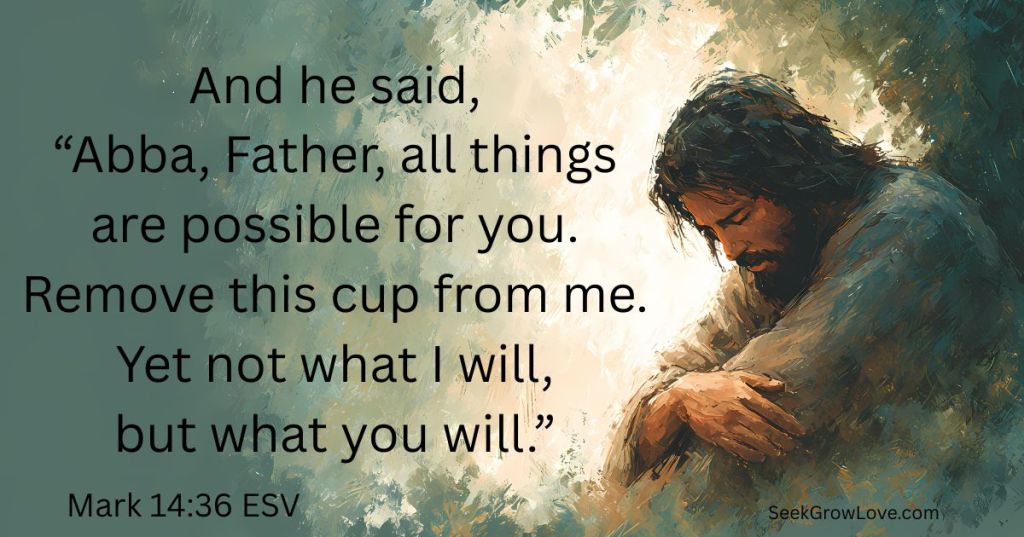
We see later in chapter 14 that he was “deeply grieved” and asked that God would “remove this cup.” Death was not what he wanted even in this situation, knowing what was coming, he still said, “not what I will, but what you will.” Jesus knew the prophesies, he knew the suffering he was about to face, yet still he sought the Kingdom of God. Jesus, along with his passion for the Kingdom to be fulfilled, is our inspiration to follow the will of God. We must “seek first the Kingdom of God”(Matt 6:33). It is of utmost importance.


Even after Jesus was crucified and was raised from the dead He still focused on the Kingdom. He told his disciples to “Go into all the world and preach the gospel to all creation.”(Mark 16:15) We are to preach the gospel of the Kingdom of God to all around us no matter how popular the message is or isn’t.


-Bill Dunn


(Photo Credit: http://dailybiblememe.com/tag/mark-1615/)