It is easy to get discouraged. It happens all the time. As Christians, Christmas is a special time of year. Our hearts turn to the Christ child and the miracle that is the birth of God’s son. While this gives us hope, we live in a fast paced, difficult world. All around us people are hurting. Evil seems to grow every day. Unbelievers ask us “Where is your Jesus”? Before long, we find ourselves depressed and doubting the goodness of God. At least I do.
The writer of Hebrews knew there would be days like this. That is why he spent so much time writing in his letter to the Hebrews that “we can have confidence to enter the Most Holy Place by the blood of Jesus” (we can go before God Himself through our prayers)…so let us draw near to God with a sincere heart and with the full assurance that faith brings… (Hebrews 10:19-22a). The wise writer knew that the people of God were hurting. He continues by encouraging them to “consider how we may spur one another on toward love and good deeds, not giving up meeting together, as some are in the habit of doing, but ENCOURAGING one another… (10:24).
Sometimes the Christmas season can be lonely. We remember Christmas’ of long ago and the fun we shared with people that we loved. Parents, brothers and sisters, friends…perhaps gone now and only existing within our hearts. As children of God, we can trust in the incredible hope that is found only in Jesus. It is our duty, to help each other and encourage each other to keep on living…and loving. Each of us pushing each other onwards towards good deeds – and new, happy memories.
In this Christmas season, my hope is that you dear reader will remember the love of Christ, the forgiveness and grace of the Father, and the promise of the coming Kingdom of God.
Questions for Discussion:
Who might you “spur on to love and good deeds” this Christmas season? (10:24)
What does it mean to “persevere” in the faith? (Hebrews 10:36)
When I was a kid, I often had to do the dishes. I was not a fan of having to take time to soak the dishes and scrub them, inside and out. One time, I decided to save time and only cleaned the outside of the cups. They looked super clean! I put the cups away and everything looked clean and ready for the next meal. Later, when my Mom pulled a cup from the cabinet, it looked nice and clean. But the inside was a mess. Milk had spoiled in the cup and was caked along the bottom. She was not very happy and found the cup to be completely unusable. I had to pull all the cups out and get the job done the right way!
In the Old Testament, God’s people were instructed to offer sacrifices to God. These sacrifices of animals, grain, and oil were expressions of devotion to God, addressed sin, and maintained covenant relationship between God and Israel. Animals were burned on an altar symbolizing total surrender to God. Sometimes, animal blood was applied to the altar. In this case, the offering was a sin offering – usually a lamb.
The writer of Hebrews compares the offerings of the Old Testament with the new offering through the death of Jesus Christ. Hebrews 9:11-14 tells us that “the blood of goats and bulls and the ashes of a heifer sprinkled on those who are ceremonially unclean sanctify them so that they are outwardly clean”. They became sanctified – set apart for God’s special use – because of the spilled blood of an animal. However, people were only ceremonially clean on the outside of their body. They were now clean to worship God and come before Him, but on the inside sin would return. Again and again, people would have to continually offer animals in sacrifice to God to maintain their ceremonial purity before Him.
Jesus, as the sinless, perfect, lamb of God is clean on the inside as well as the outside. In other words, after His resurrection, He was able to ascend to Heaven and sit at the right hand of God because of His perfect, redeeming blood. Since He died and was resurrected in perfection (because He was always perfect), he could now spend eternity with His Father in Heaven! Jesus had no sin, so He did not need to be “saved from sin” like you and me. The very blood of Jesus, shed on the cross for you and for me, is the blood that makes us clean on the inside (Hebrews 9:14). No longer do we have to make sacrifices repeatedly. He died for us, once and for all (1 Peter 3:18, Romans 6:10, 1 John 2:2). Hebrews 9:15 teaches us that Jesus is the perfect mediator of a NEW covenant (not like the Old Testament…). Those who put their faith in Him may “receive the promised eternal inheritance – now that he has died as a ransom to set them free from the sins committed under the first covenant” (Hebrews 9:15). Jesus is the Lamb of God who takes away the sin of the world. We are now “clean” on the outside and inside. Like one of my cups – finally spotless and useful for the Kingdom of God.
Questions for Discussion:
Why did God want blood as payment for sin? (Hebrews 9:22)
Why does Jesus appear for us in God’s presence? (Hebrews 9:24)
When my son was a little boy, he asked for a pocketknife for Christmas. He was interested with those who could take a piece of wood or a stick and whittle it into a figure or an animal. Watching an experienced woodworker use a little knife to create amazing little figures was fascinating to a young boy.
Of course, I got him his first pocketknife, and we talked about how it was very sharp. We talked about how to hold the knife and how to begin the process of whittling away. I warned him not to put his finger on the blade and to respect it. Of course, the first thing he did was rub his finger across the blade – and cut himself. Just a slight bump against the blade and the cut was deep enough to draw blood – and a few tears.
The writer of the book of Hebrews describes the Word of God as being sharper than any type of edged weapon (4:12). Like a pocketknife, it can cut deep – deep into the mind and heart of the believer. God’s Word judges the thoughts and attitudes of the heart. Like an impartial judge sitting on the judgement seat, the Word of God judges what is within us. The Word of God judges if we are resting in God’s grace or in human works. We can work hard and perform many good deeds for ministry. But those good deeds will not save us. Only the grace of God through faith in Jesus can save us from our sin. We can fool other people, but the Word of God makes it very plain that we cannot fool God. He will judge us rightly and with justice. If our faith is in Christ, we will find a sympathetic savior, who while tempted in every way, did not sin. He is perfect – and wants us to trust in His father as He did. The Word of God makes it very plain – our salvation is through grace by faith alone (Ephesians 2:8-9). We cannot pretend to “earn” our way into God’s Kingdom. His Word testifies to the truth – that Jesus is the way, the truth, and the life (John 14:6) and trusting in him allows us to receive mercy and find grace to help us in our time of need (Hebrews 4:16).
Remember to honor and obey God’s Word. While it contains the awesome message of salvation, it also opens our lives up to the all-knowing, all seeing eyes of God. Sharp indeed!
Questions for Discussion:
How could Jesus experience EVERY temptation? (4:15)
One of the great truths of the Bible is the humanity of Jesus Christ. Jesus, our Lord and Our Savior, was born of the virgin Mary through the power of God’s Holy Spirit. Our God created Jesus to be His messiah – God’s chosen One to save his people and rule as King in His future kingdom. Jesus always existed in the mind of God. In the beginning was the Word (John 1:1). The Word, or Logos in Greek, is the eternal program of salvation and restoration through Jesus Christ. It is the wonderful plan of God to make a way for believers to enjoy fellowship with Him in the eternal coming Kingdom. As such, at a time of God’s choosing, He created his messiah. He brought his great plan of salvation, the Logos, into reality. Our Lord Jesus was born into the world, a little baby, born of the virgin Mary and celebrated as our Lord and Savior. He was born into the world through God’s power to be fully human, and fully God’s son. He is the begotten one (first among everything).
The book of Hebrews tries to explain why Jesus had to be made perfect and why he had to be a human – like you and me. But why did Jesus have to be just like us? Jesus was created by God to be His only Son. In order to serve both God and mankind, Jesus had to be a special man – the sinless and perfect Son of man. Both divine (Son of God) and human (Son of Mary) – He is the perfect one to exist as the “mediator between God and men, the man Jesus Christ” (1 Timothy 2:5). Hebrews 2:14-18 teaches us that He had to be made with flesh and blood – he had to be a man. This is so His death on the cross might break the power of the fear of death. His resurrection is proof that a man can be raised up to eternal life. He was created specifically to save Abraham’s descendants of faith (that’s you and me). In being a man, he could be God’s High Priest, serving God and making atonement for the sins of the world (Hebrews 2:17,18).
With Christmas coming very soon, we remember the birth of Christ. That little child, born and placed in a manger, the son of Mary, would become the savior of the world. In God’s great wisdom, He made a way for us to enjoy fellowship with Him forever in His coming Kingdom. Thank Him for the gift of his Son, His human Son, the Christ Child who takes away the sin of the world.
The end of the book of Hebrews gives an exhortation to them to listen to what was likely just read. Exhortation is a pleading with someone to act. I hope they did. I’ve been persuaded to.
What they, and by extension we, should have understood by the end of this portion of the letter was that Jesus is a better high priest than the Levitical priests because his sacrifice was perfect. We learned that he was chosen by God. We learned that to be chosen means that you choose God back. Jesus chose God back by being faithful to his part in God’s plan of salvation, which was to shed his sinless blood on the cross to save us. This inaugurated the New Covenant through him, with better promises so that we can all partake in the Kingdom of God.
What he saved us from was being slaves to sin that kills. We learned that we are saved from sin because his sinless sacrifice takes away sins (makes people perfect). We learned that the Old Covenant sacrifices of animal blood couldn’t take away sins, but they did remind the people of God of their sin (to help them stop sinning and live well).
God is perfect because he is always faithful to do what he says he’ll do according to his promises, which are always for our good. Jesus was made perfect as a result of his faith, causing him to always do what his father asked of him, for his good, and for the good of the world. We were made perfect when we entered into the New Covenant with God through Jesus.
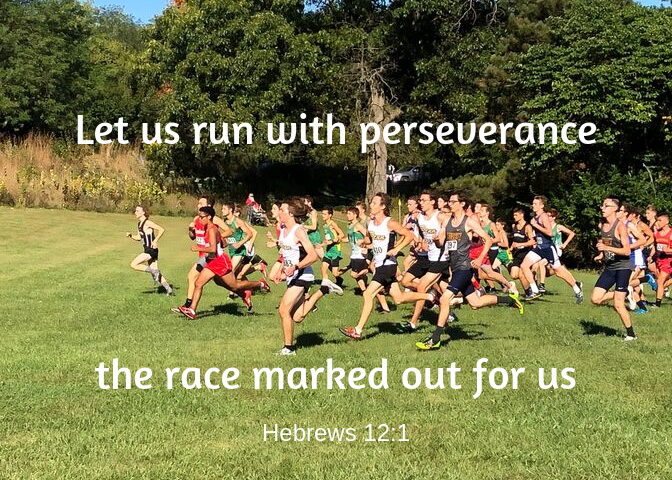
Remaining perfect happens by being faithful to do what we said we’d do until our race is finished, just like the people of old were required to do whatever was required of them under their covenant. What God required of them, of Jesus, and of us, is to do his will; to be faithful.
The will of God for us is to love as Jesus loved, which is the new commandment in the New Covenant. The way Jesus loved was through self-sacrifice to save the world. Self-sacrifice saves because it demonstrates one’s love for others. Those who love others are those who will be in God’s Kingdom for all eternity. Self-sacrifice for us is doing whatever it takes (according to God’s will) to save someone; to bring them into the covenant so that they too can be made perfect. If we are doing this, we are freed from sin. We are freed from sin because we chose to do the will of God.
We read however that we can get sluggish in doing God’s will. We can even get entangled back in sin. We heard that to get out of being sluggish, sinning, and to get back to doing God’s will, that we need endurance. We learned that endurance comes through discipline.
The last chapter in Hebrews gives us a few more practical examples of how to be disciplined. We were taught that being disciplined by our father who loves us is for our good. Being disciplined helps us to adhere to our part in God’s plan of salvation. It helps us to be faithful, with endurance to the end of our race.
The Hebrews were given a grand letter reminding them of how awe-inspiring Jesus is, how much better God’s work is through him than any work he’s done before, and that it’s available to everyone who comes through Jesus. They tasted of it, but they got sluggish, and were in need of some exhortation to finish their race faithfully.
The children of God, including us, have a high calling. We’re being exhorted to endure this life race with faith all the way to the end through discipline. The stakes are high, we can’t faint back into our old ways. Said more with the desire written on my heart, we’re being exhorted to be Jesus to the world to save it.
-Juliet Taylor
Reflection Questions
1. If this exhortation has persuaded you to act, what are you going to do (how will you discipline yourself)? You can find many examples in the chapter.
2. God is pleased with what 3 sacrifices according to Hebrews chapter 13?
3. The Hebrews were exhorted to imitate the faith of the ones who taught them the word. What action stands out the most that you’d like to imitate from someone who taught you?
If you’re feeling sluggish, tired of enduring the hardships that come with choosing to be faithful to the end of your race in this age, caught in sin that’s hard to get disentangled from, then think on all of those faithful chosen of God from chapter 11. They made it! They’re going to the Kingdom!
We have to have the endurance to make it to the end to, for our own good. If that great cloud of witness doesn’t move you, consider Jesus’s faith, by which he endured the cross for you. God’s will for him involved the shedding of his blood to resist the sin of others against him and to free us from it. Has God asked you to shed blood to resist sin? That’s probably not God’s will for you, thank God, though many of his children have. I pray it never comes to that.
What’s it going to take to finish your faith race? This writer says endurance, and it comes through discipline (he may even be referencing the letter he’s penning as part of that discipline). He is reproving the Hebrews, but discipline involves more than reproof. It involves scourging (I think the definition of scourging here is “suffering”), and it takes training.
The Hebrews seem to have forgotten that they are heirs to the Most High; they are sons of God. If you’re a son, then you will be disciplined (if not, you’re illegitimate). God’s discipline is like that of a father to his child. It is like the training up of the child in the way he should go so that when he is old, he will not depart from it. The child who was disciplined experienced how to endure as an adult.
The discipline was for the child’s good, though it was sorrowful in the moment. As adults, the discipline will be sorrowful in the moment, but remember, the discipline of the Lord happens because he loves his children, so welcome it. If you’re not disciplined, you’re going to hurt yourself or others with sin. You might forfeit your entrance into the kingdom.
Discipline removes sin. It shapes us into holy people – sharing in the holiness with God (because we are transformed into people who want good for others and therefore do the will of God). It yields the peaceful fruit of righteousness (it turns you into a person who is faithful to do God’s will).
With the Lord’s leading, we can take steps to discipline ourselves to resist sin with endurance, for a whole lifetime. Here are some examples from this chapter:
Serve those in need – strengthen the hands that are weak and the knees that are feeble.
Pursue peace with all men.
Don’t let any root of bitterness spring up causing you trouble.
Don’t refuse the one who is disciplining you.
Don’t trade your birth right for food (like Esau did); God didn’t forgive that sin.
Remember, you didn’t endure what God’s firstborn son (the children of Israel) did. They were not allowed to be where God was like you are through Jesus. Through their mediator Moses, they had to stay away from the mountain where God was. And they were terrified because if they touched the mountain, they’d die. They were terrified of hearing God’s voice, sounding like thunder and lightning.
Instead, you’ve come to the church of the firstborn (Jesus). You have approached the throne room of God, with his angels, with your brothers and sisters who have all been made perfect by Jesus’s sacrifice, and you can do it without being terrified. You’re not going to die if you approach the throne room of God through Jesus.
Oh, and by the way, Jesus’s sprinkled blood as our living sacrifice speaks better than Abel’s blood that cried out for vengeance. Jesus’s blood cries out for love/sacrifice for others. Our job is to follow the cries of the one who’s better, who’s blood lets us into the throne room of God now to be in his presence. God will oblige both, but he says vengeance belongs to him.
God once shook the earth when he spoke from earth. In the end, he’ll speak from heaven, and shake both heaven and earth, so that the things that can be shaken will be removed, leaving only those things that are unshakable. What’s unshakeable is the Kingdom of God. Let’s praise God that we can be a part of that Kingdom now, showing him reverence and awe for what he’s doing. It’s a new thing, and it’s better.
-Juliet Taylor
Reflection Questions
1. Can you think of something you endured faithfully through discipline?
2. Do you have a routine of discipline that helps you stay on track?
3. Abel’s blood cries out for vengeance. Jesus’s blood cries out for love/sacrifice to save others. God will oblige both cries, but vengeance belongs to God, not to those under the New Covenant. Our responsibility is to love, as Jesus loved because it can change hearts and allows us in God’s presence now (in spirit as we draw near). Our job is to love even those who have hurt us. How can you love someone who has hurt you?
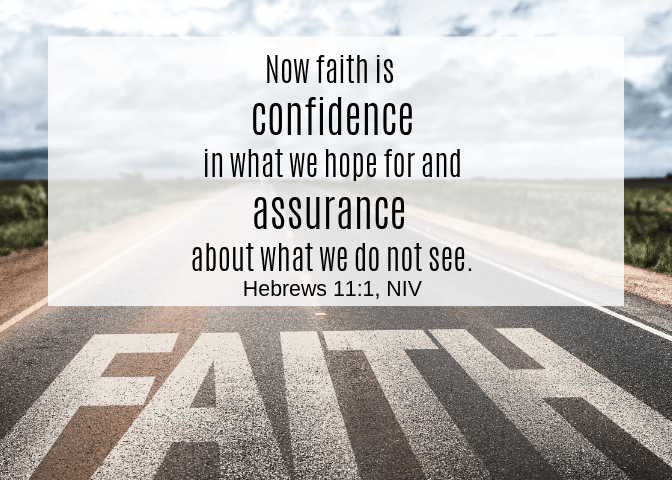
By faith, everything is made better. Faith is the certainty of things hoped for, a proof of things not seen that were promised or spoken of by God. By faith, the people of old gained approval by God.
Throughout scripture, we have examples of God’s people who lived by faith, fulfilling their role in the covenant that God made with them, because they believed that God was faithful to fulfil his promises. There were some promises that were fulfilled in their time, according to the specific covenant God made with them (e.g., the Abrahamic covenant, the creation covenant, covenants of blessings, or children, or land, etc..), but all the faithful examples listed in this chapter died in faith, without receiving the promises of the New Covenant, but having seen and welcomed them from a distance.
They were people who knew that this world (the current age) is not their home. They knew they were strangers, looking for a better home, a heavenly one (that will come down to earth), whose maker was God.
By faith, Abraham offered up Isaac. He knew his God was faithful to his promise that through Isaac, the promised seed (Jesus) would be born. That can’t happen if his son is dead. So Abraham had faith that God was able to raise people from the dead.
By faith, Moses chose to suffer with his people, rather than to indulge in the temporary pleasures of sin that came with the territory of being a grandson to a rich Pharoah. He considered the shame of Messiah greater riches than the treasures of Egypt, because he was looking to the reward.
There are so many examples of faithful people of God mentioned in this chapter. If you’re lacking in faith, read about them, you won’t be disappointed! The point in reminding the Hebrew readers of this I believe, was to teach them, or to remind them, that the people of old were faithful to the end of their lives, to a God they believed was faithful in keeping his promises—even the ones they had not yet received prior to dying, and thus became pleasing to God. They were chosen because of their faith, enduring until their end.
Yet, God wasn’t willing to establish his kingdom with them in their time, because he wanted them to be with the Hebrews in this letter. By extension, he wanted them to be with us. He didn’t want them without also having you! That’s the God you chose to serve!
The promise of a better hope, the one obtained now through the New Covenant, spoken of in the law and the prophets of old, is for those pleasing to God – the faithful; the chosen. It’s for those who have gained approval through their faith (their obedience to whatever covenant God made with them because they believed he was faithful), who are made perfect with those of us who chose to enter the New Covenant with God through Jesus. The better promises are all through Jesus, and they’re available for everyone who seeks God through him, choosing God back through their faith.
“6 And without faith it is impossible to please Him, for he who comes to God must believe that He is (exists) and that He is a rewarder of those who seek Him.
-Juliet Taylor
Reflection Questions
1. It is common for people to say, “Have faith,” but I don’t think people should have faith in something that God never promised them. The examples in this chapter seem to reflect that. What do you think?
2. Whose faith recorded in this chapter do you admire most, and why?
3. We are to have faith in promises not yet received in this age too. How will you keep your faith until the end?
I used to think that Hebrews chapter 10 was the scariest chapter in the whole Bible because it contains the scariest verses—about those willful sins that are committed. I missed the whole point of this beautiful chapter.
I missed that Jesus doesn’t have to make a sacrifice for us yearly like the priests of old did to cleanse the flesh of sin committed that year. His one-time sacrifice takes away sins for all time, cleansing the flesh and the conscience. That’s perfection that the old law could never do. Through Jesus, God’s children no longer needed that reminder that we’re slaves to sin, because we’re not anymore. We are free in Christ. We are perfect, but we have to choose to remain perfect by doing God’s will.
I missed that where there is forgiveness of sin (because of Jesus’s obedience to always do God’s will), an offering for sin is no longer required to enter the holy place of God. His role as high priest of the New Covenant is different than that of the Levitical high priests. He’s always available to save if you draw near to him; to intercede on our behalf when we sin, as opposed to sacrificing himself by dying again and again and again when we sin.
An animal sacrifice for sin is no longer required under the New Covenant law, but drawing near to Christ is required when dealing with my sin. I still need to bring a sacrifice, but it’s of repentance; a contrite heart. And I don’t have to wait outside a tent or a veil, I go right into the heavenly tabernacle where Jesus is and ask for forgiveness in his name. God will be faithful to me when I draw near to him through his son in this way. This is required of me if I entered the New Covenant with God through Jesus. I did, when I was baptized into the name of Jesus. Praise God.
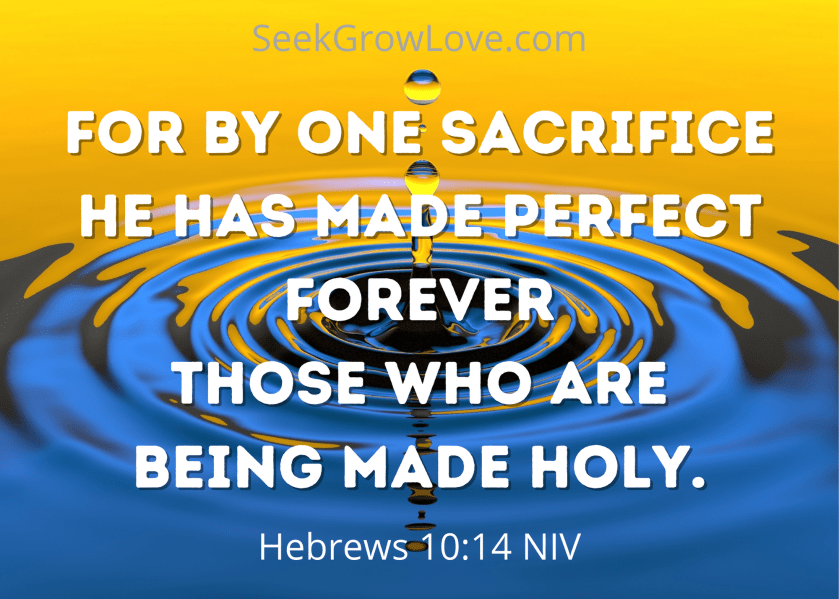
The word says that by one offering (Jesus’s literal sinless body), he perfected for all time those who are sanctified. Those who are sanctified are those who have put the laws of God in their minds and have written them on their hearts because they chose to do God’s will out of love for God and others (just like Jesus did).
Now for those scary verses:
26 For if we go on sinning willfully after receiving the knowledge of the truth, there no longer remains a sacrifice for sins, 27 but a terrifying expectation of judgment and the fury of a fire which will consume the adversaries (read through verse 31 if you want to see how scary this section is).
There no longer remains a sacrifice for sins, but what does remain is something better – drawing near to Christ through repentance when we sin. I think this is true for most sins, even willful sins IF we desire to repent of them because we know how much better God’s ways are for us and desire to get back on track.
If we don’t have that desire and don’t enter the holy place through Jesus’s torn body veil, what should we expect? If we don’t, we should expect just judgment. If we don’t, it means we are choosing to willfully bind ourselves to sin again and remain in it. It means we aren’t looking for forgiveness, because we think it was better when in slavery to sin than being freed from it (and slavesto serving God by doing his will that is good for us).
This reminds me of the children of Israel in Massah and Meribah, complaining in the wilderness, wishing they were back in Egypt. They were slaves there, and perhaps they’d die, but at least they weren’t going to die of hunger or of thirst like they would in the wilderness serving God, so they grumbled. They tested Yahweh God, as they had no faith that God would provide for them as he promised (“Is the LORD among us or not?”). This willful sin, this lack of faith that God would be faithful to do what he said he’d do for them in a time when they were enduring trials and hardship, eventually got them destroyed. The reality was that though God was faithful to uphold his end of the covenant he made with them, they weren’t willing to uphold theirs because they didn’t trust him.
The testing of God’s faith is what I believe the scary section in Chapter 10 is referencing. If we sin because we don’t believe God is faithful to do all he promised for us, especially when times get tough, and we think it was better living the old way when slaves to sin as opposed to being slaves to God, then our entrance into the Kingdom of God is in jeopardy. It’s like saying to ourselves, “We’re slaves to sin, but at least we won’t die hungry or thirsty living in sin.”
Unfortunately, choosing to live like Christ now does come with pain and suffering, because of the consequences of the past and present sins of all people. Not everyone chooses to do what God says is good for us, so our world becomes more and more corrupt. So do our bodies. It’s hard to live for Christ in a world like that. There’s also so much confusion about what’s right and wrong, even among his followers, and so we get hurt. And of course, there is Satan, walking around like a roaring lion, trying to get us off track.
The Hebrews were reminded of their former sufferings for Christ and commended for enduring it with joy because they once knew they had something better awaiting them. Though I’ve been through trials, I’ve never had to go through the trials that the Hebrews here had to go through for Christ. It says that they “32 …endured a great conflict of sufferings, 33 partly by being made a public spectacle through reproaches and tribulations, and partly by becoming sharers with those who were so treated. 34 For you showed sympathy to the prisoners and accepted joyfully the seizure of your property, knowing that you have for yourselves a better possession and a lasting one.” The Hebrews were being exhorted. The writer is pleading with them to behave how they once did, and to stop looking back at their old way of life.
If the people of God who went through this type of hardship needed an exhortation to get back on track, what of us? What of me?
Now that we’ve got the kick in the pants we needed to stop being babies, we can apply this information to do better with some application from the writer:
“19 Therefore, brethren, since we have confidence to enter the holy place by the blood of Jesus, 20 by a new and living way which He inaugurated for us through the veil, that is, His flesh, 21 and since we have a great priest over the house of God, 22 let us draw near with a sincere heart in full assurance of faith, having our hearts sprinkled clean from an evil conscience and our bodies washed with pure water. 23 Let us hold fast the confession of our hope without wavering, for He who promised is faithful; 24 and let us consider how to stimulate one another to love and good deeds, 25 not forsaking our own assembling together, as is the habit of some, but encouraging one another; and all the more as you see the day drawing near.”
-Juliet Taylor
Reflection Questions
1. Notice that we draw near to Jesus in the throne room of God, which is God’s throne room in heaven. We do this in spirit. The bible uses figurative language like this a lot. What other figurative language do you notice in this chapter?
2. How can you encourage one another in love and good deeds through their hardships?
3. How do you live by faith as it says in Hebrews 10:38 (quoted from the old; applied to us in the new)?
No one talks about the sins committed by God’s people in ignorance. But it’s these sins that the Levitical high priest offers a sacrifice for yearly. If that’s the case, then what of the sins of the people that are committed willfully? I think we’ll find out about them in Hebrews Chapter 10.
The more I read, the more I have to change my mind about what God’s will for me actually is. There’s so much confusion that’s been passed on from generation to generation that gets stuck in our minds and in our hearts. Confusion is not good, because if we continue in it, someone’s going to get hurt. This studying of the book of Hebrews has helped me tremendously in that regard.
The Old Covenant had a high priest who sacrificed for sins with regulations that had to do with food, drink, and regulations for the body UNTIL the reformation of the covenant. An example of this is in washing hands and feet prior to entering the tabernacle or making a sacrifice. God told them that if they didn’t do this, they’d die. The priest would do this to make sure they didn’t die (literally), for the purpose of cleansing the flesh (the body) of the sin that was committed that year. But it could not cleanse the conscience. It, along with the various gifts and sacrifices offered amongst the people of God under the Old Covenant, could never make the worshiper perfect in conscience. Why?
The Holy Spirit (God) had not yet revealed the way into the holy place while the outer tabernacle was standing, separating the people from God. Nothing offered could compel the person to desire to flee dead works and serve the living God out of self-sacrificial love (God’s will for us all) because Jesus hadn’t demonstrated this kind of love yet. Jesus’s love is what changes the heart, soul, mind—the conscience, if you will. It causes us to desire to repent when we miss the mark and strive to do God’s will out of love.
The New Covenant, with its better high priest, better promises, and better tabernacle, will help the chosen people of God live well for his kingdom. They (we) can start living that way now because the Kingdom of God is at hand. Our great high priest Jesus is working for us (in us), from heaven for our own good, and for the good of others to do God’s will out of love. We’ll desire this with a clean conscience because of what our savior did for us.
The Levitical high priest was only able to make a sacrifice on behalf of his own and the people’s sin once a year. He was only able to cleanse sin once a year. But Jesus’s one time love sacrifice makes it available to cleanse our conscience of sin at any time, as he is available to save forever those who draw near to God through him, since he always lives to make intercession.
It makes sense that if Jesus is always available to make intercession for us that we can become entangled in sin again that kills. When that is the case, we can draw near to God through our high priest and repent because he’s always available to save. I think this is what the writer to the Hebrews is trying to get across. They needed to draw near to God through their new, better high priest with repentance. And they can do that without dying because Jesus already did that.
The new, better high priest has the job role of cleansing our conscience from dead works to serving the living God once we enter the holy place of God. We are the people who desire that because of what Jesus did for us. He demonstrated for us that love conquers sin and sets people free (to serve God). We must choose to follow in Jesus’s footsteps to remain cleansed, repenting when we miss the mark.
God’s desire for his people isn’t new. This has always been God’s will for his people. That’s why he brought his firstborn son Israel out of slavery to Egypt, to serve him, with a clean conscience (the heart) so that it would be well with them. But most of them chose not to.
How the people would be reconciled back to God is new. It was revealed by the Holy Spirit after the veil was torn. Jesus’s body was torn so that we could be in God’s presence to offer sacrifices, just like the Levitical Priests could, but without a chance of dying when we enter (Jesus already did that). The sacrifices we bring in are repentance, praise, thanksgiving, humility, brokenness, contriteness, etc.
People can now have hope of resurrection from the dead to everlasting life by entering the New Covenant, made available through Jesus’s love sacrifice. We are called to do the same, Jesus showed us how. Jesus was able to do this through the eternal spirit working in him. We can do it through Jesus’s spirit working in us.
Jesus tells us what is required of us. It’s the better requirement than the Old Covenant stipulations because it can make us perfect in conscience. Our requirement is to love, as Jesus loved. How has he loved? Jesus Christ laid down his life for us. And we ought to lay our lives down for our brothers and sisters. Hopefully not literally, but we will be willing to if it comes to that. We can do this through the spirit of Jesus working in us. We can desire this because of Jesus’s demonstration of love. If we don’t, Jesus is always able to save when we draw near to him (repent) with our better sacrifices.
-Juliet Taylor
Reflection Questions
1. Without the shedding of blood, there is no forgiveness. Those under the Old Covenant were forgiven for their sins through the blood of animal sacrifice that year, but it didn’t save them (they had no hope of resurrection). With the shedding of Jesus’s blood, there is forgiveness of sins that saves us. What do you think is the difference between forgiveness under the old law and forgiveness under the new law?
2. Hebrews 9:26 says, “Otherwise, He would have needed to suffer often since the foundation of the world; but now once at the consummation of the ages He has been manifested to put away sin by the sacrifice of Himself.” This does not mean that people don’t sin anymore. We can clearly see that that’s not the case. What do you think it means to “put away sin”?
3. Christ loved us by dying for us. How do you think God wants you to demonstrate his love to someone today who is in need of some love from you?
Jesus is a better high priest because the Lord set it up, not man. He was chosen. The Lord (Yahweh) chose Jesus to be high priest of his New Covenant due to his loving obedience, as opposed to being appointed by men after their predecessor in lineage died (like in the Levitical priesthood). Jesus’s place as high priest is in heaven itself, not on earth as it was under the law of Moses, where there could only be a mere copy of the sanctuary.
Jesus wasn’t in the priestly line of Levi, he was in the line of Judah – whose line was chosen to be the king-ly line (after Saul (Benjamin’s line) screwed up and another (David) was found who chose God). It was after this chosen man (David) set his heart on choosing God that God swore his oath regarding the new priesthood that was to come in Psalm 110:4. God was going to make his new forever priest one who chose him, after the order of Melchizedek (chosen to be both king and priest; no lineage that made him so). And through him (the new high priest Jesus), he made a New Covenant with people who chose him from their hearts and had God’s laws in their minds.
The Old Covenant promised Israel that they would be God’s people – a kingdom of priests and a holy nation among all the inhabitants of the earth (Exodus 19:6). To serve God in this way, they had to know God’s will in how to live rightly, or at least better than how the rest of the world had been living (and hurting each other). God gave them laws to help them become holy, for their own good and the good of the world. But not all of them were faithful to uphold their end of the deal.
Although God chose them, some didn’t choose God back based on their actions. The law was not in their hearts. If it was, they would have trained themselves to distinguish between good and evil (to stop the evil and do good). They didn’t, hence, the need for a new covenant made with chosen people, through a perfect high priest.
The New Covenant through Jesus is written on the minds and hearts of God’s chosen people. To be chosen means that God chooses us because we choose God. We choose God by obeying him from the heart because we know that he loves us and sets up his commandments for our good, and for the good of the world through us. He’s a good father who establishes our ways for us so that it will be well with not only us, but those whom we affect by following God. We are the people who want that. We want it so badly, that we train for it.
I understand that God set up the Old Covenant for the people’s own good – because they needed it to live well in their time – to be the people that God wanted them to be for their own good, to affect the lives of those around them positively as God’s holy people. But they didn’t want it (based on their behavior). God says of them, “For they did not continue in My covenant, And I did not care for them, says the Lord.” We know that God cared for his firstborn son Israel. He showed them mercy time and time again. But eventually, their continuously evil actions caused God to cease from his pleading with them to be faithful – until the better man Jesus inaugurated the better covenant based on his faithfulness.
In this better covenant, all will know God, because they are people who choose to know him. In this better covenant, God will be merciful to them, because they will choose to repent. In this better covenant, God will not remember their sins, because they will choose to ask for forgiveness and do better, in the name of their high priest Jesus, because God’s laws are in their minds and written on their hearts (because they chose to put God’s laws in their minds, and on their hearts for their own good, and for the good of those around them). Don’t let Calvin persuade you otherwise.
There is usually a good reason people are chosen. They aren’t generally going to be randomly selected when it comes to matters of importance. And if they were chosen, they generally have to maintain the qualities that got them chosen in the first place to remain chosen. Throughout our bible history, some did, some didn’t. When God chooses someone, it almost always has to do with that someone choosing him. If God is choosing you, I pray you choose him back.
-Juliet Taylor
Reflection Questions:
1. Do you think God cared for the Children of Israel, even though he’s quoted from an Old Testament statement that he did not (Hebrews 8:9)?
2. Do you think God puts his laws into our minds and writes them on our hearts under the New Covenant (which would take away our autonomy) or do you think action on our part is involved?
3. Hebrews 9:13 says, “When He said, “A new covenant,” He has made the first obsolete. But whatever is becoming obsolete and growing old is ready to disappear. What does obsolete mean here?




 Seek Grow Love