The struggle of the Corinthian church continues in today’s reading: 1 Corinthians 9-11. In these chapters Paul addresses issues the church was having regarding worship and communion, while continuing to argue his point about permissible food. What I love most about this section is we really get to see Paul’s heart.
Paul had a love for people. Having experienced the amazing transformative love of Christ himself, he eagerly sought to share this with others. All people. Jew, Greek, male or female. Paul was willing to eat, drink, and share the Gospel with anyone.
Paul had a love for his mission. He considered it an “opportunity” to preach the Gospel (9:18 NLT). He was strong in his convictions and took it seriously. He was purposeful (9:26).
Today, we live very different lives from Paul. We live in a very different world than the one Paul lived. Yet the things that mattered most to Paul need to be what matters most to us. Paul’s work is not yet finished. We, as the church, need to continue what he and the other Apostles started. Love each other. Love others. Most importantly, love God. In our busy world today, may we never lose sight of this. May we see each day as an opportunity to be a light in the darkness.
Reflection Questions
What opportunities to share the Gospel has God given to you? What have you done with those opportunities?
How do you show your love for God? How do you show your love for people? Is there a group of people that you have not tried loving yet? How could you love more and more?
Rather than just complaining about the darkness, or fearing the darkness, or condemning the darkness, how can we be a light in the darkness?
I really enjoyed today’s reading. Paul had some zingers that actually got me laughing – my favorite being 8:2. In our reading today, we learn this letter is a response to one from the Corinthians (7:1). After a lengthy introduction in chapters 1-4, Paul gets right to addressing some specific concerns regarding the Corinthian church. There is a lot that can be discussed here, but the key seemed to be Paul encouraging the Corinthian church to remove distractions and get back to the business of spreading the Gospel.
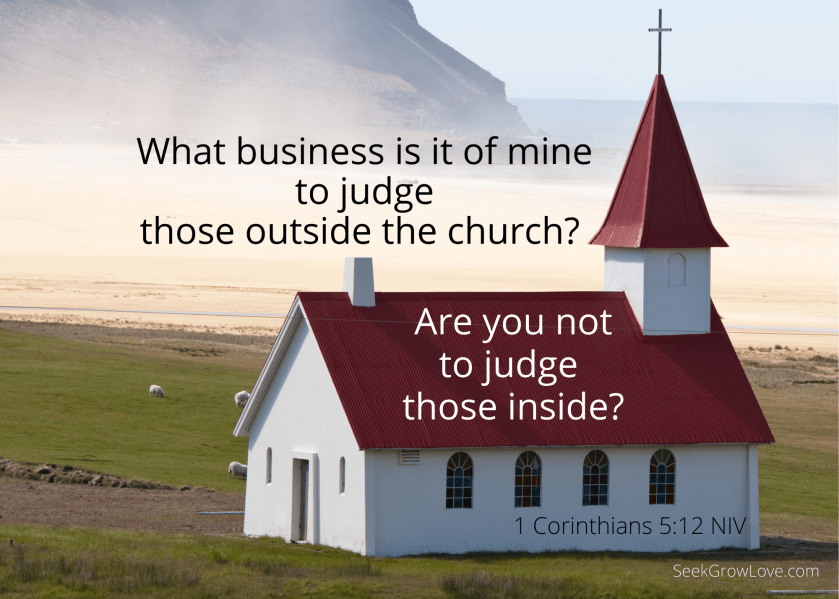
Earlier this week I wrote about how the early church was moving in the days of the Apostles. In today’s reading, we see a church that has come to a standstill. It seems the Cornintian church lost focus on spreading the Gospel and what it meant to be the body of Christ. Paul mentions when he told the church to stay away from people “who indulge in sexual sin, or are greedy, or cheat people, or worship idols” he was referring specifically to believers who partake in these actions (5:10 NLT). Paul plainly puts that to stay away from all such people, you’d have to leave this earth – that was another one of those zingers I found humorous. The problem Paul has with the Corinthians is they are allowing a man living in sexual sin with this step mother to be an active member of their church. It’s a distraction. It’s giving the church a bad name, as Paul writes even pagans don’t tolerate such behavior. Paul is NOT telling the church to avoid sinners, but he is telling us to get the sin out of the church. There is a difference. Allowing one who is actively participating in sin with no signs of repentance within the church causes a distraction. Discord can break out amongst the people in the church over the issue. I believe Paul is also concerned with the Corinthians giving the church a bad name, in turn hindering the spread of “sincerity and truth” (5:8 NLT). He continues this idea in chapter 6, regarding the Corinthians use of the public courts to settle disputes. He doesn’t like that this is being done in front of non-believers. Why? Because, it is distracting from the Gospel message. It’s the same way with the issues of marriage and food discussed in chapters 7 and 8.
We have to remember the church was on a mission. Our New Testament stories and scripture come from what the early church did. Paul understood the importance of the movement and the urgency to share the Gospel. It seemed this specific Corinthian church had forgotten. Paul is urging the Corinthians to remove distractions and get back to the business of the church. I believe that is the biggest take away from today’s scripture. It’s not about whether we should be married or not, whether we eat this or that. It’s not even about what people we should avoid or allow in the church. It’s about refocusing the efforts of the church to do the work of Christ. Jesus tells us the two most important commandments are to love God and secondly love others. That is the movement to which Paul wants the Corinthians to return. It must be our focus as well. Paul sums it up pretty nicely in his opening statement in chapter 8, “But while knowledge makes us feel important, it is love that strengthens the church” (verse 1 NLT).
Reflection Questions
What distractions have gotten in the way of you intentionally spreading the Gospel? How can you minimize them (or eliminate them or use them to your advantage – depending on what your distractions are) so that you focus more on how to best love God and love others which must include spreading the good news?
What should our response be to sin in the church? What should our response be to sin outside of the church? Why the difference? What happens when we get it mixed up and treat outside sin as we are supposed to treat inside sin? What happens when we get it mixed up and treat inside sin as we are supposed to treat outside sin?
After reading the whole Bible passage today, re-read 1 Corinthians 8:2. What is Paul saying in this verse? Why is he saying it? What can you learn from it? And how could you put it into practice?
What do you think God wants you personally to learn and put into practice today from this letter from Paul to the church in Corinth?
After spending the last two days discussing unity, today’s reading from 2 Thessalonians may seem counterintuitive as there appear to be a lot of divisive factors. In Paul’s explanation of the second coming there is clear division between the saved believers and evil doers. What I find interesting is who is doing the dividing.
Paul makes it clear God will take care of Evil. There is a plan. While we may not have all the details of how said plan will work out, verses like 2:8 make it pretty obvious a plan exists. Today’s text seems to be saying it is God’s job to judge and take care of evil; it is our job to love and teach.
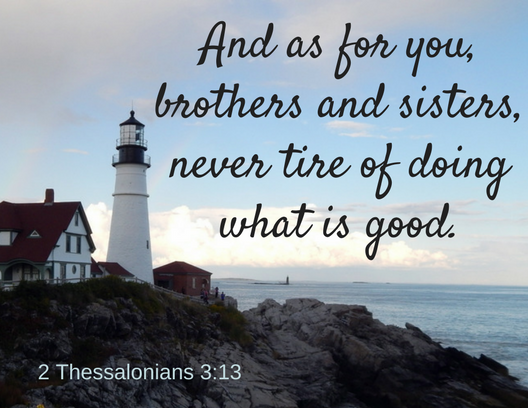
Throughout both letters to the Thessalonians, Paul commends their ability to love one another and remain faithful. In this letter, Paul specifically instructs them to “never tire of doing good” (3:13). The Greek word used here is kalopiountes meaning “to do well, act honorably, do what is right. From Kalos and poieo; to do well, ie Live virtuously” (Strong’s 2569). We know from Paul’s other writings he regards love as the greatest virtue (1 Corinthians 13:13). Basically, after discussing God’s plan to vanquish evil, Paul instructs the Thessalonians to show love. I think there is significance in the order he presents these topics. Our response to God’s judgment upon the earth is to love.
Yet, it’s also clear Paul does not equate love with acceptance. Again, Paul warns against idleness. Here is where I believe the call to teach comes. While we are not called to judge, we’re also not called to hold the truth to ourselves. In fact, Paul even instructs the Thessalonians to “warn” the ones who “refuse to obey what we say in this letter” (3:14 NLT). As Paul did with the Athens people, we need to find a way to express the Gospel Truth to those with destructive ways of living. This takes faith. This takes action. This takes love.
Reflection Questions
What are your thoughts on the statement: “Our response to God’s judgment upon the earth is to love”?
What does a loving warning look and sound like? Have you ever received one? Have you ever given one? Is there a person to whom God is asking you to give a loving warning? Pray about it.
When have you been guilty of holding the truth to yourself? How could you respond next time?
How will you show your faith, action and love this week?
Prior to the New Covenant, the Jews were like slaves to the law, in the sense that children are slaves to their parents’ rules until the time has come to set them free to do what they’ve learned is right without their parents’ involvement. This is what Paul is trying to reiterate regarding the Law of Moses and the Law of Christ/law of liberty to the Galatians.
When Jesus ratified a new covenant with them (and us), the Jews were set free from the Law of Moses in the same manner that a child is set free from her parents’ rules/laws once she becomes an adult. Because Jesus came, the Jews are now free to walk by faith like Abraham did, without a law to teach him what to do, but with God’s wisdom about what to do, having already learned what is good from their “childhood.”
To make this point clearer, think of the things you still do as an adult because your parents taught you well when you were a child, like holding the door for the person behind you, or waiting patiently for your turn while in line, etc. They’re not things that you’re doing because you’re still under your parents’ rules and will receive consequences from them if you don’t (or do). They’re things you’re doing because they’re ingrained in you to do from their discipline of you, and because you’ve learned that they are good practices to help you live well (to keep yourself and others from harm and to do good to others).
If you engage in the good things your parents taught you once a “free to do as you please” adult, you will probably do well in life. If not, you will understand that you’re not really free, you’re just not under your parents’ authority anymore. They’re not going to be the ones providing you with consequences for your actions because you’re not under their yoke. You’re under a free society’s yoke – one that obviously still expects you to do what’s right so that you won’t harm yourself or others.
And there will be some behaviors that you’re no longer expected to engage in in your free society, such as not talking to strangers. Though your parents may have taught you to heed this rule when you were under their yoke to keep you from harm, it no longer applies in your free society. The opposite is actually expected for love and respect’s sake.
If they (and we) now identify in Christ, they are free from the Laws of Moses (free from their “parent” Moses’s rules), its consequences, and its authority. They are adults, free to serve God without specific laws about how they must live, beyond what their new authority Jesus says to do, which is to love as Jesus loved, giving the world the royal treatment (love your neighbor as yourself).
What’s ingrained in a Christ follower is the Holy Spirit, not the laws from the Law of Moses. It is the Spirit that writes the law (of Christ) on our heart, urging us to do what pleases God. If we (both Jew and Gentile) listen to the urging of the Spirit, we are walking by the Spirit and pleasing God. If not, we’re walking by the flesh and pleasing ourselves (sinning/choosing our own will).
We will reap what our behavior sows in the end, either to the flesh, which leads to death, or to the Spirit, which leads to life. Jesus, our authority under the New Covenant, will be our judge.
So, how have you been doing in loving God and loving people?
If you don’t know how to love like Jesus, ask God for his wisdom about how to love your neighbor (and God), or what actions you should take to love them. His desire is to give you his wisdom about what to do when you ask.
First Corinthians 1:30 says that Jesus has become wisdom for us, so look to him for wisdom; look at his words to help you to know what God’s will is. Look at the people that Jesus entrusted God’s word with, like Paul. At the end of almost all of his letters, he gives those he’s writing to some practical application in how to love like Jesus. James gave us a lot too!
The more we follow the urging of the spirit to do God’s will, the more we become like Christ and will do God’s will. Becoming this type of person takes time, molding, and shaping. There will be times when we miss the mark and wander off the path. Isn’t it a blessing though to be under the law of liberty, free to make mistakes without the consequences from the Law of Moses when we do? What a burden that would be! Thank God that we won’t receive the consequences from the Law of Moses when we miss the mark on our race.
Under the New Covenant, God urges us to restore one who’s wandered off, gently, as consequence. We must help each other stay on the path of righteousness and bear each other’s burdens, like Paul is with the Galatians in his letter. This is how you fulfill the law of Christ/the law of liberty.
So, should we follow the Law of Moses to be sure we are living well? No. We should read and understand all scripture, as it is all God breathed, “profitable for teaching, reproof, correction, and training in righteousness; so that the man of God may be adequate” (2 Tim. 3:16-17), but we should apply what we read and do in light of the New Covenant we are under with our new high priest and mediator Jesus. It is a better way to live, with a lighter yoke. Jesus teaches us how to do this (seek God’s wisdom through him).
For example, before Jesus was crucified, he shared in the Passover meal with his disciples. The Passover was a meal shared to remember what Yahweh God had done for the Jews, leading them out of slavery from the Egyptians, to serving him. But at the last supper Jesus has with them, he tells them to remember something new when they have Passover. He says to remember him, remembering what he did for them in shedding his blood and breaking his body.
Gentiles don’t celebrate Passover, because it doesn’t apply to them. But many Christians do share a meal together once a year that they call communion, remembering Jesus’s shed blood and his broken body for us. God didn’t give Gentiles a law telling them they must celebrate Communion under the New Covenant, but his son told his disciples to remember him. We must remember what Christ did for us too.
Communion is a good practice to help us remember, but it is not a law we must abide by to be in Christ (identified as a Christ follower). What we must abide by is what Jesus said, which is to remember what he did for us.
It is easy to forget what Jesus did for us when we don’t engage in practices that help us remember. However, if a Gentile chooses not to remember Jesus’s blood and body every year, he is not condemned to not enter the kingdom of God. But each year he forgets about Jesus’s sacrifice, the more off track he may get, which can put him in jeopardy of not entering the kingdom of God at the end of his race.
And Jewish Christians no longer need to celebrate Passover/Seder. But it is okay if they do, so long as they’re not doing it to separate themselves from Gentiles as righteous. But when they do, it would be good practice to primarily remember what Jesus did for them, which is much better than what Moses did for them. If they don’t, they are not condemned to not enter the kingdom of God in the end, but the more they forget about Jesus’s sacrifice for them, the more off track they may get, which can put them in jeopardy of not entering the kingdom at the end of their race.
The Galatians (and we) should understand that teaching anyone, even a Jew, to follow the Law of Moses for the purpose of being identified as righteous, is wrong. It is a false gospel. Doing what Christ says to do is the true gospel, and it identifies you as a child of God in Christ. Faith in Jesus, with the faith of Abraham/of Jesus, identifies you as a true child of God.
Paul emphasizes his point with an analogy of two women from the Old Testament. Hagar was a slave, Sarah was free. The enslaved woman will have no part of the inheritance of the free woman, so the Galatians need to get this right. Lives are at stake.
When Paul first preached the Gospel to the Galatians, they were fulfilling the Law of Christ because of their great love for Paul, not only listening to him and receiving his teachings, but also taking great care of him while he was sick. They treated him like he was a messenger from God, like Jesus himself. Paul said if it were possible, they would have torn out their eyes to give them to Paul if he needed them. That is loving like Jesus. It’s sacrificial love. It is giving their neighbor Paul the royal treatment.
There is no law about what exactly we must do to love like Jesus the way the Galatians did at first. But we know that to love like Jesus when we see a brother sick and in need means doing something to help that brother. Think on the wisdom we received from James to understand (James 2:15-17). Your faith is worthless if you don’t give a brother what he needs, and it makes you a sinner.
Again, 1 John 3:16 tells us what loving like Jesus is, and that we should follow suit. This is how we know what love is, Jesus the Christ laid down his life for us, and we ought to lay our lives down for our brothers and sisters. What this verse is saying is that love is sacrifice. We are to sacrifice our lives to love someone else, in all of our doings under our new authority.
For Jesus, it looked like living a sinless life and dying on the cross to save us. For the Galatians when they first met Paul, it was to take care of him in his ill state. Paul is now loving them by urging them to remember their first love (acts of love towards him when he had a need) in the rest of their doings.
There are many things that we can do to love like Jesus. We are going to need to seek God’s wisdom to know the specifics and be led by the spirit in our various circumstances, but we can all heed this bit of wisdom at the end of Paul’s letter to the Galatians to remain on the path of righteousness under the New Covenant through Christ:
Instead of allowing someone to enslave you with their false teaching, a good practice is to serve one another through love, like the Galatians did at Paul’s first preaching. This is the freedom they have in Christ, to do good until Paul without a law that tells them so.
We are called to freedom, but we should not turn our freedom into an opportunity to sin just because there’s no law under the New Covenant. Remember, there’s wisdom! The whole Law (of Moses) is fulfilled in one word, the statement, “You shall love your neighbor as yourself.” Under the new Covenant, this is also wisdom from God. But if you bite and devour one another, you may just be consumed by one another. You won’t be entering the kingdom of God if you’re doing this because you’re not loving your brother like Jesus taught. Instead, walk by the Spirit so that you won’t carry out the desires of the flesh.
The desires of the flesh (not God’s will) are whatever is opposed to the desires of the Spirit of God (God’s will). The spirit he put inside you urges you to do his will, while the flesh urges you to do your own will, or what you think is good for you to do.
If you want to know if you’re walking by the spirit or walking by the flesh, Galatians 5:19-21 gives you a pretty clear list of things that people do when they’re walking by the flesh. These are things that are going to harm yourself or others and if practiced (meaning ongoing without repentance), they’re going to make you forfeit your entrance into the kingdom of God.
Instead, walk by the Spirit’s urging about what you should do, and the fruit of the Spirit will follow. They are things that are produced by people who love like Jesus. If you want to know if you’re a disciple of Jesus, they’re great identifiers: love, joy, peace, patience, kindness, goodness, faithfulness, gentleness, and self-control (Gal. 5:22-23). If these characteristics are yours, you’re not under a law (you can call it the law of liberty if you really want to be under a law). You’re in Jesus’s free society (free to love like Jesus based on the needs of those you’re serving, based on God’s wisdom about it, not by a law outlining specifics you must do to be righteous).
If you are a Christian, you crucified the flesh with its passions and desires when you entered the New Covenant. I think this means that since becoming a Christian, you have decided to live by the urging of the Spirit inside you, as opposed to your former ways following the desires of your flesh, just like Paul proclaimed of himself. But if one of you practices one of those things from the flesh list, then your brother who is spiritual should restore you gently. Be sure the restorer is spiritual though, being sure the one restoring the brother sinning doesn’t have a log in his own eye to clean out first, lest he also be tempted. And bear one another’s burdens. I love how Paul basically reiterated how to fulfill the law of Christ in this situation using the same wisdom that Jesus used when teaching his disciples how to live from the from the Sermon on the Mount (Matthew 5-7).
Some more wisdom to stay on track to the Kingdom of God include sharing good things with the one who teaches you the word. If the one teaching you God’s word took time away from doing other things to support their family, then in return you should support your teacher.
Remember, God is not mocked. Whatever a person sows, he will also reap, whether to the flesh (ongoing sin/your own will) which leads to destruction or to the Spirit (God’s will), which leads to eternal life. The one preaching the false gospel will reap what he sows.
Don’t grow weary in doing good. This can be a hard one with all of life’s ups and downs. I remember when I knew I was growing weary, so I cried out to God to help me keep going. He simply reiterated it back to me through the prophetic word of a dear sister in Christ, and then told me what to prioritize.
In due time, if we don’t become weary, we will reap good things. While we have opportunity, let’s do good to all people, especially those who are of the household of the faith. Amen!
I find it hilarious that Paul says, “See what large letters I have written to you with my own hand!” It sounds like he’s saying that he’s using Caps Lock to shout out to the Galatians this point: All who want to make a good showing in the flesh try to compel you to be circumcised, so that they will not be persecuted for the cross of Christ. In other words, they’re not trying to teach you their false gospel to help you, they’re teaching it to try to help themselves.
Wouldn’t we all like to be able to say this after trying to reprove a fellow Christian, “I boast in the cross of our Lord Jesus Christ, through which the world has been crucified to me and I to the world. Circumcision and uncircumcision is nothing. What’s something is a new creation in Christ.” If you think and behave in a way knowing this, then peace and mercy to you who are now the Israel of God.
Reflection Questions
1. Have you witnessed the cry, “Abba! Father!” since receiving the Spirit of God’s son into your heart?
2. How did the son who was born according to the flesh persecute the one who was born according to the Spirit (Gal. 5 29)?
3. Gal. 5:1 says, “It was for freedom that Christ set us free; therefore keep standing firm and do not be subject again to a yoke of slavery. What do you think “freedom” means in this verse? Freedom from what and to what? (I think it means a little more to a Jew than to a Gentile).
In Matthew 24, Jesus’ disciples ask him what the sign will be for his coming and the end of the age. The disciples are anticipating the age to come and the restoration of all things that we see Peter refer to in Acts 3:21. Jesus speaks about quite a few things that will occur prior to his return, but we’ll focus on verses 4-14.
First, there will be some who come claiming to be the Messiah. The Jewish historian Josephus notes that there were multiple individuals who fit this description. There were 4 in particular whom he records as leading messianic-like movements in the first century. While Josephus’ writings are open to debate and interpretation, they do seem to indicate that these individuals were doing what Jesus said they would. These individuals seem to have had political aspirations that prompted their messianic claims. Whether claims were specific to being the Messiah or not, they could be seen as trying to functionally fill into that role.
In politics, there are often claims about how a candidate is going to make things better. An individual can be looked at as a kind of savior by his supporters. In recent American political history, Barack Obama and Donald Trump have had supporters who perhaps viewed them as a type of “messiah”, someone who will “fix” everything that is broken. While they did not make bold messianic claims, it does, in my view, highlight how that type of following can take someone’s eye off the ball in terms of focusing on Jesus.
Jesus’ warning is that these “false Christs” will lead many astray. In the absence of the true Messiah, there will always be a danger of some individual or group making bold claims that can lead people astray by shifting focus and allegiance away from the Gospel and Jesus.
Second, Jesus speaks of wars and rumors of wars. This is not to say that the presence of war will hint at his immediate coming, but that this will be a reality of life in the time preceding his return. Governments will be looking to exert control and solidify their power. Peace will not be a constant, because the world will not recognize Jesus as king, and even the view that someone has the correct doctrines or ideas will lead to violence against those who are “wrong”. Jesus also mentions that there will be famines and earthquakes, and perhaps other natural disasters can be seen in line with these. These are not seen as culminating events, but rather Jesus describes them as the beginning of birth pangs. These are like early contractions in a pregnancy. There is still a ways to go, but they are a reminder of where things are headed.
Third, there will be turmoil for the faithful. There will be nations that oppose the gospel and will do what they can to root it out. Whether it be Rome trying to eliminate Christianity in the first century or the Chinese Communist Party opposing Christianity in the 21st century, Jesus highlights that this will be a normal occurrence as the end of the age draws nearer.
Fourth, there will be many who fall away from the Gospel. This may not mean that they abandon the moniker of “Christ” or “Christian”, but they will functionally not operate as such. Hate and betrayal are common occurrences among those who have fallen away. Perhaps due to power struggles and desire to be the most influential, or maybe even for self-preservation. This disunity will create opportunities for false teachers to infiltrate and influence those who want to follow Jesus, but this false teaching will lead many astray. The co-opting of Christianity as a political tool has been observed in history. State-sponsored churches exist in some countries, and believers with “heterodox” views are barred from legally teaching and proselytizing according to their understanding of scripture, such as a plain reading of scripture, free from longstanding tradition.
Fifth, all of these things will culminate in a sort of lawlessness. The fallout of this includes what Jesus describes as “the love of many growing cold”. In Revelation, Jesus calls out the church of Ephesus for not having the love that they had at first. Jesus recognizes that the two greatest commandments are to love God and to love people. If love goes cold, there ceases to be obedience to one of the greatest commandments. A lack of love for people, specifically the lost, will prevent a “believer” from staying the course on the mission to spread the gospel.
Jesus says that the one who endures to the end will be saved. This indicates that some will fall away from the saving gospel (see the parable of the Sower). Salvation is for the faithful (though not the perfect), and the faithful will stay the course and share the gospel with the nations. Jesus indicates that there will continue to be those who will remain faithful and push on to spread the gospel, and at some point after the gospel has been preached throughout all the world, he will return.
Reflection Questions:
1. Why do you think people fell prey to false Messiahs? What might a false Messiah look like today?
2. How can we fight against our love growing cold and allowing false teachers to infiltrate our churches? Does church discipline factor into this?
3. How can you do your part to make sure that the gospel is being preached? Do we sometimes look too much at the big picture and not the practical, small parts of ministry that we can participate in?
When you hear the term GOAT, what do you think of? A furry four-legged animal with horns that has been known to butt humans or “faint?” Or a term that has become familiar in the 21st century sports world—GOAT—Greatest of All Time.
When I was a school librarian a few years ago, I added four “GOAT” books to the library. They were all part of the “Sports Illustrated Kids: GOATS” series. The students could check out “Olympic GOATS” and read about gymnast Simone Biles or swimmer Michael Phelps; “Football GOATS” and read about Tom Brady and Allan Page; “Basketball GOATS” and study the skills of Michael Jordan and LeBron James; or “Baseball GOATS” and read about famous players Sandy Koufax and Ted Williams.
We can speculate about the greatest sports figures, or the greatest actors in Hollywood, or the greatest leaders in world history. But one cannot dispute the greatest commandment in the Bible.
“But when the Pharisees heard that Jesus had silenced the Sadducees, they gathered themselves together. One of them, a lawyer, asked Him a question, testing Him, ‘Teacher, which is the great commandment in the Law?’ And He said to him, ‘You shall love the Lord your God with all your heart, and with all your soul, and with all your mind. This is the great and foremost commandment. The second is like it, you shall love your neighbor as yourself. On these two commandments depend the whole Law and the Prophets.’” (Matt. 22:34-40)
We can see an expansion of Jesus’ words in our corresponding reading from Mark 12: 28-32 when Jesus says in verse 29, “Hear O Israel! The Lord our God is one Lord,” before his declaration of the two greatest commandments. In Mark 12:31b, Jesus says, “There is no other commandment greater than these.”
These two commandments are the “GOATS” of the Bible.
Jesus’ answer to the lawyer, who was trying to test him, was quoted directly from the Law. Deuteronomy 6:5 says, “And you shall love the Lord your God with all your heart and with all your soul and with all your strength” and Leviticus 19:18 says, “You shall love your neighbor as yourself.”
In our Matthew passage, verse 40, Jesus adds this statement. “On these two commandments depend the whole Law and the Prophets.”
What does Jesus mean by that?
The entirety of the Law and the prophecies found throughout Scripture, were given to humanity to encourage us to love and exalt our Creator and to love His creation, particularly mankind. This should be our ultimate purpose in life.
Jesus shared a similar directive in the Sermon on the Mount when he said, “In everything, therefore, treat people the same way you want them to treat you, for this is the Law and the Prophets.” (Matt. 7:12)
The Law regulated every facet of life in a Jewish family and Jewish hierarchy. The voice of God’s prophets had instructed and corrected His people. Yet the entirety of the Law and the Prophets meant essentially nothing if not established on these two simple commands, two greatest commands. Love God entirely. Love others as you love yourself.
“Beloved, let us love one another, for love is from God; and everyone who loves is born of God and knows God. Beloved, if God so loved us, we also ought to love one another. We love, because He first loved us.” (I John 4:7,11,19)
The GOATS of the world eventually change over time. New athletes break sports records, Hollywood stars replace revered ones, and new world leaders accomplish historic milestones.
But the GOATS of the Scripture have never changed, will never change into eternity.
“You shall love the Lord your God with all your heart, and with all your soul, and with all your mind. You shall love your neighbor as yourself.”
Reflection Questions
Who do you think are some GOATS in sports or movies?
How much of what you do and believe is based on these two commandments?
What can you change or improve in your life this week to better follow these commandments?
I was especially struck by several verses in today’s reading. In chapter 31 verse 18 we read,
“I have surely heard Ephraim’s moaning:
‘You disciplined me like an unruly calf,
and I have been disciplined.
Restore me, and I will return,
because you are the Lord my God.
God heard their moaning. I find great comfort in that the creator of the universe cares enough about us to hear our moaning. He also cares enough about us to discipline us for our own good. Hebrews 12:7-11,
7 It is for discipline that you have to endure. iGod is treating you as sons. For what son is there whom his father does not discipline? 8 If you are left without discipline, jin which all have participated, then you are illegitimate children and not sons. 9 Besides this, we have had earthly fathers who disciplined us and we respected them. Shall we not much more be subject to kthe Father of spirits land live? 10 For they disciplined us for a short time as it seemed best to them, but he disciplines us for our good, mthat we may share his holiness. 11 nFor the moment all discipline seems painful rather than pleasant, but later it yields othe peaceful fruit of righteousness to those who have been trained by it.
We all fall short of the glory of God and we will struggle many times to do what is right. When we recognize that we have strayed, we must repent and turn away from that sin. Jeremiah 31:19 gives a great example of what repentance looks like in action:
19
After I strayed,
I repented;
after I came to understand,
I beat my breast.
I was ashamed and humiliated
because I bore the disgrace of my youth.’
Verse 20 is perhaps the most poignant of all:
20
Is not Ephraim my dear son,
the child in whom I delight?
Though I often speak against him,
I still remember him.
Therefore my heart yearns for him;
I have great compassion for him,”
declares the Lord.
I don’t know about you, but my eyes fill with tears and I get goosebumps on my arms at the thought of God’s heart yearning for His people and Him having great compassion for us. Though he must discipline us at times, He does so out of His great love for us!
-Kristy Cisneros
Reflection Questions
How do you view God’s discipline? Is there a time(s) you feel God disciplined you? Why do you think He disciplines – in that case, and in general? Or – asked a different way – Does a Good God discipline? Explain.
What role does repentance play? What feelings come with repentance in Jeremiah 31:19?
What do you love about God’s love? How would you try to explain it to somehow completely new to the concept of a loving God (who disciplines)?
There’s no doubt that adultery is one of the most talked-about sins in the Bible. Even King David, a man after God’s own heart, fell into this sin. Earlier in Scripture, we see God destroy an entire city because of its sexual immorality. In the book of Hosea, God uses adultery as a metaphor for the unfaithfulness of Israel. Hosea doesn’t just speak God’s message, he lives it out, through his marriage and even the names of his children.
Right off the bat in Hosea 1:2, we see what God asks of him, “When Yahweh began to speak with Hosea, Yahweh said to Hosea, ‘Go, take for yourself a wife of prostitution and have children of prostitution; for the land commits great adultery, forsaking Yahweh.’” (REV) God’s people were a promiscuous bunch, chasing idols and worldly desires they believed would fulfill them.
Hosea and his wife Gomer have three children, each with a symbolic name. First is Jezreel, representing God’s judgment and the scattering of Israel. Then comes Lo-Ruhamah, meaning “no mercy,” because God was withdrawing his compassion. Finally, there’s Lo-Ammi, meaning “not my people,” a symbol of God’s rejection after Israel broke their covenant with Him.
Gomer, like Israel, is unfaithful. She cheated on Hosea and eventually fell into prostitution, chasing after other men. This would have been enough for most people to get a divorce over. But God had other plans for their relationship. Hosea doesn’t give up, rather he pursues her. When she’s at a point of desperation he buys her back – “So I bought her for myself for 15 pieces of silver and a homer and a half of barley.”(Hosea 3:2, REV)
God rejected Israel because they had turned from Him and started following other gods like Baal. I thought it was interesting how even small things like loving raisin cakes can symbolize where our hearts are drifting – “Yahweh said to me, ‘Go again, love a woman loved by another, and an adulteress, even as Yahweh loves the children of Israel, though they turn to other gods and love cakes of raisins.’” (Hosea 3:1 REV) It’s not about the cake, but rather what it represents. The misplaced love and devotion.
Despite everything, God promises restoration. He doesn’t stop loving His people and we can have security in knowing he will not stop.
“Afterward the children of Israel will return and seek Yahweh their God, and David their king, and will come with trembling to Yahweh and to his blessings in the last days.” (Hosea 3:5 REV)
Psalms 136:1-9(NKJV) Oh, give thanks to the LORD, for He is good! For His mercy endures forever. 2 Oh, give thanks to the God of gods! For His mercy endures forever. 3 Oh, give thanks to the Lord of lords! For His mercy endures forever: 4 To Him who alone does great wonders, For His mercy endures forever; 5 To Him who by wisdom made the heavens, For His mercy endures forever; 6 To Him who laid out the earth above the waters, For His mercy endures forever; 7 To Him who made great lights, For His mercy endures forever— 8 The sun to rule by day, For His mercy endures forever; 9 The moon and stars to rule by night, For His mercy endures forever.
(I quoted the above section in the NKJV version because of the familiarity of the phrase “His mercy endures forever” but encourage you to read it in a different version as the word “mercy” is translated many ways.)
The Hebrew word “hesed” is found about 250 times in the Old Testament. It is translated “love and faithfulness,” “unfailing love,” “faithful love,” “steadfast love,” and “loyal love,” depending on the Bible version used. It has a bigger concept than just God’s love or mercy. His love for His people is an central and essential part of God’s character. The core idea of this term communicates loyalty or faithfulness within our relationship. Hesed is closely intertwined with God’s covenant with His people Israel in the OT.
We see this in our section of reading from 2 Chronicles today where Solomon is dedicating the Temple. The Temple in the OT is the dwelling place of God, specifically at the holy of holies, in the ark of the covenant. God’s “hesed” is in the perfect performance of His commitments expressed by the tablets that God gave Moses on Mt Sinai.
2 Chronicles 6:7-11(NLT) Then Solomon said, “My father, David, wanted to build this Temple to honor the name of the LORD, the God of Israel. 8 But the LORD told him, ‘You wanted to build the Temple to honor my name. Your intention is good, 9 but you are not the one to do it. One of your own sons will build the Temple to honor me.’ 10 “And now the LORD has fulfilled the promise he made, for I have become king in my father’s place, and now I sit on the throne of Israel, just as the LORD promised. I have built this Temple to honor the name of the LORD, the God of Israel. 11 There I have placed the Ark, which contains the covenant that the LORD made with the people of Israel.”
After a dedication service in Chapter 6, in Chapter 7 we see where God approves and accepts the sacrifices made there by the people. He does this by sending fire down, which we see as God’s approval of the sacrifice. God’s fire and presence are put in this Temple building giving His presence to that place.
2 Chronicles 7:1-3(NLT) When Solomon finished praying, fire flashed down from heaven and burned up the burnt offerings and sacrifices, and the glorious presence of the LORD filled the Temple. 2 The priests could not enter the Temple of the LORD because the glorious presence of the LORD filled it. 3 When all the people of Israel saw the fire coming down and the glorious presence of the LORD filling the Temple, they fell face down on the ground and worshiped and praised the LORD, saying, “He is good! His faithful love endures forever!”
Think about the day of Pentecost at the start of the church that we are part of. God’s fire came down and rested on each of the apostles showing God’s approval and acceptance of the sacrifice of Christ. The holy spirit is given to those that follow Christ from that day. We are the Temple of God’s building, the church of the body of Christ. God’s enduring love is given to us with the same commitment and intensity as He has shown Israel in the OT. Our relationship with God is based on the covenantal sacrifice of the blood of Christ which allows us into the place and presence of Him.
Have a great day today with the mighty hesed of God watching over and keeping you in all you do!
-Tom Siderius
Reflection Questions
What verses of Psalm 136 really stand out to you? Are there any surprising verses? What do you notice about God’s character?
Where have you seen God’s hesed in Scripture? Where have you seen it in your lifetime? Are you confident it will endure forever?
Every chosen action is a result of a complex combination of a variety of motivations, but each one can be traced back to a source of love. Some form of love is at the base of every decision, as people prioritize what they love most. The recipient of love could be God, oneself, another person, a physical object, or even intangible concepts such as happiness or power. Loving God is a common commandment and suggested motivator throughout the Bible, but not every other object or concept is as desirable to love from a biblical perspective. Wisdom is needed to differentiate between what should be loved, and what shouldn’t be, which will ultimately have a great impact on what decisions are made and what actions are taken.
Proverbs is known for describing wisdom and contains numerous examples of valid sources of love and others that should be avoided. Wisdom itself is a great concept to love according to the Bible, as Proverbs 4:7 commands to “Get wisdom. Though it cost all you have, get understanding” (NIV). Wisdom is so valuable that it is worth sacrificing all else. In other words, the love for wisdom should be greater than the love of money, material resources, fame, power, or anything else. All those concepts and objects are discouraged as primary sources of love throughout Proverbs.
While there are many things not worthy of love, Proverbs and the rest of the Bible offer several suggestions to give one’s love to. Most notably, aside from God, are other people. The command to love others is present throughout the Bible, but it is even more meaningful and impactful than simply being nice to one another. Not only is some form of love at the root of all motivation, but the recipient of that love is commonly love itself. People love to be loved. God designed people to need to be loved, and Proverbs 19:22 claims that “what a person desires is unfailing love”. Many people are willing to sacrifice a lot to be loved. It is the greatest motivator and is often the force causing many actions and behaviors. While it is still beneficial to simply be kind to a neighbor or provide for the physical needs of others, genuinely loving others requires providing what is needed most—love. Building a strong and unselfish relationship on unfailing love increases the impact one can have in the lives of others. It makes it easier to spread God’s word and His Kingdom.
As with all things, it might require some sacrifices to love others effectively. However, that isn’t a problem if love for others is greater than the love of whatever is put aside. Sacrifices will always be made for what is loved the most. Therefore, carefully prioritize what is loved. Love God and love others to use the natural motivation to encourage godly choices, behaviors, and actions to have the greatest impact in the world.
-Josiah Railton
Reflection Questions
“Some form of love is at the base of every decision, as people prioritize what they love most.” – What do your decisions show that you love most?
What do you WANT to love most? What is getting more of your love now than it deserves?
What sacrifices have you already made for what you love most? What additional sacrifices might be ahead? What sacrifices have others made for you?









 Seek Grow Love