Holiness and Thanksgiving

Theme Week – Thanks: Romans 1

Old Testament: Ezekiel 41 & 42

Poetry: Psalm 109

Yesterday, we learned that giving thanks to God is a part of our duty as those saved by grace through faith in Jesus. Today in Romans we see what happens to our souls when we don’t give thanks to God. 

In the magnum opus that is Romans, Paul lays out the case that Jews and gentiles both are redeemed by grace through faith in Jesus, that we are all members of Israel made new and we all can be grafted into the people of God. But to get to that point, Paul has let us know there is some bad news ; people are unrighteous. To be clear, God is angry at sin and those things that oppose his good will upon the Earth. God’s desire for humanity has been “made clear” by his creative action and people are without excuse to worship him. (Rom. 1:18-20)

Then we get to the point : “For although they knew God, they did not honor him as God or give thanks to him, but they became futile in their thinking, and their foolish hearts were darkened.” (Rom. 1:21)

Read that again : Paul seems to be connecting what they did not do and what happened to them. When people who could know God do not honor him or give thanks to him, they THEREFORE become futile in thinking and have darkened hearts. Which could also mean that if we want to not become futile in our thinking, if we do not want our hearts to remain in the dark, we need to honor God as God and give thanks to him. 

Now, let’s be clear about Paul’s point : we are not going to give thanks to God enough to be saved. Romans presents a powerful case that we can’t save ourselves! “We have all sinned and fallen short of the glory of God” (Rom. 3:23) and “the wages of sin is death.” (Rom. 6:23) However, we also remember what God gave: “the free gift of God is eternal life through Jesus Christ our Lord.” (Rom. 6:23) 

Rather than simply “being thankful”, today give thanks to God for Jesus Christ our Lord, through and in whom we have salvation : “Thanks be to God through Jesus Christ our Lord… There is therefore now no condemnation for those who are in Christ Jesus.” (Rom. 7:25-8:1)

Application and Reflection

Paul gives us a number of different ideas of what to be thankful for today : 

  1. Paul gives thanks to God for the church in Rome. (Rom. 1:8) When was the last time you gave thanks to God for your local church? Your local youth group or youth pastor or pastor? Take a moment to give thanks to God for that today.
  2. Paul gives thanks to God for the salvation of others! (Rom. 6:17) Look around at your mom, dad, brothers, sisters, and other family. Think about those people around you who know the salvation of God found in Jesus. Thank God for those who know Jesus around you. If you have some people who need to know more about Jesus and God, how can you share the gospel message of salvation by grace through faith with them?
  3. Paul says that we should give thanks for our food (Rom. 14:6) Will you take the time before every bite of food today to remember that God has given you this food? Will you make sure that God is honored by your thanks today?

-Jake Ballard

The Marriage Supper of the Lamb AND The Great Supper of God

Old Testament: Ezekiel 31-32

Poetry: Psalm 104

New Testament: Revelation 19

     At the start of Revelation 19 heaven rejoices over God’s actions regarding Babylon the great. Soon we hear about the coming of the marriage supper of the lamb, and John is informed that the bride is clothed in fine linen which “is the righteous acts of the saints” (v. 8). He is also told to write that those who are invited to the wedding supper are blessed. This feels a bit like when Jesus commented in 16:15 “I am coming like a thief,” drawing our attention forward to coming attractions rather than remaining in sequence with events.

     The voice which spoke about the marriage supper came from God’s throne, and hearing it speak caused John to fall and want to offer worship. John is corrected for this and told that only God is to be worshipped (v. 10). But it seems like in this case he made an understandable error. Throughout Revelation voices come from a variety of exalted sources, among them angels, strong angels, mighty angels, an angel standing in the sun, the Temple, the altar, and the horns of the altar. For John it may have been like experiencing holy surround sound, never knowing where the next proclamation would emerge from. Maybe degrees of grandeur are indicated by who spoke from where, giving different impacts to their statements. It wasn’t always clear to John what the intention was.

     The message of the chapter proceeds, announcing the arrival of Christ, and of the armies of the world gathered for Armageddon. In fact, the word “Armageddon” is only named back in 16:16 where its origin is explained. Here the battle is previewed as “the great supper of God” – a supper for the birds, to eat the carrion it will provide, in contrast to the wedding supper of the lamb (v. 17‑18). With Jesus on the move there is no contest (2 Thessalonians 2:8). Jesus seems to be given credit for the entire victory: the gathered forces “were killed with the sword which came from the mouth of Him who sat on the horse.” That is, except for the beast and the false prophet. Those two are removed from the scene and dropped into the lake of fire, receiving their punishment for serving the dragon and for deceiving the nations.

     The description of Christ includes having “a name written on Him which no one knows except Himself” (v. 12). Note that this mirrors part of Christ’s letter to the third church, Pergamum. There Christ said he would give overcomers a white stone with a new name written on it, which only the recipient would know (2:17). (That same letter identifies Christ with the sharp two-edged sword, shown in John’s opening vision sticking from Christ’s mouth, much as in chapter 19; 1:16; 2:12.) I like the idea of these names which are known only to oneself. I wonder if I am being fanciful in thinking this new name involves having a sense of your own identity. You won’t need to share that with anyone else. There will be no need to. There will no longer be self-doubt, rivalry, jealousy, any of the potential bitterness that plagues our current lives. It will be a wonderful time. I hope to see you then.

     Lord, I look forward to the day when your kingdom has come on earth as you now reign in heaven. You have been waiting for a long time, allowing more people to be saved through the grace of your son. May your glory and your majesty be shown in my life while I wait for that day. Let me be empowered and enthused to perform righteous actions that will please you. Let me set my mind on the things of the Spirit, live as your humble servant, and exalt you. Let my light so shine before men that they will glorify you. Let me present my body as a living and holy sacrifice, acceptable to you. Renew my mind, so I may prove what your will is. Thank you, my God. In Jesus’ name I pray these things, Amen.

-Daniel Smead

Reflection Questions

  1. Do you ever think about the fact that it is our opportunity, and honor, to clothe the bride of Christ in righteous acts?
  2. Who are some of the people you want to sit with at the wedding supper of the lamb? What do you think you will talk about there?

God’s Two Witnesses

Old Testament: Ezekiel 15 & 16

Poetry: Psalm 96

*New Testament: Revelation 11

Following our strange detail about John eating the Scroll that God gave to him, we are finally going to learn about what the Scroll says through what John tells us! Unfortunately, it is very detailed, also strange in some ways, and has been the cause of many interpretations over the past 2,000 years. However, we are going to do our best to humbly try and understand what John says in this passage, while focusing on his main point. I don’t assume that my interpretation is 100% correct, so I invite all of you to critique it by looking at the text itself and speaking with other Christian teachers that you trust.

We are introduced to two Witnesses, or two Martyrs, who are proclaiming to people “their testimony”. Now, throughout Revelation, we see that John testified to “the testimony of Jesus Christ” (1:2, 9) and that the Christian martyrs from chapter six also had a “testimony” that they proclaimed (6:9). We will learn later that Christians are able to overcome Satan using “their testimony” as well (12:11). Narratively speaking, it is likely that these two Witnesses have the same testimony as John and the Christians. That testimony is the gospel message about Jesus’ death, resurrection and eventual return to establish God’s kingdom, as can be seen throughout the whole letter. In other words, the two Witnesses are two individuals that are faithfully preaching the gospel to those around them.

There has been speculation as to whether these are literally two individual people that are to come in the future, or whether they represent what the churches are supposed to be doing, since they are described as lampstands like the churches (compare 1:20 and 11:4). I assume that these are representatives for what the churches, and us, are supposed to be doing, but also don’t believe that John’s main point is in their identity; John’s main point to this vision is what is produced by their faithful preaching of the gospel.

After the two Witnesses are killed, resurrected, and exalted to God’s space, the people actually repent of their evils! In 11:13, it states that people “gave glory to the God of heaven”, which is repentance language. As we saw in the previous seven seals and seven trumpets, and will see in the later seven bowls, God’s judgment actions are not enough to bring about repentance; but the faithful preaching of the gospel message is enough, even if Christians die for it!

My encouragement to you today is to behave like these two Witnesses; faithfully preach the gospel, even at the expense of your own life. Whatever the cost may be for you, the reward is going to be more than you ever imagined! And just like the story of Revelation states, that reward is coming soon, after the Church does her job of faithfully preaching to the nations. Are you ready for that day to come?

Talon Paul

(originally posted for SeekGrowLove on Nov 13, 2019)

Reflection Questions

  1. As Talon asked, “Are you ready for that day to come?” That’s the most important question.
  2. Whatever your age or occupation, how can you help preach the gospel?
  3. What is your testimony of Jesus Christ and his Father and God? Who needs to hear it?

Fulfillment

Old Testament Reading: Isaiah 61-62

Poetry Reading: Psalm 89

New TestamentReading: James 3

Every city has a story. My parents and extended family grew up in Cleveland, Ohio, and most school breaks, I went to Cleveland. While some refer to it as “the mistake on the lake”, I love the city! I like the architecture and history, the cultural diversity and ethnic foods, the Westside market, being right on Lake Erie, the Metropark system, a plethora of cute donut shops putting my hometown in southern Indiana to shame, and what is still my favorite ice cream place ever, Malley’s! But, while I enjoyed visiting and genuinely liked the place, I didn’t have the memories of what it used to be like or appreciate the changes as much as those in my family who had known its previous years. It seemed like around every corner though someone had a story. My Dad’s old high school is now an apartment complex. My Mom’s old church that she went to take pictures of is….shall we say…. no longer in a neighborhood welcoming cheerful little ladies in Oldsmobiles with cameras driving slowly down the street snapping photos and pointing. Now Cleveland hasn’t been destroyed like Jerusalem was, and it is still a great city, but as a person who never saw the “olden days”, I couldn’t appreciate all of the changes in the same way. In today’s reading of Isaiah 61, I think it is important to remember that Isaiah KNEW Jerusalem.  He had grown up there in its glory days, and he knew what it had been. Similar to stories of people who see their cities and countries devastated by war today, Isaiah had seen a city destroyed.  When he uses phrases like verse 4 “ancient ruins” and “devastations of many generations”, he could visualize exactly what it used to be.  How painful that must have been without the promise God gave him that he shared with others through his prophecy.

The Hebrew name for Jerusalem is Yerushalayim which I recently learned while attending a Bible study, is a combination of the Hebrew word “Yireh” (referencing an abiding place) and “Shalem” (meaning peace or complete). Hence….sometimes we hear “the City of Peace”. Hmm. If you haven’t heard much about Jerusalem yourself, a quick Wikipedia scan of facts doesn’t seem to cry out “city of peace” to me:

  • destroyed twice
  • besieged 23 times
  • attacked 52 times
  • captured and recaptured 44 times

And really, who could possibly keep count of the violence and destruction given – it’s one of the world’s oldest cities. But, it is also a city of current world conflict, not just the past. We see its involvement in current world events, and we can read of its historical and future significance in the Bible. In fact, Jerusalem is mentioned over 800 times in the Bible! It seems to be a place that is important to God. Eternal peace also seems to be important to Him, and while Isaiah saw the city destroyed once, Isaiah also prophesied the LORD’s message regarding a coming day of peace that we’ve read about several times this week already.

For those hearing this in Isaiah’s days (and for the next 700 years or so!) there would have been some questions. While we certainly still have our own questions today, Jesus himself takes care of explaining Isaiah 61 pretty nicely in Luke 4.

And He came to Nazareth, where He had been brought up; and as was His custom, He entered the synagogue on the Sabbath, and stood up to read. 17 And the scroll of Isaiah the prophet was handed to Him. And He unrolled the scroll and found the place where it was written:

18 “the spirit of the lord is upon me,

because he anointed me to bring good news to the poor.

he has sent me to proclaim release to captives,

and recovery of sight to the blind,

to set free those who are oppressed,

19 to proclaim the favorable year of the Lord.”

20 And He rolled up the scroll, gave it back to the attendant, and sat down; and the eyes of all the people in the synagogue were intently directed at Him. 21 Now He began to say to them, “Today this Scripture has been fulfilled in your hearing.”

 New American Standard Bible (La Habra, CA: The Lockman Foundation, 2020), Lk 4:16–21.

I love to picture Jesus just unrolling the scroll written ~700 years before, skimming along to see….oh yes….this is one of the passages talking about me.

Some of Isaiah’s prophecies are already fulfilled, some are yet to achieve complete fulfillment in the New Jerusalem. But, in our generation, we have the privilege of looking back at so many already which have taken place to provide assurance and hope for the best one yet to come. We can thank God that through Jesus, we do have peace and reconciliation with Him, and one day, we will all live in true peace. Until then, may we all seek to know the word of God the way Jesus did, may we all seek to be peacemakers, and may we share the message of true peace with others in a world in desperate need.

Behold, the Lord has proclaimed to the end of the earth:

Say to the daughter of Zion, “Behold, your salvation is coming;

Behold His reward is with Him, and His compensation before Him.”

12 And they will call them, “The holy people,

The redeemed of the Lord”;

And you will be called, “Sought Out, A City Not Abandoned.

 New American Standard Bible (La Habra, CA: The Lockman Foundation, 2020), Is 62:11–12.

-Jennifer Hall

Reflection Questions:

1. Jerusalem isn’t alone in not always being a place of peace. Our minds can be places of war and devastation sometimes. What worried, anxious, angry, depressed, un-peaceful weights should you share with the LORD through Jesus today?

2. How does looking back over history and seeing scriptures fulfilled boost your confidence in the Bible and its message? Are there questions you have that you could ask someone in the body of Christ?

3. How can you use the hope of Isaiah’s message to find peace with God and to be a peacemaker in situations in your life?

Exercising Faith

Old Testament: Isaiah 33 & 34

Poetry: Psalm 75

New Testament: Mark 6

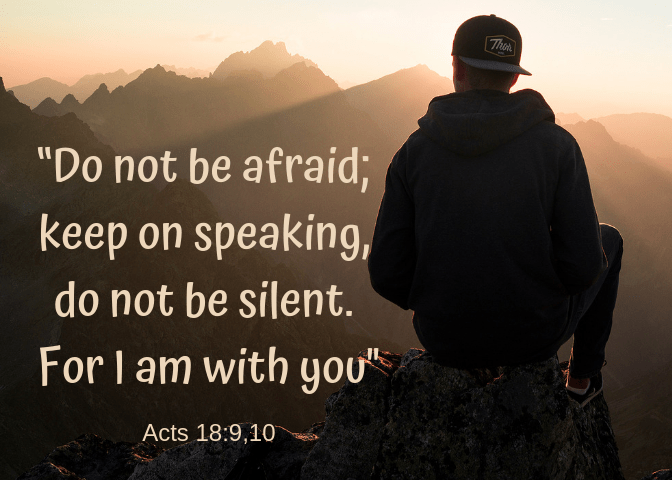
In Mark chapter 6, Jesus summons his disciples to go on a boat to Bethsaida, while he stays behind on land to pray. Their boat got to the middle of the lake, and Jesus, seeing them, started walking towards them. Little did they know, he was walking on water towards the boat. After seeing him, they immediately thought he was a ghost and were terrified. Seeing them frightened, he immediately said, “Take courage! It is I. Don’t be afraid.” 


   Jesus, with the power of His Father God, walked on water, which is not normal in any way, but Jesus told them to not be afraid. Do you sometimes find it hard to trust in God? It might be during a hard test, you might be in a difficult situation with your family or friends, or maybe you’re a new brother or sister of Christ who is struggling to find their purpose in the world. Trusting in God can lift a heavy weight off your shoulders. Faith is a lot like a muscle. The more we exercise our faith, the stronger our trust in God becomes. When we practice and train ourselves to have more faith, it becomes easier to have trust, and to rely on God. So ask yourself, are you willing to practice trusting in him?

-Hannah Bormes

Reflection Questions

  1. When was the last time you exercised your faith muscle? How did it work out for you?
  2. In what current situation would Jesus tell you to not be afraid? Why? How can exercising your faith muscles help you lessen your fear?
  3. What might God be asking you to do with His power?

The Law of Love

OLD TESTAMENT: ISAIAH 8-9

POETRY: PSALM 63

NEW TESTAMENT: HEBREWS 8

I believe that many readers of these devotions are currently students, while for some of you your school days are long in the past. Well, please adjust your memory as necessary and imagine the following situation: you’ve written a research paper with a required word count, and you run out of things to say (at least in the amount of time you gave yourself to write it). Your imagination is tapped. The letter of the law tells you the requirement, but you just can’t get your brain to produce any more useful ideas on the subject. What might you do? Perhaps you make one of your quotations longer to get the paper to reach the limit. If you were being a bit more cautious you might find spots to put in two or three shorter quotations so that your teacher won’t think that was what you did, instead of having one long quotation. 

Well Hebrews is the New Testament book which depends the most on quotations, it has the most quotations and draws on them steadily to make its points about God’s intentions. Much of its argument about high priests uses Psalm 110 (which is itself the most quoted text in the New Testament, with Psalm 110:1 the most quoted individual verse in the Bible). And starting in Hebrews 8:8 we have the longest quotation in the New Testament, but I guarantee that it isn’t there for padding. For one thing the average length of a Greek letter at the time was only 90 words – more philosophical letters ran to 250 words. But even the short book of Philemon is 355 words. The book of Hebrews is nearly 5,000 words. Padding was not required. This information may be treated only as trivia, or we may think about why Hebrews depended so much on the Old Testament, as foundation for what it tells us. Consider the possibility that for some Christians this was one of the first “New Testament” works they had contact with – they may have known stories of Jesus by word of mouth, but their Bible may have been almost entirely the Old Testament, and this letter was attempting to guide how they viewed it by careful argument. On the off chance that you have been skipping over the quotations all this time because you assume they don’t add anything to the main story, do please read today’s text in full (and you probably should go back over the earlier ones too).

Hebrews 8:1 begins by restating some facts about Jesus: that he became our high priest and is at God’s right hand. Hebrews seven had discussed these facts, but alongside many other issues, now the author (who you may recall I choose to call Herb, for simplicity) refocuses our attention on these core points from Psalm 110:1, 4. Going from that foundation verse two makes the additional point that in heaven Jesus ministers in “the sanctuary,” that is “the true tabernacle” or sacred tent, pitched by God rather than man. Moses was given very specific instructions about what the tabernacle on earth should be like, and he was told that the tabernacle reflected the greater reality which exists in heaven. Several of the Psalms also refer to the heavens as a tent set up by God. The comparison might not seem as smooth if it were drawn between the heavens and the Temple which Solomon spent years building in Jerusalem, but the book of Hebrews doesn’t discuss the Temple worship, it emphasizes the worship that took place in the wilderness.

Having brought his audience back to first principles, Herb says in the next few verses some things that will be expanded on in chapters nine and ten. That doesn’t mean he is saying things that his audience wasn’t aware of. For example, in 8:3 he says that it is necessary for Jesus to have “something to offer” as a high priest. Herb says this only a few verses after having stated in 7:27 that Jesus “offered himself.” I think this fact was familiar to everyone involved in Christianity. But Herb is walking his readers through his argument, making the case he set out to make. 

The quote beginning in Hebrews 8:8, from Jeremiah 31:31-34, will also be part of the discussion in the next two chapters of the book. It shows that during the time of the first covenant a need was stated – by God – for an improvement in the relationship of God and the people. All along the way God recognized needs and took steps to fill them. The same God brought about the first covenant and the second covenant. It was not some error in the first that resulted in the second, God planned for the developments that took place. While Jeremiah 31:31-34 says that the time is coming when no one would need to teach anyone the Laws (v. 10) it does not say that the content provided in the Law would be changing. Jeremiah simply said a new way was coming for God’s law to be given to God’s people, and that a way will come for sins to be forgiven. But we know that these changes involved more, and that the content of what people are meant to take in has changed between the first and second covenants. The law of love is a simpler message than the hundreds of laws contained in Leviticus, and through the Holy Spirit what God desires will be written “on our hearts” (v. 10). There is a different kind of relationship possible with God now than before.

Jesus said, in the Sermon on the Mount, that he did not come “to abolish the Law” but to “fulfill” the Law (Matthew 5:17). Perhaps some scholar of the Law could have anticipated that for the Law, which no one had ever successfully kept, to be fulfilled might be just what was required to bring change. Maybe Jesus’ words would have disturbed that scholar. Then again, a scholar of the Law who could anticipate such matters may also have foreseen that this was in God’s plan. Ultimately it was the ministry of Jesus at the true tabernacle, in heaven, which allowed the first covenant to be obsolete and disappear.

Lord, thank you for writing your will on my heart to let me understand you better. I don’t understand you as well now as I someday will be able to, but I am glad to know you more than I once did. It is good to love you, and to feel your love. Merciful Lord, help us to offer your mercy in your great strength. Amen. 

Reflection Questions

  1. We might sometimes think of the second covenant as very different from the first, but both covenants come from the God who took the people “by the hand to lead them out of the land of Egypt” (v. 9) – God loved and cared for the people of the first covenant, it is God who was rejected. What does the history of Israel show us about how God handles human rejection? 
  2. It seems likely that the first audience of the book of Hebrews knew the Old Testament better than most of us do, which may have helped them to understand the book of Hebrews better than we do. When you run into an Old Testament quotation you do not understand well, do you try to follow up on its context in the Old Testament?
  3. How do you see the “law of love,” for God and neighbor, as differing from the law expressed in the first covenant? Is the issue that people are being freed from ceremonial issues? Are Christians being given more trust and leeway?

sgl23bibleplanDOWNLOAD

The Priest, Melchizedek, & Jesus

OLD TESTAMENT: ISAIAH 6-7

POETRY: PSALM 62

NEW TESTAMENT: HEBREWS 7

In Hebrews 7 the author of Hebrews (who for simplicity I’ll call “Herb”) describes Jesus’ greatness, particularly as a high priest. Herb is following a pattern we recognize, he has compared Jesus to angels, Moses, Joshua, and now Levitical high priests and says ‘that was good, but he is greater.’ The style of argument he is using was one employed by rabbis, it emphasized moving from a lesser thing (never a thing without value) to a greater thing. In the case of the priesthood connected to the Levites Herb compares it with a priesthood connected to Melchizedek, who has almost no known history (see Genesis 14:18-20, Psalm 110), and ties that to Jesus’ High Priesthood.

When Melchizedek and Abraham met it was several hundred years before the Levitical priesthood began with Aaron’s family, and before the Law which records instructions for those priests. There was no Ark of the Covenant then, and no Tabernacle to house it. It is difficult to imagine what form Melchizedek’s service toward God took, and for whose benefit it was provided. Should we suppose that Melchizedek and Abraham met often, and that the first frequently ministered to the second? We are told that Melchizedek was not only a priest but also the king of Salem (that city seems to have been at or near the site of Jerusalem, Psalm 76:2). Might Salem, under Melchizedek’s leadership, have been faithful to God?

We may find Melchizedek mysterious, rather like Balaam who operated as a prophet separately from the Hebrew people in Moses’ day (and ended up turning away from God). But Herb’s description in Hebrews 7:3 makes Melchizedek’s life sound even less clear, getting into whether we know who this priest-king’s parents were, or when he was born or died, as though Melchizedek had no birth or death. Herb’s point really is that Melchizedek was never stated to have become a priest based on inheriting the position, and that it is never mentioned that anyone took up his role as a priest after him. This is following a second style of reasoning accepted among rabbis, one in which you didn’t need to assume the reality of things which scripture left unstated. This allowed Herb to draw connections to Jesus, as one who did not inherit a priestly role from a parent, and who would never stop serving in his role as high priest. That was in contrast with the carefully kept genealogies of the Levitical system – there were tens of thousands of priests living in the New Testament period, each of whom gained their title through their father, and each of whom was to retire at age 50 (Numbers 8:25) – the order of Melchizedek was not joined based on birth records and was not temporary, but was through the permanent oath of God declaring membership (v. 21, 28; Psalm 110:4). So Herb’s statement “made like the Son of God, he remains a priest perpetually” (3b), paired with him saying that Melchizedek “lives on,” (8) may not just involve the rabbinical argument about an unstated death being assumed not to have occurred – it may refer to Melchizedek retaining his status as priest when he is resurrected. Melchizedek will continue to serve alongside the high priest of his order.

Hebrews repeatedly points to Jesus as the fulfillment of God’s plans and calls believers to follow Jesus to gain perfection / maturity / completion (the Greek term doesn’t translate simply). We are told in 7:19 that “the Law made nothing perfect,” but 7:28 says that “the word of the oath, which came after the Law, appoints a Son, made perfect forever.” Now of course when Herb tells us to join with Jesus he doesn’t mean that believers will stop sinning in this life, after all in 7:25 he describes Jesus as “able also to save forever [completely] those who draw near to God through Him, since He always lives to make intercession for them” (you see the point, people don’t need intercession unless they are still doing wrong; by the way, where 7:25 says “forever” and I note the Greek was more like “completely” that wasn’t the same Greek term as I was mentioning Herb used related to “perfection” and “completion.” I am sort of in the habit by now of noting with translations that say things like “forever” or “eternal” what word they should have said, though, because – say it with me – there was no New Testament word for eternal). As chapter six reminded us, a high priest never took the task on for himself, God made the choice, and when God provided us with Jesus we got the best (and only) high priest possible for the purpose of bringing us fully into contact with God.

I’m not sure if people in the church today think very often about how salvation works, but Herb felt it needed clarification and provided some in his book. We have read about Jews who were concerned over the idea of the Law continuing to be followed in the Church, a meeting was held at Jerusalem with apostles and other leaders to discuss that. At one point Paul addressed the issue by pointing to how God interacted with faithful Abraham, centuries before the Law. Paul showed that obedience to the Law was not required to please God, God was more interested in faith. Herb describes something similar with the priesthood, showing that it existed in Abraham’s time well before Aaron or Levi’s line and so the Levitical priesthood was not required for making connections to God. Herb also showed that Levi effectively tithed to Melchizedek when Abraham gave him a tenth of the spoils of battle, which Herb said meant that the earlier line of priesthood was greater than the later one. 

Such interpretations as Paul and Herb wrote, or the many statements interpreting prophecies in the Bible, do not result from authors ‘putting together the pieces’ for what they wanted to support. I don’t think they could have been so fortunate in locating such details anyway. Rather we are talking about a God who shaped event, prophecy, and interpretation. Just as God chose Abram, by His own will, from whom to make a great nation, God also determined that He would use Abram as the starting point to reach the world. God’s choice involved setting up a whole imperfect system to put the Hebrew people on their path, creating a nation and a history and a culture that prepared the way for Jesus. Jesus then opened the way for people from the world; Jesus also provided for better things than the Hebrew people had been experiencing. It can be mindboggling to think about all the steps of the plan God put in place. I tend to wonder if some of those steps along the way were interchangeable, based upon whether certain people would follow through or fail in what they were called upon to do. What I am certain about is that God’s plan was never going to fail.

Thank you, Lord, for your plan, which you have been preparing for so very long. Thank you that we do not have to depend upon who gave us birth in this world to determine if we may enter your kingdom, but that you allow us to become inheritors of your kingdom through a relationship with your son Jesus. I may come into the relationship fallen, but he can lift me up. However dirty I seemed to myself, he was able to wash me clean. However useless I have felt, he can make me useful. As inheritors with him please help us each to joyfully work in your plan, caring and serving as he does for the will of his Father. And please help me be eager to serve him, let me help in ways I have not yet even been of help. Thank you, Amen.

~ Daniel Smead

Reflection Questions

  1. Do you find it encouraging to think that your future is not based on your past, but on your connection to Jesus?
  2. Hebrews 7:25 says that Jesus is able to save completely “those who draw near to God through” Jesus – do you see this more as part of the cautionary language in the book, saying salvation calls for drawing near to God, or as part of the promissory language of the book, pledging that we are able to draw near to God? How might a difference in outlook on that point affect someone’s life? How have you drawn nearer to God in the last few months?
  3. Perhaps it will seem to be a side issue, but we are told we will be priests in the coming age (Revelation 5:10). If the offer had existed through the Levitical order almost no Christians would be eligible – they are not Levites, they are not male, they are the wrong age, etc. But as members of the Melchizedite order alongside Jesus we are not subject to those restrictions, and we can serve with our High Priest Jesus for centuries. How can you honor God today?

sgl23bibleplanDOWNLOAD

Take Care

Old Testament: Isaiah 5 & 6

Poetry: Psalm 61

New Testament: Hebrews 6

Is it possible to lose your salvation?  The author of Hebrews thinks that this is a real possibility.  It can happen.  In Hebrews 3:12, he wrote, “Take care, brethren, that there not be in any one of you an evil, unbelieving heart that falls away from the living God.”  In Hebrews 6:5, he writes about those who “…. have fallen away, it is impossible to renew them again to repentance…”  Truly, these are very troubling words to read and to contemplate.  We might wonder to ourselves, “I have gone too far?  Have I sinned too much?  Have I ruined my chances with God?”  For each one of us are sinners.  We are imperfect.  We are prone to sin.  We get distracted.  We get discouraged.  We get apathetic.  Each of us can think of people who, at one time, sincerely followed Christ.  They attended church.  They lived good lives.  Their faith seemed genuine.  However, now things are different.  They live as though they had never known the Lord.  In some cases, they have openly embraced evil.  The way of Christ has been rejected by them.  Has their salvation been lost?

      What is it to be saved?  It may be helpful to think of salvation in terms of past, present and future.  In the past tense, you have been saved.  Christ died on the cross for your sins some 2000 years ago.  The work is done.  His blood covers all who come to Him in faith.  Each one of you fondly remembers the day when you came to Christ.  On that day, whether decades ago or only days ago, you were justified before God by the blood of Christ.  So, you have been saved.  In the future tense, you will be saved.  Salvation, life eternal, is not yet in your possession.  You are saved now only in hope and in promise.  The resurrection at the return of Jesus Christ is when salvation will become yours.  You will be saved.  That is the past and future of salvation.  What about the present?  You are now being saved.  You have been saved in the past.  You are being saved in the present. You will be saved in the future.  So, you are being saved.  The present work of salvation in us has been called “sanctification.”  It is a process.  It is to grow into the image of Christ.  God, by His Spirit, is working in you to change you and transform you.  However, the Apostle Paul recognized that there is an ongoing struggle within each Christian.  While we hope in the age to come, we still live in this present evil age.  Paul in Romans 12:2 urged Christians “…do not be conformed to this world, but be transformed by the renewing of your mind…”  Another common theme in the writings of Paul is the encouragement to live by the “Spirit” and not by the “flesh.”  It is no wonder that Paul looked at the Christian life as a contest that must be won, a race that must be completed, a journey that must be finished, and a battle that must be waged.  To be a Christian is to be actively engaged against sin and evil in your life. The book of Hebrews draws from the rich history of Israel to make the point.  The people of Israel were saved from slavery in Egypt by God’s mighty works.  The people of Israel left Egypt with the goal of entering the Promised Land.  However, between the past and the future, between Egypt and the Promised Land was the wilderness.  The wilderness wanderings are what tested the people of Israel for 40 years.  The wilderness tried their faith and challenged their hope.  Then, the people of Israel lived in the shadow of God’s presence.  They had seen the mighty works of God.  God fed them daily with the manna.  He gave them water out of the rock to drink.  However, as incredible as it may seem, many of them remained disobedient.  They grumbled and complained.  They wanted to go back to Egypt!  Hebrews 4:1,2 comments, “Therefore, let us fear if, while a promise remains of entering His rest, any one of you may have come short of it. For indeed we have had the good news preached to us, just as they also; but the word they heard did not profit them, because it was not united by faith in those who heard.”  In the same way, we Christians find ourselves in a “wilderness” of sorts.  Behind us lay our sins and our old way of life.  Before us lay the Promised Land, the kingdom of God, eternal life.  However, you are now walking through the wilderness of this present evil age.  The wilderness is what can make you or break you.  The wilderness experience will reveal who and what you really are.  You have to keep your eyes upon the distant Promised Land.

     Hebrews 6:4,5 observes, “For in the case of those who have once been enlightened and have tasted the heavenly gift and have been made partakers of the Holy Spirit, and have tasted the good word of God and the powers of the age to come and then have fallen away, it is impossible to renew them to repentance, since they again crucify the Son of God and put Him to open shame.”  This verse is not declaring a penalty against those who have fallen away.  Rather, it is simply describing the reality of the human heart.  Some of the Israelites of old were apparently untouched by the wonders that they had seen.  They had short memories.  They were easily discouraged by obstacles.  They didn’t trust the God who had saved them.  They returned to their old ways.  In the same way, some Christians after tasting “the good word of God and the powers of the age to come” have fallen away.  They were unimpressed by what God had done in them.  They were no longer moved by the sacrifice that Jesus made on the cross.  After God had revealed His glory to them, what further could God do to convince them now?  If you have seen miracles and all you can do is yawn, what more can God do with you?  I believe God, in His grace, would allow repentance in these cases.  However, can such a hardened heart be able to repent?  If you have already proven yourself resistant to the Holy Spirit, you have rendered yourself blind and deaf to the saving gospel message.  It is a though God has cooked you a wonderful gourmet meal with the best ingredients.  However, you have no taste for what God is serving.  So, you won’t be back because you have no appetite for what God is serving.  Hebrews reads, “…it is impossible to renew them to repentance….”  You have headed back to Egypt and have forsaken the Promised Land.  What could convince you change your course now?  God had given you his best and you didn’t want it.

      However, it is not the intent of Hebrews to discourage, but to encourage.  Hebrews 6:9 reads, “But, beloved, we are convinced of better things concerning you….”  Hebrews 6:11 adds, “And we desire that each one of you show the same diligence so as to realize the full assurance of hope until the end…”  The book of Hebrews, taken as a whole, is a word of encouragement.  Don’t give up.  Don’t quit.  Don’t be discouraged.  Don’t be overcome by sin.  Have hope.  Have faith in the promise of God.  For God is faithful.  For you will find troubles and challenges in the wilderness.  So, brothers and sisters, if you are reading these words, you have not yet given up. You are not lost.  You are still seeking the Promised Land.  Hebrews 10:35,36,39 sums up this message: “Therefore don’t throw away your confidence which has great reward.  For you have need of endurance, so that when you have done the will of God, you may receive what was promised….but we are not those who shrink back to destruction, but of those who have faith to the preserving of the soul.”  So, the wilderness road may have beaten up a bit.  You may have wandered in the wrong direction at times.  Perhaps you had temporarily lost your way.  You might have encountered obstacles.  However, you are still on the road with your eyes focused on the Promised Land.  Keep going and don’t give up.

-Scott Deane

Reflection Questions

  1. Why is it important to know what you believe about salvation?
  2. Have you accepted Jesus and been baptized? Are you assured of your salvation?
  3. What are some reminders you can put into your everyday routine to point you to living a gospel-centered life so that you don’t forget your primary calling?

Breaking the Sin-Cycle

Old Testament: Isaiah 1-2

Poetry: Psalm 59 

New Testament: Hebrews 4

In yesterday’s devotion, we were reminded of the importance of obedience and the dangers of disobedience. Even though the passages that we read yesterday were years and years removed from our reading today in Isaiah, similar themes run through both. Israel was continuously going through a sin-cycle of disobedience, discipline, and then a decision to return to God. In Isaiah 1, we see the harsh consequences of sin again. Verse 5 says, “Why will you still be struck down? Why will you continue to rebel? The whole head is sick and the whole heart is faint.” Sin has eternal consequences, and it also has consequences in our daily life. Because of the Israelites’ sin, their home was destroyed, and all of the things that they loved were taken away. Even though sin was destroying them from the inside out, they still refused to submit to God. 

In many ways, we can talk about sin with the same language that we use for other negative repetitive behaviors, like addiction. People who are addicted to something keep returning to it even if the actual desire to do the thing isn’t there. They may actually hate the thing that they do, but they can’t seem to stop themselves from returning to it (which sounds a lot like my relationship with social media). Israel continued to return to sin despite the pain that it caused. 

In verses 18-20, we see a promise to the Israelites. It says, “Come now, let us reason together, says the LORD: though your sins are like scarlet, they shall be as white as snow; though they are red like crimson, they shall become like wool. If you are willing and obedient, you shall eat the good of the land; but if you refuse and rebel, you shall be eaten by the sword; for the mouth of the LORD has spoken.” On their own, Israel could never break out of the sin cycle. When they rested on their own power, they fell back into disobedience. 

But, we don’t have to rely on our own power to break our addiction to sin. This promise for the Israelites – the promise to be made clean, to be freed from sin – found its fulfillment in the sacrifice of Jesus on the cross. 2 Corinthians 1:20 says, “For all the promises of God find their Yes in him.” We now have been grafted into the body of Christ. The promise that was given to Israel has been given to us as well. This is why we can break the sin-cycle in our lives. We don’t have to rely on our own works; we find our rest in him. Hebrews 4:9-11 says, “So then, there remains a Sabbath rest for the people of God, for whoever has entered God’s rest has also rested from his works as God did from his. Let us therefore strive to enter that rest, so that no one may fall by the same sort of disobedience.” We can enter into this state of rest because Jesus has done the work for us. He was the sacrifice that made us clean. Just like the Israelites waited for the Promised Land, we wait in hope for the Kingdom, our eternal glorious place of rest. We have to hold fast to the truth and choose to live rightly. 

How then should we live? Isaiah describes a life that is lived rightly: “Wash yourselves; make yourselves clean; remove the evil of your deeds from before my eyes; cease to do evil, learn to do good; seek justice, correct oppression; bring justice to the fatherless, plead the widow’s cause.” (Isaiah 1:16-17). 

Let’s pursue righteousness as we wait for the fulfillment of the promises of God. 

~Cayce Fletcher

***You can find more of Cayce’s writing at www.amorebeautifullifecollective.com.***

REFLECTION QUESTIONS

  1. Why is it so hard to change our behavior on our own power?
  2. In what ways does it comfort you to know that the Holy Spirit can help you break the sin-cycle?
  3. Do you feel as though you are resting in Christ, or are you relying on your own works?

sgl23bibleplanDOWNLOAD

Rebellion, Discipline, and Obedience

Old Testament: Isaiah Introduction (See Below)

Poetry: Psalm 58

New Testament: Hebrews 3

After several years of teaching, I recently had the opportunity to stay home with my two kids. My oldest is three, and he has a mind of his own. Much of my day is spent doing fun things, like playing outside, reading books, and building Lego towers. But, with a toddler, there are always going to be times of correction. Discipline now is necessary for a happy, healthy, well-adjusted human later on. But disciplining through rebellion has its share of tears, tantrums, and yelling of “No.” 

Today, we read about a similar situation of discipline. There are two choices we have in life. We can choose to be obedient to God, submitting to his word, or we can choose to pursue our own desires, rejecting God’s word. One path is the path of righteousness and life. The other is the path of sin and death. In Psalm 58, we read about the harsh judgment reserved for those who are not righteous. In verse 10, “The righteous will rejoice when he sees the vengeance; he will bathe his feet in the blood of the wicked. Mankind will say, “Surely there is a reward for the righteous; surely there is a God who judges on earth.” 

As Hebrews 3:7-8 says, “There as the Holy Spirit says, ‘Today, if you hear his voice, do not harden your hearts as in the rebellion on the day of testing in the wilderness.’ We must take care of the condition of our hearts. If our heart is soft to God’s leading, we will listen in obedience to what he says, and we will do it. However, if our heart is hard, we will be more likely to reject God’s commands. 

How do we know the condition of our heart? It’s important to look at our actions. If what we do is lined up to God’s word, then we have a heart to listen to what he says and follow it. I’ve heard it described as a plumb line that we use to measure up our actions. If we are out of line, God’s word will call us out. 

What does a hard heart look like? If you notice that your actions are consistently not matching up with godly living as described in the Bible, that is a good indication that you have hardened your heart to his teaching. You are living in rebellion. Those words seem harsh, but they line up with the way that Hebrews describe them. If you consistently read that you should do something but you don’t, you are not living righteously. Just like the notifications on your phone, you swipe out of and never look at or the alarm you press snooze on, you are desensitizing yourself to the effects of sin. You’ve become “an evil, unbelieving heart” that is “hardened by the deceitfulness of sin” (v. 12-13). 

We need to encourage each other to pursue a righteous life of obedience. That is what we are called to do. 

~Cayce Fletcher

***You can find more of Cayce’s writing at www.amorebeautifullifecollective.com.***

Isaiah Introduction

The book of Isaiah was written by the prophet Isaiah to the southern tribe of Judah at a time when the Assyrian empire threatened Judah’s destruction.  The name Isaiah means “the Lord saves”.  Isaiah is quoted in the New Testament more than any other Old Testament prophet.

While Isaiah predicted that Judah would eventually be defeated because of their sins; he also predicted a message of hope – the coming messiah (a suffering servant), would come to establish the Kingdom of God on the earth.

Some have suggested that the first 39 chapters of Isaiah focus on doom and gloom, similar to the 39 books of the Old Testament; while the 27 last chapters (40 – 66) of Isaiah focus on hope and restoration, similar to the 27 books of the New Testament.

There are many prophecies in Isaiah about the “last days”, the “Day of the Lord”, the promised messiah (Jesus), God’s suffering servant (also Jesus), conditions in the millennium, and the coming Kingdom of God.

One of my favorite verses is Isaiah 41:10, “So do not fear, for I am with you; do not be dismayed, for I am your God.  I will strengthen you and help you; I will uphold you with my righteous right hand.”

–Steve

REFLECTION QUESTIONS

  1. Have you walked through a season of rebellion? What was the outcome?
  2. What is the importance of obedience?
  3. What is the current status of your heart? How do you know?

sgl23bibleplanDOWNLOAD