As much as I could go on and on repeating exactly what Paul says in Romans 2, I have much more to add and apply from the Chronicles passage, so focus your reading on those chapters. Mostly, I’ll be looking at chapter 6. Solomon has just built the amazing perfect temple that David definitely did not build (even if he prepared all the materials, drew the blueprints, and basically left only the annoying part of building a building to Solomon). And in chapter 6, Solomon is dedicating this temple to God. Take a look at verse 14, the opening of Solomon’s prayer where he addresses God. Notice, there’s almost a lesson in that God’s faithfulness is kept with those who “walk before [Him] with all their heart.” Of course, Deuteronomy 6:5 says more and Jesus even more of how much of you should be dedicated to God on a daily basis (hint: it’s literally all of who and what you are, Mark 12:28-31). But I mostly want to look at verses 36-39.
“36 “When they sin against you—for there is no one who does not sin—and you become angry with them and give them over to the enemy, who takes them captive to a land far away or near; 37 and if they have a change of heart in the land where they are held captive, and repent and plead with you in the land of their captivity and say, ‘We have sinned, we have done wrong and acted wickedly’; 38 and if they turn back to you with all their heart and soul in the land of their captivity where they were taken, and pray toward the land you gave their ancestors, toward the city you have chosen and toward the temple I have built for your Name; 39 then from heaven, your dwelling place, hear their prayer and their pleas, and uphold their cause. And forgive your people, who have sinned against you.” – 2 Chronicles 6:36-39 – NIV
Reread those verses and think for a second… You may be saying “How does this apply? Isn’t this just an ironic prophecy about Israel’s inevitable collapse and occupation by Babylon?” And, yes, it probably is. But the beauty of the Bible is taking historical accounts and creating life lessons from them, so hear me out. When you’re buried in sin, and truly lost, it almost feels like you’re a captive in enemy land. And, in some spiritual sense, you are. Sin is the land of the world and of Satan, not of God. And you feel far and cut off from everyone, but look at 37. Then 38. Because if you pray to God, he will hear you, and if you truly wish to repent – to turn in your ways – and return to God in all of your heart (and soul, and mind, and strength) then God will forgive you.
“…Now, my God, please, let Your eyes be open and Your ears attentive to the prayer offered in this place…” – 2 Chronicles 6:40
-Liam Johnson
Today’s Bible reading passages can be read or listened to at BibleGateway here – 2 Chronicles 5-6 and Romans 2
In today’s Bible reading I will be looking at Romans 1. I want to specifically focus on where he says “…that we may be mutually encouraged by each other’s faith, both yours and mine.” I think this is especially important to take note of since covid made it hard to gather for a long time and I think we can all agree that to some degree our Faith was affected. This is why I think it is important that I go to church, to be able to meet with like-minded believers who are going to support me in my own walk with the Lord and for me to be able to support them as well. God did not intend for us to be alone, but for us to have fellowship with one another and encourage each other to live daily for Him. As life is returning to normal at this stage of the pandemic I think it is important that we make an effort to rebuild our church communities and get ourselves back into those routines that will draw us closer to God.
Earlier this week you heard about our recent Midwest Family Camp theme of standing firm in our faith and its importance. Throughout verses 21 and 22 we can see the effect that happens when we are not standing firm in our faith, “For although they knew God, they did not honor him as God or give thanks to him, but they became futile in their thinking, and their foolish hearts were darkened. Claiming to be wise, they became fools” This is why it is important to be in a community of believers, iron sharpens iron, and wise Godly people can point out when our thinking becomes futile, or when we are not honoring God with our actions. Without these leaders in our churches we may become like the fools that Paul is talking about here, and if you read on, these foolish people do not end up living fun or flourishing lives.
In our churches we need people who are willing to step up as leaders and examples of what standing firm and walking with God looks like.
Katie-Beth (Fletcher) Mattison
Today’s Bible reading passages can be read or listened to at BibleGateway here – 2 Chronicles 3-4 and Romans 1
It was 10 o’clock. The air was heavy with humidity and filled with the familiar sound of girls giggling from the top bunks of the cabin. Crickets buzzed. Floorboards creaked. The busyness of the day was finally settling down. I slid into my freshly washed sheets and laid down on my lumpy plastic mattress with a smile. It was so good to be home. After a long two years, we were finally back at our beloved Family Camp.
“Hey, Casey?” One of my cabin daughters called.
“Yes?”
“Can we borrow your AirPods? We want to watch a movie together.”
We’d barely arrived and I already felt my preachy-cabin-mom instincts kicking into gear. Here we go. “Girls, girls, girls! That would defeat the whole point and the beauty of family camp! This is meant to be a week of IMMERSION. A detox from all the outside junk of the world. I used to love the feeling when I was young, before we even had the capability of having technology in the cabin, that I was on an entirely different planet when I was at camp. No TV. No news. No music that wasn’t worship. When I’d get in the car after camp and finally hear a radio station playing secular music, it’d be like, ‘Whoa! Oh yeah! I forgot everyone else on the outside was still doing this!’ It was a great escape from everything that distracted me from focusing on my faith and my relationship with God. For a couple years after I first got a smart phone I thought, “Hey, this will be cool. I can fall asleep listening to TV at camp now.’ But then I realized I was robbing myself of that high I used to get. And its SUCH an amazing feeling that I don’t want you girls to miss out on it either. Cut all of that stuff out and give yourself a break. You’ll feel renewed!”
Fortunately, my cabin girls are super awesome and wise (or perhaps they just wanted me to stop preaching at them) and didn’t push back at all. We went on to have an amazing week, cut off from the world, and I was delighted to return home with that blissful Family Camp high.
Then… Saturday came. Life was returning to normal and we were back into the routine of things. The TV was on, my browser tabs were multiplying, and social media was overtaking my thoughts. I felt my fire simmering down to coals.
Suddenly it occurred to me that I needed Cabin-Mom-Casey to give Every-Day-Casey a loving lecture. “Your fire is burning out because you’re not fanning it! Why do you limit yourself by only cutting out worldly things and focusing on God that one week a year?! What can you limit and cut out right now today and everyday?”
The daily Bible readings for today are 2 Chronicles 1-2 (on the wisdom of Solomon) and Proverbs 31 (on the virtuous woman). As so often happens, I think God gives us the right passages when we need them most. So how do these verses apply to my current conundrum?
In 2 Chronicles, we see Solomon didn’t ask for wealth or riches, but for something much greater… wisdom. That wisdom in turn brought on all the desires of his heart. But he had to actually implement that wisdom. I feel God provided me with the teaching, knowledge and experience to know what I need to do in order to keep my fire burning, but I need the wisdom to actually make those right decisions.
In Proverbs 31 we read the long and daunting list of the ideal woman. It’s a popular and somewhat intimidating chapter. The virtuous woman makes her own clothes? And does all the cooking? And brings food from afar? And gets up when it’s still night time?! How does she have the time?? I occasionally ponder on this before getting distracted by the interesting part of my current Netflix show… and wait, someone just messaged me on Facebook… I’ll think more on it when I finish this oooone last round of Candy Crush. I may never know how she did all that, but there is one thing I do feel fairly confident about: I think the virtuous woman was focused. She didn’t allow silly worldly distractions to separate her from the godly tasks before her. Proverbs 31:26 says, “She opens her mouth with wisdom and in her tongue is the law of kindness.” She was wise in what she allowed to occupy her time and thoughts.
So what would Solomon advise me in his wisdom? What would the wise and virtuous woman instruct me to do to keep that fire burning? I’d imagine they’d encourage me to cut out or greatly limit my TV time. They’d probably advise me to stop wasting as much time on my phone and to use my time wisely. I think they’d love for me to make my home a holy oasis away from the world for my family.
My prayer today for my cabin girls, for myself, and for you reading this; is that our fire and faith would be lit anew as of today. I pray that we would eliminate some of the worldly winds threatening to snuff out those flames. Finally, I pray that God grants us the wisdom to actually do it.
-Casey Kiel
Today’s Bible reading passages can be read or listened to at BibleGateway here – 2 Chronicles 1-2 and Proverbs 31
Have you ever thought about ants as something besides a pest? Before I started researching facts about ants, I just thought about them as annoying insects that carried away crumbs left around your house. However, research proves that ants are much more than just annoying pests, they are also very intelligent and good at working together.
Ants are able to come together as large groups and use all of their intellect as a whole.
Ants are officially the world’s smartest insects and have 250,000 brain cells.
Ants are the only non-mammals who can learn through interaction.
Research is not the only thing that proves that ants are smart; the Bible also describes the wisdom of ants. In Proverbs 30:24, it says that there are multiple small things on the earth that are very wise. The first thing listed that is small but wise is ants. Proverbs 30:25 says that ants are wise because they spend their summer gathering food for the winter, even though they are small. While ants are wise because they gather food for the winter in preparation, they are also wise in the method by which they gather their food; teamwork. Each ant is able to gather some food by itself. It may be able to gather enough food for a month if it works alone, but it wouldn’t be able to gather enough food for the entire winter if it worked alone. But when an ant works as part of a colony, it is able to help make sure all the ants in the colony have enough food for the winter. As Christians, we should be the same way. We should be working together to help each other stand firm in God’s word, instead of trying to do God’s will by ourselves and stumbling in our faith throughout the process.
As Christians, we should be working together to help each other to better understand the Bible. Understanding the Bible gives us wisdom, which in turn helps us to stand firm in our faith. Every person reads the Bible differently and learns different things when they read it. Working together with fellow believers to study the Bible allows us to each learn the things others learned when they read the Bible that we wouldn’t have learned by ourselves. The more lessons we learn from the Bible, the sturdier foundation we are able to build our faith upon.
Not only can spending time with other Christians help you to build a stronger foundation, but it also helps you to draw closer to Jesus, allowing you to live your life more like Jesus. Matthew 18:20 says that where two or three believers gather together, Jesus will also be there in the believers’ midst. When Jesus is in the midst of a group of believers, each believer becomes stronger in their faith. This allows them to imitate Jesus better in every action of their life and to stand firm in their faith throughout hardships with less difficulty.
Throughout our lives, we will all face trials that try to shake us from our faith including people who try to challenge our faith. Many people who try to cause you to fall away from your faith come with reasons and logic that very subtly oppose the Bible. If you try to stand by yourself without surrounding yourself with fellow believers, there is a good chance you may start to fall away from your faith because you start to believe what others say. However, if you are surrounded by other Christians, they can help you find the flaws in the logic and continue to stand firm in your faith. Hebrews 10:24-25 says, “And let us consider how to stimulate one another to love and good deeds,not forsaking our own assembling together, as is the habit of some, but encouraging one another; and all the more as you see the day drawing near.” Just like ants, we need to be gathering with other fellow believers and working together, so that we can stand firm in our faith.
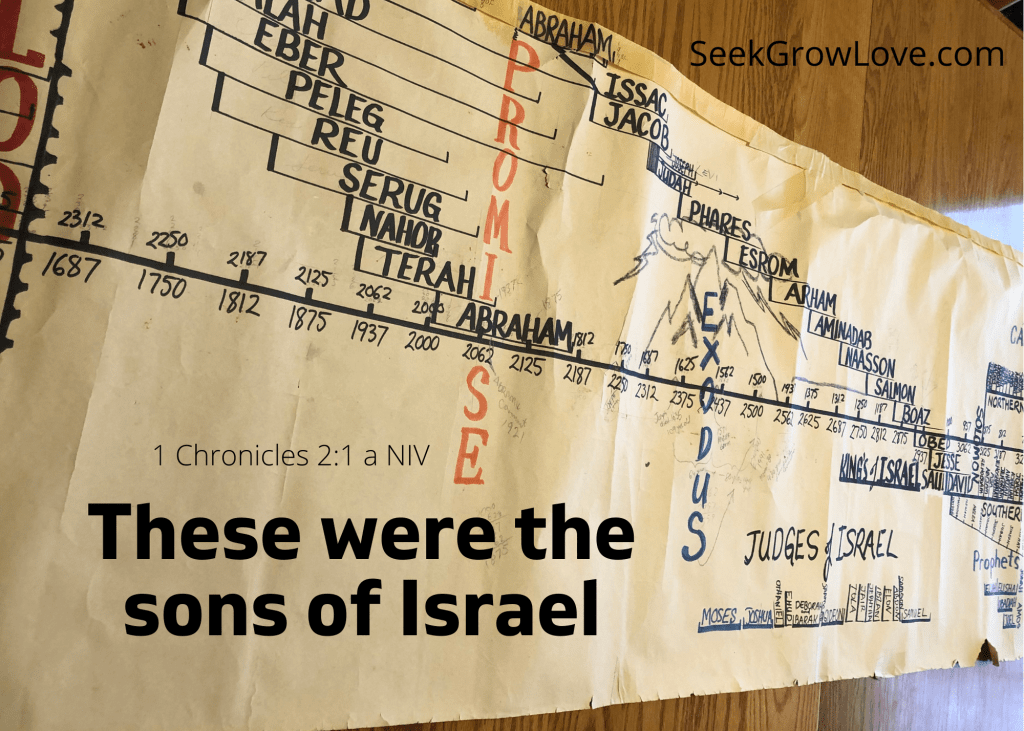
Reading through Chronicles it is easy to skim past large sections that seem to drone on for hours. But the fact that the whole book of Chronicles was true history of the Israelites, that was written down for us to read thousands of years later is truly fascinating. The book of Chronicles which starts off with the genealogy from Adam, shows how much the Israelites appreciated and treasured their heritage and lineage. They viewed their history as all the ways God provided for them over the years.
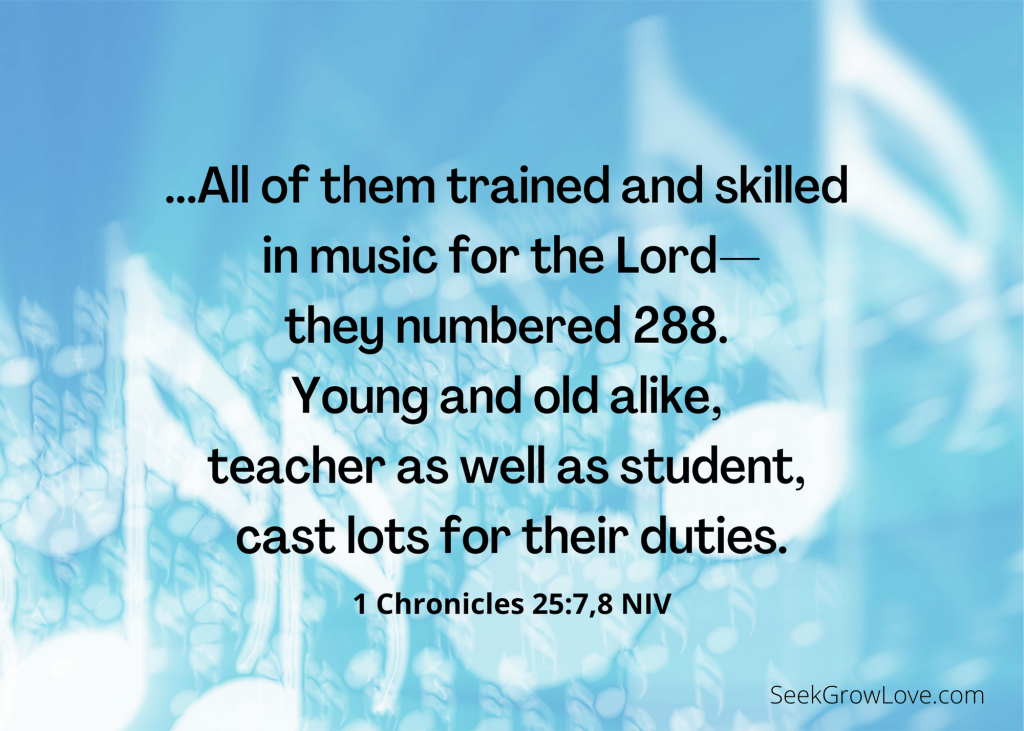
Chapters 23-26 are devoted to the organization of the temple. It tells in detail the families who served in the temple and how God chose the people to be servants of the temple by being musicians, gatekeepers, treasurers, and temple officials. These positions were cast by lot. The high priest who wore the special ephod was able to cast lots using the urim and thummim. This was one way God communicated with his people. It allowed God to give the Israelites a direct yes (urim) or no (thummim) answer.
There are many times in the Bible where it tells us that something was determined by lot. For example, Saul was appointed King of Israel by lot, and the lot was cast on Jonathan when he ate the honey he wasn’t supposed to eat according to Saul’s orders (1 Samuel 14:42), and Matthias was chosen as the apostle to replace Judas by lot (Acts 1:26), and to make decisions on how to divide the land to each of the 12 tribes (Joshua 18:6). The Bible records many other times when the people used lots to seek God’s counsel.
So what can we take away from all of this? God loves his people, He wants to show us His plans for our lives. Part of God’s character is that he is immutable- never changing through the ages. In most cultures today, casting lots is often overlooked as a means of receiving communication and answers from God, but we must not overlook His word given to us – including Chronicles- which show God’s continuity and love to His people. God knows that we are a forgetful people who don’t remember all the many things God has done over the years. Through Chronicles we see a God who kept his promises to the Israelites and who organized the temple and determined its leaders by lot. This same God is involved in our lives as well. It’s filled with the history of God providing for and keeping true with his promises to his people. It was used to remind the Israelites of these things and it can remind us as well how God was working through their lives and how He is and was and will work in ours. And knowing this helps us Stand Firm for Him.
As Marcia mentioned in yesterday’s devotion, many of us were at Midwest Family Camp last week, where the theme was “Stand Firm”. In a nutshell, if we don’t have a relationship with the Lord, it is critical that we repent and come into a relationship with Him. If we already have a relationship with the Lord, we need to strengthen that relationship, and stand firm in the faith – no matter what.
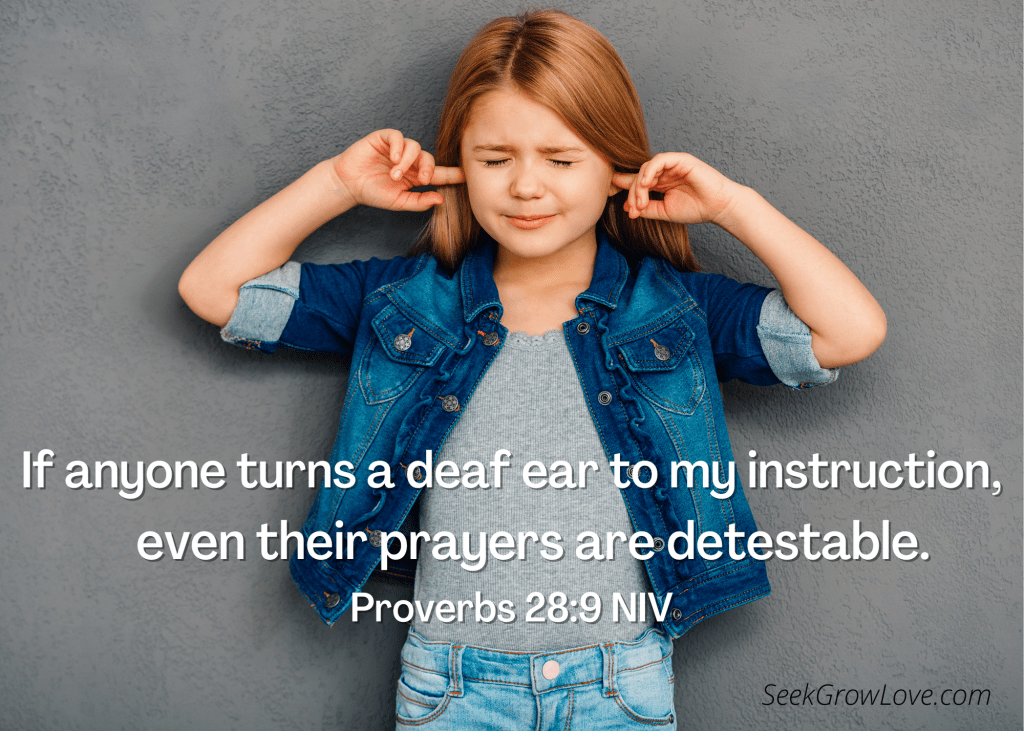
In today’s reading in Proverbs 28, there are a few verses that jumped out at me which reinforced that message. The first is found in Proverbs 28: 9, “If anyone turns a deaf ear to the law, even his prayers are detestable.” This proverb tells us that if we’re not doing everything to live the life God called us to live, if we’re not following his rules, then He won’t listen to our prayers. Since many of our prayers are about asking for God’s help with various things, if we selfishly want Him to answer our prayers, then we need to obey His rules, and live for Him. As we grow in relationship with Him, we come to long for an even deeper relationship with the Lord. Then we learn that prayer is powerful, and we don’t waste it just asking for superfluous things.
Proverbs 28:13 goes on to say, “He who conceals his sins does not prosper, but whoever confesses and renounces them finds mercy.” This is saying if we pretend to be Christians, we won’t prosper (you can’t fool God). But if we confess and renounce our sins, and turn completely to God, we will receive God’s mercy. I don’t know about you, but I would much rather have His mercy than to have Him holding me back from prospering.
As we continue to read through this chapter, we get to verse 20, which says, “A faithful man will be richly blessed, but one eager to get rich will not go unpunished.” I’ll take a detour here and comment on the health and wealth teachings we often hear from people who don’t know better. The theory goes sort of like this… “if someone follows God, God will bless every aspect of their life. They will be rich, healthy, and blessed.” Many people who call themselves Christians subscribe to this false belief. Jesus told us in John 16:33, “…In this world, you will have trouble. But take heart, I have overcome the world.” We have to remember this life isn’t our reward. This life is the test to see what reward we will receive when Jesus returns. If we are faithful to the Lord now, we will enjoy peace with God now, and eternal life when Jesus returns. If we are just trying to get rich, we are actually worshiping money, not God — our reward is in this life, and we will forfeit eternal life.
1 Tim 6:9-11 says, “People who want to get rich fall into temptation and a trap and many foolish and harmful desires that plunge men into ruin and destruction. For the love of money is a root of all kinds of evil. Some people eager for money have wandered from the faith and have pierced themselves with many griefs. But you, man of God, flee from all this, and pursue righteousness, godliness, faith, love, endurance, and gentleness.”
Instead of trying to get rich, we need to follow the advice given in Proverbs 28:27, “He who gives to the poor will lack nothing, but he who closes his eyes to them receives many curses.” Again, I think the idea is that if I’m greedy, wanting to keep all my money for myself, I’m not trying to please God, I’m just greedy for money, and God will curse me for not following Him. But if I’m generous with the things God has given me by giving them to the poor — this mimics God’s generosity to me. When I am imitating God, God loves that. In fact we’re commanded in Ephesians 5:1, “Be imitators of God, therefore, as dearly loved children.”
So the bottom line is this. We need to do everything we can to reconcile ourselves to God. We need to confess and renounce our sins, obey His laws, be faithful, and be generous. All these things are required to live in close relationship with God. And if we live in a close relationship with God, we will have peace with God in this life, and an amazing reward in the life to come. In Rev 21:4, we’re told, “He [God] will wipe every tear from their eyes. There will be no more death or mourning or crying or pain…” Rev 21:7 goes on to say, “He who overcomes will inherit all this, and I will be his God and he will be my son.”
My family, several of my church family, and many friends and family from across the Midwest and beyond just returned home from a week of church camp for the whole family where the theme was Stand Firm. So, I am seeing Stand Firm everywhere. Sometimes good examples, sometimes bad examples, but always examples to learn from.
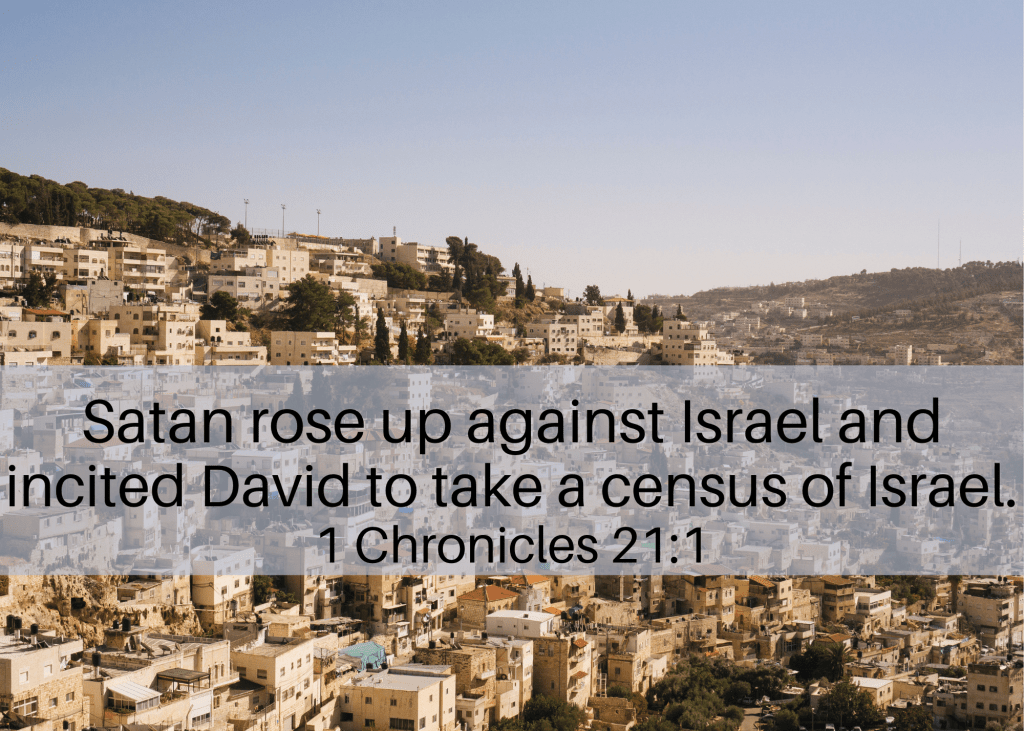
1st Chronicles 21 starts right off with “Satan rose up against Israel and incited David to take a census of Israel.”
One evening at Family Camp our theme was Stand Firm against Evil and many warnings were given of the roaring lion who seeks to devour – not just nibble at your toe. I found it interesting that in this passage (which is one of the few Old Testament passages besides those in Job that uses Satan’s name) Satan’s target is not an individual but a whole country and his means of attack is through their leader. Thanks to Stephanie Schlegel, our writer last week, I know that Israel is about the size of New Jersey and I can much better picture this beautiful land that God chose for His people and that Satan wanted to bring down.
It reminds me of the importance of praying for our leaders who are in vulnerable positions and are themselves perfect targets through which an entire nation or church can be attacked by spiritual evil. And the laws and policies they put in place are sometimes actually brought about by the devil’s deception, as we see in the case of David.
In this case I believe Satan saw David’s ego as a possible chink in his armor through which Satan could attack a whole country. David, unprompted by God but deceived by Satan, decided it would be a good idea to number the fighting men in Israel. His army commander, Joab, tried to talk David out of it. He pleaded with David to be content just knowing that ALL the fighting men were loyal to him and God was watching over them, regardless of how many or few they were. But that wasn’t enough for a man deceived by Satan, he needed to know exactly how large and vast his kingdom had grown. It’s better for bragging rights to be able to say, “The nation I built has one million one hundred thousand fighting men.” But God wanted him to be content saying, “The nation God built is large.” God was disappointed in David and there was a price to pay – by the whole nation. One man’s sins can reap a punishment for a whole nation. And it is a sin to let your pride grow, especially when it grows greater than your trust in God.
The Proverbs have much to say about pride and humility, including Proverbs 27:1-2
“Do not boast about tomorrow, for you do not know what a day may bring forth. Let another praise you, and not your own mouth; someone else, and not your own lips.”
How can you Stand Firm this week – in humility. Never get puffed up about how well you are standing firm, or how large your army or influence is. Resist the devil and his attacks. Don’t be deceived. Stand firm – trusting in God alone.
My last devotional for this week comes out of Proverbs 19:18. It says, “Discipline your son while there is hope, and do not desire his death.” After doing this for a week now, the first portion of this passage made me immediately think about Amon. Remember him? He was that king of Judah that was murdered by his servants after reigning for only 2 years. He did evil in the sight of Yahweh. His father, Manasseh, also did evil in the sight of Yahweh but eventually repented and renewed his status with God. I had commented to myself on paper, thanking God for repentance – as there’s still time for it. What if you don’t have the time like Amon? What if you don’t even know that repentance is an option? This is why we are commissioned! Find those Josiahs and let them know the good news!
Discipline your son while there is hope, and do not desire his death… Why would any good parent desire their child’s death? My studies this week have also led me to some wisdom, I think, regarding the latter portion of this verse in Proverbs. I don’t think I would have understood the latter part if I hadn’t immersed myself in the word for a week. Words mean something. This is a wise, powerful statement that lets us know we DO desire our children’s death if we don’t take action to discipline them. We’ve got a great commission in our own homes if we are parents.
I have been wanting to do a study on child-rearing for a while now. Since I desire that my children live, I started by looking into discipline as it is demonstrated in the word. I found that my idea of discipline was nothing like what discipline actually meant in the bible.
Look at the Old Testament and how God, through Moses, disciplined the children of Israel in comparison to the New Testament and how God, through Jesus disciplined.
Deuteronomy 11:1-13 (NIV)
11 Love the Lord your God and keep his requirements, his decrees, his laws and his commands always. 2 Remember today that your children were not the ones who saw and experienced the discipline of the Lord your God: his majesty, his mighty hand, his outstretched arm; 3 the signs he performed and the things he did in the heart of Egypt, both to Pharaoh king of Egypt and to his whole country; 4 what he did to the Egyptian army, to its horses and chariots, how he overwhelmed them with the waters of the Red Sea[a] as they were pursuing you, and how the Lord brought lasting ruin on them. 5 It was not your children who saw what he did for you in the wilderness until you arrived at this place, 6 and what he did to Dathan and Abiram, sons of Eliab the Reubenite, when the earth opened its mouth right in the middle of all Israel and swallowed them up with their households, their tents and every living thing that belonged to them. 7 But it was your own eyes that saw all these great things the Lord has done.
8 Observe therefore all the commands I am giving you today, so that you may have the strength to go in and take over the land that you are crossing the Jordan to possess, 9 and so that you may live long in the land the Lord swore to your ancestors to give to them and their descendants, a land flowing with milk and honey. 10 The land you are entering to take over is not like the land of Egypt, from which you have come, where you planted your seed and irrigated it by foot as in a vegetable garden. 11 But the land you are crossing the Jordan to take possession of is a land of mountains and valleys that drinks rain from heaven. 12 It is a land the Lord your God cares for; the eyes of the Lord your God are continually on it from the beginning of the year to its end.
13 So if you faithfully obey the commands I am giving you today—to love the Lord your God and to serve him with all your heart and with all your soul—
Let’s go through this passage carefully. Through Moses, God disciplined the 12 tribes of Israel (the children of Israel). He disciplined them by first showing them his majesty, or who he was (Yahweh God!). Who he was could be recognized by the works he did (e.g., signs, miracles, plagues). He rescued them (from Egypt) and defeated their enemies (Egypt in the red sea). Along their journey to the promised land, he performed miracles to sustain them in the wilderness (e.g., manna, water from a rock). He got rid of the people among them who were insolent and tried to usurp Moses (i.e., Dathan and Abiram; Korah).
He then disciplines the children of Israel by telling them to obey the commandments they were given (i.e., obey the law of Moses) so that they would have strength to enter the promised land. He entices them to obey the law of Moses by describing how wonderful their hope is. In it, they will have long life and it will be well with them. In it, they will have good things (flowing with milk and honey). It is a land they won’t have to tend themselves (like they did in Egypt) to receive the good things in it. The good things will be sustained through heaven. To me, the last verse shows God’s heart. He cares so much about that land that he desires to give to his children.
Now let’s look at the New Testament and the discipline of God through Jesus. He pretty much does the same thing but gives greater honor and authority to Jesus since Jesus literally is the one who rescues the people.
In the New Testament, Jesus disciplined the 12 disciples by showing them who he was (is) (The Son of God! The Messiah – pretty much described throughout the whole book of John). Who he was (the Messiah) could be recognized by the works he did in their presence. There were some pretty distinctive works he did that pointed to himself as the Messiah (i.e., Isaiah 35:5-6a “Then the eyes of the blind will be opened and the ears of the deaf will be unstopped. 6 Then the lame will leap like a deer, and the tongue of the mute will shout for joy.).
It is Jesus himself who rescued them from their enemy (sin and death) by his death on the cross. Once seated at the right hand of God in heaven, it is Jesus who sustains them along their journey to the Kingdom of God (KOG). Post resurrection, it’s up to them (and us) to do these final things to enter into the KOG through Jesus. Jesus is the bread of life and he is the rock of our salvation who provides living water. He chastens us by pruning us along our journey (e.g., If your right hand offends you, cut it off – get rid of the people and things in your life that try to usurp Jesus as Lord of your life because they’ll prevent you from entering the KOG).
Jesus disciplines us by telling us to obey the Law of Christ (i.e., Love God and love people like Jesus loved). We need to obey these commandments so that we will have strength (through the receiving of the holy spirit) to enter the KOG.
The love of Christ compels us to obey by enticing us with the good things in the KOG, our hope. In the KOG, we will live forever with Jesus (and eventually with God himself). God will wipe away every tear from our eye; sin and death will be no more (the incorruptible crown; the crown of life). In it, we will be rewarded with good things, positional rewards based on how we built upon the foundation that was laid for us (built upon Jesus) (the crown of rejoicing; the crown of righteousness). If you’re an elder in your church, you’ll receive a crown of glory!
Once there, we won’t have to labor like we do now to enjoy the KOG. There will be a river of the water of life flowing from the throne of God and from the lamb. In it will be the tree of life on either side of the street with 12 kinds of fruit. The leaves of the tree will be for the healing of the nations. I realize that this may not all be literal. All I really know is that it will be unimaginably good and that God and my Lord Jesus will be there, so I’d like to be there too.
And then for my correlation of the last verse. I can only imagine the joy Jesus must have when he thinks about the coming KOG. It is his reward. He’ll be ruling the whole world from the new Jerusalem. I think this was God’s plan all along, with Jesus in mind as the king of his kingdom before the foundation of the world, to a people whose desire is for them whom they love.
Going back to the Old Testament passage, we see that not all of the children of Israel were witnesses to God through Moses. Therefore, he instructs them to discipline their children who were not witnesses. An example of discipling for the children of the children of Israel who were not direct witnesses was laid out for us in Deuteronomy 11.
Similarly, not many of us were direct witnesses to Jesus’ ministry on earth. Therefore, he instructs his disciples to discipline the rest of us who were not direct witnesses. I believe that through the power of the holy spirit however, we too can be called witnesses of Jesus, and are therefore also commissioned to discipline our children and others (the Josiahs). An example of discipling for us is laid out in the new testament, beginning with the gospels.
Can you say amen?
-Juliet Taylor
Today’s Bible reading passages can be read or listened to at BibleGateway here – 1 Chronicles 5-6 and Proverbs 19
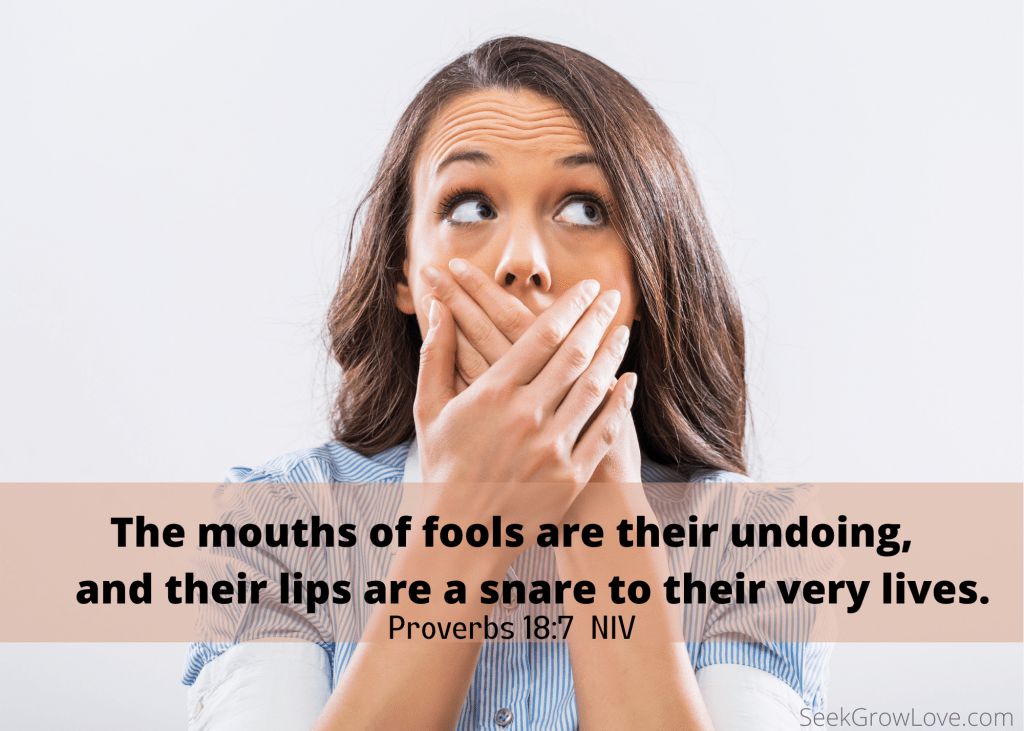
The book of wisdom says, “Death and life are in the power of the tongue, and those who love it will eat its fruit.” (Proverbs 18:21). I understand this scripture to mean that we have the power to speak words to others unto life or words unto death, so we should choose our words carefully. If we love to talk, we better make sure our speech represents who we are because we become what we speak (eat your words). Our words are death and life to our own bodies.
I keep coming back to the issue of the heart. I know we need to have a heart for God if we desire to be with him and his son in the Kingdom of God. But how do we really know if we have a heart for God? The heart can be seen in the things we do that correspond with Jesus’ commandments (love) that we must do to enter in. Works are fruit but works can be deceiving if the heart behind the works is not motivated by love. Mathew 7:15 – 23 says:
15 “Beware of the false prophets, who come to you in sheep’s clothing, but inwardly are ravenous wolves. 16 You will know them by their fruits. Grapes are not gathered from thorn bushes nor figs from thistles, are they? 17 So every good tree bears good fruit, but the bad tree bears bad fruit. 18 A good tree cannot produce bad fruit, nor can a bad tree produce good fruit. 19 Every tree that does not bear good fruit is cut down and thrown into the fire. 20 So then, you will know them by their fruits.
21 “Not everyone who says to Me, ‘Lord, Lord,’ will enter the kingdom of heaven, but he who does the will of My Father who is in heaven will enter. 22 Many will say to Me on that day, ‘Lord, Lord, did we not prophesy in Your name, and in Your name cast out demons, and in Your name perform many miracles?’ 23 And then I will declare to them, ‘I never knew you; depart from Me, you who practice lawlessness.’
The people speaking to Jesus in this passage are shocked that Jesus doesn’t know them. The works mentioned in this passage do outwardly appear to be good fruit. Fruit can look good on the outside but can be rotten on the inside.
It can be difficult to identify bad fruit sometimes. If you really want to know if you’re producing good fruit or not, there is one particular fruit that’s pretty transparent, at least to the people we’re around the most. Our words are a good indication of what’s in our hearts.
Here’s a similar passage from Luke’s perspective in Luke 6:43-47:
43 For there is no good tree which produces bad fruit, nor, on the other hand, a bad tree which produces good fruit. 44 For each tree is known by its own fruit. For men do not gather figs from thorns, nor do they pick grapes from a briar bush. 45 The good man out of the good treasure of his heart brings forth what is good; and the evil man out of the evil treasure brings forth what is evil; for his mouth speaks from that which fills his heart.
46 “Why do you call Me, ‘Lord, Lord,’ and do not do what I say? 47 Everyone who comes to Me and hears My words and acts on them, I will show you whom he is like:
Jesus has a little more to say about the mouth in Mathew 12:30-37:
30“He who is not with Me is against Me; and he who does not gather with Me scatters.
31“Therefore I say to you, any sin and blasphemy shall be forgiven people, but blasphemy against the Spirit shall not be forgiven. 32“Whoever speaks a word against the Son of Man, it shall be forgiven him; but whoever speaks against the Holy Spirit, it shall not be forgiven him, either in this age or in the age to come.
33“Either make the tree good and its fruit good, or make the tree bad and its fruit bad; for the tree is known by its fruit. 34“You brood of vipers, how can you, being evil, speak what is good? For the mouth speaks out of that which fills the heart. 35“The good man brings out of his good treasure what is good; and the evil man brings out of his evil treasure what is evil. 36“But I tell you that every careless word that people speak, they shall give an accounting for it in the day of judgment. 37“For by your words you will be justified, and by your words you will be condemned.”
James gives us even more clarity about the power of our speech in chapter 3:5-12:
5 So also the tongue is a small part of the body, and yet it boasts of great things. See how great a forest is set aflame by such a small fire! 6 And the tongue is a fire, the very world of unrighteousness; the tongue is set among our body’s parts as that which defiles the whole body and sets on fire the course of our life, and is set on fire by hell. 7 For every species of beasts and birds, of reptiles and creatures of the sea, is tamed and has been tamed by the human race. 8 But no one among mankind can tame the tongue; it is a restless evil, full of deadly poison. 9 With it we bless our Lord and Father, and with it we curse people, who have been made in the likeness of God; 10 from the same mouth come both blessing and cursing. My brothers and sisters, these things should not be this way. 11 Does a spring send out from the same opening both fresh and bitter water? 12 Can a fig tree, my brothers and sisters, bear olives, or a vine bear figs? Nor can salt water produce fresh.
Are you noticing as I am that some of the scariest, most convicting verses in the bible for a supposed Christian regard our speech? We must tame our tongue. To tame the tongue we must change our hearts.
By examining our own words, we can tell if we have a heart for God or not. I think it’s a really good indication about our destiny too. If you really want to know if you are producing good fruity speech, ask those who are closest to you how they perceive your speech towards them. If they aren’t on the receiving end of your good fruity speech, that’s not good. Be prepared with your response. If you don’t like what you hear, how will you respond? Choose your words wisely.
If you know you will have trouble responding with good fruit, prune your speech! You might find it helpful to practice not saying anything at all. Proverbs is chock-full of verses that tell us that there is wisdom in keeping our mouths closed. Even a silent fool is considered wise if he keeps his mouth shut. We can use that silent time to pray for wisdom and words of life and in the meantime, practice our sacrifice of praise to God, which is the fruit of our lips that give thanks to his name.
-Juliet Taylor
Today’s Bible reading passages can be read or listened to at BibleGateway here – 1 Chronicles 3-4 and Proverbs 18
…the exact truth about the things you have been taught.
1 Chronicles 1-6
The very last class of my undergraduate education taught me something I’ve remembered for years. I was finishing up my minor and taking my last sociology class. I made a statement during a class presentation that earned me a grade that pushed me into a new academic rank that I thought was impossible to achieve. The presentation was on being a voice for change in society. “If we want to bring about societal change, we need to make some noise!”
I’m going to sound a tad irreverent here. I used to cringe every time a modern agent of societal change preached “Fact-check!” My disdain from the message grew with each passing day that the seemingly one-sided social sermon that I immersed myself in on an almost daily basis, was made light. The noise was bringing change but to me, it was not warranted change.
At first, noise is all I ever allowed myself to hear from the opposing side’s communication. My mind went straight to the need for taking the stick out of the opposing side’s eye. There may have been a beam in there too.
I had to turn off the noise and get myself immersed in something else because I wasn’t helping the situation. I was supposed to be the light that brought change, not the opposing societal view. Right around this time, I started digging into the various things Jesus was called. In the quiet I reacquainted myself with The Light of the World.
Through my continued immersion in the word, I did something I had rarely done. I actually took the time to read the genealogies of Jesus, the boring stuff, in the beginning chapters of Mathew and Luke. It dawned on me.
In the quiet, I realized that the words so often skipped over were God’s fact-checks! Through these, he made certain we knew who the Messiah was, the one who would bring about the right change. It was all in there waiting to be discovered. The Messiah is exactly who God said he’d be and exactly who Jesus said he was. There are facts that lead to him in the genealogies, the lineages, the “begats”, the “in the lands of-s”, the “in the times of-s”, through the recordings of kings of kingdoms, in the astronomical signs of the times, etc. All fact-checks leading to Jesus Messiah.
The genealogies of Jesus were written by eyewitnesses of his ministry. I love the beginning of Luke:
“Since many have undertaken to compile an account of the things accomplished among us, 2 just as they were handed down to us by those who from the beginning were eyewitnesses and servants of the word, 3 it seemed fitting to me as well, having investigated everything carefully from the beginning, to write it out for you in an orderly sequence, most excellent Theophilus; 4 so that you may know the exact truth about the things you have been taught.” -Luke 1:1-4
I took a little more time today reading through the genealogies recorded in 1 Chronicles chapters 1 – 6. They’re fact-checks. They can help us to be prepared with an answer to anyone who questions our faith.
Through this experience, I have begun to listen to the opposing side before opposing them completely. I have come to value the opposing side’s pleas for fact-checking. They are right. We need truth. But we need to fact-check society as a whole – all sides.
I’m still a bit put off by the societal noise and social pressures of our time. Although it may be true that making noise may lead to societal change, it may not be what God wants for us. There were times when Jesus spoke softly and times when Jesus rebuked. There were times when Jesus was offensive and there were times when Jesus remained silent. He always did whatever he heard from his father. If I’m going to be the light of the world like Jesus, desiring to cause societal change, I need to hear Jesus and heed his statements. I need to do it his way. His way is often the unpopular way but it is the only way that’s going to bring about change that matters.
-Juliet Taylor
Today’s Bible reading passages can be read or listened to at BibleGateway here – 1 Chronicles 1-2 and Proverbs 17




 Seek Grow Love