Trusting, Seeking & Standing Firm

OLD TESTAMENT: Habakkuk 2

POETRY: Psalm 119:153-160

NEW TESTAMENT: Revelation 13

Habakkuk 2:2-4 (LEB):

“And Yahweh answered me and said:

‘Write the vision and make it plain on tablets,

so that he may run who reads it.

For still the vision awaits its appointed time;

it hastens to the end—it will not lie.

If it seems slow, wait for it;

it will surely come; it will not delay.

Behold, his soul is puffed up; it is not upright within him,

but the righteous shall live by his faith.'”

Psalm 119:153-160 (LEB):

“Look on my affliction and deliver me,

for I do not forget your law.

Plead my cause and redeem me;

give me life according to your word.

Salvation is far from the wicked,

for they do not seek your statutes.

Great is your mercy, O Yahweh;

give me life according to your rules.

Many are my persecutors and my enemies,

yet I do not swerve from your testimonies.

I look at the faithless with disgust,

because they do not keep your commands.

Consider how I love your precepts;

give me life according to your steadfast love.

The sum of your word is truth,

and every one of your righteous rules endures forever.”

Revelation 13:7-8 (LEB):

“And it was permitted to make war on the saints and to conquer them.

And authority was given it over every tribe and people and language and nation.

And all who dwell on the earth will worship it, everyone whose name has not been written from the foundation of the world in the book of life of the Lamb who was slain.”

In Habakkuk 2, God instructs the prophet to write down the vision He has revealed. This vision, while it may seem slow in coming, is assured and will ultimately be fulfilled. God encourages Habakkuk to remain faithful and patient, for the righteous shall live by faith.

In our own lives, we often find ourselves in seasons of waiting, questioning God’s timing and plans. Like Habakkuk, we may feel that the answers we seek are delayed. Yet, God’s assurance reminds us that His promises are sure, and we are called to trust in His character and faithfulness. This passage challenges us to embrace a faith that endures, especially in uncertain times.

Psalm 119 continues the theme of seeking God in times of trouble. The psalmist cries out for deliverance, expressing his deep reliance on God’s law and commandments. He recognizes that while he faces persecution and opposition, he is determined to hold fast to God’s truths.

The psalmist’s plea, “Look on my affliction and deliver me,” reflects a heart that is anchored in God’s mercy and truth. He understands that salvation is found in God alone, and he chooses to love and meditate on God’s precepts, despite the trials he endures. This teaches us the importance of grounding ourselves in God’s word and seeking His help in our struggles. We can draw strength from the truth that God’s steadfast love is the source of life and hope amidst adversity.

Revelation 13 presents a sobering reality: the world may rise against believers, and authority may be given to oppose the saints. This passage speaks to the challenges and tribulations that Christians may face as they navigate a world often in conflict with God’s kingdom. However, it also reassures us that not everyone will follow the ways of the beast; those whose names are written in the book of life will stand firm in faith.

In the face of persecution and temptation to conform to worldly standards, we are reminded that our allegiance lies with Christ, who has triumphed over sin and death. This call to remain steadfast is a powerful encouragement to persevere in our faith, knowing that our ultimate victory is secured through the Lamb who was slain.

-Jeff Ransom

Reflection Questions:

In what areas of your life are you waiting on God’s promises? How can you cultivate patience and trust during this time?

Reflect on the importance of grounding yourself in God’s word. How can you actively seek His truth and guidance in your daily life?

How does the reality of opposition in Revelation encourage you to live out your faith boldly? What steps can you take to stand firm in your beliefs?

Consider the psalmist’s expression of love for God’s precepts. What practices can you incorporate to deepen your love for God’s word in your life?

Our Amazing Living Hope

OLD TESTAMENT: Isaiah 61 & 62

POETRY: Psalm 112

NEW TESTAMENT: 1 Peter 1

Isaiah 61:1-2 (LEB):

“The Spirit of the Lord Yahweh is upon me,

because Yahweh has anointed me;

he has sent me to bring good news to the oppressed,

to bind up the brokenhearted,

to proclaim release to the captives

and liberation to those who are bound,

to proclaim the year of Yahweh’s favor

and the day of vengeance of our God,

to comfort all who mourn.”

Isaiah 62:11-12 (LEB):

“Look! Yahweh has proclaimed to the end of the earth:

Say to daughter Zion, ‘Look, your salvation is coming!

Look, his reward is with him, and his recompense in his presence.’

And they shall call them ‘The Holy People, The Redeemed of Yahweh,’

and you shall be called ‘Sought After, A City Not Forsaken.'”

Psalm 112:6-7 (LEB):

“For the righteous will not be moved forever;

they will be remembered forever.

They are not afraid of bad news;

their heart is steadfast, trusting in Yahweh.”

1 Peter 1:3-4 (LEB):

“Blessed be the God and Father of our Lord Jesus Christ,

who according to his great mercy

has caused us to be born again to a living hope

through the resurrection of Jesus Christ from the dead,

into an inheritance imperishable and undefiled

and unfading, reserved in heaven for you.”

Isaiah 61 presents a powerful declaration of the Messiah’s mission. This passage, which Jesus Himself read in the synagogue (Luke 4:16-21), speaks of the transformative work of the Spirit of God. The Messiah brings good news to the oppressed, heals the brokenhearted, and proclaims freedom to captives. This is a message of liberation, healing, and hope—a mission of restoring what sin has broken and bringing the year of the Lord’s favor.

As we move into Isaiah 62, the focus shifts to the future glory and salvation of Zion. God’s people are given new names: “The Holy People” and “The Redeemed of Yahweh.” These names reflect their restored identity and the transformation that salvation brings. Once forsaken and desolate, God’s people are now called “Sought After” and “A City Not Forsaken.” This is a beautiful reminder that God’s salvation renews our identity, bringing hope and purpose where there once was despair.

Psalm 112 describes the life of the righteous, those who fear the Lord and delight in His commands. The psalmist paints a picture of a life marked by generosity, justice, and steadfastness. The righteous are not afraid of bad news because their hearts are secure in the Lord. Their confidence is not rooted in circumstances, but in the unshakable nature of God’s character.

Even in the face of uncertainty or difficulty, the righteous remain steadfast, trusting in Yahweh. This psalm encourages us to live with a heart that is grounded in God’s faithfulness. Like a tree firmly planted, the righteous are not easily moved by the storms of life, for their foundation is in the One who holds all things together.

In 1 Peter 1, we are reminded of the incredible hope we have in Christ. Through his resurrection, we have been born again to a “living hope,” an inheritance that is imperishable, undefiled, and unfading. This hope is not something fleeting or fragile, but a secure and eternal reality that is reserved in heaven for us.

Peter goes on to call believers to live lives of holiness in light of this great hope. Just as God is holy, we are called to be holy in all we do. This holiness is not a burdensome requirement but a response to the incredible mercy and grace we have received. We are to set our hope fully on the grace that is to be revealed at the return of Jesus Christ, allowing this hope to shape our lives and our actions.

This week, meditate on the liberating mission of the Messiah in Isaiah, the secure life of the righteous in Psalm 112, and the living hope that is yours through the resurrection of Jesus in 1 Peter. Let these truths remind you of your identity as God’s holy and redeemed people, and allow the joy of your salvation to shape every aspect of your life.

-Jeff Ransom

Reflection Questions:

How does the mission of the Messiah in Isaiah 61-62 inspire you to reflect God’s love and healing in your life and the lives of others?

In what ways can you cultivate the steadfastness described in Psalm 112, especially when faced with difficult news or circumstances?

How does the living hope described in 1 Peter 1 give you encouragement in your daily walk? How can this hope shape your perspective and actions?

What steps can you take to live a life of holiness, as Peter encourages, knowing that this is a response to the incredible grace and salvation you have received?

Heart Change

OLD TESTAMENT: Isaiah 44 & 45

POETRY: Psalm 107

NEW TESTAMENT: James 2:14-26

Faith or Works

How are we saved?  We are saved by grace alone, through our faith in Jesus Christ.  But what comes out of our faith?  Shouldn’t it be works?

If we start with works and try to earn our righteousness, we won’t get there.  We cannot earn salvation.  However, if we have faith, works should come out of that.

I think most people reading this probably know these things.  You’ve probably heard a sermon, read a devotion on it, etc.  But do we live that way?  Do we live in a way that is trying to work on all the individual things in our lives, to clean them up one by one, to do the good things we are supposed to?

Alternatively, we can focus on growing our faith.  On accepting the gift given to us and let the good works come naturally as a result of that.

The youth group at our church recently read in Romans 12 which lists many snippets on how we should be living “love must be sincere…be joyful in hope…share with God’s people who are in need.  Practice hospitality…live in harmony with one another…do not be conceited…” and many more. 

We could use this as a checkbox of good works to make sure that we are doing the right things to show our salvation.  But that doesn’t address our hearts.  If we need a checklist to make sure we are loving one another, we need to go back and look at our hearts.  What we talked about in class was to pray to have our hearts changed so that living this way would come naturally out of the overflow of our hearts.  And I think this relates to the faith vs works question. 

If our faith is sincere, our hearts are changed, and the result of that is good works.

A checklist can be a good way for you to ask yourself – am I living as one whose heart has been changed – but I don’t think it is good to be living our lives based off of a checklist.  It focuses you more on the tasks rather than the effects of what you are doing or the purpose behind it.

So maybe ask yourself if you are doing these good things, or avoiding the bad, but if you aren’t meeting the things on that list, don’t place your focus there.  Instead, pray for God to change your heart and you should start to see that happen more and more.

~Stephanie Fletcher

Reflection Questions

  1. Where have you seen faith without works? Where have you seen works without faith? Why, do you think, God is looking for both, working together?
  2. Are you living as one whose heart has been changed? Are you living out your faith daily? What evidence do you have to support your answer?
  3. What specific heart change can you pray for?

Remember How He Told You…

Old Testament: 2 Kings 22

Poetry: Psalm 87

New Testament: Luke 24

The Resurrection Story is one of the most beautiful stories ever written, and the best part is, it’s even true! It is a part of a plan written by God and fulfilled through Jesus by his obedience to death on the cross all those years ago. There was purpose in this suffering: so that the sins of the world could be forgiven. There is purpose in every season. Likewise there was purpose in his life of ministry and ultimately purpose in his resurrection. All the seasons of his life brought about God´s perfect and pleasing will. God can use anything and everything for His good. Even pain and suffering. Even a blood-stained cross. Even the death of His precious son.

Jesus knew what he was called to do and he followed through, he died on the cross for our sins. For three days the world was without hope. At the time they all believed that a Savior would come with sword and shield to bring victory over the Romans. It would then make sense that they would reject Jesus as their Messiah because his entire life and tragic death was the exact opposite as how they expected their Savior to come. Thankfully though, God gives us what we need not what we think we want. 

Although Jesus´ disciples were plainly told all the things that were to take place including the hope of Jesus´ resurrection, there was no anticipation of his return because they had forgotten that God´s plans are larger than life- even larger than death, Jesus´ death. They hoped that Jesus would be the one to redeem Israel. Not only did he redeem Israel, but the world, just not in the way they believed it would happen. 

Someone asked me recently what my passions were. But it got me thinking, how do my passions and talents fit together into God´s grand plan? How do I fit into His story? The women who first found the tomb empty were staying focused on doing their ministry. Likewise the disciples all took part in the Great Commission, being witnesses of all that had happened. After Jesus´ ascension they set out to spread the gospel even to the point of becoming martyrs. How can I use where I am in life and who I am in Christ to further God’s plan?

Jesus entrusted his entire life- even life itself- into God´s hands. And it wasn´t without God´s response to Jesus´ obedience. The process is like the call and response section in the back of the hymn books. Back and forth between God and His people. It started in the beginning with God when he created the world and everything in it and brought forth the plan of salvation. Jesus already did his part by dying on the cross, and is now continually interceding for us to God. It’s our turn to call on God and turn our life into a living sacrifice in order for Him to respond in immeasurable ways. Jesus submitted to God´s will and God answered by raising him from the grave. In the same way I believe we as Christians are expected to follow the example Jesus set before us of obeying God’s calling for our life. Use the God-given talents and the passions he has placed on your heart to live for Him, serving Him wholeheartedly. And in God´s timing, His will and His ways will prevail.

-Makayla Railton

(originally posted for SeekGrowLove on April 4, 2021)

Reflection Questions

  1. Do you agree that the resurrection of Jesus is one of the best true stories ever?  What should your response be?
  2. Most of Jesus’ closest followers soaked up every word he spoke and were convinced he was the Messiah, but their faith faded fast when something seemed to go very wrong, and they forgot what he taught about his resurrection.  Is your faith strong enough to make it through the tough times? How can you work at remembering what he taught?
  3. Jesus’ resurrection can give people great hope about the future, but only if they believe.  The story is absolutely meaningless to those who haven’t made the decision to follow God.  Have you? Is there a loved one in your life that needs to hear about the good news?

Waiting & Acting

Old Testament: Micah 7

Poetry: Psalm 85 (day 2)

New Testament: Luke 19


“But as for me, I will look to Yahweh; I will wait for the God of my salvation. My God will hear me.” — Micah 7:7 (LEB)


“For the Son of Man came to seek and to save the lost.” — Luke 19:10 (LEB)


In a world often overwhelmed by corruption and despair, both Micah 7 and Luke 19 offer us powerful messages of hope and redemption. These passages remind us that no matter how bleak our circumstances may seem, God’s love and salvation are always within reach.


Micah 7 depicts a society engulfed in sin and injustice. The prophet agonizes over the overwhelming corruption, yet he chooses to watch in hope for God. Micah’s confidence is not rooted in the present circumstances but in the unchanging nature of God. He waits patiently for the God of his salvation, assured that God will hear him.


In Luke 19, we see the fulfillment of the hope that Micah clung to. Jesus encounters Zacchaeus, a tax collector despised for his dishonest, corrupt ways. Despite Zacchaeus’ reputation, Jesus seeks him out, calling him by name and choosing to stay at his house. This act of grace leads to Zacchaeus’ repentance and transformation. Zacchaeus’ story vividly illustrates Jesus’ mission: to seek and save the lost.


Both Micah and Zacchaeus found their hope in God. Micah trusted in God despite his society’s moral decline, while Zacchaeus found redemption through an encounter with Jesus. We, too, are called to place our hope in God, trusting in His promise of salvation. Zacchaeus’ transformation shows the power of God’s grace. No one is beyond redemption; Jesus seeks us out, offering a chance for a new beginning. Our lives can be profoundly changed when we come to God through Jesus. Micah’s patient waiting for God’s salvation and Zacchaeus’ immediate response to Jesus’ call both demonstrate the importance of faith in action. We must wait with hope, but also be ready to act in response to God’s call.

-Jeff Ransom


Reflection Questions:

  1. How can you place your hope in God amid the challenges and uncertainties in your life?
  2. In what areas of your life do you need to experience the transformative power of God’s grace?
  3. How can you be a faithful steward of the resources and opportunities God has entrusted to you, making Him known, while actively waiting for His guidance?


This week, consider these questions and take steps to deepen your relationship with God, embodying the hope and transformation He offers to all who seek Him through Jesus.

Head Protection

Old Testament: 1 Kings 11-12

Poetry: Proverbs 14

New Testament: Ephesians 6:17a

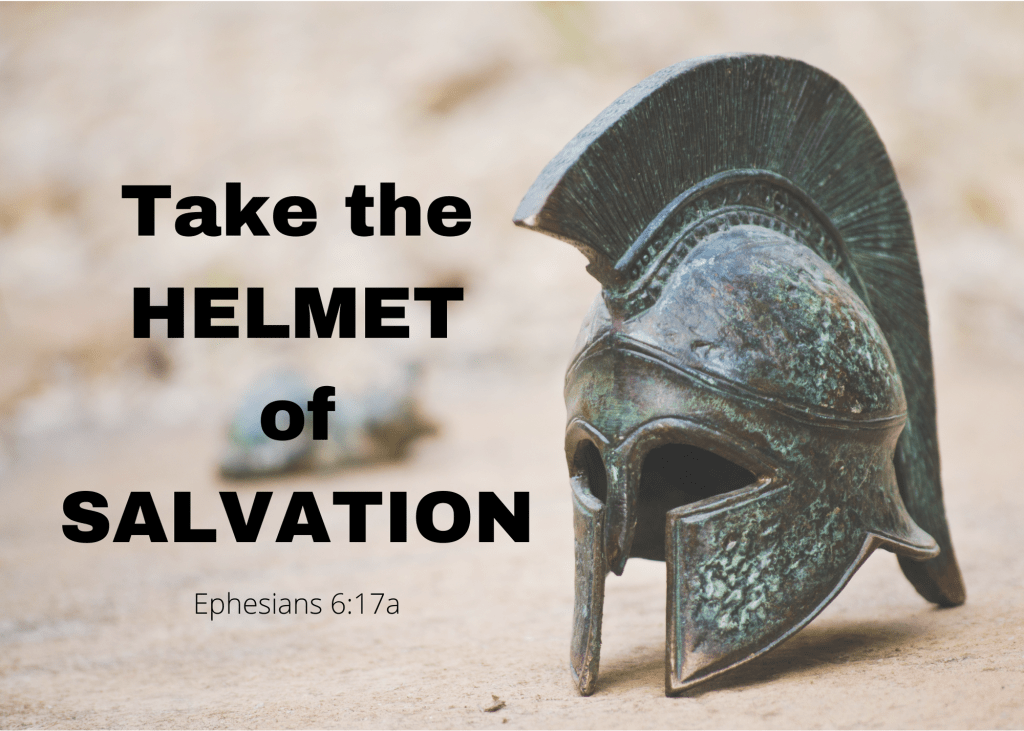
Ephesians 6:17a – “Take the helmet of salvation…”

Here’s a disquieting fact to start our devotion today: According to the International Brain Injury Association, 5.3 million Americans are living with some kind of disability due to a traumatic brain injury. 5.3 million is the population of South Carolina! Of course there are varying degrees of injury, but most are due to car accidents and sports-related incidents. 

And while 5.3 million is a staggering number, I’m willing to bet that there are so many more people living with spiritual battle scars in their minds. 

Our minds are such a vulnerable space and it’s one of the enemy’s favorite areas to attack. At least, that’s been my experience. Anyone else struggle with random thoughts popping up that obviously aren’t from God? 

But why attack the mind? Why not make the heart the primary target? Because our thoughts turn into words, which turn into actions, which turn into habits, which turn into our character. James, the half brother to Jesus, said it this way, “It is the evil that a person wants that tempts him. This desire causes sin. Then the sin grows and brings death.” (James 1:14-15, ICB) This is why it is imperative to protect this part of our body. 

For the apostle Paul, the author of this Epistle, the helmet was the perfect metaphor; after all, he was under house arrest when he wrote this letter. He probably had a lot of face time with a Roman guard who most likely wore some kind of helmet. Each piece of the helmet added another layer of protection against injury or death.

Paul calls this piece of the armor the helmet of salvation. The Greek form of the word for salvation is used only in this verse in all of the New Testament and it means “peace”. As we don this piece of armor, we can have the “peace of God that transcends all understanding will guard your hearts and your minds in Christ Jesus”. (Philippians 4:7)

Where does this salvation or peace come from? It comes from being in the Word of God daily: reading, studying, meditating, and memorizing it. We need to be intentional about the media that we consume and the conversations that we participate in. We need to be aware of entertaining the thoughts that seem to come out of nowhere. Protecting our minds against the thoughts that flow in and out should be something that is carefully monitored as we go about our daily living.

If you want to be in God’s Shalom peace while you engage in spiritual battle, be sure to wear the helmet of salvation.

-Bethany Ligon

Reflection Questions

  1. How do you think the enemy attacks minds? What about yours in particular?
  2. Describe the progression from thoughts to words to action to habits to character. Give an example that leads to ungodly character. Give an example that leads to godly character. Which type of thoughts do you work at thinking most?
  3. What protection is available to you against the thoughts that lead to ungodliness and death? In what ways can salvation and peace mean the same thing? What can you do (today) to strengthen your protection that God has made available to you?

Photoreceptors

Old Testament: 2 Samuel 22

Poetry: Proverbs 7

New Testament: Ephesians 5

A few weeks back my children were very excited to have me read a new book they checked-out from the library.  Not yet mastering the alphabet, their choices are often from the featured book table, typically the flashiest cover; however, the book they chose did not meet my expectation. Their choice: The Worm.  The title wasn’t a metaphor. Not a how-to on dance moves. Not a fictional story of a kid-turned-wrestler.  It was literally a picture book just about worms, and so we began to learn everything I never wanted to know about these three phylums of the animal kingdom.  Did you know that worms can be over 100 feet long? And there are people around the world who eat worms? Or that worms are hermaphrodites? Probably the most relevant fact to today’s devotion is that most worms, including the earthworm, don’t have eyes. This doesn’t stop them from knowing when they are exposed to light. Built into the skin of earthworms are photoreceptors which work as light detectors. These creatures of darkness cannot exist in the light. Being caught above the surface trying to do your same wormy thing equals starvation, dehydration, or becoming prey.

Looking at today’s Proverb, we can see that the speaker is specifically warning his son about infidelity and adultery.  If we use a broader brush with this wisdom, and extend the metaphors and figures of these proverbs as is often done, we can bring our own struggle with sin into the picture.  “Do not let your heart turn to her ways or stray into her paths.  Many are the victims she has brought down; her slain are a mighty throng. Her house is a highway to the grave, leading down to the chambers of death. (Prov. 7:25-27).” Don’t stray into the path of lust, pride, greed,or being obscene (Eph 5:1-3).  A knock on the door soon becomes a visit. A visit becomes a stay.  When you stay long enough, it is where you live (James 1:14-15). Like a worm, deeper and deeper you dig yourself into the ground, making your bed and lying in the grave.

You may not have heeded the warning up to this point, so here is the wake-up call to all of us worms trying to hide from the light, whether it be for a day or decades,“But everything exposed by the light becomes visible—and everything that is illuminated becomes a light.  This is why it is said, “Wake up, sleeper, rise from the dead, and Christ will shine on you (Eph 5:13-14).’” When we are exposed by the light of God, we shrivel up and die.  This can be tremendous or tragic. Waking up today means we die unto ourselves and become a new creation in Christ.  We are covered, cleansed, and made pure through God’s grace given to us through the blood of the Lamb.  If our dry bones do not rattle and we die in our darkness, there is no rebirth. Only an eternal separation, a scorching from the Light, because, “For of this you can be sure: No immoral, impure or greedy person—such a person is an idolater—has any inheritance in the kingdom of Christ and of God.  Let no one deceive you with empty words, for because of such things God’s wrath comes on those who are disobedient. Therefore do not be partners with them (Eph 5:5-7).” 

You may have fallen victim to a snare, directly disobeying the commands of God. Don’t sleep on this. Restore your relationship with the One True God, and in the midst of the distress, ask for help and He will answer, not letting you become a victim to the grave (2 Sam 22:5-7). God has given us a path to repentance and an amazing grace. It is time to put your photoreceptors to work, find the surface, and enter again into His marvelous light.

-Aaron Winner

Reflection Questions

  1. What sins have seduced you? What was enticing about this sin? Have you gone in for a visit, or a stay, or is that where you live now?
  2. What do you know about God’s wrath? What do you know about God’s grace? How does God decide which worm gets the grace and which worm gets the wrath? Which worm are you right now?
  3. How active have your photoreceptors been? Do you recognize the difference between light and dark? Unlike the worm, do you seek the light? How?

All-Surpassing Power

Old Testament: Ruth 4

Poetry: Psalms 62

New Testament: 2 Corinthians 4

2 Corinthians 4 teaches us that we have the ability to endure hardship. We are able to endure hardships because we have God’s help. As Christians we have to remember that since God has the ability to raise the dead, he also has the ability to give us the strength to handle hard situations or remove us from those situations altogether. 2 Corinthians 4:7 states:

“But we have this treasure in jars of clay to show that this all-surpassing power is from God and not from us.”

Paul refers to the power that can save us as “treasure in jars of clay”. This treasure cannot be found from worldly things. There is no amount of podcasts or self-help books that will save you the way only God’s power can save us. Paul goes on to remind us that even when we feel the pressure of our problems, we are not broken.

“We are hard pressed on every side, but not crushed; perplexed, but not in despair; persecuted, but not abandoned; struck down, but not destroyed.” (2 Corinthians 4:8-9).

2 Corinthians 4 leaves us with an important reminder. The problems we have to deal with now are only temporary and it is an opportunity for God to work within us. If we remain faithful, we will one day live eternally without worldly troubles.

“For our light and momentary troubles are achieving for us an eternal glory that far outweighs them all. So we fix our eyes not on what is seen, but on what is unseen, since what is seen is temporary, but what is unseen is eternal” (2 Corinthians 4:17-18)

-Brooke Cisneros

Reflection Questions

  1. What have you done that could only be done with God’s power? Are you using God’s power to the fullest?
  2. When have you felt “hard pressed…but not crushed; perplexed, but not in despair; persecuted, but not abandoned; struck down, but not destroyed”? What makes the difference and gives you hope even in difficult situations?
  3. What temporary or “light and momentary” troubles has God already seen you through?

By No Means!

Old Testament: Deuteronomy 21 & 22

Poetry: Job 38

New Testament: Romans 6

Today, we get to say hi to the same hypothetical objector that Paul seems to address in the first handful of chapters in the book of Romans.  Paul opens up chapter six with the question, “Are we to continue in sin that grace may abound?” (Romans 6:1 ESV).  He asks the same question in verse 15 as well.  In chapter 5, Paul talked about the great work that God and Jesus were able to accomplish through the cross.  The cross is only needed because of sin in the first place.  If there was no sin, then there would be no need for Jesus to die on the cross.  Therefore, in a sense, our sin led to the incredible, world-altering power that was experienced on the cross of Jesus.  Should we continue in that sin then to show the incredible power and grace of God?  Paul’s answer is quite clear both times this question is raised: “By no means!” (Romans 6:2,15). 

Paul goes on to talk about the baptized believer being united with Christ Jesus in his death and resurrection.  While being united with Jesus in his death, “our old self was crucified with him in order that the body of sin might be brought to nothing, so that we would no longer be enslaved to sin.  For one who has died has been set free from sin… Let not sin therefore reign in your mortal body,” (Romans 6:6,7,12).

We live in a broken world that is cursed and broken by sin.  It seems everywhere we turn we can see sin.  Since we live in a world that is broken by sin, sin is to be expected in the life of a Christian, right?  Well, that’s what many may expect, but that is not what Paul seems to indicate in chapter six.  Paul states on multiple occasions in chapter six that we are both set free from sin and that we are dead to sin.  This does not sound like someone who just expects a Christian to keep on with their sinful ways.  Paul expects the Christ follower to no longer be enslaved to the great enemy of sin.  Christ Jesus has set us free from that strong entanglement!

For too long, too many Christians have had a lax stance towards sin.  When we expect a Christian to continue in sin, I believe that we are belittling the work that was accomplished on that cross.  Before chapter 6, Paul has showed us that Christ’s death enabled us to experience forgiveness, justification, and reconciliation with God.  From my personal experience, these seem to be the central focus of the church when discussing the salvation that is offered to us through the cross.  However, it does not stop there.  Christ didn’t die just so that we could be forgiven of our sins; it’s bigger than that.  Christ didn’t die just so that we could be justified; it’s bigger than that.  Christ didn’t die just so that we could be reconciled to God; it’s bigger than that. 

I appreciate the work of Alva Huffer in his book Systematic Theology.  In his book, he details the “Seven Doctrines of Salvation”.  Huffer advocates for the fact that through Christ’s death, we have been saved seven-fold from the consequences of our sin.  On top of forgiveness, justification, and reconciliation, we also experience sanctification, adoption, redemption, and newness of life.  It is the newness of life that Paul describes here in chapter six.  Because Christ died, we can experience new life as Christians – a life that is free from sin and dead to sin.  As followers of Christ, let’s cherish this new life that we have access to.  Let’s show the world what it looks like to live a new life that is free and dead to sin!  That’s exactly what this world needs.

-Kyle McClain

Reflection Questions

  1. What does God’s grace mean to you?
  2. What is your stance on sin? And on sinners?
  3. Have you accepted the salvation God has made available through the death of His Son? If so, thank God for each of the seven doctrines of salvation! If not, what questions do you have?

A Pretty Awesome Formula

Old Testament: Deuteronomy 15 & 16

Poetry: Job 35

New Testament: Romans 3

Remember that time that you held an imaginary debate or argument in your mind with either an imaginary figure or your spouse, coworker, boss, or friend?  We have all been there before.  Evidently, Paul has been there before as well.  Except this time, Paul records this imaginary debate in Romans 3.  How exciting! 

Romans 3:1-8 gives the impression that Paul is debating an imaginary figure on how the Jews fit into the bigger picture.  Paul’s conclusion to this mini debate is that the Jews are not better off, “For we have already charged that all, both Jews and Greeks, are under sin,” (Romans 1:9 ESV).  There we have it.  All of mankind is under sin.  This conjoins the Jews and the Greeks together.  If you don’t believe Paul, no need to worry.  Paul has plenty of ammunition to help prove this point.  Paul quotes a number of scriptures from the Old Testament in the following verses to bring home this point.

After Paul’s introduction, his letter to the saints at Rome has been rather gloomy thus far.  However, verse 21 is where we start to see a shift.  Paul recognizes that we are all under sin… “BUT NOW…”.  This is where it gets fun!  This passage in Romans 3:21-31 can preach!  Essentially, this is a teaching on the doctrine of salvation, as the righteousness of God is revealed through faith in Christ Jesus for all who believe.

Many are able to quote Romans 3:23: “for all have sinned and fall short of the glory of God.”  Paul is only halfway through his sentence when we have a verse break.  Don’t forget about verse 24: “And are justified by his grace as a gift, through the redemption that is in Christ Jesus.”    Paul compares God’s grace to a gift.  Whenever you are given a gift from someone, you have two choices: you can receive it and open it or you can deny the gift.  I have many memories as a child of receiving gifts from my parents for Christmas, my birthday, or other special occasions.  Not once did I ever reject a gift that my parents gave me; I openly received the gifts every single time.  Nearly every child receives the gifts they are given without a second thought.  We need to mimic the attitude of a child here and gladly receive God’s gift of grace with open arms.  How do we receive God’s grace?  Well, fortunately for us, Paul tells us exactly how to receive that grace in the following verse.  Paul tells us that it is “to be received by faith,” (Romans 3:25).

Paul crams a lot in this short passage to conclude chapter three, as he talks about our salvation.  You can sum up Paul’s discussion in the following formula: sin + grace + faith = justification.  Paul will later reveal to his audience that the justification leads to eternal salvation. For you math nerds out there, that’s a pretty awesome formula.  For those of you not interested in math, trust me, that’s still a pretty awesome formula.

As we go through our lives, let’s remember to keep our arms open wide ready to receive God’s free gift of salvation.

-Kyle McClain

Reflection Questions

  1. Have you ever rejected a gift given to you? Have you rejected or gladly received God’s free gift of salvation? Who do you know who might need some more information or encouragement to receive this gift?
  2. How would you define and describe each of the words in the following formula: Sin + Grace + Faith = Justification. What is the importance of each one?
  3. In the gloomy moments of your life, how can Romans 3 lift your spirits and bring joy, hope and peace?