Is Paul Disobedient to God???

Acts 20:4-23:35

The next few days we are going to read the record of Paul’s journey to Jerusalem and then in the end to Rome and imprisonment.  The story is one of great believing but also a cautionary story to us about listening to the voice of God in every situation.  The apostle Paul is most responsible for the revelation of the mystery of the church of the body of Christ being given by God to us.  He proclaims in Galatians:

Galatians 1:11-12(NLT) Dear brothers and sisters, I want you to understand that the gospel message I preach is not based on mere human reasoning. 12 I received my message from no human source, and no one taught me. Instead, I received it by direct revelation from Jesus Christ.

Paul is the person chosen by God and equipped to do the ministry to the Gentiles and the formation of churches all over the known world at that time.  There are no other so central to this ministry and growth of the body of Christ.  Try to read the book of Acts records with this perspective in mind.  Also that most of the Gentile church looks to Paul as their father in the Word.  

Is the apostle Paul really susceptible to disobeying God???

Acts 20:22-24(NKJV)  And see, now I go bound in the spirit to Jerusalem, not knowing the things that will happen to me there, 23 except that the Holy Spirit testifies in every city, saying that chains and tribulations await me. 24 But none of these things move me; nor do I count my life dear to myself, so that I may finish my race with joy, and the ministry which I received from the Lord Jesus, to testify to the gospel of the grace of God.

Bold speech Paul.  I go bound in the spirit and don’t count the cost of my decision.  Is this the best that Paul can do in this situation?  I appreciate his desire to go back to Jerusalem and to try to convince his countrymen of the same truth of the Word of God he has preached all over the known world.  But early Christianity in Jerusalem has many persons that have accepted Jesus as Messiah but continue to promote the doing of the whole law of the scribes and Pharisees also.  These persons are not doing the will of God as God has revealed to Paul in his letters.  Read Galatians in concert with Acts for more perspective on both.  Then even revelation is given to other believers to warn Paul of the consequences of going to Jerusalem.

Acts 21:10-13(NKJV) And as we stayed many days, a certain prophet named Agabus came down from Judea. 11 When he had come to us, he took Paul’s belt, bound his own hands and feet, and said, “Thus says the Holy Spirit, So shall the Jews at Jerusalem bind the man who owns this belt, and deliver him into the hands of the Gentiles.’ ”
12 Now when we heard these things, both we and those from that place pleaded with him not to go up to Jerusalem. 13 Then Paul answered, “What do you mean by weeping and breaking my heart? For I am ready not only to be bound, but also to die at Jerusalem for the name of the Lord Jesus.”

Paul is not moved by anyone’s advice.  He is determined to do what he has decided to do.  

How are we like Paul in our lives?

Acts 21:27-30(NKJV) Now when the seven days were almost ended, the Jews from Asia, seeing him in the temple, stirred up the whole crowd and laid hands on him, 28 crying out, “Men of Israel, help! This is the man who teaches all men everywhere against the people, the law, and this place; and furthermore he also brought Greeks into the temple and has defiled this holy place.” 29 (For they had previously seen Trophimus the Ephesian with him in the city, whom they supposed that Paul had brought into the temple.)
  30 And all the city was disturbed; and the people ran together, seized Paul, and dragged him out of the temple; and immediately the doors were shut.

Acts 23:11(NKJV) But the following night the Lord stood by him and said, “Be of good cheer, Paul; for as you have testified for Me in Jerusalem, so you must also bear witness at Rome.”

God goes with Paul’s decision but then shows him what will happen.  Going to Rome ad imprisonment is not part of Paul’s plan but God will give it help  to make it the best outcome for Paul and also for the church.

Acts 23:31-35(NLT) So that night, as ordered, the soldiers took Paul as far as Antipatris. 32 They returned to the fortress the next morning, while the mounted troops took him on to Caesarea. 33 When they arrived in Caesarea, they presented Paul and the letter to Governor Felix. 34 He read it and then asked Paul what province he was from. “Cilicia,” Paul answered.
35 “I will hear your case myself when your accusers arrive,” the governor told him. Then the governor ordered him kept in the prison at Herod’s headquarters.

Stay tuned for the  next episode of the Adventures of Paul Going to Rome tomorrow.

Love in Christ, Tom Siderius
Getting Back to Business

1 Corinthians 5-8

Devotion by Emilee (Ross) Christian

I really enjoyed today’s reading. Paul had some zingers that actually got me laughing – my favorite being 8:2. In our reading today, we learn this letter is a response to one from the Corinthians (7:1). After a lengthy introduction in chapters 1-4, Paul gets right to addressing some specific concerns regarding the Corinthian church. There is a lot that can be discussed here, but the key seemed to be Paul encouraging the Corinthian church to remove distractions and get back to the business of spreading the Gospel. 

Earlier this week I wrote about how the early church was moving in the days of the Apostles. In today’s reading, we see a church that has come to a standstill. It seems the Cornintian church lost focus on spreading the Gospel and what it meant to be the body of Christ. Paul mentions when he told the church to stay away from people “who indulge in sexual sin, or are greedy, or cheat people, or worship idols” he was referring specifically to believers who partake in these actions (5:10 NLT). Paul plainly puts that to stay away from all such people, you’d have to leave this earth – that was another one of those zingers I found humorous. The problem Paul has with the Corinthians is they are allowing a man living in sexual sin with this step mother to be an active member of their church. It’s a distraction. It’s giving the church a bad name, as Paul writes even pagans don’t tolerate such behavior. Paul is NOT telling the church to avoid sinners, but he is telling us to get the sin out of the church. There is a difference. Allowing one who is actively participating in sin with no signs of repentance within the church causes a distraction. Discord can break out amongst the people in the church over the issue. I believe Paul is also concerned with the Corinthians giving the church a bad name, in turn hindering the spread of “sincerity and truth” (5:8 NLT). He continues this idea in chapter 6, regarding the Corinthians use of the public courts to settle disputes. He doesn’t like that this is being done in front of non-believers. Why? Because, it is distracting from the Gospel message. It’s the same way with the issues of marriage and food discussed in chapters 7 and 8. 

We have to remember the church was on a mission. Our New Testament stories and scripture come from what the early church did. Paul understood the importance of the movement and the urgency to share the Gospel. It seemed this specific Corinthian church had forgotten. Paul is urging the Corinthians to remove distractions and get back to the business of the church. I believe that is the biggest take away from today’s scripture. It’s not about whether we should be married or not, whether we eat this or that. It’s not even about what people we should avoid or allow in the church. It’s about refocusing the efforts of the church to do the work of Christ. Jesus tells us the two most important commandments are to love God and secondly love others. That is the movement to which Paul wants the Corinthians to return. It must be our focus as well. Paul sums it up pretty nicely in his opening statement in chapter 8, “But while knowledge makes us feel important, it is love that strengthens the church” (verse 1 NLT). 

Reflection Questions

  1. What distractions have gotten in the way of you intentionally spreading the Gospel? How can you minimize them (or eliminate them or use them to your advantage – depending on what your distractions are) so that you focus more on how to best love God and love others which must include spreading the good news?
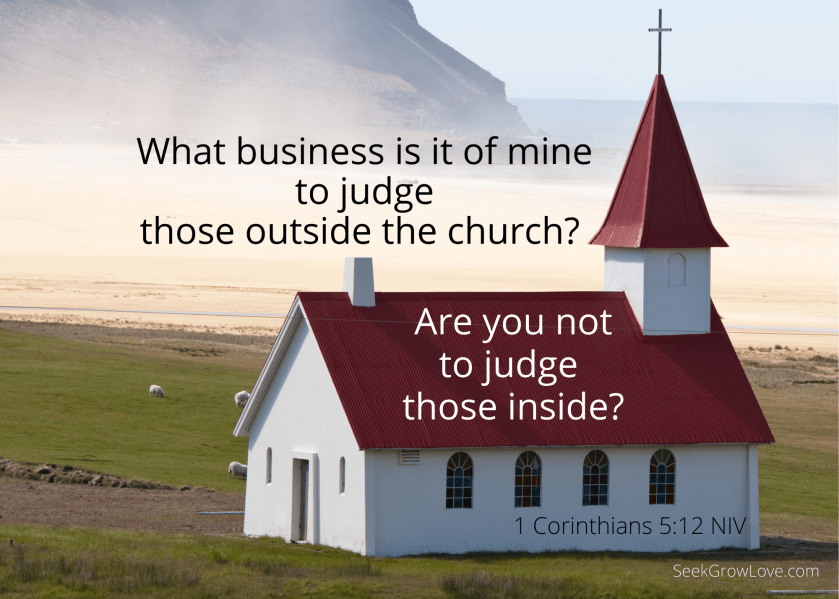
  2. What should our response be to sin in the church? What should our response be to sin outside of the church? Why the difference? What happens when we get it mixed up and treat outside sin as we are supposed to treat inside sin? What happens when we get it mixed up and treat inside sin as we are supposed to treat outside sin?
  3. After reading the whole Bible passage today, re-read 1 Corinthians 8:2. What is Paul saying in this verse? Why is he saying it? What can you learn from it? And how could you put it into practice?
  4. What do you think God wants you personally to learn and put into practice today from this letter from Paul to the church in Corinth?

The Struggle With New Revelation

Acts 11-12 

Devotion by Juliet Taylor (Tennessee)

It is good to change your beliefs based on revelation you’ve received about God’s word and what it means as it applies to your life, though it can bring on emotions you may not be prepared for. The first revelation I changed my mind about regarding the word of God was hard to handle, as it was a deeply held belief I was taught to accept and defend as truth by trusted individuals (with good intentions). But it was wrong.  

I learned it was wrong by way of other trusted individuals who had studied and changed their minds. They were able to present a good case for the error originally taught. I accepted that I believed something in error, however I didn’t fully understand the new revelation. I was confused. My confusion made me rethink what I had been taught about God and his thoughts about me. Be careful, this can happen to you. 

Thank God for his constant workings in me. The process I went through to cut through the confusion taught me how to not fear being wrong. It taught me to seek God for his wisdom about truth instead of holding on to pride. Pride does come before the fall, but it was good, as I was humbled. I can now handle being wrong. 

What I love most about the things I learned from the reading for this week’s devotional is that God’s wisdom is blaring through the pages. We get to read about how the early Christians struggled with new revelation and what they did about it.  We read about those who fell, those who were humbled, and the approach of those who did better. The better approach was rewarded with more work and a more intimate relationship with God. He gave the humble more of what they sought – his wisdom and power about what to do to spread the Gospel. 

In Acts chapter 11, some Jewish Christians took issue with Peter for eating with uncircumcised men. To convince them that this was God’s will, Peter explained his vision and experience with Cornelius. They listened and responded with the right responses, “When they heard this, they quieted down and glorified God, saying, “Well then, God has also granted to the Gentiles the repentance that leads to life” (Acts 11:18). What a response. 

After Stephen’s persecution however, fear took hold of some, to the point of stifling the spreading of the Gospel to Jews only. But there were some who took it to the Gentiles in Antioch. To those who didn’t let fear lead them, “the hand of the Lord was with them, and a large number who believed turned to the Lord” (Acts 11:21).  

Barnabas was sent to witness the workings of God with the Gentiles by those in Jerusalem. When he witnessed the grace of God, he rejoiced and encouraged them to remain true to the Lord. Barnabas was a good man, full of the Holy Spirit and faith. He brought Paul to them and together they taught the new Christians for an entire year.  

Doing God’s will (preaching the Gospel to the Gentiles, teaching them for a year, rejoicing, etc.) brought on many good things for those who were faithful to the news. They received a prophecy that there would be a famine so they behaved like Kingdom bound citizens and gave money to those in need. 

But we know that doing God’s will can also make us targets. King Herod killed the disciple James. This pleased the non-Christian Jews, so he also sought Peter’s life. The church used their powerful weapon of fervent prayer, leading to an angelic rescue of Peter from prison and death. 

Most in these chapters took the news of the new revelation from Peter very well. They rejoiced and accepted the news straight away. They got to work for the Lord, preaching the Gospel to the Gentiles and remaining with them for a time to help them grow.  

REFLECTION QUESTIONS 

There were many things the disciples did right when they heard the new revelation from Peter. What are some good actions you can take to help someone so that they don’t fall when learning something new? 

What do you think Barnabas and Paul taught the new Christians in Antioch for the year they stayed with them? 

Herod was eaten by worms and died after an angel of the Lord struck him because he did not give God the glory when the people he fed cried out, “the voice of a god and not of a man!” Why do you think he was met with this immediate consequence? 

Thankful for Their Legacy

OT: Joshua 3

Poetry: Psalm 45

NT: Romans 16

Last Friday marked one year since my father lost his battle with a terrible neurodegenerative illness. My sisters and I had helplessly watched him decline for over a decade, advocating intensely during that time to help him get the complex care he desperately needed while grieving the slow waning of our once-healthy father. Then, three days after Easter, our dad succumbed to his illness and was finally able to rest from this broken world. 

We sisters all shared a lot of our fond memories of our dad at his memorial service: his love for the color yellow, his affinity for hiking in nature, his proclivity to play practical jokes on unsuspecting coworkers and family members, his devotion to his daughters. As I remembered his life, I also considered what I would want written in my epitaph. What do I want people to say about me at my memorial service? What kind of legacy do I hope to leave? While considering my own funeral might sound a bit morbid, it is important to remember that we are mortal, our actions in this lifetime can have consequences (for the good or the bad), and we need to be focused on our mission for Christ. 

Perhaps, like me, you tend to skip over chapters like Romans 16, in which Paul is just thanking and saying hello to some random people with difficult-to-pronounce names, much like we might skip over the Acknowledgements section of a book. However, I encourage you to read it again, focusing on how all of these people were important to Paul and his work in some way. They all left a legacy, built a foundation for the early church. Paul didn’t complete his great missionary journeys alone; there were countless people supporting him in various ways the whole time. Some of the people were mentioned elsewhere in scripture; some of the others we have never heard of before, but they were all instrumental in the ministry work that Paul was doing, so he wanted to thank them publicly. (This is a good reminder to me that we need each other for help and encouragement, and we should offer gratitude to those people who have made a difference in our lives, especially those who encourage us in the ministry.) This chapter is a testament to the devotion of the early believers who helped spread the message of Jesus so we can all be believers today! And even though these are just names to us now, they were real people doing real work for the Kingdom, and their names are still being read thousands of years later. What a great legacy!

As followers of Jesus, we also have a hope beyond the grave. This life is not all that there is! We have a hope for resurrection and eternal life in the Kingdom with God and Jesus, and we are called to share that hope with others during our lives. Take another peek at the poetry reading for today. The explanation under the heading of Psalm 45 states that it was a wedding song, but many scholars also believe that it actually has some parallels to our Messiah and the hope of the coming Kingdom, the wedding feast of the Lamb (Jesus) with his Bride (the Church). What comparisons do you notice between the poem and the coming Kingdom? 

So, let’s keep living with an eternal perspective, focusing on the work God has called us to do, leaving a legacy for Him by contributing to the work of His Church. 

-Rachel Cain

Reflection questions:

-Who has been an encouragement and support to you as you seek out and pursue the work God has for you? How can you thank them?

-What do you hope is written in your epitaph? (What kind of legacy do you want to leave?)  What can you do this week to further develop or strengthen your legacy?

Not Alone

Acts 6

April 24

Helen Keller is quoted as saying, “Alone we can do so little; together we can do so much.”

As I read through Act 6 today, I am reminded that we were never meant to do ministry, serving others, all on our own might. We have been designed to be ministerial alongside others. 

The number of followers of The Way was increasing daily. In fact, the size had reached a critical juncture. 

In ecological terms, it’s referred to as “carrying capacity”. A habitat can only support a certain number of any kind of species depending on the natural resources available. 

Likewise, we read in Acts, that the number of believers was becoming so great, and including a wonderful mixture of cultural backgrounds, that peoples’ needs, specifically widows, were not being met. 

The leadership knew that people had basic physical needs as well as spiritual needs that needed to be provided for. They had to ask themselves, “What’s the best use of our time”? They realized that they could not forsake one for the other.

Once they determined the best course of action, even more people were ministered to, both physically and spiritually.

As we go about the Lord’s business serving others, we need to first ask ourselves, am I attempting to go it alone, or am I willing to work alongside others? The next question to consider is are you serving in a way that not only meets the needs of others, but that will have the greatest impact?

What I am NOT saying is that if a task isn’t one of your spiritual gifts that you can excuse yourself…however, we are informed in multiple passages within the New Testament that we all have a part to play and some individuals are better suited for some areas of ministry over others. 

When everyone is working collaboratively, and doing it in such a way that suits how God has uniquely designed us, we can have an exponential impact on the growth of God’s kingdom. 

How can you serve others, with others, for the Kingdom?

-Bethany Ligon

Questions for Reflection and Discussion

  1. Consider who you do ministry with? Thank them for this partnership.
  2. Do you too often try to go it alone? What is the dangers of working alone? What is the blessing in working with a partner or team?
  3. Are there jobs caring for the physical or spiritual needs in your church or community that aren’t getting done? How can you, with a partner or team, help meet those needs?

Living for Christ and Each Other

Acts 4

April 22

After the events of the day of Pentecost, the healing of the lame man, and the great response of multitudes in Jerusalem, the church faced life in the world of that day. A world of darkness, and difficulty. And yet met it with a flowing out of the life of Jesus Christ. This is ideal Christianity, true, genuine Christianity. Unfortunately, there is also a counterfeit Christianity. It came in shortly after this in the early church, and evidence of it will be seen throughout the book of Acts. Wherever the true church has gone throughout the world, counterfeit Christianity has gone right along with it. How can you tell true Christianity from counterfeit?

Counterfeit Christianity can be recognized externally as a kind of religious club where people, largely of the same social status or class, and bound together by a mutual interest in some religious project or program, meet to advance that particular cause. That is part of Christianity and let’s face it every group that gets together. But that is a far cry from all that true Christianity is. True fellowship consists of individuals who share the same divine life, who are made up of all ages, backgrounds, classes, and status-levels of society, and who, when meeting together, regard themselves as what they really are, brothers and sisters in one family. With that mutual background of love and fellowship they manifest the life of Jesus Christ.

That is what we have here. The key idea is community, commonness, everything in common. They were of one heart and mind. Here were people who, by the Holy Spirit, had been united into one life. They were of one heart. At the very deepest level of their lives they belonged to each other, and that is only possible by means of the Holy Spirit. They did not need to have met someone before to recognize that if he or she is a believer they belong to each other, they are of the same family and they always have the most important thing in common. This was true of these people.

Not only did they have it, but it also manifested itself in the fact that everyone had a new attitude toward the material life. This is not a forced distribution of goods. It is not an attempt to make everyone give up their material things and redistribute them to others. No, it is a change of attitude, saying, nothing that I possess is mine, but everything that I possess is God’s, and therefore it is available to anyone who needs it. So here were these early Christians, one in heart and mind and body, united together. That is the church as it ought to be.

-Andy Cisneros

Questions for Reflection and Discussion

  1. Don’t point the finger at others – but look at yourself. How authentic, true and genuine is your Christianity? Are there any areas where you slip into a counterfeit Christianity? What would the fix be?
  2. How will you practice unity of the church body this week? And next week?
  3. What do you “possess” that is God’s? (Hint: it should be a pretty long list – but go for it – no one word answers here.). How can you show that these belong to God and make them available to anyone in need?

Devote Yourselves

Acts 2

April 20

“They devoted themselves to the apostles’ teaching and to fellowship, to the breaking of bread and to prayer.” Acts 2:42

One of the things the very first churches did was devote themselves to fellowship. Fellowship means holding all things in common. They would share everything. They began to know and to love one another. Here are 3,000 people suddenly added to a little band of twenty. Most of them probably were strangers before this time. Many of them had come from other parts of the world into Jerusalem for that occasion. They did not know each other. But now they are one in Christ, and they begin to love each other and start to talk to each other, to find out what each other has been thinking and how each has been reacting, and to share their problems and burdens and needs, to talk about these together and pray together about them. There was a wonderful sense of community, of commonality, of belonging to each other. That is the fellowship which is the intended life for the body of Christ.

If the body is not operating, then the life is not manifest. That means there is no power because the life of God is always power. The reason the church has been so powerless lately is that it has been so fragmented and broken. We have estranged ourselves from each other. In Ephesians, the Apostle Paul says, and do not grieve the Holy Spirit of God… (Ephesians 4:30). Then he lists the things that grieve the Holy Spirit: Get rid of all bitterness, rage and anger, brawling and slander, along with every form of malice. Be kind and compassionate to one another, forgiving each other, just as in Christ God forgave you. (Ephesians 4:31-32)

If that is not happening, then the Spirit of God is grieved. When the Holy Spirit is grieved, it does not act. There is no life. The church becomes dull and dead and sterile and mediocre. All this is manifest in an empty ritual, with no vitality in it. God intends that Christians should have fellowship, should share one another’s lives and thoughts and problems — bear one another’s burdens and so fulfill the law of Christ. It is not an option; it is an essential. Therefore, when the Holy Spirit of God begins to move in any congregation, or in any assembly of believers, he starts at this point. He begins to heal the brokenness of their lives and their relationships one with another, to get them to admit to each other their malice and their anger and their frustration and their grudges, and to forgive one another. This is when life begins to flow once again through the body of the Lord Jesus Christ.

What can you do to have more fellowship with fellow believers?

-Andy Cisneros

Questions for Reflection and Discussion

  1. Look again at the list of things that grieve the Holy Spirit, as well as the positives we are to do instead. Slow down and prayerfully consider each one, searching your own heart, words, attitudes and actions. What do you need to ask forgiveness for? Who do you need to forgive?
  2. How can you use fellowship to then bear one another’s burdens?
  3. How devoted are you to fellowship with the body of believers? What can you do to have more? With whom? When? Where? How? And, of course, remind yourself why?

Gaining God’s Guidance

Acts 13

I am continually amazed at the way God directed the steps of the apostles through the direction of His Holy Spirit in the days of the formation of the early church. The apostles had the message to share that through Jesus there was forgiveness of sin and reconciliation to the Father. They were given the opportunity to share this message in very public places and many came to believe in Jesus. Can you imagine speaking in one place and then being asked to speak again the following week and almost the whole town shows up?

We as Christians have been given the same message to share – that there is forgiveness for sin through Jesus Christ resulting in reconciliation with our heavenly Father God. This is the greatest message of hope there is. Do we share it as often as we can? Wouldn’t it be awesome if we were asked to share and a whole town full of people showed up and came to believe! We realize that the apostles were filled and empowered by the Holy Spirit to do amazing things, and make amazing inroads in the gentile world for the gospel of Christ to be shared and accepted. If we want to be successful like they were notice what they did at the very beginning of Acts chapter 13 – the men fasted and prayed for direction and it was given to them.

As we attempt to share the gospel of Jesus Christ with the world do we go about it in our own way or in God’s way. Do we remember to pray for God to lead us by His Holy Spirit to know where and when we are to share the message? Do we ask for the opportunity to share and do we ask for the correct words to say as the opportunity presents itself. The apostles were successful in their mission to share the gospel in Antioch because they had prepared the way ahead with prayer, and diligence to listen to where, and when God was directing them to speak. All of this leaves me wondering – would we be much more successful in our sharing of the Gospel if we spent more time in preparation with prayer and listening for God’s directives? Give it a try and see what happens!

-Pastor Merry Peterson

Pastor Merry Peterson lives in Ontario, Canada and pastors at Freedom In Christ Church.

Today’s Bible reading passages can be read or listened to at BibleGateway here – 2 Samuel 7-8 and Acts 13

The Early Church : The Passion of The Church

Acts 3

The early church was a special time in history. Jesus has just been raised. He has gone up, bodily, into heaven, and has poured out his Spirit upon those who follow him. (Rom. 8:9) In our day discussions about doctrines and divisions about drivel develop daily. 


BUT in the EARLY CHURCH, they were passionately pleading for the Pierced. They didn’t argue and debate about the number of angels that can dance on the head of a pin (to be fair, no-one has ever really debated that question). We can get so distracted from what was the early church’s singular focus : giving everyone and anyone the message of Jesus, and changing their world with the power of Jesus.


In chapter three, a man who had been begging for years is healed. This is the first of many, many miracles recorded in the book of Acts. The disciples were passionately sharing the message and gift of Jesus with everyone! They tell their fellow Israelites that God healed this man because of his servant Jesus. They tell the Sanhedrin and high priest about Jesus. They count it as a joy when they are persecuted and beaten for Jesus. They know their reward in heaven is great, because the righteous are persecuted by the wicked (Matt. 5:12).


In our lives, are we passionate about the message and work of Jesus then and now? If you aren’t don’t try to be passionate!


Instead, remember your sins, your mistakes, your failures. Remember that for even the smallest, you were separated from God. You were condemned to destruction, because that is the fate of those without God. And remember that God loved you enough to give you Jesus to redeem you. Jesus loved you enough to die in your place. They love you SO MUCH they love you just as you are, and they love you TOO MUCH to let you stay there, and want to make your life better, freer, holier, more and more wonderful. 


The early church was passionate because they knew the truth of Christ. We will be passionate when we remember it. 

-Jake Ballard

Today’s Bible reading passages can be read or listened to at BibleGateway here – 1 Samuel 17-18 and Acts 3

Share Jesus – at all costs

Acts 4-6

            Earlier this year, in June, I experienced a first.  Let me walk you through the moment.  I was preaching at the North Hills Church of God in Springfield, Ohio, as I do every Sunday.  At this point in time, our church chose to worship outside because there were a lot of unknowns of the Coronavirus.  There were very strict rules in place to help prohibit the spread of the virus.  During my message, a police officer slowly pulled through our long driveway and checked what was taking place.  For a split second, I thought that I was maybe going to get in trouble for hosting a large group gathering.  I thought I could get in trouble for preaching to a group of people.  It was the first time in my life that I ever wondered whether or not I would get in trouble with preaching God’s Word.

            To say that we have it pretty easy in the United States is quite the understatement.  I praise God that we have the freedom to share God’s Word with others without even having the fear of being persecuted.  I have spent all of maybe 5 seconds in my life thinking that I could get in trouble/persecuted for sharing God’s word.  If I had to guess, I would say that most people reading this would have a similar experience to myself.  There are people today who do not have this luxury, and this was especially true in the book of Acts

            In Acts chapter 4, our heroes, Peter and John, were sharing God’s Word with others.  When they did this, they were arrested and presented before the Jewish council.  The council questioned Peter and John, and the council commanded them to no longer share the good news about Jesus and remain silent.

            I absolutely love Peter and John’s reply to this command to remain silent: “Whether it is right in the sight of God to listen to you rather than to God, you must judge, for we cannot but speak of what we have seen and heard,” (Acts 4:19,20).  Burn baby to you, council!  Peter and John made it obvious to the council, that they must listen to the voice of God over the voice of men.  They had to preach the good news of Jesus, for that is what God wanted them to do, not the council.  Peter and John did not care what the consequences would be for preaching about Jesus.

            Peter and John were eventually released after receiving more threats from the council.  Word got out of what had taken place to Peter and John.  The Christ followers responded by praying to God for boldness.  The early Christ followers did not succumb to the external pressures of the world.  Rather, they prayed to God and came together as one to share this radical message of the Messiah.

            These Jesus followers gave their all to further spread this message.  They were even willing to contribute all of their possessions to spread the knowledge of Jesus the Messiah, and that is literally what they did.  They pooled all of their possessions together for the good of the gospel message (outside of a few greedy people *cough* Ananias and Sapphira *cough*).

            My oh my!  Imagine what good we could accomplish today if we had the same mindset of the Jesus followers in Acts.  These people had no cares in the world what would happen to them for sharing the gospel message, even though the threat was very real and evident.  All they did was pray for more boldness, and it didn’t stop with just their voices either.  They were willing to give all of their possessions to help spread this gospel message.

            What great examples these early Jesus followers provide for us today.  In comparison, today, we seem to be a whole lot more reserved in our approach to spread this gospel message.  Maybe we should take a note from the early church and take some more extreme measures in our life to spread the gospel message.  If we do, God can work so many wonderful wonders in and through us. 

            Be bold and give it all to God!

-Kyle McClain

Today’s Bible passage can be read or listened to at BibleGateway here – Acts 4-6

Tomorrow we continue the exciting, inspiring historical account of the early church with Acts 7-8. Come read along!