Today’s reading contains one of my favorite stories about Paul’s travels – his time in Athens. I love this story because it teaches us to approach others of varying beliefs with kindness and respect. In Acts 17:22-30 Paul demonstrates how to speak the truth in love.
Paul begins his discussion with the Athens people by complimenting them. It isn’t false flattery either. While the lifestyle of idol worship is appalling, Paul looks at the heart behind the lifestyle and establishes common ground with the people. He makes the observation that they are “very religious in every way” (v. 22 NLT). He reminds them of their own “‘unknown God’” to whom they have dedicated an altar. Instead of coming to them with radically new ideas, he expounds on one of their own. Instead of creating division between his religion and theirs, Paul seeks unity.
In his following statements, Paul shows his knowledge of their customs, further establishing his credibility. He isn’t ignorant of their ways of life. He notes how the Greeks put special significance over temples, believing it to be where their gods reside and have power. He explains how the Hebrew God “since he is Lord of heaven and earth, he doesn’t live in manmade temples” (v. 24 NLT). He discusses their custom to offer sacrifices and argues that the true God does not require sacrifices from man in order to survive. Finally, Paul quotes some of Athens own poets to prove the existence of God as creator of man. To make all these arguments, Paul needed to have a baseline understanding of the Athens religious beliefs. This means he took the time to understand the people he sought to evangelize.
It’s also worth noting that Paul initially approaches them with an I statement. I looked it up in the original Greek and sure enough the verb used for seeing/noticing is conjugated first person singular. In relational communication, I statements are key. I statements help the speaker convey ideas without seeming to attack the recipient. I think it is brilliant that Paul does that here with the Athens people.
The way Paul speaks to the Athens people reminds me of how he explained his teaching style in I Corinthians when he wrote “I have become all things to all people” (9:22 NIV). Paul humbles himself in sharing the gospel. Rather than teach a doctrine, Paul sought to teach good news. I think today we can learn from Paul. If there is someone in your life who’s lifestyle seems counter to yours or your beliefs, I encourage you to search for common ground like Paul. Find that common ground. Address it, using an I statement. Then, expound on their beliefs by guiding them to the truth. It takes finesse, of course, but it is important to not ostracize people. In a world full of so much division, look for the similarities. Ask God to give you humility. I wonder just how many people we could reach if we paused and looked for our similarities. Despite the many ways we can differ, at the end of the day, we are all a part of God’s creation, groaning and longing for a day free from death and decay. We are more alike than we are different.
Reflection Questions
Have you worked on using “I statements”? What results have you seen? Have you tried them before when sharing the good news?
How was the good news shared with you? Are there bad ways to share the good news? What might that look like? With what results?
Think of someone different from you who does not currently have the hope of eternal life. What do you have in common? What do you know about them? What “I statements” could you use to start a conversation with them about God?
The wisdom James is giving his readers sounds a lot like the wisdom given in the law of Moses (Leviticus 19), from the book of Proverbs, and from the Sermon on the Mount (Matthew chapters 5, 6, & 7). I can’t think of a better devotional than to review it and what I believe it means so I can apply it:
Let not many of you be teachers, because teachers will be more harshly judged. Teachers have a responsibility to seek God’s wisdom about what they are teaching others so that they will not lead others astray. They are influencers. If you’re going to influence someone to follow God’s word, take care that you are seeking God’s wisdom about how to interpret it so that you can lead by example, like Jesus did.
We all stumble in many ways. But if we can learn to control our tongue, we can be a perfect person, able to control how we behave. Jesus did this. He only spoke what the father told him, and then did what his father said to do.
Like a ship’s rudder directs the whole ship, or a bit in a horse’s mouth directs the whole horse, so the tongue bridled can direct the person’s behavior. The tongue speaks what’s in the heart of the person; the person’s own will. If the tongue can be tamed, by seeking God for his wisdom about what to speak and then do, the person is letting God lead, or letting God’s will direct her, or walking by the spirit.
Practice using caution when you speak, seeking God’s wisdom about what you should say and what you should do like Jesus did, so that what you say is what you do, and what you do is what God says is good.
Again, just as a small flame can set a whole forest on fire, so the tongue is a small thing, that can send a person to the grave. If what you speak is not of God, you’re speaking of your own wisdom and doing your own will. When you do this, death is the end result if you do not get back on the right path.
Man has tamed all of God’s creation, and yet he cannot tame his own tongue. With it he blesses his father but then curses men who were made in the likeness of God. Let’s not let it be this way, friends.
Who among you is wise and understanding? If you are, prove it through your good deeds. Notice that it doesn’t say the wise and understanding should become a teacher, though that should be a prerequisite, I think.
If you are wise and understanding, it will be evidenced by your bridled tongue. You will be a gentle person, who does the will of God.
Deeds that are not good, or not wisdom from above, include bitter jealousy and selfish ambition. The behaviors involved with these characteristics are earthly, or demonic, and they create disorder and evil. They are deeds done with the motivation of loving oneself without a care for others.
Deeds that are good, from above, will be produced from people who are first pure, then peaceable, gentle, reasonable, full of mercy and good fruits, unwavering, without hypocrisy. These are deeds that are done for the good of others, for love’s sake.
The seed whose fruit is righteousness is sown in peace by those who make peace. In other words, our goal is to sow the word of God in others peacefully, so that they too will bear righteous fruit; they’ll become people who also become righteous and are peaceful.
How many times do you see the opposite happen, especially online? I work from home, with fewer opportunities to spread the gospel face to face, but I enjoy doing it online. Others use this tool as well. Unfortunately, I think many keyboard warriors have missed the mark on this one. There seems to be a motivation of pride – to win an argument, with much quarrelling and name calling, rather than peaceful planting for love’s sake. If someone doesn’t want to hear your argument, shake the dust off and move on peacefully.
Chapter 4.
What is the source of quarrels and conflicts among you? It’s your desire to please yourself, or for your own will to be done. For example, you lust and do not have, so you murder. You are envious and cannot obtain what someone else has, so you fight and quarrel.
You do not have what you want because you do not ask. If you do ask, you do not receive because you ask with the wrong motives, so that you can spend it on your own pleasures.
You are supposed to ask to receive things for your own good and for the good of others, that is, God’s wisdom about whatever God says is good for you.
If you don’t, you’re like an adulteress, envious of something not meant for you, but you take it anyway to please yourself. When you do this, you’re a friend of the world, and an enemy of God, because you do the things opposed to his will and will therefore hurt yourself or others in the process with your own will/judgment.
He jealously desires his spirit to dwell in us, which prompts us to desire to do his will, not our own. Therefore, he gives greater grace to the humble, that is, to those who seek God’s help in making decisions (and then act on his wisdom about what to do).
So, submit to God for his wisdom. Resist the devil by resisting the urge to walk by the flesh (your own will) rather than the spirit’s urging, and the devil will flee. Remember that he fled from Jesus after his temptation because Jesus met him with this resistance. He told him he will do God’s will. Draw near to God and he will draw near to you.
Be humble people. Humble people cleanse their hands (stop sinning). They aren’t double-minded, they are seekers of one will, God’s. If they were sinning or seeking to please both God and man, they need to mourn and weep their sin and circumstance. Humble people will be exalted.
Don’t speak evil about your neighbor. This means do not slander; don’t charge someone falsely with malicious intent by attacking their reputation. When you do this, you have judged your neighbor as unworthy of receiving the royal treatment of love. When you do this, you have spoken against the law (of Moses (Exodus 20:16), but as it should be applied under the law of liberty) and become a judge of it, rather than a doer of it.
Instead of seeking God’s wisdom about your neighbor and what to do, you used your own wisdom to judge him falsely according to your own will. You will be put to shame, for there is only one judge, who is able to save and destroy.
We do this when we rely on our own will to make a profit as well. When you make your own decisions about what you’ll do to make a profit, or an abundance beyond what you need, and succeed, you become boastful. When you boast in relying on your own wisdom and will to make a profit, rather than relying on God for your provision and what to do with it, you’re being arrogant. Instead, seek God’s will in the matter, and do it. You don’t know what tomorrow holds for you.
If you know the right thing to do according to God’s will but do not do it, that is sin.
Chapter 5.
If you’re rich and store up treasures for yourself on earth without regard for reliance on God for your provision, nor using your abundant excess for those in need, your wasted rotting possessions will testify against you in the end (because you’ve decided to be the judge of how you’ll behave instead of relying on God’s wisdom to teach you what to do in various matters of this life).
The context here is about the rich who have been wicked, withholding the pay to those who served them in making their abundance. Like Abel crying out to God, the cries of those you’ve mistreated will reach the ears of the Lord, whom God appointed judge.
While you were enjoying your luxuries, those who worked hard but were treated badly were dying. You didn’t save them with your wealth by helping them with it. Instead, you condemned the righteous to death by withholding what could have helped them. They died without fighting against you for help.
Instead of being like this rich man, be like the righteous laborers. Be patient until the coming of the Lord, just as the farmer is patient in waiting for the precious produce of the soil to be ready. If you can be patient in thinking on the coming of the Lord whose time is near, it can strengthen your heart, and you can endure.
Don’t complain against brothers and sisters in Christ, so that you won’t be judged. The judge is standing at the door! I tie much of what I read about unrighteous complaining to the Israelite children in Massah and Meribah. They were judged for grumbling against Moses (and in turn, God) for bringing them out of slavery only to suffer in the wilderness, with no regard for the good God had done for them. They looked back at their life as a slave and thought it better than being free in the wilderness. This showed a lack of faith/trust and disobedience to God, as it was testing God.
As examples, this wisdom from God mentions the prophets of old, how they endured suffering for doing what was right in God’s eyes with patience and were counted blessed, especially the prophet Job. Those closest to him urged him to grumble against God for his poor circumstances. He never did. We know how it turned out for him in the end, full of God’s mercy and compassion. Take him as an example to follow if you are suffering.
Above all, do not swear, either by heaven or by earth or with any other oath; but your yes is to be yes and your no, no, so that you do not fall under judgement. I think this comes from Matthew 6:33. The Law of Moses says, “Do not make false vows, fulfill them to the Lord.” But Jesus says don’t make a vow at all. Let your word be good enough.
So why would this be above all? Because oaths in Jesus’s time were used to manipulate or test God. People would use vows or oaths in the name of God to get someone to do what they wanted them to do because they’d swear by God’s name. Don’t do this!!! I believe it is also part of taking God’s name in vain (e.g., “I swear to God I’ll do what I say”).
What’s in the heart of the person who swears by God’s name? It’s not to honor their commitment but to get what they want using God. Just let your word be good enough. Don’t test/use/manipulate God. He can’t be tempted anyway so you’re just condemning yourself.
If you are suffering, pray.
If you are cheerful, sing praises to God.
If you are sick, call for the elders of the church and they will pray for you, anointing you with oil in the name of the Lord, and the prayer of faith will restore the one who is sick and the Lord will raise him up.
Notice that if you are suffering, you are to pray, but if you are sick, you are to have someone else pray for you. I think this is because the sick person may not be able to pray as he would when well. But what follows should follow all who are righteous who pray; it should be a prayer like the Lord’s prayer, including asking for forgiveness of sins.
Confess your sins to one another and pray for one another so that you may be healed. I don’t think this is strictly in context with someone who is sick needing prayers for sin. It should be a part of our everyday life as Christians, as we pray the Lord’s prayer together. The prayer of a righteous person, when it is brought before God, can accomplish much, just like it did for Elijah when he earnestly prayed for no rain.
If anyone among you strays from the truth and someone turns him back, know that the one who has turned a sinner from the error of his way will save his soul from death and cover a multitude of sins. Turning someone from sin is loving them. But be sure to be gentle when you do it. And be sure you don’t have a log in your own eye first (Prov 10:12; Matt 18:15-17; 1 Peter 4:8).
Our daily lives should involve helping each other be the people God wants us to be, working together to know and do God’s will. It will involve praising God together, serving each other, praying for one another, and helping each other abstain from sin or turning away from it. Lives are at stake.
REFLECTION QUESTIONS
1. Chapter 3 places a lot of emphasis on taming the tongue. I think this has to do with stopping ourselves to seek God’s wisdom before we speak and proceed to act on our own wisdom/with our own will. What do you think?
2. Chapter 4 seems to lump things we do that don’t seem too harmful (like quarreling) with things we deem very harmful, like murder. Jesus seems to do this too when he applies the New Covenant command of love to Old Covenant laws (i.e., don’t just refrain from murder, refrain from being angry with your brother). I think he does this to show us how to stop sin from “growing”. If you can cut off anger and love your brother, you won’t murder him. What do you think?
3. Chapter 5 made me think a lot. God is for the protection of his people. His laws are for our good and the good of others, yet he calls us to sacrifice our rights in order to save others. Others in turn are to sacrifice for us. How do you decipher when to speak up and act for justices’ sake verses staying silent and suffering unrighteousness done to you by others, knowing God will judge through Jesus in the end?
As Jesus continues his journey toward Jerusalem, he encounters people from all walks of life—outcasts, disciples, religious leaders, and ordinary men and women. In Luke 17:11–18:14, there are various stories and teachings involving miracles and parables where Jesus calls people to deeper trust, genuine gratitude, and humble prayer.
Trust and Thankfulness
This section of Scripture opens with Jesus traveling along the border between Samaria and Galilee. Ten men with serious skin diseases (traditionally translated as “lepers”), who were shunned by society and desperately wanted mercy, call out to him from a distance, saying, “Jesus, Master, have mercy on us” (Luke 17:13). Jesus responds not with an immediate healing, but with a command: “Go and show yourselves to the priests.” As they obeyed, they were cleansed. But while all ten were physically healed, one man (the Samaritan) displayed gratitude which brought him a deeper wholeness—spiritual as well as physical. Jesus tells him, “Your trust has made you whole” (Luke 17:19). The passage reveals that faith and thankfulness are both vital to experiencing the fullness of God’s blessing.
One helpful insight here is that trust often requires action before we see results. The lepers had to begin their journey to the priests while still unhealed. Their obedience was an expression of trust, and as they went, God’s power healed them. Trust, even as small as a mustard seed, has the power to move what seems immovable (cf. Luke 17:6).
Reflect: Where is God inviting you to trust him more, even before you see the outcome? How might cultivating a heart of gratitude open the door to God’s work in your life?
Persistence in Prayer
Jesus then tells the parable of The Persistent Widow (Luke 18:1-8), encouraging his followers to “always pray, and not become discouraged.” The widow’s relentless pursuit of justice before an indifferent judge is contrasted with God’s attentive care for his people. If even an unjust judge can be moved by persistence, how much more will God respond to the cries of his beloved children when they persistently come to Him in prayer?
The parable is about the necessity of persistent prayer and unwavering hope, even when answers seem delayed. Jesus asks, “When the Son of Man comes, will he find trust on the earth?” (Luke 18:8). Our perseverance in prayer is an act of trust and also a testimony to our trust in God’s character.
Reflect: In what prayers do you need to be more persistent? What discouragements in your life can you bring honestly before God, trusting that he hears and cares?
Humility Before God
Finally, Jesus tells the parable of The Pharisee And The Tax Collector (Luke 18:9–14). The Pharisee stands confidently, listing his religious achievements and looking down on others. The tax collector, by contrast, stands at a distance, unable even to lift his eyes, but nonetheless, he prays: “God, be merciful to me, a sinner.” Jesus declares that it is the humble tax collector who goes home “righteous,” not the devout Pharisee. The reason Jesus gives is that “everyone who exalts himself will be humbled, but whoever humbles himself will be exalted.”
This parable reveals that one must be humble when coming before God. Humility, openness, and a childlike posture are essential for receiving the kingdom of God (Luke 18:17). Our standing before God is not based on our prowess, devoutness, or accomplishments, but on our honest need for his mercy, because there is nothing we can do to deserve it.
Reflect: In what ways do you find yourself comparing your spiritual life to others? How can you approach God with greater humility and openness in your heart?
Encouragement
As you read these stories and teachings of Jesus, may you be inspired to trust in God more deeply, return thanks for His goodness and blessing, persist in prayer, and humble yourself before Him.
Jerry works on the REV Bible (revbible.com) as the chair of the REV Translation Committee and the lead NT translator. He also has a podcast on the Book of Proverbs called “Words of Wisdom” (stfi.org/podcasts/words-of-wisdom-podcast) that people can find on Spotify, Apple, Pandora, etc.
Jesus was a master teacher, and he used parables to teach and challenge his listeners to reconsider their present attitudes or perspectives. In Luke 16, Jesus teaches on wealth, faithfulness, forgiveness, and humble service, inviting us to consider how our daily choices reflect our commitment to God’s kingdom and to live in light of the age to come.
Wise Stewardship and Eternal Perspective
Jesus begins this section with the Parable of the Wise Manager (Luke 16:1-9). In this story, a house manager is called to give an account of his stewardship after being accused of wasting his master’s possessions. Facing dismissal from his position, he shrewdly reduces the debts of his master’s debtors, hoping to secure their goodwill for his own future. Surprisingly, the master commends the manager—not for his dishonesty, but for his prudence and foresight. Jesus then says, “For the sons of this age are in their own generation more prudent than the sons of the light. And I myself say to you, make friends for yourselves by means of unrighteous wealth, so that when it fails they will receive you into the tents in the age to come” (Luke 16:8-9).
Scripture teaches that our resources—whether money, talents, or opportunities—are temporary and ultimately belong to God. Jesus calls us to use what we have now with a perspective toward the age to come, investing in relationships and acts of generosity that have lasting value in God’s kingdom. Furthermore, our “wealth” includes not only material goods, but also our mental and physical abilities. The challenge is to use all we have to prepare for the future life God promises rather than clinging selfishly to earthly treasures here and now.
Reflect: How can you use your resources today to bless others and honor God? What does it mean for you to “make friends” through your actions and generosity with respect to the age to come?
Faithfulness in Little and Much
Jesus continues on in Luke 16, saying, “The one who is faithful in a very little is also faithful in much” (Luke 16:10). This is such an important point about the need to be mindful of small things before thinking about larger things. In addition, Jesus warns that we cannot serve both God and wealth, for our loyalties will inevitably be divided (Luke 16:13). The religious leaders, who loved money, scoffed at Jesus’ teaching, but he reminded them that God knows the heart (Luke 16:14-15). Jesus’ emphasis is on faithfulness in small things as the foundation for greater areas of responsibility in God’s eyes. Our daily choices, even in seemingly insignificant matters, reveal where our true allegiance lies and where our focus is placed.
Reflect: In what “small” areas of your life is God calling you to be more faithful? How might your attitude toward money or possessions reflect the way you trust in God?
The Rich Man and Lazarus: A Warning and a Promise
Jesus then tells the Parable of the Rich Man and Lazarus (Luke 16:19-31). The rich man lives in luxury, ignoring the suffering of Lazarus, a poor beggar at his gate. After death, their roles are reversed: Lazarus is comforted, while the rich man is in torment. The parable warns that earthly status and comfort are fleeting, and that our response to the needs of others has eternal consequences. This story is a powerful call to compassion and to heed God’s Word, for “if they do not listen to Moses and the prophets, they will not be persuaded if one rises from among the dead” (Luke 16:31).
Reflect: Who are the “Lazarus-es” in your life—those in need whom God is calling you to notice and care for? How does this parable shape your view of justice and mercy?
Forgiveness, Faith, and Humble Service
In Luke 17:1-10, Jesus addresses the challenges of his followers with regard to their life in community with one another. He warns against causing others to stumble and commands a spirit of continual forgiveness: “If your brother sins, rebuke him, and if he repents, forgive him…even if he sins against you seven times in the day” (Luke 17:3-4). Jesus’ disciples, feeling the weight of this command, cry out, “Increase our faith!” Jesus assures them that even faith as small as a mustard seed is powerful when a person trusts in God.
Finally, Jesus reminds his disciples that serving God is not about seeking recognition or reward. “When you have done all that you were commanded, say, ‘We are unworthy servants; we have only done what was our duty’” (Luke 17:10). Even after faithful obedience to God, our attitude should be one of humility, not entitlement. We are to focus on our duty and responsibility as disciples and not be preoccupied thinking about what reward we might receive.
Encouragement
Jesus is calling us to live with wisdom, faithfulness, compassion, and humility as his disciples. As you reflect on these teachings, consider how you can steward your resources for God’s glory, forgive generously, and serve with a humble heart. May you find encouragement in knowing that God sees your faithfulness, values your compassion, and honors your humble service in His kingdom.
Luke 14-15 presents some of Jesus’ most challenging teachings, calling us to embrace humility, count the true cost of discipleship, and rejoice in God’s relentless pursuit of the lost. Also, we find some of Jesus’ most memorable parables and statements that help us to understand what it means to be a servant and call him “Lord,” and the depth of God’s grace for all who turn to Him.
Humility and Hospitality in God’s Kingdom
Luke 14 opens with Jesus at a Sabbath meal in the house of a Pharisee, where he observes how the guests desired to sit in places of honor. Jesus uses this moment to teach about humility, saying, “Everyone who exalts himself will be humbled, and whoever humbles himself will be exalted” (Luke 14:11). In God’s kingdom, Jesus is declaring that status is not measured by one’s social standing, but by a heart that is willing to serve and take the lowest place. Jesus goes further, urging his listeners to invite not just friends and wealthy neighbors to their feasts, but “the poor, the maimed, the lame, the blind” (Luke 14:13). True hospitality, he teaches, is generous and selfless, reflecting God’s own gracious invitation to everyone.
Reflect: In what ways can you practice humility in your daily interactions with others? Who in your life might need an invitation to experience God’s love through your hospitality or kindness?
Counting the Cost
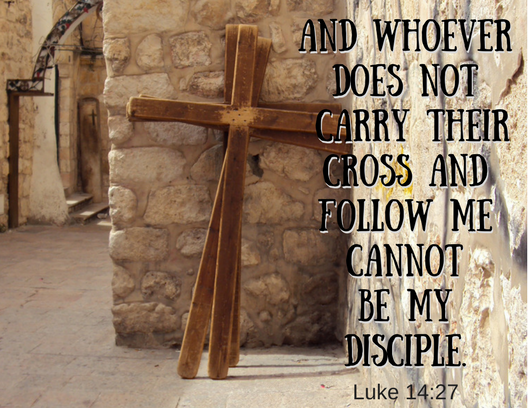
As crowds follow Jesus, he turns to them with sobering words and says, “If anyone comes to me, and does not hate his own father, and mother, and wife, and children, and brothers, and sisters, yes, and his own life also, he is not able to be my disciple. Whoever does not carry his cross and come follow after me is not able to be my disciple” (Luke 14:26-27). This statement would have certainly caused his audience to be taken back, wondering what this stipulation could mean. But Jesus is not commanding hatred or any ill-will toward others. Rather, he is using intentionally strong language to emphasize the supreme loyalty required to follow him. Discipleship means putting Jesus above all other relationships and comforts, and being willing to endure hardship and sacrifice for his sake. He illustrates this with parables about building a tower and a king preparing for war—both which require careful consideration of the cost (Luke 14:28-33). Jesus’ main point is that following him must be a wholehearted commitment and not a partial or casual decision.
Reflect: What does it mean for you to “carry your cross” in your current season? Are there certain comforts or relationships that are impeding your commitment to Christ that you do not want to let go of?
The Joy of God’s Restoration
Luke 15 is a chapter overflowing with God’s heart for the lost. The religious leaders grumble at Jesus because he welcomes and eats with sinners; something which they find repulsive and utterly alarming. In response to their judgmentalism and resistance to seek those who need help, Jesus tells three parables—the lost sheep, the lost coin, and the lost son. Each story highlights God’s relentless pursuit of the lost and the extravagant joy that accompanies when even one sinner repents and is saved (i.e., “found”).
The Parable of the Lost Sheep (Luke 15:4-7) shows a shepherd leaving ninety-nine sheep to find the one that is lost, rejoicing when it is found. “I tell you that in the same way there will be more joy in heaven over one sinner who repents than over ninety-nine righteous people who have no need of repentance.” In like manner, the Parable of the Lost Coin (Luke 15:8-10) and the Parable of the Lost Son (Luke 15:11-32) echo this theme about how God’s love actively seeks, restores, and celebrates the return of those who were lost.
These parables reveal the depth of God’s grace and mercy and the value he places on every individual, no matter how small they might seem. In the parable of the Lost Son, in particular, the father’s embrace of his long-lost son illustrates God’s loving heart and readiness to forgive and restore, no matter how far we have wandered, if we will just turn back to Him in repentance.
Reflect: Where have you experienced God’s restoring grace in your life? Who in your life might need to hear about God’s joy in welcoming the lost home?
Encouragement
This section of Scripture invites us to embrace humility, count the cost of following Jesus, and rejoice in God’s heart for the lost. As you reflect on these teachings of Jesus, consider how you can embody Christ’s humility, make courageous choices to follow him, and join in God’s joy by welcoming others into His grace and forgiveness. May you find encouragement in knowing that every step toward Jesus is met with God’s open arms and heaven’s jubilant celebration, for this is the will of God.
Several accounts in John 9:1–10:21 invite us to reflect deeply on spiritual sight, the voice of Jesus, and the abundant life he offers. We are going to look at three separate aspects of the section and then reflect on their significance.
From Blindness to Sight
The section begins with Jesus encountering a man born blind. Jesus’ disciples ask whose sin caused this—his or his parents’—but the question is ill-posed, and Jesus redirects their thinking by saying, “Neither did this man sin, nor his parents; but let the works of God be revealed in him” (John 9:3). Jesus then heals the man, giving him physical sight.
This healing is more than a mere miracle—it’s a sign of God’s power and how God can transform lives. The man’s journey from blindness to sight mirrors the spiritual awakening that Jesus brings to those who invite him into their life. It was undeniable the transformation that had happened physically in the man. Later, when questioned, the man boldly testifies, “One thing I do know, that, though I was blind, now I see” (John 9:25).
Reflect: Where have you experienced God’s transforming work in your life? Where have you been blind but now you see? And are there areas where you still need the light that Jesus brings to break through the darkness that can blind us? The passage encourages us to trust that God can reveal His work in us even in situations that seem hopeless or confusing.
Humility vs. Pride: Who Really Is Blind, And Who Can See?
After noting that the man was healed, the Pharisees investigate, but their hearts remain hardened to the truth. Jesus tells them, “For judgment I came into this world, that those who do not see will see, and that those who see will become blind” (John 9:39). The Pharisees, confident in their own understanding, ask, “We are not blind too, are we?” Jesus replies, “If you were blind, you would have no sin, but now, since you say, ‘We see,’ your sin remains” (John 9:41).
Ironically, Pharisees are both “blind” and “deaf” to the truth. Humble people, like the man born blind, can “see” and “hear” Jesus, while the proud cannot. This theme echoes throughout Scripture: spiritual pride blinds us to God’s work, while humility opens our eyes and ears. The Pharisees thought they could “see,” but that false confidence was their undoing. Jesus says because of this their “sin remains.”
Reflect: Are there areas where pride or self-reliance might be keeping you from seeing or hearing what God wants to show you? Is there a concrete action you can take to promote cultivating a humble, receptive heart in your life?
Hearing and Following Jesus’ Voice
As the section continues, Jesus states, “I am the door. If anyone enters by me, he will be saved, and will go in and go out, and will find pasture. The thief does not come except to steal and kill and destroy. I came so they can have life and have it abundantly” (John 10:9-10). Jesus’ self-ascription is “the Good Shepherd,” and his sheep know his voice and follow him.
When the text says that the true “sheep” (i.e., believers) “hear” the voice of the Shepherd (i.e., Jesus), while others do not, this is not talking about mere intellectual understanding, but about a trusting relationship. To “hear” the voice of Jesus means that you follow him because he leads, protects, and provides for you (his sheep), offering more than what is needed for survival, but a more abundant life.
Reflect: Are you attuned to Jesus’ voice in your daily life? What practices help you recognize and respond to him as your Good Shepherd? In a world full of competing voices and influences, this section invites us to focus on hearing the voice of Jesus and to be willing to follow him wherever he leads.
Encouragement
Through the narrative of this section, we are being challenged to move from spiritual blindness to sight, to embrace humility over pride, and to follow the Good Shepherd who offers an abundant life. Take time today to ask God to open your eyes, soften your heart, and help you listen for Jesus’ voice. As you do, may you experience the fullness of life that he promises and that only he can give.
Several sections in part of our text today (Mk 9:33-50) stand out to me as timely. The wisdom of Jesus is always timely, but these jumped off the page (screen, really). Contending with our brothers and sisters (think humility), contending with those that are not in our tribe (think bridge building), and our example to those who come up behind us in the faith (think training and discipleship).
Jesus, likely already knowing the answer to his question, asks his disciples what they were discussing on the road to their next stop. The subtext indicates that they were embarrassed, for they were arguing about who was greatest, or who would have the highest standing in the hierarchy under Jesus. Jesus’ teachings place a lot of value on humility and submission to God. When looking at the Pharisees, we see that they valued their status and relied on that status to give them advantages in their lives. Jesus says in verse 35 that “if anyone would be first, they must be last and a servant of all”. This reminds me a little bit of John F. Kennedy’s line, “Ask not what your country can do for you, but what you can do for your country”. Being a good citizen means that you are not just looking out for your own needs but looking out for the welfare of those around you. How can you help build others up, and how can you protect and advocate for others? Those are questions a good citizen might ask. One might also ask how they can hold themselves accountable as they try to make a difference.
The disciples clearly cared about what Jesus was doing and teaching, but they seemed to have too much focus on what the benefit of their relationship to Jesus might mean for them and their status. Living as a follower of Jesus has some similarities to living as a citizen in our own contexts, but it has a greater scope and reach. As future citizens of the Kingdom of God, we need to be looking at how to build up other Kingdom citizens. This means that we shouldn’t be squabbling or striving to have the most prominence, status, or influence. We should be striving to do good. In doing good, we may perhaps become influential and be respected, but that should not be our primary goal. We need to work to please God, not to please or appease men. We should not be working to satisfy the needs of our ego, but rather let ourselves decrease, so that Jesus might increase.
We next jump to the disciples telling Jesus that someone who was not in their group was casting out demons in Jesus’ name. This bothered them because they somehow thought it was improper for someone to be doing good works, but not be officially affiliated with Jesus. Good is good, whatever the motivation might be. Unbelievers can do good things. Does that mean we should stop them? There is an opportunity to form coalitions with people that we might not otherwise align with, and in doing so, we might create more opportunities to speak into their lives and influence their thinking. Now, sometimes someone might represent something that we can’t in good conscience join with, but that is not what appears to be happening here. Perhaps the disciples see this as Jesus not getting credit, but that would be a weird take since they were calling out the name of Jesus. Perhaps it ties into their ego thing a little bit; if those who are not with Jesus can do this, it diminishes what we are doing with Jesus. Jesus makes this point that we should take to heart: “the one who is not against us is for us”. We can stand alongside, or leave alone, those who are doing good things that go along with the works that we should be doing, even if they have a different motivation for doing them. We can work with other Christian groups to serve, even if we don’t agree on everything doctrinally. You can take the stand of not sharing in communion over certain differences while still trying to meet the needs of others.
Finally, we get this idea from Jesus: If you become a stumbling block for others, specifically, it seems young believers, it’s a travesty. Essentially, we get the idea that you’d be better off dead than to cause someone to sin. It’s a good reminder that eyes are always watching you. When you serve in public and when you live in your private life…your church is watching. Your kids are watching. Your friends are watching. What are you communicating with your actions? Are you living on the up and up? Are you abusive in some way that might drive someone away from the gospel? Your example or your direct action toward an individual or group can have a lot of influence on how someone grows and lives. You can be salt and flavor the world for the kingdom, or you can be like expired milk and be good for nothing.
We always need to be mindful of our ego, our behavior, and our influence. We should be examining these things in light of the gospel and the life and teaching of Jesus, and see how we’re doing and where we might need help. We should always aim to learn from mistakes, whether they are our own or made by another.
Reflection Questions:
1. Do you ever find yourself in the same kind of spot as the disciples, concerned with your status in the church or in another group? What drives that, and how can you combat that trait?
2. Do you sometimes get the urge to dismiss a person or group that is doing something good simply because they don’t share your motives or affiliations? What is the danger here, and what cautions might one need to take when trying to make inroads with groups that might not share motivations, but do share similar convictions and goals?
3. What do you think of Jesus’ saying that it would be better to have a millstone tied around your neck and be cast into the sea than to cause one of these little ones to sin? What kind of perspective should that give us when evaluating our conduct and behavior?
Proverbs 16:18 says: “Pride goes before destruction, and a haughty spirit before a fall.” I think the perfect poster child for this proverb is none other than Haman, the villain of the book of Esther.
Haman had a lot of plans, didn’t he? He plotted and schemed and thought he had everything locked in. He was the king’s right hand man and proud to be in that position.
But, when his true colors were revealed to the king, he was taken down. And he fell hard.
We might look at Haman’s story and think, “Of course! I saw that coming. If only he’d read Proverbs 16.” But, as we see in Jesus’s words in Matthew 7, sometimes we can’t see the log in our own eye.
I’m not immune to feeling prideful. It comes out in me sometimes, and I’m willing to bet that it comes out in you, too. It’s so easy to spot and talk about someone else’s sin. But it’s not easy when we have to face our own.
So when we feel pride creeping in, what do we do? Psalm 73:26 says, “My flesh and my heart may fail, but God is the strength of my heart and my portion forever.” Every good thing we have, every good thing we are…is God’s. He is the source, and recognizing that we can do nothing apart from Him is humbling. And it halts pride right in its tracks.
Reflection Questions:
Have you ever had, or witnessed in someone else, a downfall from pride?
How do we protect our hearts against what Proverbs 16:18 warns us about? Is there a Scripture that speaks to you about this?
Haggai is a short, two chapter book, but it packs a lot. Haggai was a minor prophet who urged the Israelites to do four things – reflect on their priorities, work in hope during hard circumstances, be humble and pure in their intentions and actions, and remain faithful for the coming kingdom.
Have you ever been in the midst of tackling a massive project? Perhaps a work, home improvement or church project? Sometimes these endeavors can feel so tedious, can’t they? Like you will never ever be done with the task and the finished product is hard to even fathom, a pinprick of light at the end of a long tunnel. In the midst of it all you’re likely very weary. You’re even considering taking some shortcuts just to get the thing done! If you’re solely relying on your human limits, you’re not seeing past the long days to the end result, which sounded so promising in earlier days.
The Israelites felt the same. Before they even began rebuilding the temple, they weren’t focusing on what God wanted from them, instead zeroing in on selfish endeavors. When they decided to rebuild, with Haggai’s prompting, it was a major undertaking. They felt like their efforts were fruitless and the days were difficult. They gave little effort to what they were told God wanted for them. They weren’t choosing to humbly submit to God and make the daily choice of obedience to Him. They just didn’t feel His vision anymore.
What Haggai is driving at is this – God has so much for us. But we need to do our part, too. Furthermore, our choices really do matter. Our heart matters. God doesn’t just want us to blindly “do,” He wants us to want to obey His word. That’s how His work is done in the world. We are His hands & feet, working in humility and obedience to our Father to establish His perfect Kingdom.
Reflection questions:
What are you doing for God right now, or what is He calling you to do? What is your attitude about it?
What is one way that you can recast your vision for what God has in store? What can you do today to be obedient to Him?
God is once again reaching out to the nations. He is sending messages through the prophet Ezekiel. He wants them to know that “He is the LORD their God.” Yet, they have fallen into the trap of pride. We see this in the way the ruler of Tyre is described in Ezekiel 28:2. In the pride of your heart you say, “I am a god; I sit on the throne of a god in the heart of the seas.” When we are prideful we may elevate ourselves over God. Our self-importance becomes inflated. Self-sufficiency guides our behavior rather than a dependance on God’s grace and strength. Our pride can also blind us to the value of others. We may forget that human beings are created in the image of God and therefore have invaluable worth. God’s children, His image bearers, live lives that show love for God and others. Our worth is found in the LORD. A righteous understanding of the love that God demonstrates to the world (John 3:16) is a source of self-esteem and should produce grateful hearts in us.
Unfortunately, the nations being addressed by Ezekiel have adopted selfish prideful ideas and behaviors. They rely on their natural resources, militaries, trading abilities, treasuries, allies, …but God is sending a message through Ezekiel. Many times God states to these countries, “then they will know that I am the Lord.” These countries needed to acknowledge that God is above all and truly know Him. That should be one of our daily goals, too. We love You Lord! You are the LORD our God!
Reflection Questions
Where else in Scripture do you find God warning about pride? Why does God dislike human pride?
What do you see as the dangers of pride? In what ways have you seen prideful attitudes come between you and God?
The world often tells us to take pride in ourselves, our family, what we have accomplished, etc.. How might you reply?