Concrete Love

Old Testament: Judges 4 & 5

Poetry: Psalm 53

New Testament: 1 Corinthians 13:1-3

For the rest of this week, we are going to be looking each day at small sections of one chapter in the Bible- 1 Corinthians 13. When I was a kid I was taught that 1 Corinthians 15 is the Resurrection chapter, Hebrews 11 is the Hope chapter, and 1 Corinthians 13 is the Love chapter.  If you’ve ever been to a wedding ceremony there is a good chance that you’ve heard all or at least a portion of this read as part of the ceremony.  Today we will look at verses 1-3:

            If I speak in the tongues of men and of angels, but have not love, I am a noisy gong or a clanging cymbal. And if I have prophetic powers, and understand all mysteries and all knowledge, and if I have all faith, so as to remove mountains, but have not love, I am nothing. If I give away all I have, and if I deliver up my body to be burned, but have not love, I gain nothing.

            This is such a timely reading for me to consider.  For the past 3 years, I’ve been working toward receiving my Doctorate of Ministry from Vanderbilt Divinity School in Nashville.  It’s been a lot of hard work.  For my project I read hundreds of articles and books, conducted interviews, presented ideas to colleagues, tested ideas on various groups, and wrote, edited, re-wrote, and re-edited until I had a project to present to my committee.  Then after my committee read it, we met and I had to defend my project thesis orally.  Finally, on April 9 I passed.  On May 10 I’ll graduate and receive my official title D.Min, Doctor of Ministry in Integrative Mental Health Chaplaincy.  The afternoon I passed my wife Karen said “Hello, Dr. Fletcher.”  I said, “That’s the only time you’re ever going to call me that, right?”  She said, “Absolutely, I hope you enjoyed it.” 

            So, I’ve been feeling relieved, accomplished, grateful, and good about having achieved this milestone in my academic and professional career. 

            But God had a lot more to teach me.  And Brother Paul put his finger on it.  In 1 Corinthians 13:1-3 Paul is saying a lifetime of accomplishments, being a gifted speaker, full of knowledge, or being spiritually gifted with miraculous powers, in the absence of concrete acts of love, is just a bunch of noise.  You can get all the degrees and accolades and knowledge, but if you don’t put love into practice, it’s a bunch of noise and worthless.

            It reminds me of a story I once heard: There was a child psychologist who was famous and had written many best-selling books on parenting and how to raise children.  Recently, he had spent many hours constructing a new driveway at his home. Just after he smoothed the surface of the freshly poured concrete, his neighbors’ small children chased a ball across the driveway, leaving deep footprints. The man yelled after them with a torrent of angry words. His shocked neighbor heard these words and said to him, “You’re a psychologist who’s supposed to love children.” The fuming man shouted, “I love children in the abstract, not in the concrete!”

            Paul is saying in I Corinthians 13:1-3 that love in the abstract is worthless.

            A few days later, God showed me what love in the concrete looks like. I shared the following story on my Facebook page recently.  It resonated with a lot of people because it’s been shared hundreds of times and I’ve heard more responses to it than anything else I’ve ever posted on social media.  It illustrates to me what Love in the Concrete looks like:

I met Jesus yesterday.  Face to face.

He’s a cashier at a grocery store in Front Royal, Virginia.

I was on my way home from work after a busy Monday visiting sick patients at the hospital, supporting families as their loved ones face the end of life, helping people struggling with addiction and staff cope with the challenges of being full-time caregivers. I’m a chaplain and a pastor, that’s what I do all day. It’s what I’ve trained to do, studied, practiced. 

But then, yesterday, out of the blue, with no warning I met Jesus working the register at a grocery store.

First, I saw him patiently help the customer ahead of me.  The one who only had 3 items in her cart, was very confused trying to figure out how much she could spend because she needed to have enough left over.  He was gentle and patient with her.  He couldn’t be more than his late teens, maybe early 20s, but he was attentive and caring.  No eye rolls or looks of frustration, just caring for this confused and frustrated woman. (I was the one who was frustrated at how long it was taking).

Then it was finally my turn to check out.  He was a thin young man, wearing a cross made of horseshoe nails and wire.  He smiled and asked gently, “May I pray for you?”

That was unexpected and caught me completely off guard.  I said, “Yes, please.”   I was so moved that this young man would take the time to notice me and ask if he could pray for me.  This was more than a transactional relationship for him.  He was there to do more than simply earn his paycheck and go home.  He saw me as more than an object, a thing to help pay his bills, he saw me as a person, a human being made in the image of God, who has a life outside of this 5-minute transaction and has needs that can be helped by God’s intervention.  I was deeply moved. 

But he wasn’t finished.

“What would you like me to pray for?”  What should I say?  How specific should I be?  Should I say, “I’m currently under treatment for 2 types of advanced cancer and trying my best to keep going?”  Should I tell him about my concerns about family members that I love, my desire to help my Church grow, and all the needs of the people I visit and staff I serve in the hospital? 

There wasn’t time to go into all of that, so I simply said “My health.”

He stopped and said, “So you are having health problems.  I’ll pray for that.”

By then the tears were starting to well up in me and I hurriedly helped him bag my groceries so I could get out of there before I started ugly crying in the grocery store check-out line.

But he wasn’t done yet.

“What’s your name?”   That about finished me off.  He wasn’t just making conversation or using spiritual cliches like “I’ll pray for you” as well-intentioned people often do, but sometimes forget to actually do.  I knew that he really meant it.  He was and is praying for me, Jeff, who has health needs.  And based on what I saw, he’s already pretty close to God.  So I have a feeling God will listen attentively to his prayers.

As I sat in my car afterward waiting for the tears to subside, I had the overwhelming sense that I had just spent time with Jesus.

I met Jesus yesterday.

He works as a cashier at a grocery store in Front Royal, Virginia.

Since I shared this on Facebook I’ve had dozens of people who live locally write to me or tell me in the hospital that this same young man has left others equally in tears when he prayed for them and they, too, equally felt touched by Jesus.

This young man probably doesn’t have a doctorate in spiritual care, but you don’t need one of those to show people concrete love in the name of Jesus.  Go and be Jesus wherever you are today.

Pastor Jeff Fletcher

Reflection Questions

  1. Name a time when you were surprised by God’s love revealed to you in unexpected places.
  2. How would you describe the difference between abstract love and concrete love?
  3. The young man showed Jesus’ love while checking people out at the grocery store. Where can you show the love of Jesus today?

A Team Effort

Old Testament: Judges 1-3

Poetry: Psalm 52

New Testament: 1 Corinthians 12

            I love baseball. (If you don’t, don’t leave just yet, please). Baseball is a team sport.  This was put on display for me recently.  I was watching a Washington Nationals game this weekend and the commentators brought in a retired pitcher who used to play for the Nationals in their 2019 World Series winning season.  During the playoffs that year, Anibal Sanchez came very close to pitching a no-hitter.  It was broken up in the 8th inning by a Cardinals batter.  When asked about it Sanchez said he wouldn’t have come close to having a no-hitter without his teammates making great plays.  He said no pitcher should ever get sole credit for a no-hitter.  It’s impossible without your teammates making plays.   Sanchez wasn’t just being humble, he was 100% right.  It takes a catcher to catch the pitch, fielders to make plays and throw the ball to first, outfielders to run and catch fly balls.  Without good teammates, you can’t pitch a no-hitter.  When a no-hitter does happen, or even rarer a perfect game, the pitcher gets the accolades and they stick a microphone in his face after the game, but it was a team effort.

            The same is true for the Church.  That’s what Paul was trying to get at in 1 Corinthians 12.  There are a few people that are “up front” during a worship service.  The worship leader, the soloist, the scripture reader, and the pastor all have visible roles and they are important.  But they aren’t the only important people.  Many important people are working behind the scenes in nearly invisible ways.  The person running the sound system is important.  The pianist, guitar player, and other musicians are important.  The person who makes the coffee before Sunday School is important.  The people who set up tables for Church dinners are important.  The people who teach children’s church are important.  The people who clean the bathrooms, take out the trash, and vacuum the floors are important.  The people who buy toilet paper are important, very important.  If those people don’t do their jobs what have you got?  A mess.  Also important are the people who type the bulletin and change the slides with the worship song lyrics, and the people who make sure that the heat is turned on or the a/c is turned on.  All of these people are important.  So are the people who faithfully place their financial contributions in the offering, and the people who count and collect those offerings, and the people who write checks so that the pastor can feed their family and the lights stay on.  Even in smaller churches, it takes a lot of people to share their gifts and talents.

            Apparently, in the Church at Corinth, there was a lot of jealousy and rivalry going on between Christians.  It was causing division in the Church.  The Apostle Paul wrote this letter to correct some of those problems.  He wanted them to understand that Churches need to maintain unity to be healthy and carry out the mission that God has given us to do.  Everyone in the church is not gifted in the same way.  Some people love to be up front serving in visible ways.  Some people are not gifted to speak or lead worship, but they have other gifts.  I have a special needs sister, Christine, who wants to help and has claimed her gifts by handing out the church bulletins.  She grabs a stack and goes to each person in Sunday School and gives them a bulletin.  She wants to help by sharing her gifts.  She also loves to sing very loudly in worship and her exuberance is infectious.  (And she likes to say “amen” when her brother the preacher says that he’s winding up the sermon).

            Read through all of the Apostle Paul’s letters in the New Testament and see how much Paul depended on others to help him carry out his ministry.  Often when he wrote letters to encourage and teach Churches he was in jail for preaching the Gospel of Jesus, which was a threat to both the religious leaders and the Roman Empire.  Paul depended on people to take the letters he wrote from prison and deliver them to the Churches.  He also depended on people to bring him food, an extra blanket, his books and letters, and medicine.  He had poor eyesight so he depended on a secretary to write down his words. He also longed for fellowship with other followers of Jesus.  Paul was the face of much of the teaching and spread of the Church in the first century, but it took a team to support him.

            What are some ways that you are serving in your Church?  You can’t start too early.  Our church has a 7-year-old help take up the offering some Sundays. As you read through 1 Corinthians 12, try not to get too bogged down thinking about the theological issues that continue to divide Christians today (are the spiritual gifts Paul mentions for now or did they stop after the first century?)  It’s amazing how this chapter that Paul wrote to help a church not be divided has caused many Christians to disagree and divide.  If God decides to give you the gift of miracles or healing, who am I to tell you that God did away with those gifts 1900 years ago?  (if you do have the gifts of miracle or healing, please come visit me, I could use it.)

            Remember, there is no “ I” in “Team”.  And there is no I in Church.  It’s all about how we use the gifts God has given each of us to serve.

Pastor Jeff Fletcher

Reflection Questions

  1.  What similarities do you see between sports teams or work teams and the team work needed to carry out the work of Jesus and the Church?
  2. Are you currently using any of your gifts to help carry out the mission of the Church?
  3. Are you willing to test your gifts and potentially experience some failures and disappointments as you seek to carry out the mission of Jesus Christ and the Church?  What will you try and risk next?

Refuge

Old Testament: Joshua 19 & 20

Poetry: Psalm 51

New Testament: 1 Corinthians 9

In today’s reading in Joshua we see the establishment of cities of refuge for those needing a safe place to dwell, whether Israelite or soujorner. The Israelites had been instructed to sanctify these cities, consecrating them and declaring them cities of refuge for the innocent. I am always impressed in the attention to detail and proactive instructions for so many scenarios when I read through the Old Testament law.  For example, in this chapter we have very concrete directions for what to do for those who “accidentally kill someone.” It is clear God had a detailed plan, and the instructions He gives us are not flippant or derived from the latest child-rearing or leadership self-help book. They are put in place by a holy, sovereign Father who knows all and wants the best for His children.

The Matthew Henry Commentary points out the Hebrew meaning of the names of these cities of refuge we read about in Joshua 20 and some potential correlation to the place of refuge we as Christians find in Jesus.

Kedesh:           holy

Shechem:        shoulder (e.g. the government is upon his shoulder)

Hebron:           fellowship

Bezer:              fortification

Ramoth:          high or exalted

Golan:             joy or exultation

In the same way God planned for safe dwelling places in the time of Joshua, He planned the same for us in the gift of His son who came to preach the gospel of the coming kingdom and died and was resurrected as a sacrifice for us. Not just for those who “accidentally” did something wrong, but for us who have done wrong knowingly. Time and time again. For those like David who plotted a murder, committed adultery, and whose words we read again today in Psalm 51. David seemed to live much of his life seeking safe dwelling places, but he ultimately claimed his safety in God as his refuge. In fact, if you scan the Bible for uses of God as a refuge, you’ll definitely find yourself in Psalms! Like David, we won’t find safe dwelling places regarding what matters to God in the caves, suburbs, America, or by stockpiling weapons and descending into underground bunkers. We find our safe dwelling place in God through Christ.  Hebrews 7:23-25 states this very nicely:

            “Now there have been many of those priests, since death prevented them from continuing in office; but because Jesus lives forever, he has a permanent priesthood. Therefore he is able to save completely those who come to God through him, because he always lives to intercede for them.”

With current events exploding with more and more people living in such turmoil from the Middle East to every corner of the globe it seems, safe dwelling places are not things to take for granted. If we are a follower of Christ, we have been reconciled to God finding immediate safety today as well as the most beautiful hope in the coming kingdom and eternal life with Jesus. Only then will true refuge be found.

            “God is our refuge and strength, an ever-present help in trouble. Therefore we will not fear, though the earth give way and the mountains fall into the heart of the sea, though its waters roar and foam and the mountains quake with their surging.” – Psalm 46:1-3

-Jennifer Hall

Questions:

  1. Are there things in the world you seek or believe to be sources of refuge outside of God and His sources of refuge?
  2. What encouragement can you find in today’s reading or God’s word regarding His promises to be our source of refuge?
  3. What do you look forward to in God’s coming kingdom where we will have perfect safety and an eternal dwelling place?

Hyssop

Old Testament: Joshua 13 & 14

Poetry: Psalm 51

New Testament: 1 Corinthians 6

Ahh….Psalm 51. There are few Psalms I can remember off hand what they are about. I usually can recall that Psalm 119 is the really long one kinda smack dab in the middle of the Bible that talks about the word of God. Psalm 100 is my Mom’s favorite that she still has memorized and can recite on turbo speed which is an uplifting one full of gratitude. And then there is Psalm 51. It isn’t super long and it isn’t super cheerful, but it is authentic, transparent, and full of repentance. A psalm of confession at a time in David’s life that is so significant even our Bibles tell us what David had just been caught doing before writing this.

I don’t know about you, but I know I wouldn’t particularly want people thousands of years from now reading about my sins or finding prayers I wrote on my darkest days. But, I am so grateful that God allowed that from the man after God’s own heart, a beautiful poet and gifted communicator whose contrite and sincere words are available for us today to encourage, convict, and restore.

 In Psalm 51 verse 7, hyssop caught my eye because right now I have it growing in my yard again, transitioning back to a vibrant green after the long winter of blah. For my purposes today, I like that it is a perennial with pretty foliage and purple flowers that also have some herbal benefits. But, in the Bible it is referenced as a cleansing and purifying plant, one used for cleansing lepers, ceremonial cleansings, and what the Israelites were instructed to use as a paintbrush of sorts for smearing the sacrificed lamb’s blood on the doorposts in Exodus 12.  How beautiful a psalm and image to read on the first day of Passover. How wonderful to know that since David’s time, through his line, we received a Messiah through whom we can be cleansed and made right to God.  It is encouraging to know that God always knew we needed this Messiah, and that Jesus was part of God’s plan from the beginning. The relationship with God we have through Jesus and the hope of the gospel he preached in the coming kingdom, a time of no more mistakes and tears, provides a source of joy today.

                Purge me with hyssop, and I shall be clean;

wash me, and I shall be whiter than snow.

 Let me hear joy and gladness;

let the bones that you have broken rejoice.

 Hide your face from my sins,

and blot out all my iniquities

Someone else must think Psalm 51 is a noteworthy one we can relate to because like it or not. . . here we come. . . .6 days in a row!

-Jennifer Hall

Questions:

1. What do you like about Psalms and the books of poetry in scripture?

2. How do you relate to the words in Psalm 51?

3. Consider what you need to ask God to cleanse you of today, and rejoice in the mercy and great compassion David reminds us are abounding in Him when we turn to him in repentance.

Unleavened

Old Testament: Joshua 11 & 12

Poetry: Psalm 50

New Testament: 1 Corinthians 5

As is frequent with God’s word, we see connections, themes, and promises fulfilled which transcend centuries, and today’s readings are an example of this. From our Old Testament reading of Joshua we see a thorough purging and annihilation of pagan people who were not followers of God in the land God wanted inhabited by his chosen people. Terms like “captured”, “struck every person”, “no survivor”, and “utterly destroyed” used more than once paint a pretty clear picture of what Joshua and the Israelites were busy doing. But, why? That is also repeated throughout, and while it could be summed up as “God said so”, it seems more beautifully stated in Joshua 11:15,

“Just as the Lord had commanded His servant Moses, so Moses commanded Joshua, and so Joshua did; he left nothing undone of all that the Lord had commanded Moses.” New American Standard Bible (La Habra, CA: The Lockman Foundation, 2020), Jos 11:15.

Over a thousand years later, our New Testament reading in 1 Corinthians written to the church in Corinth also references instructions on purging out the evil. And just like the pagan people and cultures surrounding and within the promised land in the time of Joshua, Corinth was certainly a place full of evil. A city known for immorality (not immortality as I just accidentally typed!), for all varieties of sexual sins and deviance, statues and idols of lovely false gods like Aphrodite and none other than a thousand prostitutes kept busy at the temple. One could imagine as new converts came out of this culture to Christianity, and for the existing church functioning within that society, there were some things that needed cleaned up. And then there were some things that just straight up needed called out, purged, and done away with. Finding ourselves progressed another couple thousand years from there, I think we can relate.

Tomorrow, the Jewish people and those celebrating Passover will be starting their remembrances and celebrations. I really like that the Jewish holidays have Biblical and spiritual meanings, and Passover is directly mentioned in our New Testament reading today. One instruction the Hebrews were given for the Passover was to remove the yeast/leaven from their homes on the first day. Today, there are all sorts of traditions on how to do this for Passover including varieties of special cutlery and cleaning to remove every speck of potential leaven from  cookware to corners of homes and cabinets. Even the kids are apparently often helpful at finding those hard to reach remnants. As Christians according to 1 Corinthians 5, we know Jesus is our Passover lamb, which brought about a huge culture change, and one I am incredibly thankful for because I absolutely do not want to be doing anything with the blood of lambs or goats! But, while Jesus’s sacrificial life and death is a tremendous gift and blessing that reconciles us with God, scripture also tells us we can’t just be thankful for Jesus and leave whatever filth we have in our lives, homes, and churches.  Leaven is often correlated to sin in scripture, and today’s reading is very clear. Leaven is not good in this case. It will creep into every corner of the loaf. It contaminates. If we tolerate evil, we will contaminate ourselves and the body of Christ if we are a member of it. If we ignore it and don’t even look for the small hidden pieces of leaven in our lives, the leaven is very efficient at growing, attracting bugs, and all the rest.

We are forgiven and cleansed through our Messiah who took the place of the Old Testament sacrifices. We also know we are human beings living in another Corinth, and it is easy to be deceived when society is screaming “that’s not leaven, that’s just fine”.  May we all prayerfully consider the internal, spiritual leaven within ourselves along with any other things we might be cleaning up this spring. While smudges on windows, crumbs under the stove, and dead leaves in landscaping simply do not matter in the big picture, the spiritual stuff is a life and death matter. I love these verses in Psalm 19: 12-14 which talk about intently looking for the hidden pieces of leaven in our hearts.

But who can discern their own errors?

Forgive my hidden faults.

Keep your servant also from willful sins;

may they not rule over me.

Then I will be blameless,

innocent of great transgression.

May these words of my mouth and this meditation of my heart

be pleasing in your sight,

Lord, my Rock and my Redeemer.

-Jennifer Hall

Questions:

1. What similarities do you see between the culture in Joshua’s day, the city of Corinth, and today?

2. Have you ever seen someone’s sin in the body of Christ negatively impact others in the church family?

3. What challenges do you and the church face in identifying sin and right/pure actions from a Biblical worldview in today’s society?

Thankful for Their Legacy

OT: Joshua 3

Poetry: Psalm 45

NT: Romans 16

Last Friday marked one year since my father lost his battle with a terrible neurodegenerative illness. My sisters and I had helplessly watched him decline for over a decade, advocating intensely during that time to help him get the complex care he desperately needed while grieving the slow waning of our once-healthy father. Then, three days after Easter, our dad succumbed to his illness and was finally able to rest from this broken world. 

We sisters all shared a lot of our fond memories of our dad at his memorial service: his love for the color yellow, his affinity for hiking in nature, his proclivity to play practical jokes on unsuspecting coworkers and family members, his devotion to his daughters. As I remembered his life, I also considered what I would want written in my epitaph. What do I want people to say about me at my memorial service? What kind of legacy do I hope to leave? While considering my own funeral might sound a bit morbid, it is important to remember that we are mortal, our actions in this lifetime can have consequences (for the good or the bad), and we need to be focused on our mission for Christ. 

Perhaps, like me, you tend to skip over chapters like Romans 16, in which Paul is just thanking and saying hello to some random people with difficult-to-pronounce names, much like we might skip over the Acknowledgements section of a book. However, I encourage you to read it again, focusing on how all of these people were important to Paul and his work in some way. They all left a legacy, built a foundation for the early church. Paul didn’t complete his great missionary journeys alone; there were countless people supporting him in various ways the whole time. Some of the people were mentioned elsewhere in scripture; some of the others we have never heard of before, but they were all instrumental in the ministry work that Paul was doing, so he wanted to thank them publicly. (This is a good reminder to me that we need each other for help and encouragement, and we should offer gratitude to those people who have made a difference in our lives, especially those who encourage us in the ministry.) This chapter is a testament to the devotion of the early believers who helped spread the message of Jesus so we can all be believers today! And even though these are just names to us now, they were real people doing real work for the Kingdom, and their names are still being read thousands of years later. What a great legacy!

As followers of Jesus, we also have a hope beyond the grave. This life is not all that there is! We have a hope for resurrection and eternal life in the Kingdom with God and Jesus, and we are called to share that hope with others during our lives. Take another peek at the poetry reading for today. The explanation under the heading of Psalm 45 states that it was a wedding song, but many scholars also believe that it actually has some parallels to our Messiah and the hope of the coming Kingdom, the wedding feast of the Lamb (Jesus) with his Bride (the Church). What comparisons do you notice between the poem and the coming Kingdom? 

So, let’s keep living with an eternal perspective, focusing on the work God has called us to do, leaving a legacy for Him by contributing to the work of His Church. 

-Rachel Cain

Reflection questions:

-Who has been an encouragement and support to you as you seek out and pursue the work God has for you? How can you thank them?

-What do you hope is written in your epitaph? (What kind of legacy do you want to leave?)  What can you do this week to further develop or strengthen your legacy?

Everything Changed

Old Testament: Deuteronomy 19 & 20

Poetry: Job 37

New Testament: Romans 5

I remember it like it was yesterday – okay maybe more like a couple days ago.  While attending the Atlanta Bible College, I had the privilege of studying God’s word and living with “the guys”.  We got along great, and to this day they are some of my closest friends.  While we got along great, we would often be confronted with our strong, opposing opinions on various topics – most of which would have little to no bearing on our quality of life.  One such topic was what we would do if we were in a situation where our child and wife’s lives were in danger and we could only save one of them.  Mind you, this was coming from a handful of guys who at the time had no wife or any children.  Regardless, we had pretty strong thoughts and feelings on what we would do in such a situation.  We spoke as men with a lot of conviction in what we were saying.

I’m guessing you have had similar discussions or thoughts.  What would you do if a loved one of yours was on the cusp of death?  Would you give up your own life for the life of someone else?  Maybe you too speak on similar topics with such conviction.  We may talk a big game, but when it comes down to it, it would be so hard to pinpoint how exactly we would respond in a life-or-death scenario. 

Not many people would die for a good person.  On top of that, fewer people would die for their enemies – that is almost unheard of.  I can only think of one example of someone willingly dying for their enemies.  Paul sheds light on this one example in Romans 5:6-11.  That one example is Christ dying for the ungodly, the sinners, and the enemies of God.  Paul is talking about you and I!  Christ died for us while we were enemies.  In addition to Christ dying for the ungodly, the sinners, and the enemies of God, contemplate the fact that God sent his son to die for the ungodly, the sinners, and his enemies. 

If it came down to it, I’m not sure the number of people I would be willing to die for.  That’s a hard scenario to consider.  What I can guarantee you is the number of people I would send my child to die for is incredibly smaller.  We could go on and on about the love that God has for us by sending his own son to die for the ungodly, the sinners, and the enemies of God – you and I!

Now, we have to be careful pointing out that while Paul is essentially talking about you and I when discussing who Christ died for, Paul identifies us by our former identities.  We WERE ungodly.  We WERE sinners.  We WERE enemies of God.  Paul seems to imply that all of this changes through Christ Jesus.  No longer are we identified as ungodly sinners who are enemies of God.  Instead, we are identified by our right standing with God through the works of Christ Jesus.  We WERE sinners, but Paul states, “we HAVE BEEN justified,” (Romans 5:1).

Paul continues along these same lines near the end of chapter five, as he compares and contrasts the likes of Adam and Jesus.  When talking about these two, Paul states, “For as by the one man’s (Adam) disobedience the many were made sinners, so by the one man’s (Jesus) obedience the many will be made righteous,” (Romans 5:19).  You and I are now justified and redeemed all because there is a God who sent his son to die for us while we were ungodly, sinners, and his enemies.  Through this one act of love, everything changed for us.

-Kyle McClain

Reflection Questions

  1. What does Paul teach us about God and Jesus and the relationship between these two?
  2. How have you been an enemy of God? Are you still an enemy of God? Have you accepted the gift of God’s salvation that was made possible by the death of His son?
  3. How would you try to describe God’s love to someone who has never read Romans 5? Who does God want you to tell about His love?

Go and Tell

Old Testament: Deuteronomy 11 & 12

Poetry: Job 33

New Testament: Romans 1

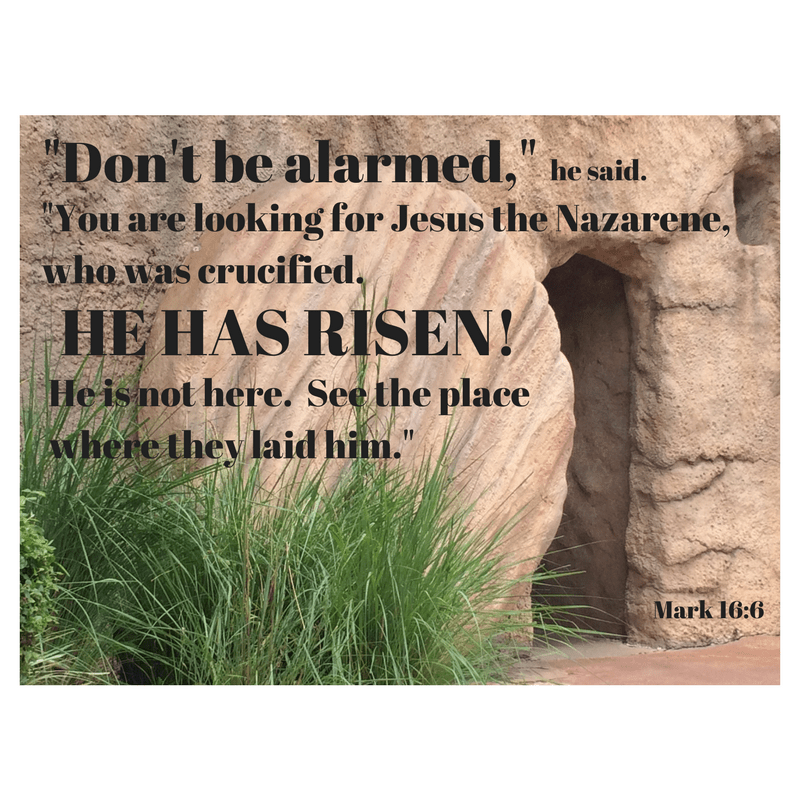
He is risen indeed!  I write this devotion to you on the heels of celebrating Resurrection Sunday with our church family.  What a joyous celebration, as we celebrate the victory that Jesus had over death and what that means for us today.  The first people who heard that Jesus has risen from the grave were the ladies present when the angel rolled the stone away.  The angel told them that Jesus “is not here, for he has risen” (ESV Matthew 28:6).  The angel then gave the ladies simple instructions: “go quickly and tell his disciples that he has risen from the dead” (Matthew 28:7). Go and tell.  That’s what the ladies were to do; they were to go and tell others that Jesus is alive.  If there has ever been a bona fide star of someone who simply goes and tells others about Jesus, it would have to be the apostle Paul.

From the moment that Paul placed his faith in Christ Jesus, his whole life seemed to revolve around spreading the gospel message of the king and the kingdom.  He took a few missionary journeys and wrote many letters seeking to advance the gospel message of the king and the kingdom.  What we have here in Romans is another example of Paul’s innate desire to go and tell others about Jesus and what was important to him.

Romans 1:1 identifies Paul as the author of this letter: “Paul, a servant of Christ Jesus, called to be an apostle, set apart for the gospel of God.”  I would say that is a pretty good summary of who Paul is.  Paul served Jesus from the moment that Jesus appeared to him on the road to Damascus, and Paul was sent off to advance the gospel message of God.  Romans 1:7 identifies the target audience of this letter: “To all those in Rome who are loved by God and called to be saints.”  Paul was writing to all of the saints in the city of Rome.  A saint is simply someone who, like Paul, is set apart from the world around them.  Paul is writing to those in Rome who have set themselves apart from the world by putting their faith in Christ Jesus.

It is believed that Paul wrote this letter around 56-58 AD – less than 30 years after the death, burial, and resurrection of Jesus.  The Roman Empire is nearing its peak in power.  In 49 AD, the Roman emperor Claudius banished all Jews from the city of Rome.  This decree lasted until Claudius’ death 5 years later.  Thus, at the time of the writing, the Jews were just able to reenter the city of Rome.  Around 56-58 AD, Nero would have just become the emperor.  He would eventually wreak havoc on the Christians in the city of Rome, but this would not have come until after Paul’s letter to the saints in Rome.  The saints in Rome would have consisted of both Jewish Christians and Gentile Christians.  I am sure they experienced similar tension that other groups of Christians experienced as well.

Paul would eventually find his way to the city of Rome in chains, but at the time of his writing, he had not yet been to Rome.  Verses 8-15 detail Paul’s desire to go to Rome.  We learn that Paul was “eager to preach the gospel to you also who are in Rome,” (Romans 1:15).  Paul wanted to go preach the gospel to them in person, but in the meantime, he would write a unifying letter to them about the gospel message.  That is largely what the letter of Romans is – Paul’s presentation of the gospel message.  I like to break down Paul’s presentation of the gospel message in Romans into three parts: 1. Our sin and need of salvation. 2. God’s plan of salvation for us. 3. How to live a Christian life.

After Paul’s introduction in the first 17 verses or so, Paul transitions into the topic of our sin and our need of salvation.  It is not a fun section to read though, but it is needed to get to the fun sections.  Why talk about salvation if we have no need of being saved?  There would be no point!  However, as we will see in the next couple of chapters, Paul does a pretty stand-up job of expressing mankind’s desperate need of salvation.

I look forward to progressing through this letter with you.  In the meantime, I encourage you to consider Paul’s task and desire of going and telling others about the risen savior. Just as the ladies present at the tomb of Jesus and the apostle Paul himself, I implore you to go and tell!

-Kyle McClain

Reflection Questions

  1. Where and to whom might God be directing you to Go and Tell? Paul used both letters and visits to tell the gospel message of the king and kingdom. How could you share the message with those you know – and those you have yet to meet?
  2. What is the importance of each part of Paul’s message: 1. Our sin and need of salvation. 2. God’s plan of salvation for us. 3. How to live a Christian life? What happens when any one of those are not shared and taught?
  3. Pray for the God’s wisdom, words and direction as you follow Paul’s example. Then Go and Tell!

From Death to Life!

Old Testament: Deuteronomy 9 & 10

Poetry: Job 32

New Testament: Mark 16

       Looking at Mark 15 allowed us to consider what Jesus suffered, and why. But the dawn has come, and now we can eagerly seek the news that our savior is raised to life. That transition from death to life is as simple for us as turning a page in our Bibles. Most Christians cannot approach Mark 16 without being aware of what should come next, which may always have been the case. Mark may not have written his Gospel primarily to tell people about Jesus, but to remind and encourage believers in their faith. We might imagine the text being read aloud in a group setting.

       We can envision the early listeners to this passage trying to put themselves in the places of Mary Magdalene, James’ mother Mary, and Salome. Certainly they understood what brought those women to the tomb: love, and mourning, and the wish to offer Jesus what support was possible by caring for his body. But from hindsight it was also clear that the tomb would be found open and empty – what a wonderful surprise for the mourners!

       And so as the account was read the listeners waited to hear of the women’s overcoming joy at learning about Jesus’ new life. It was not to be. Rather the three were left trembling, astonished, and afraid. And upon exiting the tomb they say nothing. (We know that ultimately more happened – particularly in the case of Mary Magdalene – but that is where the text stops.)

       Your Bible version, whatever version you are reading, probably does not cut off after verse 8. Perhaps it offers a footnote discussing what scholars think about the verses that follow (they doubt that the verses are legitimate). In fact different manuscripts contain four endings for the Gospel of Mark – aside from the version that simply cuts off after verse 8. That variety of endings not only shows us that some people were disappointed with the ending they had received, and tried to “fix” the issue, but it also demonstrates that the version which cuts off at verse 8 is from a pretty early date (so if there is a “real” ending of Mark lost due to damage that happened a long time ago).

       The way Mark 16 ends at verse 8 has been compared to how the book of Jonah ends. After God reprimands Jonah we never learn Jonah’s response. In Mark there may be a similar tone of leaving issues hanging at 6:52.

       So, let’s consider the possibilities. Mark may have intended to have a somewhat jarring ending to spur his audience to think about their own situations – each of them had the knowledge of Jesus’ resurrection (and had received sufficient time to get over the shock about it), so would they be silent, or would they proclaim it? Perhaps the closing line of Mark’s book was intended to open a discussion, an interactive lesson plan which is so old we have lost the details for it.

       Or it may be that Mark was unconcerned about how the ending of his book came across, because the middle of his book already set up all the promises that were needed regarding Jesus’ new life, they just need to be believed. Having arrived at the end of Mark’s gospel, we certainly have not arrived at the end of Jesus’ story. To quote from Donald H. Juel, who discussed this idea,

There is every reason to believe that the rest of his promises will be fulfilled: James and John will drink from the cup; the disciples will give testimony; the gospel will be preached to all the Gentiles. Jesus will be enthroned at God’s right hand and will one day come with the clouds of heaven so that ‘all will see’ and will send his angels to gather the elect from the four winds.

(Mark, in the Augsburg Commentary on the New Testament series.) The trust that these promises will be fulfilled is not based on human effort, and neither is the end of the story. “The story is not over and will not be until Jesus returns.” (Juel).

       Knowing if one of these possibilities about Mark is correct is not the most important thing. We know that Jesus is alive. Both of these ways of viewing Mark’s book can be useful ways for us to think about our relationship with our living savior, and to better prepare ourselves to continue serving him. We sometimes approach Resurrection Sunday as a time to think about our own future lives, but there is much to be done in the meantime to be prepared, and to invite others.

       Dear God, on this Resurrection Sunday help me recommit my heart to you and to your son Jesus, the Christ, my savior. Allow me to examine myself through the guidance of your Spirit and to determine both what I need to set aside and what I need to take up for the improvement of my service. You offered me a new life, a resurrection into immortality. Please help me be more responsible in how I live this life, so I can relay your wisdom to those around me. Make me a witness of your grace and mercy and love. In the blessed name of your son Jesus I pray these things, Amen.

-Daniel Smead

Reflection Questions

  1. Do you find it strange for a Gospel not to include an appearance of the resurrected Jesus?
  2. Might Mark have stopped where he did because he saw the alternative as a much longer book (perhaps with part of what we know as Acts)?
  3. Over 500 believers saw Jesus alive in his resurrected state (1 Corinthians 15:6), but most have needed to wait to see Jesus, and are blessed for having believed without seeing (John 20:29). What affect do you think it would have had on the church if Jesus had been taken up to heaven without appearing to anyone?

Crowd Pleaser

Old Testament: Deuteronomy 6

Poetry: Job 30

New Testament: Mark 15

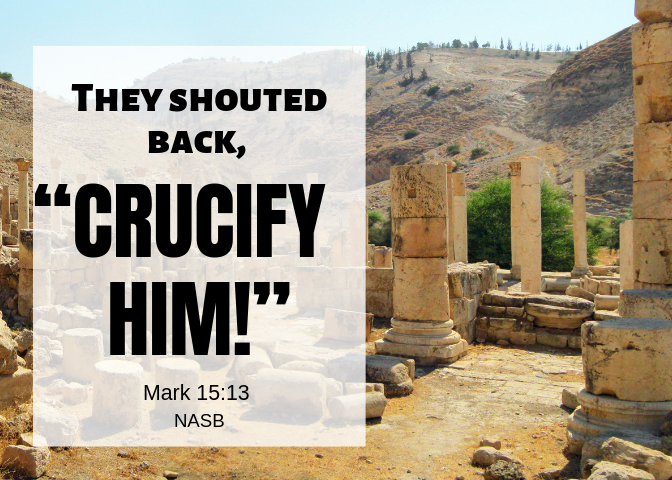
We are nearing resurrection Sunday. Before we can talk about his resurrection, we must talk about his death. In our text in Mark 15 we are seeing Jesus facing his death out in the open for all to see. The Sanhedrin brought Jesus before the Roman governor, Pontius Pilate. He could not find any fault in Jesus, and he said so three times. Late in the trial, Pilate sought a way to free Jesus. It was a Passover festival custom that the governor release a prisoner to the people, so, in a ploy to satisfy the crowd of Jewish leaders who had gathered and to secure Jesus’ release, Pilate allowed them to choose between a convicted criminal named Barabbas and Jesus. Instead of choosing Jesus, as Pilate had hoped, the crowd chose Barabbas for release. Shocked that they would free a hardened criminal, Pilate asked, “What shall I do, then, with the one you call the king of the Jews?” (Mark 15:12). The crowd cried out, “Crucify him!” (verse 13).

Pilate was confused by the crowd’s reaction, for barely a week earlier the people of Jerusalem had welcomed Jesus into the city with the waving of palm branches and shouts of “Hosanna!” (Mark 11:1–11). What Pilate may not have known was the extent to which the religious and political leaders hated and opposed Jesus. Not only did Jesus point out their extreme hypocrisy on many occasions (Mark 7:1–14), but He also claimed to be the Son of God, which was blasphemy to the unbelieving teachers of the law (see Mark 14:60–64). The religious leaders wanted to destroy Jesus (Mark 3:6). Only His death would satisfy them. Over the course of Jesus’ ministry, his teachings had angered the Pharisees, the scribes, the Herodians, and the Sadducees.  But not the crowd. Not the ones who saw Jesus’ love. Who saw him heal, support, encourage, teach. Who gave dignity to those who were oppressed. How could they hear the cries of crucify him and betray him like this? How could they hear Pilate offer Barabbas and choose him over a man who has done nothing wrong? Jesus was no longer the crowd pleaser, but the scorned suffering servant spoken about in the Old Testament. They had no idea who was standing before them. They chose Barabbas. We too face the same decision these Jews had to make between Barabbas and Jesus. When I read this story its hard for me to understand why Jesus is even in this predicament. He is the son of God. Save him. Sometimes, I have a hard time understanding God. How could he let his perfect son suffer and die?

Have you ever expected Him to act in a certain way because of what you understood about Him and His nature—but He did not do things the way you thought they should be done? I have. If I were Jesus, I would be angry. All he ever did was follow what God wanted him to do and it got him killed. Have you ever been angry and disappointed in God? I have been all but convinced that He did not live up to His promise, for I was sure that I knew what He was going to do, and God let me down. My heart was filled with rage that God would act that way, even though God has told us all, again and again, ‘For my thoughts are not your thoughts, neither are my ways your ways,’ declares the LORD. ‘As the heavens are higher than the earth, so are my ways higher than your ways and my thoughts than your thoughts’ (Isaiah 55:8-9). We cannot figure out God. He will be true to Himself, He will never lie, He will never deceive us; but He is more than we can handle. He is bigger than we are. Jesus understood this. He understood the bigger picture. He understood the need for his death. While he did not want to die he gave up his will and took all of the suffering so that we might live. Sometimes I don’t understand God but then I remember God loved us so much that he gave His one and only son for a chance for us to accept his love and have a relationship with Him. Mark 12:10-11  “The stone that the builders rejected has become the cornerstone, this was the LORD’s doing and it is marvelous in our eyes.”  All these words to say, I don’t want to be like the crowd who didn’t understand God’s plan. I don’t want to live another life other than the one I can have with Jesus. I know I’m like the crowd more than I care to admit. And like this crowd, when I (we) get angry with God and don’t want to follow his son and turn from Him, there is always another Barabbas waiting in the wings for me (us) to choose. Another crowd pleaser. One that is a murderer. One that I know is not right, but I choose anyway because I don’t want to follow Jesus. But I’m thankful that God is patient and loving and I have his son as a mediator who draws me gently back to him. Who calms my fears. Who alleviates my doubts. One who is the great shepherd and high priest.

-Andy Cisneros

Reflection Questions

  1. When have you been upset with or disappointed in God’s plan or ways?
  2. When have you been reminded His ways are higher – and better – than yours?
  3. How does the path laid out for Jesus – and his willingness to walk it – remind us that God can be trusted even when we think it doesn’t make sense or isn’t “right”?